Air Defense

S-75 Dvina / SA-2 Guideline

Also known as
  • S-75 Dvina
  • SA-2 Guideline
  • V-750 Dvina
  • V-755
  • SA-75
  • S-75M Volkhov
  • Fan Song SAM
  • HQ-2 derivative

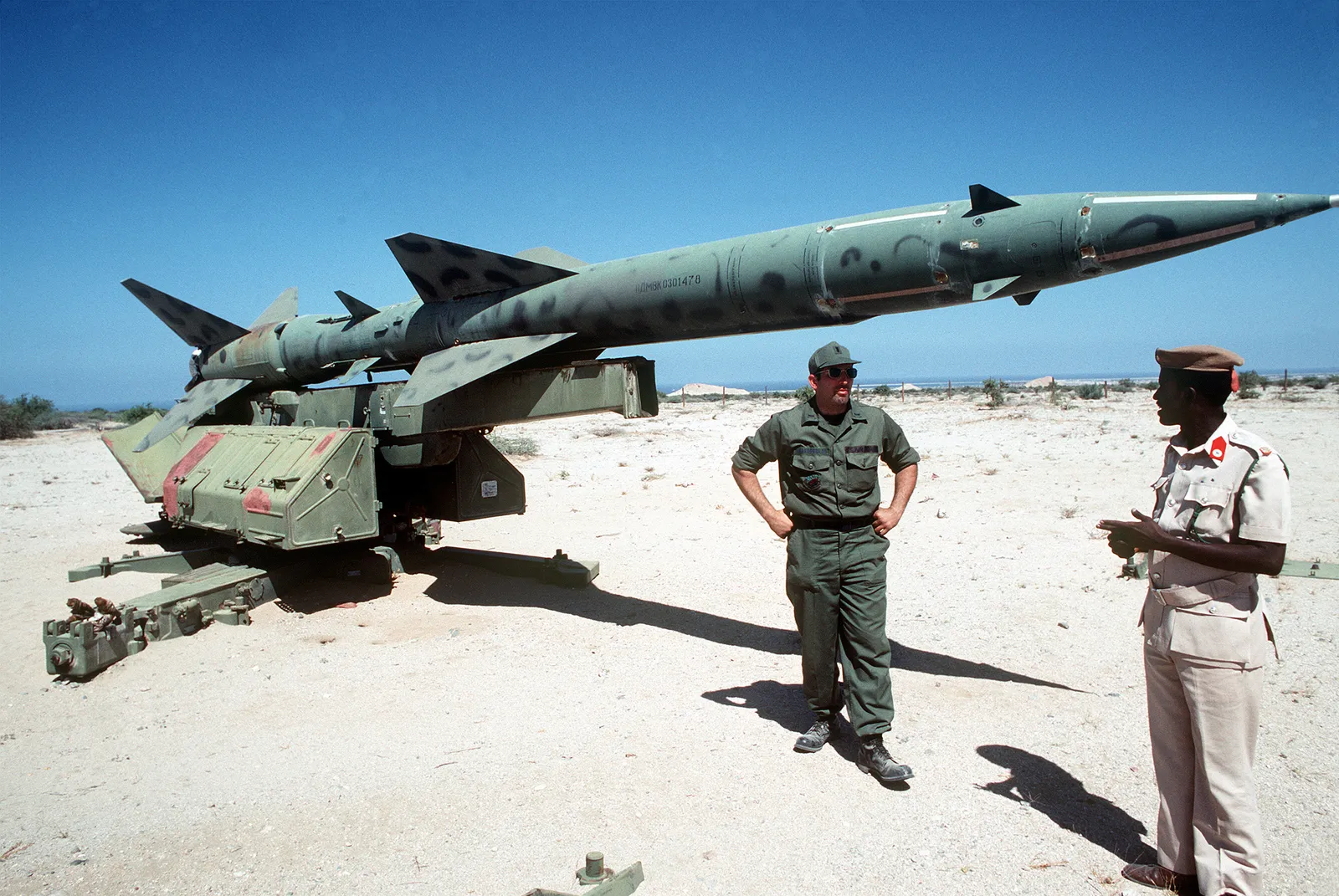
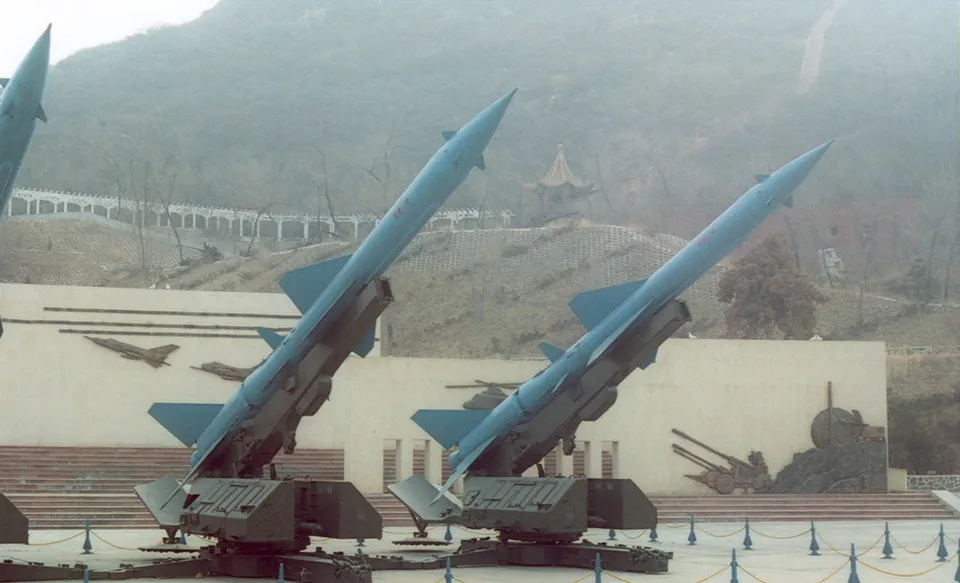
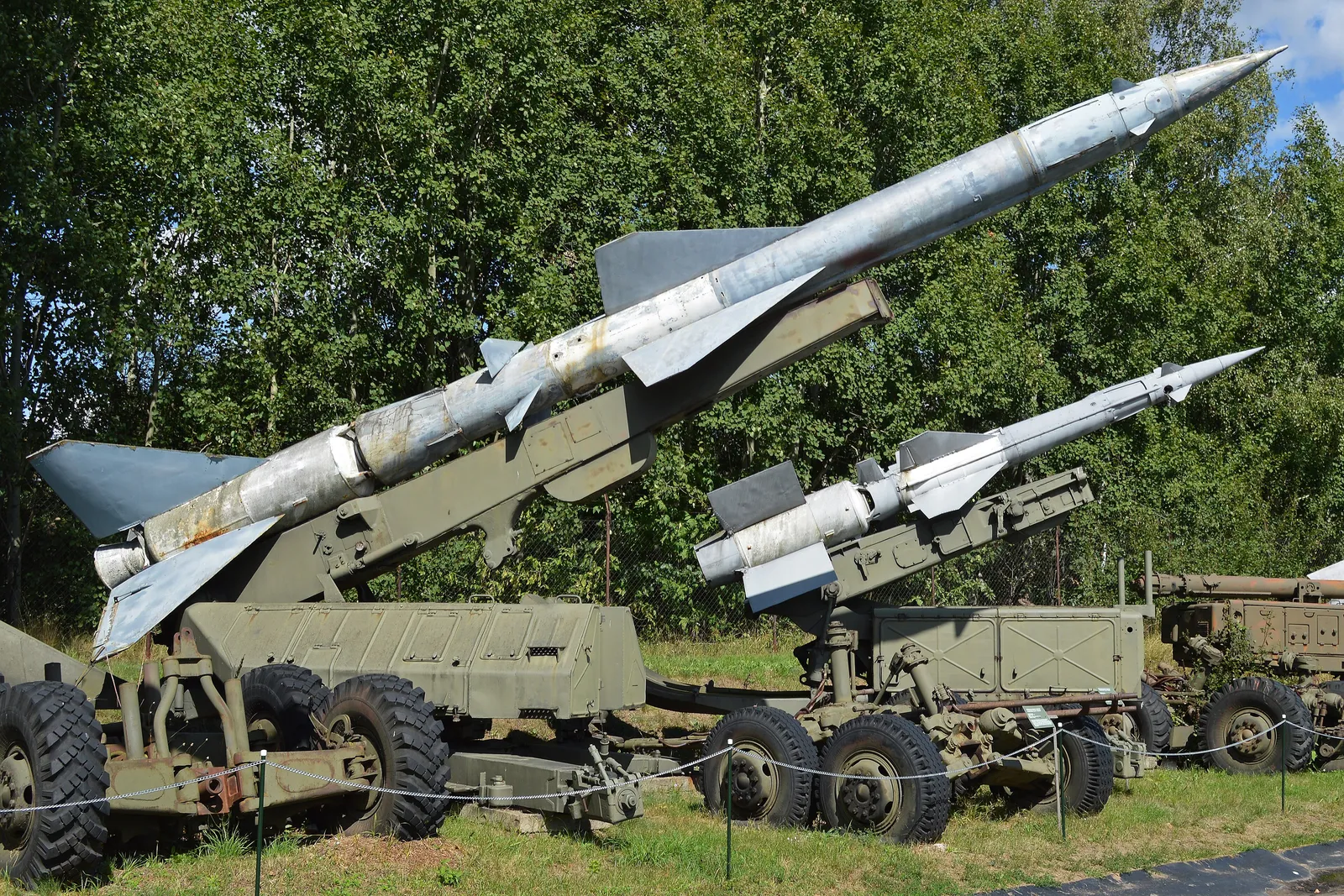
The S-75 Dvina, known to NATO as the SA-2 Guideline, is a Soviet command-guided surface-to-air missile system built around V-750/V-755 missiles, single-rail launchers, Spoon Rest acquisition radar, and Fan Song guidance radar. It became a defining Cold War high-altitude air-defense system in Vietnam and Arab-Israeli wars, where fixed SAM sites shaped strike planning and suppression tactics. In Yemen, surviving S-75 missile stocks reappeared less as intact air-defense batteries than as source missiles for Houthi-aligned Qaher and Muhit strike conversions.

Role in Conflicts

Side
North Vietnam and Viet Cong

North Vietnamese air-defense forces received SA-2 systems after Operation Rolling Thunder began in 1965, used camouflaged and frequently moved sites around North Vietnam, and are documented shooting down U.S. aircraft including an RF-4C near Hanoi on August 12, 1967.

Egypt's 1967 air-defense network relied on Soviet-supplied SA-2 surface-to-air missile systems and ZSU-57-2 guns, but Israeli low-level air attacks and strikes against fixed sites limited the SA-2's effect during the war.

Side
Egypt

During the War of Attrition, Egypt's SA-2-based air-defense network became part of a denser Soviet-supported SAM and AAA system that contested Israeli air operations over the Suez Canal zone.

Side
EgyptSyria

Egypt and Syria fielded SA-2s as part of integrated air-defense networks alongside SA-3, SA-6, SA-7, and antiaircraft guns; Israeli accounts cited SA-2/SA-3/SA-6/SA-7 missile fire as a major aircraft-loss driver in the opening phase.

Profile / Specs

Profile

Origin
Soviet Union
Type
High-altitude surface-to-air missile system
Service note
Introduced in the late 1950s; exported from 1960 and still visible in 21st-century legacy stocks and conversions
Designed
Mid-1950s
Produced
Late 1950s onward
Developed into
Chinese HQ-2 derivative and Yemeni Qaher-series ballistic-missile conversions from S-75/V-755 stocks

Specifications

Missile
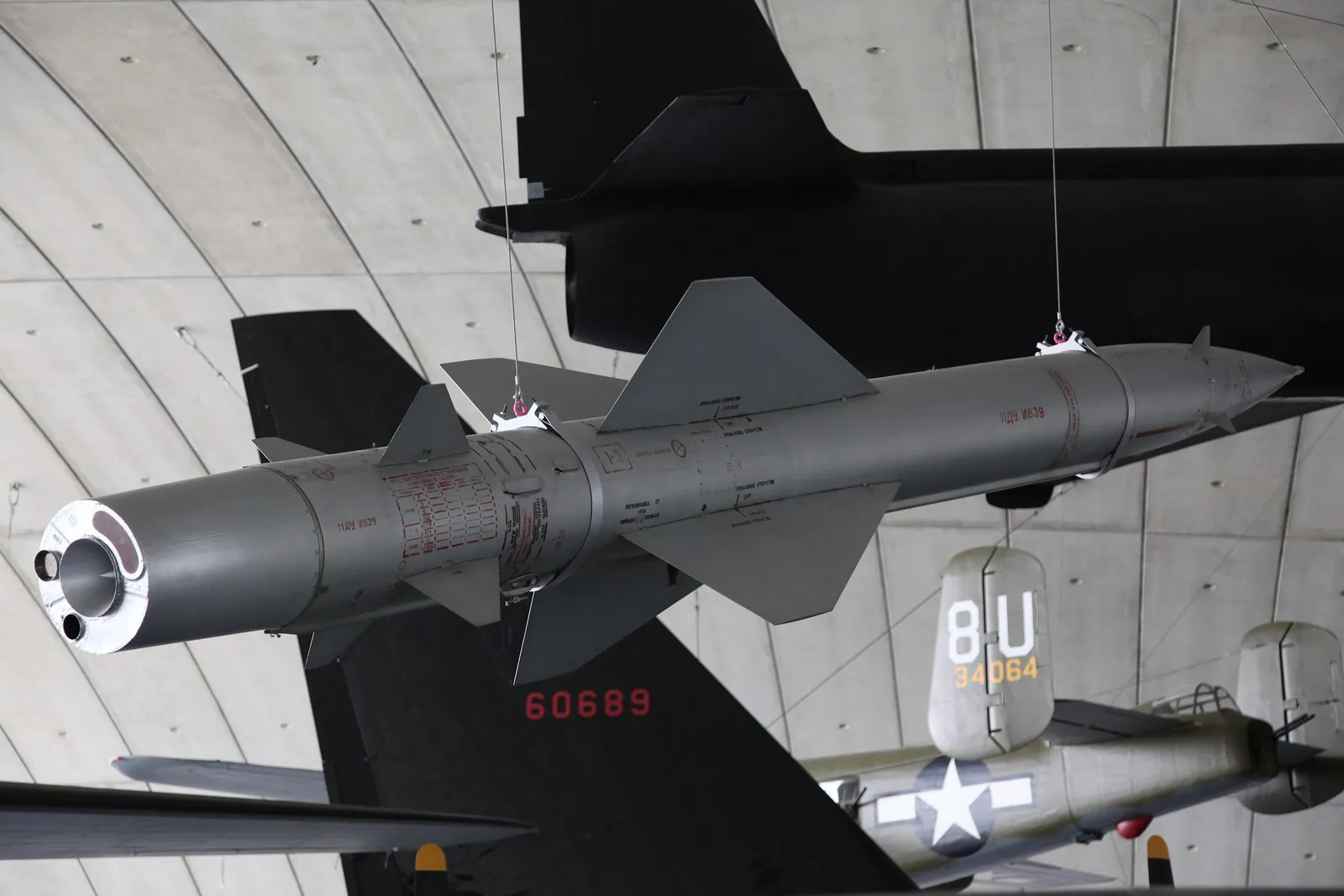
V-750 / V-755 / SA-2 Guideline two-stage missile with solid-fuel booster and liquid-fuel sustainer
Guidance
Command guidance from a Fan Song radar, normally cued by acquisition radar
Launcher
Single-rail reusable launcher that rotates 360 degrees and elevates the missile for launch
Site Layout
A typical site used six launchers with control and support vans, Spoon Rest acquisition radar, and Fan Song guidance radar
Acquisition Radar
Spoon Rest radar could detect incoming aircraft at long range and pass location data to the system computer
Engagement Radar
Fan Song radar acquired targets and guided missiles after launch
Effective Range
About 19 miles maximum effective range; 27 miles maximum slant range
Ceiling
Up to 60,000 ft
Speed
Mach 3.5
Warhead
288-lb blast-fragmentation warhead
Missile Dimensions
About 34 ft 6 in long, 2 ft 4 in diameter, with a 7 ft 3 in wing span
Battery Architecture

The S-75 page represents a complete air-defense battery rather than a missile round alone. Public museum sources describe a normal North Vietnamese SA-2 site as a six-launcher position with control vans, support vans, Spoon Rest acquisition radar, and Fan Song guidance radar.

Search and cueing

Spoon Rest radar provided long-range aircraft detection and passed location data into the system.

Source: SA-2 Surface-to-Air Missile.

Engagement control

Fan Song radar acquired targets and sent command guidance to launched missiles.

Source: SA-2 Surface-to-Air Missile.

Launch position

Six single-rail launchers, control equipment, and support vehicles formed the recognizable SAM-site pattern.

Source: SA-2 Surface-to-Air Missile.
Variants

The catalog treats S-75/SA-2 as the air-defense system family: Soviet service and export designations identify radar and missile generations, while HQ-2 and Qaher are derivative or conversion lines rather than identical battery configurations.

VariantConfigurationDesignation notes
SA-75 DvinaEarly export family designation

Early Dvina-family configurations paired V-750 missiles with Fan Song radar and fixed or semi-mobile launch sites.

Sources: SA-2 Surface-to-Air Missile, SA-2 Guideline Missile

S-75M VolkhovLater Soviet family member

Volkhov is commonly treated as a later S-75 family designation in public references, but conflict reporting often collapses the family under SA-2 or S-75.

Sources: SA-2 Surface-to-Air Missile

HQ-2Chinese derivative

The HQ-2 appears in image and derivative context as a Chinese-built member of the broader SA-2/S-75 lineage.

Sources: Commons HQ-2 / SA-2 Guideline Image

Yemeni Conversion Lineage

Yemen-war sources connect inherited S-75/SA-2 missile stocks to Houthi-aligned strike conversions rather than to clearly documented intact SA-2 battery operations. The linked Qaher records cover the converted missiles as separate battlefield weapons.

Converted weaponLineageConflict context
Qaher-1 ballistic missile, Short-range ballistic missile, ArtilleryQaher-1 ballistic missileS-75/V-755 stock conversionEarly Houthi-aligned land-attack conversion from Yemeni S-75 missile stocks.
Qaher-M2 ballistic missile, Short-range ballistic missile, ArtilleryQaher-M2 ballistic missileImproved Qaher family memberLater Qaher-series strike missile tied to the same S-75/SA-2 conversion lineage.
Muhit / MouhitS-75-derived maritime strike conversionIISS assesses the anti-ship ballistic missile as a conversion of the legacy S-75 Dvina system used for maritime strike.

Sources: Iran's Support to Houthi Air Defenses in Yemen; What Air Defenses Do The Houthis In Yemen Actually Have?; Made in Yemen? Assessing the Houthis' Arms-Production Capacity.

Timeline

S-75 Dvina / SA-2 Guideline Key Events

  1. V-750 Dvina developed

    Soviet development produced the V-750 Dvina, described by the National Museum of the U.S. Air Force as the first effective Soviet surface-to-air missile.

    Sources: SA-2 Surface-to-Air Missile

  2. Export era begins

    The Soviet Union began exporting SA-2 systems widely in 1960, making the family a recurring Cold War air-defense export.

    Sources: SA-2 Surface-to-Air Missile

  3. North Vietnam receives SA-2s

    North Vietnam began receiving SA-2 systems after the start of Operation Rolling Thunder and built camouflaged, frequently moved SAM sites with Soviet help.

    Sources: SA-2 Surface-to-Air Missile

  4. SA-2s in layered Arab air defenses

    During the Yom Kippur War, Egyptian and Syrian air-defense networks included SA-2s alongside newer SA-3, SA-6, SA-7, and antiaircraft-gun systems.

    Sources: Rescue Mission, The Struggle for Air Superiority

  5. Yemeni stocks converted

    Houthi-aligned forces converted legacy Yemeni S-75/V-755 missile stocks into Qaher-family surface-to-surface strike missiles during the Yemen war.

    Sources: Iran's Support to Houthi Air Defenses in Yemen, What Air Defenses Do The Houthis In Yemen Actually Have?

Media
Related Weapon Systems
S-125 Neva/Pechora / SA-3 Goa, Short- to medium-range surface-to-air missile system, Air DefenseAir DefenseS-125 Neva/Pechora / SA-3 GoaShort- to medium-range surface-to-air missile systemThe S-125 Neva/Pechora, known to NATO as SA-3 Goa, is a Soviet command-guided surface-to-air missile system built to cover lower-altitude targets than earlier S-75 batteries. The family combines 5V24/V-600 or 5V27/V-601 missiles, SNR-125 Low Blow engagement radar, and twin- or four-rail launchers, with later Pechora upgrades adding mobile chassis, digital electronics, and optical tracking. Cataloged use spans Egyptian and Iraqi air-defense service, Yugoslav S-125 combat in Operation Allied Force, Syrian and Houthi-aligned legacy sites, Azerbaijani Pechora-2TM use, Ukrainian Newa-SC service, and Indian Pechora employment during Operation Sindoor.
S-350 Vityaz, Medium-range surface-to-air missile system, Air DefenseAir DefenseS-350 VityazMedium-range surface-to-air missile systemThe S-350 Vityaz is a Russian road-mobile medium-range surface-to-air missile system developed by Almaz-Antey for layered air defense against aircraft, helicopters, cruise missiles, UAVs, and some ballistic targets. The system pairs 50P6-series launchers, 50N6-series radar components, and 9M96/9M100-family interceptors. In the 2014 Russia-Ukraine War, reporting has documented Russian S-350 deployments near Ukraine and later Ukrainian strikes on S-350 launcher and radar equipment.
S-200 / SA-5 Gammon, Long-range surface-to-air missile system, Air DefenseAir DefenseS-200 / SA-5 GammonLong-range surface-to-air missile systemThe S-200, known to NATO as the SA-5 Gammon, is a Soviet long-range surface-to-air missile system built around large radar-guided interceptors and semi-fixed launch sites. It appears in the catalog through Libyan SA-5 launches during the 1986 Gulf of Sidra confrontation, Syrian strategic air-defense fire during Israeli and coalition strike episodes, and Ukrainian reactivation for very long-range aircraft engagements and possible ground-attack use in the 2014 Russia-Ukraine War.
2K12 Kub / Kvadrat / SA-6 Gainful, Tracked medium-range surface-to-air missile system, Air DefenseAir Defense2K12 Kub / Kvadrat / SA-6 GainfulTracked medium-range surface-to-air missile systemThe 2K12 Kub, exported as Kvadrat and known to NATO as SA-6 Gainful, is a Soviet tracked medium-range surface-to-air missile system built around 3M9 missiles, 2P25 launch vehicles, and the 1S91 Straight Flush radar. Its conflict record spans the 1973 Yom Kippur War, where Egyptian and Syrian SA-6 batteries became a central air-defense problem for Israeli aviation, and later legacy use or transfer in Ukraine, Syria, Nagorno-Karabakh, Libya, and Yemen.
R-17 Scud-B ballistic missile, Short-range ballistic missile, MunitionsMunitionsR-17 Scud-B ballistic missileShort-range ballistic missileThe R-17 Elbrus, known to NATO as the SS-1C Scud-B, is a Soviet road-mobile, liquid-fueled short-range ballistic missile built for deep strikes with conventional, chemical, or nuclear payloads. Its combat record spans Egyptian launches in 1973, Iranian and Iraqi city strikes in the 1980-1988 war, Libyan missile attempts in 1986 and 2011, South Yemeni strikes in 1994, Armenian strikes on Ganja in 2020, and Houthi-aligned use of inherited Yemeni stocks, illustrating the lasting political and civilian risk of older inaccurate ballistic missiles.

Sources