Air Defense

S-200 / SA-5 Gammon

Also known as
  • SA-5 Gammon
  • SA-5
  • S-200 Angara
  • S-200 Vega
  • 5V28
  • V-880
  • Vega
  • Dubna

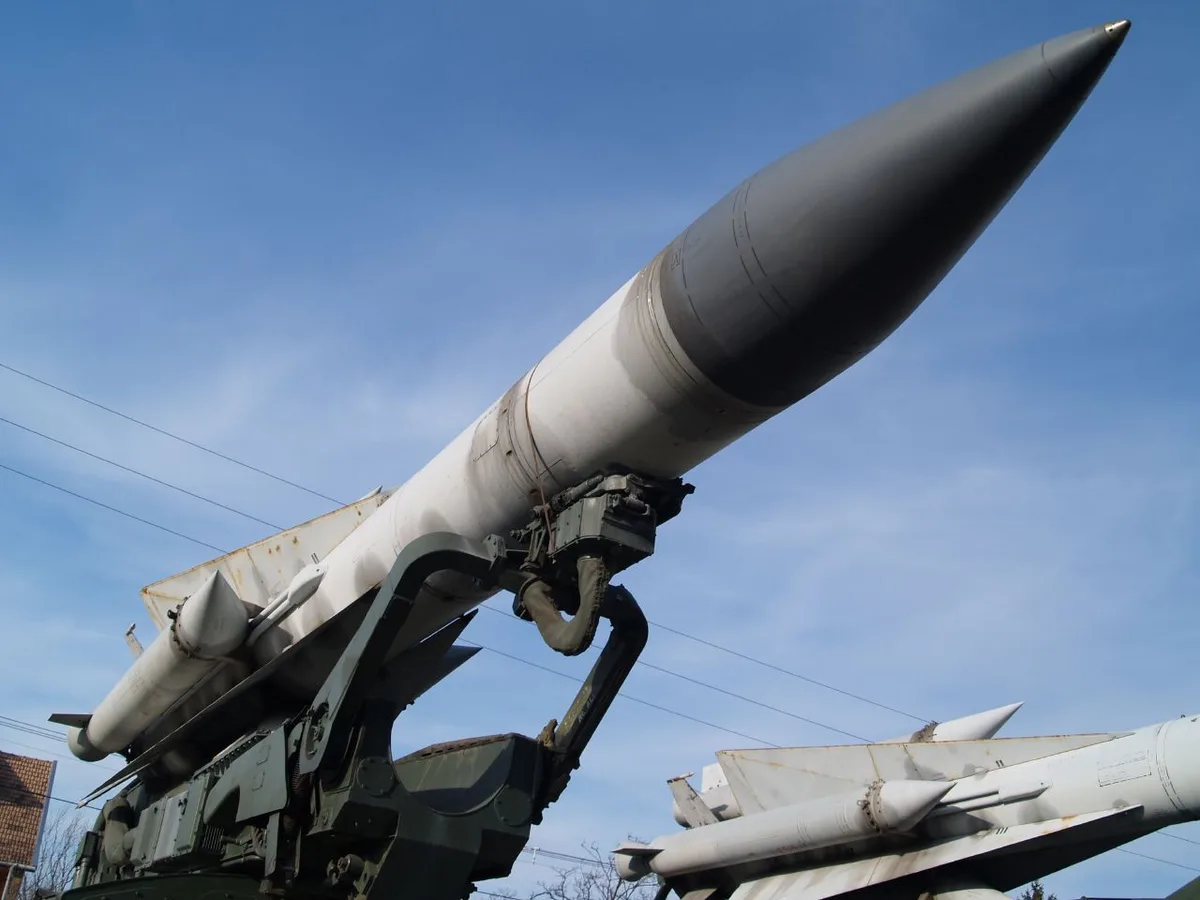
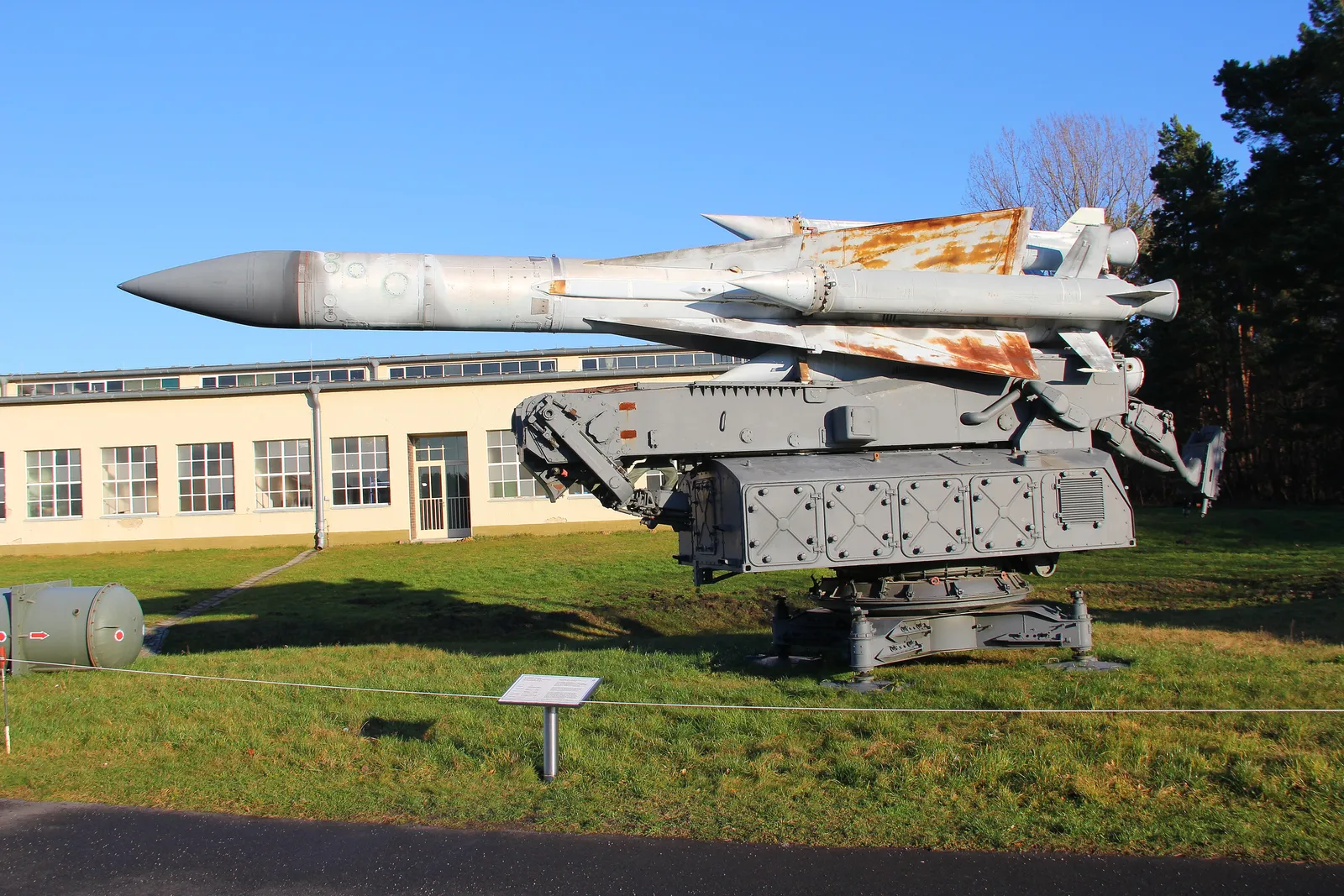
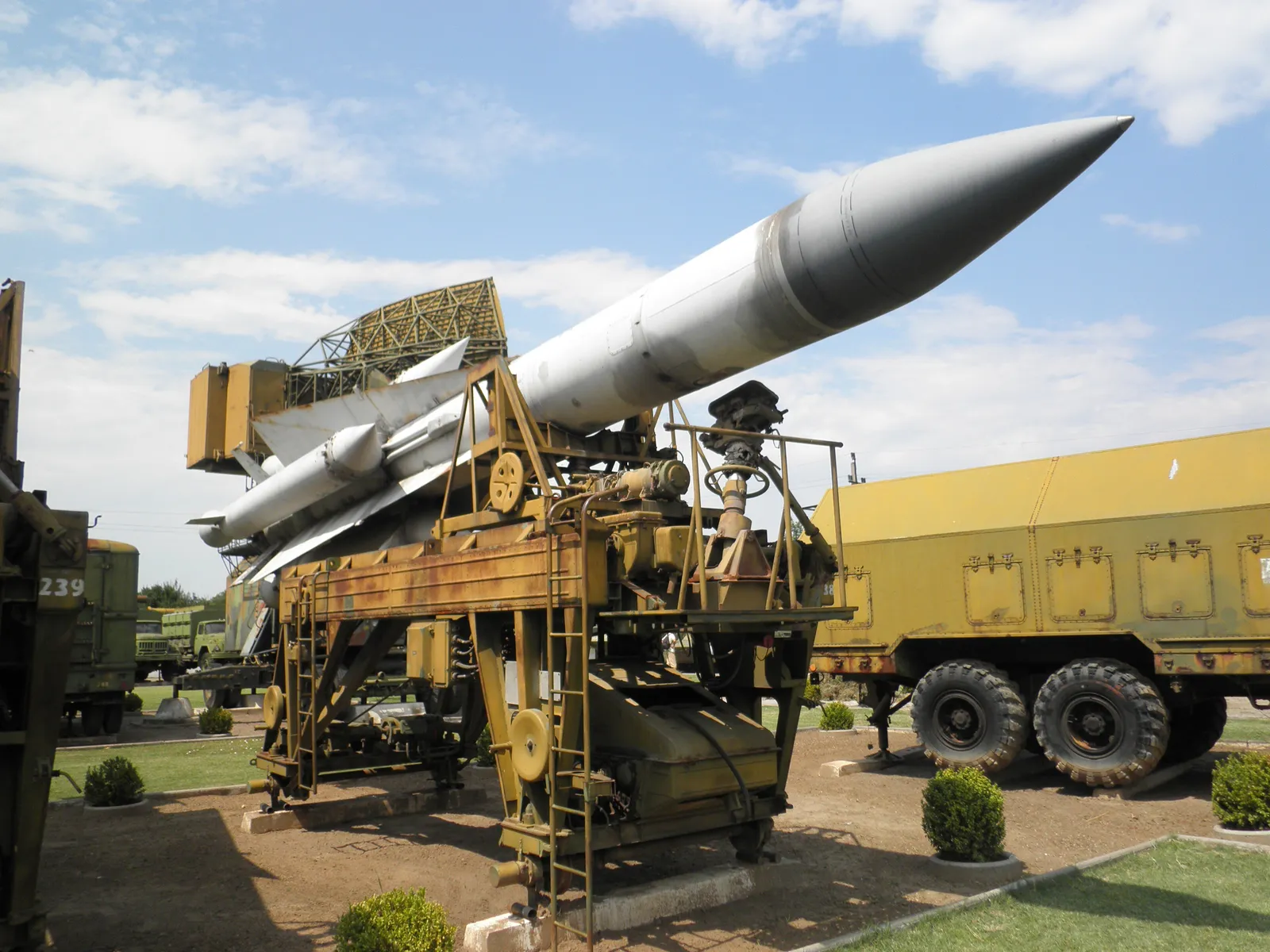
The S-200, known to NATO as the SA-5 Gammon, is a Soviet long-range surface-to-air missile system built around large radar-guided interceptors and semi-fixed launch sites. It appears in the catalog through Libyan SA-5 launches during the 1986 Gulf of Sidra confrontation, Syrian strategic air-defense fire during Israeli and coalition strike episodes, and Ukrainian reactivation for very long-range aircraft engagements and possible ground-attack use in the 2014 Russia-Ukraine War.

Role in Conflicts

Ukrainian military-intelligence footage and defense reporting documented reactivated S-200 launches during the 2014 Russia-Ukraine War; Ukrainian and media accounts linked the system to reported A-50 and Tu-22M3 aircraft shootdowns, while Russian claims also alleged adapted S-200 use against ground targets.

Role details

Syrian government air defenses fired S-200 missiles during Israeli strike exchanges in the 2011 Syrian Civil War, including the September 2018 Latakia incident in which a Syrian S-200 accidentally downed a Russian Il-20 while responding to Israeli aircraft. In the April 2018 U.S., UK, and French strike phase of the same war, Russian officials said Syrian government air defenses used S-200 systems alongside other Soviet- and Russian-made SAMs; U.S. officials assessed Syrian surface-to-air missile launches as ineffective and said no coalition aircraft or missiles were successfully engaged.

Role details
Side
Libya
Role in conflict
Coastal long-range air-defense missile fire

Libyan forces fired SA-5 missiles at U.S. aircraft during the March 1986 Gulf of Sidra confrontation; U.S. official and Navy historical accounts describe the launches as unsuccessful and followed by U.S. strikes against Libyan missile and naval targets.

Profile / Specs

Profile

Origin
Soviet Union
Type
Long-range surface-to-air missile system
Service note
Cold War design with continued Syrian and Ukrainian wartime use
Designer
KB-1 / Almaz Central Design Bureau; Fakel Design Bureau
Designed
1950s-1960s
Unit cost
Not publicly established
Produced
1960s-1980s
Number built
About 2,030 Soviet launchers deployed at peak according to CSIS

Specifications

Missile length
About 10.7-10.8 m
Launch weight
About 7,000-7,100 kg
Range
60-300 km depending on variant
Warhead
About 217-220 kg high-explosive fragmentation, with nuclear-capable variants
Guidance
Command guidance with semi-active radar homing terminal phase
Battery layout
Typically six semi-fixed single-rail launchers with acquisition and Square Pair guidance radars
Launcher
5P72V fixed single-rail launcher documented in Ukrainian S-200 footage
Missile propulsion
Solid booster cluster plus liquid-fuel sustainer on later 5V28-series missiles
Variants

S-200 designations distinguish successive Soviet long-range SAM complexes and export models; references commonly pair the system name with NATO's SA-5 Gammon reporting name and 5V-series interceptor missiles.

VariantConfigurationDesignation notes
S-200A AngaraEarly production complex

Initial operational S-200 family version listed in missile-reference sources as the first Angara configuration.

Sources: S-200 (SA-5 Gammon)

S-200V VegaImproved long-range complex

Vega is the major improved S-200 configuration associated with later 5V28-series missiles and longer engagement ranges.

Sources: S-200 (SA-5 Gammon), S-200 SA-5 Gammon

S-200VE Vega-EExport Vega configuration

The Vega-E designation identifies the export version supplied outside the Soviet Union, including to Syrian service.

Sources: S-200 (SA-5 Gammon)

S-200D DubnaLate extended-range complex

Dubna is the late S-200 family member generally tied to the longest published range figures for the system.

Sources: S-200 (SA-5 Gammon), S-200 SA-5 Gammon

Missile Fired

The S-200 page covers the full air-defense complex; the linked missile record isolates the large 5V28 interceptor used by later S-200 variants.

AmmunitionAmmunition typeFiring evidence
5V28 surface-to-air missile, Long-range surface-to-air missile interceptor, Munitions5V28 surface-to-air missileLong-range surface-to-air missile interceptor

Later S-200 variants fire 5V28-series missiles, and 2025 Ukrainian footage showed 5V28 missiles launched from standard 5P72V S-200 equipment.

Sources: S-200 (SA-5 Gammon), First Detailed Video of Ukraine Using S-200 Missile

Timeline

S-200 / SA-5 Gammon Key Events

  1. S-200 enters Soviet service

    Reference sources place S-200 service entry in 1967 as a strategic, long-range Soviet air-defense system aimed at high-altitude aircraft.

    Sources: S-200 (SA-5 Gammon), S-200 SA-5 Gammon

  2. Libyan SA-5s fired during Gulf of Sidra clash

    U.S. official and Navy historical accounts say Libyan forces fired SA-5 missiles at U.S. aircraft during the March 1986 Gulf of Sidra confrontation before U.S. strikes hit Libyan missile and naval targets.

    Sources: Gulf of Sidra Incident Statement, Enterprise Gulf of Sidra History

  3. Syrian S-200s reported fired during coalition strikes

    Russian statements said Syrian S-200 systems were among the air-defense weapons fired during the U.S., British, and French strike operation; U.S. officials disputed Syrian and Russian interception claims.

    Sources: Russian General's Claim of 71 Missiles Downed Countered by Experts, Evidence, DoD Syria Strike Briefing

  4. Syrian S-200 downs Russian Il-20

    During an Israeli strike near Latakia, a Syrian S-200 missile hit a Russian Il-20 reconnaissance aircraft, prompting Russian criticism of Israel and later Syrian air-defense reinforcement.

    Sources: Syrian Air Defenses Shoot Down Russian Aircraft

  5. Ukraine links S-200 to Tu-22M3 shootdown

    Ukrainian and media accounts reported that an old S-200 system was used in the claimed shootdown of a Russian Tu-22M3 bomber at long range, while Russia attributed the crash to technical failure.

    Sources: Ukraine Obsolete S-200 Systems Reportedly Back On Track

  6. Ukrainian S-200 launch footage released

    Defense Express and The War Zone analyzed Ukrainian military-intelligence footage showing 5V28 missiles launched from fixed S-200 launch equipment during the 2014 Russia-Ukraine War.

    Sources: First Detailed Video of Ukraine Using S-200 Missile, Ukraine Reactivated S-200 In Action

Engagement Roles

The S-200's wartime record combines its original strategic air-defense role with newer adaptation claims. The same large 5V-series interceptor that gives the system long reach also makes the launcher site bulky, hazardous to prepare, and difficult to relocate once active.

ContextDocumented roleSourcing limit
Libyan coastal air defenseFired as SA-5 missiles at U.S. aircraft during the March 1986 Gulf of Sidra confrontation.U.S. accounts describe the launches as unsuccessful and frame the later U.S. strikes as responses to Libyan missile and naval activity.
Syrian government air defenseFired as a long-range SAM against Israeli and coalition strike activity, including the 2018 coalition strike response and the Latakia Il-20 incident.Russian, Syrian, Israeli, and U.S. accounts differ sharply on effectiveness and responsibility.
Ukrainian reactivationReportedly restored for long-range air-defense ambushes and possibly adapted for surface-to-surface strikes after the full-scale Russian invasion.Some aircraft-shootdown links are Ukrainian or media-attributed, while Russian ground-strike allegations were not independently confirmed by Ukraine.
System architectureStatic or semi-fixed launchers depend on acquisition and illumination radars, with 5V28-series missiles requiring visible preparation and hazardous liquid-fuel handling in Ukrainian footage.Published footage does not reveal the full radar, seeker, or guidance modifications used by Ukraine.
Media
Related Weapon Systems
S-125 Neva/Pechora / SA-3 Goa, Short- to medium-range surface-to-air missile system, Air DefenseAir DefenseS-125 Neva/Pechora / SA-3 GoaShort- to medium-range surface-to-air missile systemThe S-125 Neva/Pechora, known to NATO as SA-3 Goa, is a Soviet command-guided surface-to-air missile system built to cover lower-altitude targets than earlier S-75 batteries. The family combines 5V24/V-600 or 5V27/V-601 missiles, SNR-125 Low Blow engagement radar, and twin- or four-rail launchers, with later Pechora upgrades adding mobile chassis, digital electronics, and optical tracking. Cataloged use spans Egyptian and Iraqi air-defense service, Yugoslav S-125 combat in Operation Allied Force, Syrian and Houthi-aligned legacy sites, Azerbaijani Pechora-2TM use, Ukrainian Newa-SC service, and Indian Pechora employment during Operation Sindoor.
S-75 Dvina / SA-2 Guideline, High-altitude surface-to-air missile system, Air DefenseAir DefenseS-75 Dvina / SA-2 GuidelineHigh-altitude surface-to-air missile systemThe S-75 Dvina, known to NATO as the SA-2 Guideline, is a Soviet command-guided surface-to-air missile system built around V-750/V-755 missiles, single-rail launchers, Spoon Rest acquisition radar, and Fan Song guidance radar. It became a defining Cold War high-altitude air-defense system in Vietnam and Arab-Israeli wars, where fixed SAM sites shaped strike planning and suppression tactics. In Yemen, surviving S-75 missile stocks reappeared less as intact air-defense batteries than as source missiles for Houthi-aligned Qaher and Muhit strike conversions.
Buk-M2, Tracked medium-range surface-to-air missile system, Air DefenseAir DefenseBuk-M2Tracked medium-range surface-to-air missile systemThe Buk-M2 is a Russian tracked medium-range surface-to-air missile system in the Buk family, using 9M317-family missiles and networked radar vehicles to defend maneuver forces and fixed sites against aircraft, helicopters, cruise missiles, precision weapons, and some ballistic targets. Conflict records tie Buk-M2/Buk-M2E systems to Russian battlefield air defense in Ukraine, Syrian government air-defense engagements, the April 2018 Syria strike response, and Venezuelan air-defense losses during the 2026 United States-Venezuela Conflict.
Kh-22, Air-launched supersonic anti-ship cruise missile, MunitionsMunitionsKh-22Air-launched supersonic anti-ship cruise missileThe Kh-22, NATO reporting name AS-4 Kitchen, is a large Soviet air-launched cruise missile designed by Raduga for attacks on carrier groups, radar-contrast surface targets, and major fixed targets. Its liquid-propellant rocket motor, supersonic flight profile, and roughly one-ton conventional or nuclear warhead made it a heavy standoff weapon for Tu-22, Tu-22M, and modified Tu-95K-22 bomber variants. Russia has repurposed Kh-22-family missiles for land attack in the 2014 Russia-Ukraine War, where the missile's naval-targeting heritage, large warhead, and high terminal speed have produced severe urban-strike risks and a difficult air-defense problem.
R-17 Scud-B ballistic missile, Short-range ballistic missile, MunitionsMunitionsR-17 Scud-B ballistic missileShort-range ballistic missileThe R-17 Elbrus, known to NATO as the SS-1C Scud-B, is a Soviet road-mobile, liquid-fueled short-range ballistic missile built for deep strikes with conventional, chemical, or nuclear payloads. Its combat record spans Egyptian launches in 1973, Iranian and Iraqi city strikes in the 1980-1988 war, Libyan missile attempts in 1986 and 2011, South Yemeni strikes in 1994, Armenian strikes on Ganja in 2020, and Houthi-aligned use of inherited Yemeni stocks, illustrating the lasting political and civilian risk of older inaccurate ballistic missiles.

Sources