Munitions

Kh-22

Also known as
  • AS-4 Kitchen
  • X-22
  • Raduga Kh-22
  • K-22
  • Kh-22 Burya
  • Kh-22M
  • Kh-22N
  • Kh-22P
  • Kh-22NA
  • Kh-22MP
  • Kh-22E

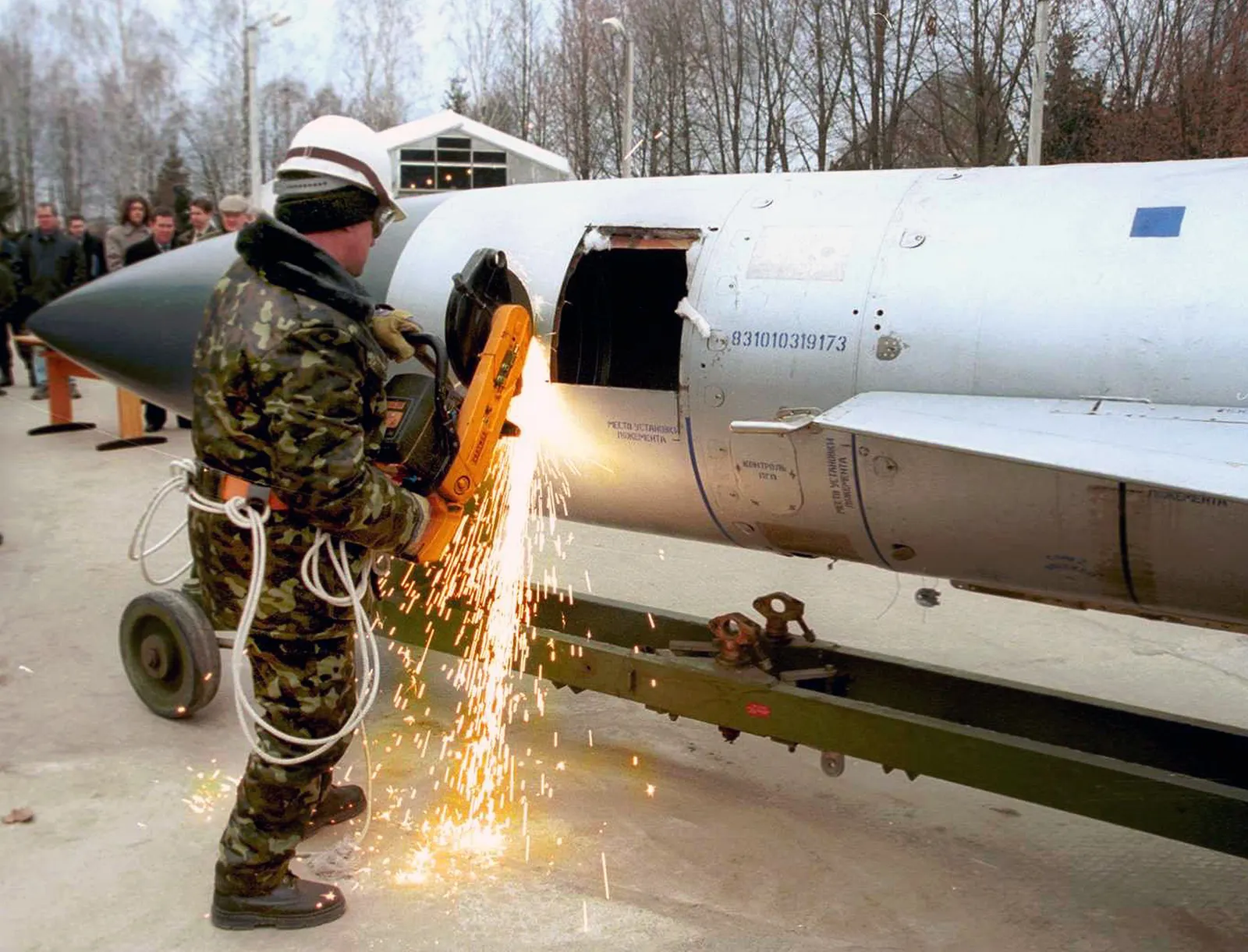
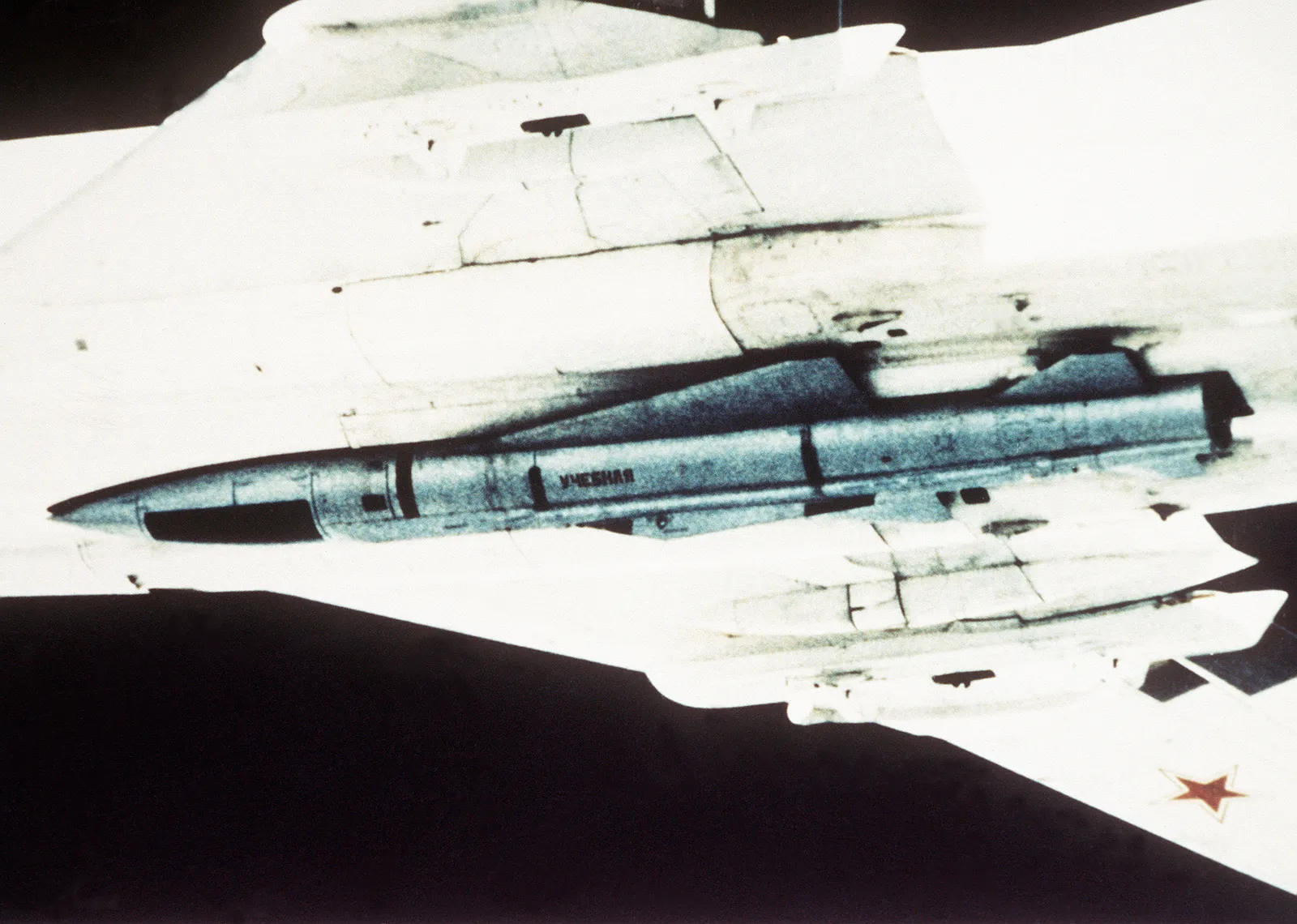
The Kh-22, NATO reporting name AS-4 Kitchen, is a large Soviet air-launched cruise missile designed by Raduga for attacks on carrier groups, radar-contrast surface targets, and major fixed targets. Its liquid-propellant rocket motor, supersonic flight profile, and roughly one-ton conventional or nuclear warhead made it a heavy standoff weapon for Tu-22, Tu-22M, and modified Tu-95K-22 bomber variants. Russia has repurposed Kh-22-family missiles for land attack in the 2014 Russia-Ukraine War, where the missile's naval-targeting heritage, large warhead, and high terminal speed have produced severe urban-strike risks and a difficult air-defense problem.

Role in Conflicts

Side
Russia

Russian Tu-22M3 bombers have launched Kh-22-family missiles against Ukraine in repeated long-range strikes. Direct reporting links Kh-22 missiles to the June 2022 Kremenchuk shopping-center attack, the January 2023 Dnipro apartment-block strike, and later Kh-22/Kh-32 salvos; Ukrainian reporting also emphasizes the missile family's heavy warhead, poor suitability for precise land attack, and low interception rate before newer air-defense coverage expanded.

Role details
Strike Profile And Land-Attack Risks

Kh-22 was designed around heavy bomber carriage and large radar-contrast targets, then reused by Russia for land attack in Ukraine. That shift makes several source-backed traits especially important for readers comparing it with newer precision cruise missiles.

AspectSourced contextOperational implication
Original target setRosoboronexport describes Kh-22E as a long-range missile for radar-contrast mobile and stationary targets, and Missilery.info describes anti-ship and surface-target branches.The missile's design logic fits ships and large targets better than precise urban land attack.
Guidance splitFAS and Missilery.info distinguish active-radar, passive-radar, and inertial or autonomous versions.Public strike reporting may identify the Kh-22 family without always resolving the exact seeker package.
Urban-strike hazardUkrinform cited the Ukrainian Air Force commander saying long-range use can produce errors of hundreds of meters, while HRW documented severe civilian harm after the Kremenchuk Kh-22 strike.A heavy warhead plus wide miss distance creates high civilian-risk effects when fired at or near populated places.
Air-defense challengeUkrainska Pravda reported Ukrainian figures of 362 Kh-22/Kh-32 launches and two downed by August 2024, before later reporting noted larger Kh-22/Kh-32 salvos with more intercepts.The family remained difficult to defeat, but later interception reports should be read against changing Ukrainian air-defense capacity.

Source labels: Rosoboronexport Aerospace Systems Catalogue 2003; X-22 Cruise Missile (K-22 Complex); Raduga Kh-22 (AS-4 Kitchen); Air Force Commander on Dnipro Kh-22 Strike; Ukraine: Russian Missile Kills Civilians in Shopping Center; Ukrainska Pravda Kh-22/Kh-32 Missile Totals; Ukrinform Jan. 24, 2026 Air Attack Report.
Profile / Specs

Profile

Origin
Soviet Union
Type
Air-launched supersonic anti-ship cruise missile
Service note
Cold War design; still used by Russian long-range aviation
Designer
MKB Raduga
Designed
1958-1960s
Unit cost
Not reliably published
Produced
1960s onward
Number built
At least 1,000 reported by Missilery.info; other estimates are higher
Developed into
Kh-32

Specifications

Launch platform
Tu-22, Tu-22M/Tu-22M3, and Tu-95K-22 bomber variants; Rosoboronexport lists up to three Kh-22E missiles on Tu-22M3E
Length
About 11.3-11.67 m
Diameter
About 0.9-0.92 m
Launch weight
About 5,635-6,000 kg depending on variant
Warhead
High-explosive or shaped-charge conventional warhead around 930-1,000 kg; nuclear variants also existed
Range
Roughly 140-600 km depending on variant and launch profile
Speed
About Mach 3.5-4.6 / around 4,000 km/h in published references
Guidance
Inertial/autonomous flight control with active radar, passive radar, or terrain-correction/autonomous variants depending on model
Propulsion
Liquid-propellant rocket motor
Designation Branches

Kh-22 is a family page, so several Kh-22 designations are treated as internal branches rather than separate catalog records. Public references do not always identify the exact branch in operational strike reporting.

DesignationConfigurationSourced distinction
Kh-22M / Kh-22MATu-22M-era anti-ship branchMissilery.info describes the M and MA versions as Tu-22M2 weapons adopted in the mid-1970s; FAS describes Kh-22M as a conventional active-radar anti-ship version.
Kh-22NImproved active-radar branchMissilery.info ties the N branch to the Tu-22M3-era K-22N complex and updated active-radar seeker equipment.
Kh-22NAAutonomous or inertial branchMissilery.info separates autonomous guidance from the active and passive seeker branches in its Tu-22M3-era family description.
Kh-22P / Kh-22NPPassive anti-radar branchFAS and Missilery.info both describe passive or anti-radar Kh-22-family variants for targets associated with air-defense radars or emitters.

Source labels: X-22 Cruise Missile (K-22 Complex); Raduga Kh-22 (AS-4 Kitchen).

Variants

The Kh-22 family used different seeker and guidance packages for anti-ship, area, anti-radar, and later Tu-22M3-era missions; public references often mix Russian X-22 transliteration with Kh-22 English transliteration.

VariantConfigurationDesignation notes
Kh-32, Supersonic air-launched anti-ship and land-attack cruise missile, ArtilleryKh-32Kh-22-derived Russian modernization

Missilery.info describes Kh-32 as a further development of the Kh-22 family with updated equipment and Tu-22M3 carriage; the catalog has a separate public Kh-32 record because it appears as a distinct modern missile in Ukraine-war reporting.

Sources: X-22 Cruise Missile (K-22 Complex)

Carrier Aircraft

Kh-22 was built around bomber carriage rather than ground launchers or tactical aircraft; the public record most clearly ties it to Tu-22, Tu-22M, and modified Tu-95K-22 aircraft.

CarrierCarrier typeCarriage evidence
Tu-22M, Long-range supersonic bomber and missile carrier, Aircraft & UAVsTu-22MLong-range bomber and missile carrier

Rosoboronexport's Tu-22M3E entry says the aircraft can carry up to three Kh-22E missiles, while FAS and Missilery.info identify Tu-22M/Tu-22M3 aircraft as central Kh-22 carriers.

Sources: Rosoboronexport Aerospace Systems Catalogue 2003, Raduga Kh-22 (AS-4 Kitchen), X-22 Cruise Missile (K-22 Complex)

Tu-95, Strategic turboprop bomber and cruise-missile carrier, Aircraft & UAVsTu-95Strategic bomber carrier family

FAS and Missilery.info identify the modified Tu-95K-22 as a Kh-22 carrier path, with Missilery.info describing Tu-95K-22 carriage under the fuselage and wings.

Sources: Raduga Kh-22 (AS-4 Kitchen), X-22 Cruise Missile (K-22 Complex)

Timeline

Kh-22 Key Events

  1. K-22 development ordered

    Missilery.info traces K-22 system development to a Soviet Council of Ministers decree and assigns missile development to the Dubna branch that later became Raduga.

    Sources: X-22 Cruise Missile (K-22 Complex)

  2. Initial Kh-22 complex accepted

    The early K-22 complex with Tu-22K carrier aircraft and Kh-22 missile completed state testing and entered long-range aviation service in the late 1960s.

    Sources: X-22 Cruise Missile (K-22 Complex)

  3. Kh-22M and Kh-22MA adopted

    Improved Kh-22M and Kh-22MA versions were adopted for the Tu-22M2 weapon complex, broadening the missile family beyond the original Tu-22K installation.

    Sources: X-22 Cruise Missile (K-22 Complex)

  4. K-22N complex enters Tu-22M3 service

    Missilery.info places adoption of the Tu-22M3-era K-22N complex in 1976, with active, passive, and autonomous guidance branches described for the family.

    Sources: X-22 Cruise Missile (K-22 Complex)

  5. Tu-95K-22 complex adopted

    The Tu-95K-22 modification added a strategic bomber carrier path for the Kh-22 family, although those aircraft were later retired.

    Sources: X-22 Cruise Missile (K-22 Complex)

  6. Kremenchuk shopping-center strike

    Human Rights Watch reported that Ukrainian Air Force command identified Kh-22 missiles fired from Russian aircraft in the Kremenchuk attack, which struck a shopping center and nearby industrial site.

    Sources: Ukraine: Russian Missile Kills Civilians in Shopping Center

  7. Dnipro apartment-block strike

    Ukrinform relayed Ukrainian Air Force commander Mykola Oleshchuk's statement that a Kh-22 launched by Russian Tu-22M3 bombers hit an apartment block in Dnipro.

    Sources: Air Force Commander on Dnipro Kh-22 Strike

  8. Ukraine reports low Kh-22/Kh-32 interception rate

    Ukrainska Pravda, citing Oleksandr Syrskyi's reported figures, stated that Russia had launched 362 Kh-22 and Kh-32 missiles from Tu-22M3 bombers and that two had been shot down.

    Sources: Ukrainska Pravda Kh-22/Kh-32 Missile Totals

  9. Kh-22/Kh-32 salvo against Kyiv region

    Ukrinform reported a combined Russian strike that included 12 Kh-22/Kh-32 missiles from Bryansk-region airspace, with Ukrainian forces reporting nine Kh-22/Kh-32 missiles downed.

    Sources: Ukrinform Jan. 24, 2026 Air Attack Report

Media
Related Weapon Systems
Kh-32, Supersonic air-launched anti-ship and land-attack cruise missile, ArtilleryArtilleryKh-32Supersonic air-launched anti-ship and land-attack cruise missileThe Kh-32 is a Russian supersonic air-launched cruise missile derived from the Kh-22 family for long-range attacks on ships and fixed ground targets. Built by the Raduga design bureau within Russia's Tactical Missiles Corporation network, it is carried by Tu-22M3-series bombers and combines a high-altitude flight profile, inertial navigation, and terminal radar homing. Russia has used the Kh-22/Kh-32 family against Ukraine, where its speed, steep terminal profile, and anti-ship design heritage make interception difficult and raise accuracy risks when fired at urban land targets.
Kh-69, Air-launched land-attack cruise missile, MunitionsMunitionsKh-69Air-launched land-attack cruise missileThe Kh-69 is a Russian subsonic air-launched land-attack cruise missile developed by Raduga within Tactical Missiles Corporation for precision strikes against fixed targets. Its compact square-section body and folding surfaces are tied to tactical-aircraft carriage, including Su-34, Su-35, and Su-57 launch contexts, while its guidance stack combines inertial, satellite, terrain-height, and electro-optical terminal inputs. The missile has been documented in Russian strikes during the 2014 Russia-Ukraine War, including the April 2024 destruction of the Trypilska thermal power plant.
Kh-59, Air-launched cruise missile family, MunitionsMunitionsKh-59Air-launched cruise missile familyThe Kh-59 Ovod is a Soviet/Russian air-launched cruise missile family developed by Raduga for tactical standoff strike from combat aircraft. The family spans the original TV-guided Kh-59, turbojet-powered Kh-59M/ME, active-radar Kh-59MK anti-ship missile, satellite-guided Kh-59MK2 land-attack missile, and Kh-59MKM penetrator variant. Russia has used Kh-59-series missiles during the 2014 Russia-Ukraine War, and open sources separately describe caveated Kh-59MK2 combat-test reporting from Syria.
Tu-95, Strategic turboprop bomber and cruise-missile carrier, Aircraft & UAVsAircraft & UAVsTu-95Strategic turboprop bomber and cruise-missile carrierThe Tupolev Tu-95 is a Soviet-designed four-engine turboprop strategic bomber family whose Tu-95MS and Tu-95MSM missile-carrier variants remain part of Russia's long-range aviation force. UAC traces the Bear's role from early nuclear missile carriage to the Tu-95MS cruise-missile carrier, while FAS and conflict reporting document its continuing use for standoff Kh-55/Kh-555 and Kh-101/Kh-102 strike missions in Syria and Ukraine.

Sources