Munitions

Kh-55/Kh-555

Also known as
  • AS-15 Kent
  • Kh-55
  • Kh-55SM
  • Kh-555
  • Kh-55 Granat
  • RKV-500

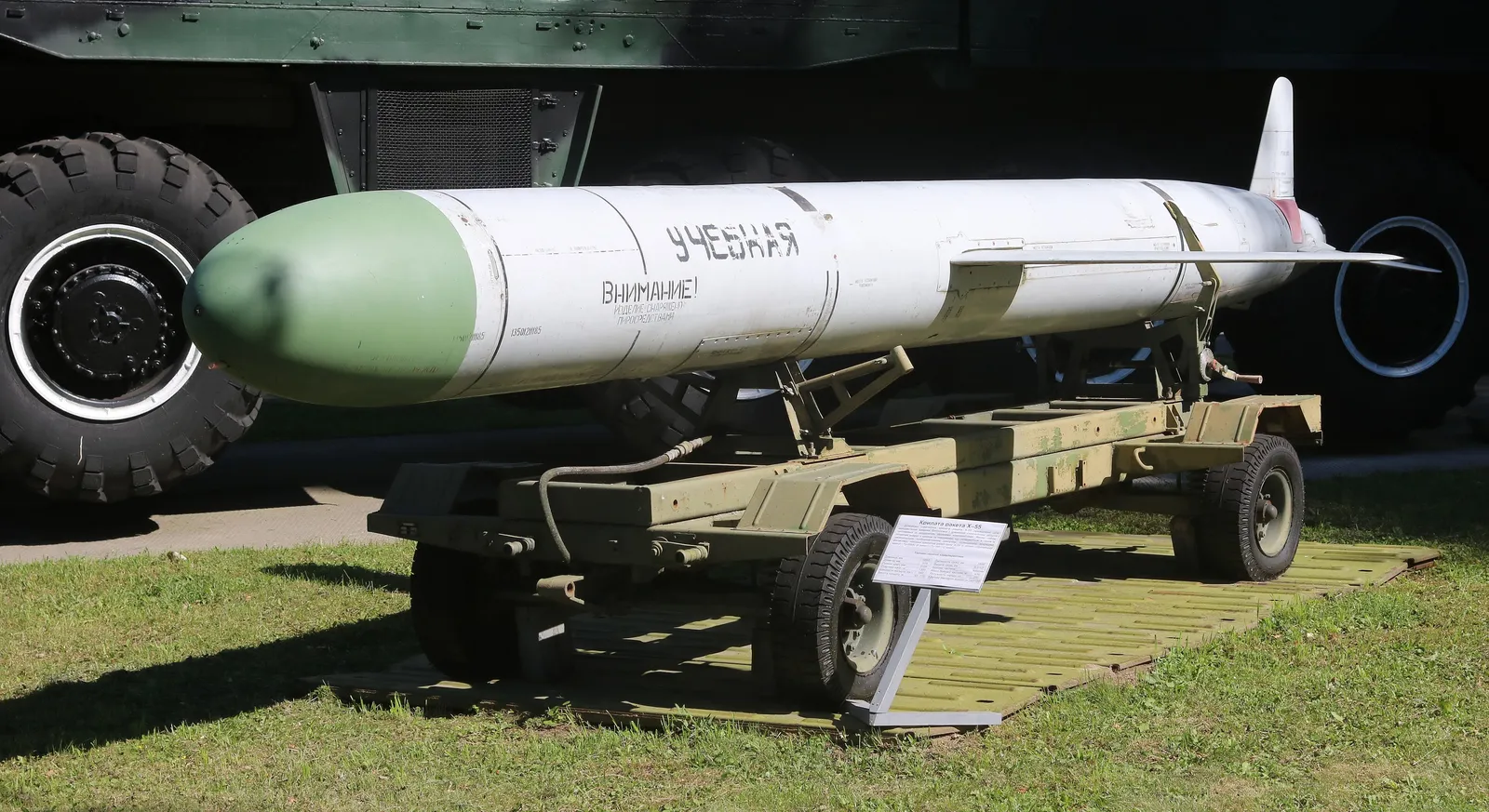
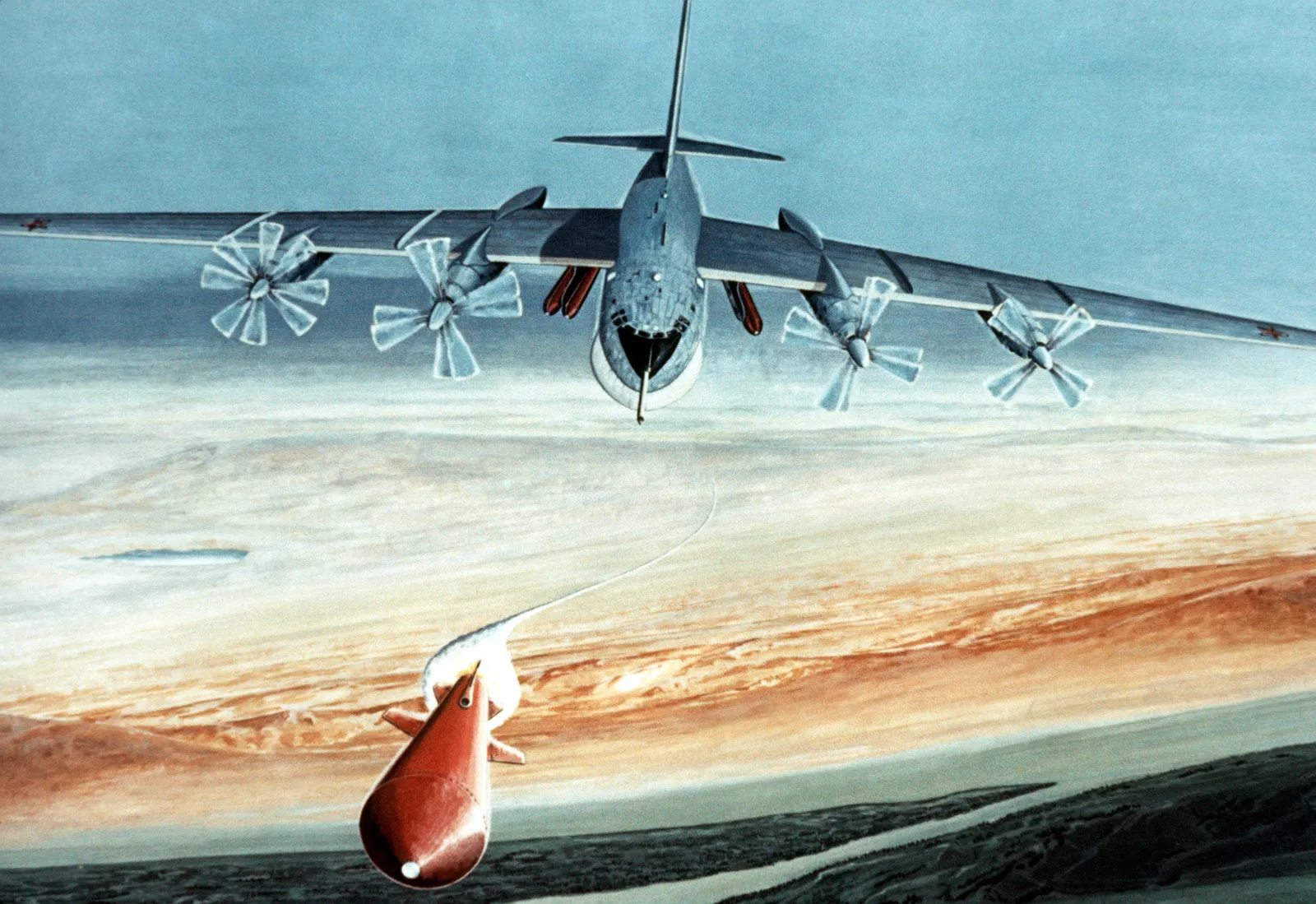
The Kh-55/Kh-555 family is a Soviet-designed, Raduga-built air-launched cruise missile line used by Soviet and Russian strategic aviation. The original Kh-55 and Kh-55SM were nuclear-armed standoff weapons, while the Kh-555 is a conventional derivative with improved accuracy and reported range up to about 3,500 km. Russian Tu-95MS and Tu-160 bombers have used the family in long-range strike packages in Ukraine and Syria.

Role in Conflicts

Side
Russia

Russian forces have used Kh-101/Kh-555/Kh-55 air-launched cruise missiles from strategic bombers in long-range strike packages against Ukrainian energy, infrastructure, industrial, and military targets, with Ukrainian reporting continuing to identify the family in 2026 attacks.

Role details
Profile / Specs

Profile

Origin
Soviet Union / Russia
Type
Air-launched subsonic cruise missile family
Service note
Entered service in the 1980s; Kh-555 conventional variant fielded in the 2000s and used during the 2014 Russia-Ukraine War
Designer
Raduga Design Bureau
Designed
Development began in 1971
Produced
1980s onward

Specifications

Class
Air-launched subsonic cruise missile
Launch platform
Tu-95MS, Tu-142M, and Tu-160 strategic bombers
Length
6.04 m for Kh-55
Diameter
0.514 m for Kh-55
Launch weight
About 1,210 kg for Kh-55
Range
About 2,500 km for Kh-55; up to about 3,500 km reported for Kh-555
Warhead
Kh-55 nuclear warhead; Kh-555 conventional high-explosive, penetrating, or submunitions warhead
Guidance
Inertial navigation with terrain contour matching
Propulsion
Turbofan
Cruise altitude
About 40-110 m
Carrier Aircraft

Open missile references identify Russian strategic bombers as the carrier aircraft for the Kh-55/Kh-555 family.

CarrierCarrier typeCarriage evidence
Tu-95, Strategic turboprop bomber and cruise-missile carrier, Aircraft & UAVsTu-95Strategic bomber and cruise-missile carrier

CSIS lists Tu-95MS variants among aircraft that can carry Kh-55 and Kh-555 missiles, including Tu-95MS6 and Tu-95MS16 carriage configurations.

Sources: Kh-55 (AS-15)

Tu-160, Strategic supersonic bomber and cruise-missile carrier, Aircraft & UAVsTu-160Strategic supersonic bomber and cruise-missile carrier

CSIS lists the Tu-160 Blackjack among aircraft that can carry Kh-55 and Kh-555 missiles, and Russian Strategic Nuclear Forces documents Tu-160 participation in the November 2015 Syria strike series.

Sources: Kh-55 (AS-15), Tu-95MS and Tu-160 strategic bombers used in Syria strikes

Configuration Notes

The Kh-55/Kh-555 family covers several closely related air-launched cruise missiles whose public conflict reporting often appears as mixed Kh-101/Kh-555/Kh-55 launch packages rather than as single-variant strike accounts.

TopicDocumented contextPrimary support
Designation splitThe original Kh-55 and Kh-55SM are nuclear standoff missiles; the Kh-555 is the conventional derivative used in Russian long-range aviation strike reporting.CSIS Missile Threat; Russian Strategic Nuclear Forces
Carrier aircraftCSIS lists Tu-95MS, Tu-142M, and Tu-160 bomber variants as launch platforms for the family.CSIS Missile Threat
Ukraine identification limitsUkrainian and NGO munition references sometimes group Kh-55, Kh-55SM, Kh-555, and modified or reassembled examples together, so conflict notes use the family grouping when reports do the same.Ukraine Ministry of Defence; Open Source Munitions Portal
Timeline

Kh-55/Kh-555 Key Events

  1. Raduga development begins

    CSIS traces Soviet development of the air-launched Kh-55 cruise missile family to work that began in 1971.

    Sources: Kh-55 (AS-15)

  2. Kh-55 enters service

    CSIS lists the Kh-55 as entering service in 1984, giving Soviet long-range aviation a strategic air-launched cruise missile.

    Sources: Kh-55 (AS-15)

  3. Kh-555 accepted for service

    Russian Strategic Nuclear Forces reported that the conventional Kh-555 derivative was accepted for service in 2004 after earlier tests.

    Sources: Test of a Kh-555 cruise missile

  4. Kh-555 used in Syria strikes

    Russian long-range aviation used Kh-555 cruise missiles from strategic bombers during the November 2015 Syria strike series.

    Sources: Tu-95MS and Tu-160 strategic bombers used in Syria strikes, Why the U.S. Should Be Paying Attention to Russia's Latest Strikes in Syria

  5. Mixed missile attack on Ukraine

    Ukrainian reporting cited Tu-95MS bombers firing Kh-101/Kh-555/Kh-55 cruise missiles during Russia's September 21, 2023 overnight attack.

    Sources: Day 575: Ukraine's air defenses destroy 36 of 43 missiles that Russia launched on Ukraine overnight

  6. Ukraine reports continuing Kh-55-family launches

    Ukraine's Ministry of Defence said its air defenses had intercepted Kh-101, Kh-55, and Kh-555 cruise missiles launched by Russia against Ukraine since the beginning of 2026.

    Sources: Russia modified Kh-101 missiles four times

Media
Related Weapon Systems
Kh-59, Air-launched cruise missile family, MunitionsMunitionsKh-59Air-launched cruise missile familyThe Kh-59 Ovod is a Soviet/Russian air-launched cruise missile family developed by Raduga for tactical standoff strike from combat aircraft. The family spans the original TV-guided Kh-59, turbojet-powered Kh-59M/ME, active-radar Kh-59MK anti-ship missile, satellite-guided Kh-59MK2 land-attack missile, and Kh-59MKM penetrator variant. Russia has used Kh-59-series missiles during the 2014 Russia-Ukraine War, and open sources separately describe caveated Kh-59MK2 combat-test reporting from Syria.
Tu-95, Strategic turboprop bomber and cruise-missile carrier, Aircraft & UAVsAircraft & UAVsTu-95Strategic turboprop bomber and cruise-missile carrierThe Tupolev Tu-95 is a Soviet-designed four-engine turboprop strategic bomber family whose Tu-95MS and Tu-95MSM missile-carrier variants remain part of Russia's long-range aviation force. UAC traces the Bear's role from early nuclear missile carriage to the Tu-95MS cruise-missile carrier, while FAS and conflict reporting document its continuing use for standoff Kh-55/Kh-555 and Kh-101/Kh-102 strike missions in Syria and Ukraine.
Kh-32, Supersonic air-launched anti-ship and land-attack cruise missile, ArtilleryArtilleryKh-32Supersonic air-launched anti-ship and land-attack cruise missileThe Kh-32 is a Russian supersonic air-launched cruise missile derived from the Kh-22 family for long-range attacks on ships and fixed ground targets. Built by the Raduga design bureau within Russia's Tactical Missiles Corporation network, it is carried by Tu-22M3-series bombers and combines a high-altitude flight profile, inertial navigation, and terminal radar homing. Russia has used the Kh-22/Kh-32 family against Ukraine, where its speed, steep terminal profile, and anti-ship design heritage make interception difficult and raise accuracy risks when fired at urban land targets.
Kh-22, Air-launched supersonic anti-ship cruise missile, MunitionsMunitionsKh-22Air-launched supersonic anti-ship cruise missileThe Kh-22, NATO reporting name AS-4 Kitchen, is a large Soviet air-launched cruise missile designed by Raduga for attacks on carrier groups, radar-contrast surface targets, and major fixed targets. Its liquid-propellant rocket motor, supersonic flight profile, and roughly one-ton conventional or nuclear warhead made it a heavy standoff weapon for Tu-22, Tu-22M, and modified Tu-95K-22 bomber variants. Russia has repurposed Kh-22-family missiles for land attack in the 2014 Russia-Ukraine War, where the missile's naval-targeting heritage, large warhead, and high terminal speed have produced severe urban-strike risks and a difficult air-defense problem.
Kh-69, Air-launched land-attack cruise missile, MunitionsMunitionsKh-69Air-launched land-attack cruise missileThe Kh-69 is a Russian subsonic air-launched land-attack cruise missile developed by Raduga within Tactical Missiles Corporation for precision strikes against fixed targets. Its compact square-section body and folding surfaces are tied to tactical-aircraft carriage, including Su-34, Su-35, and Su-57 launch contexts, while its guidance stack combines inertial, satellite, terrain-height, and electro-optical terminal inputs. The missile has been documented in Russian strikes during the 2014 Russia-Ukraine War, including the April 2024 destruction of the Trypilska thermal power plant.

Related News

Sources