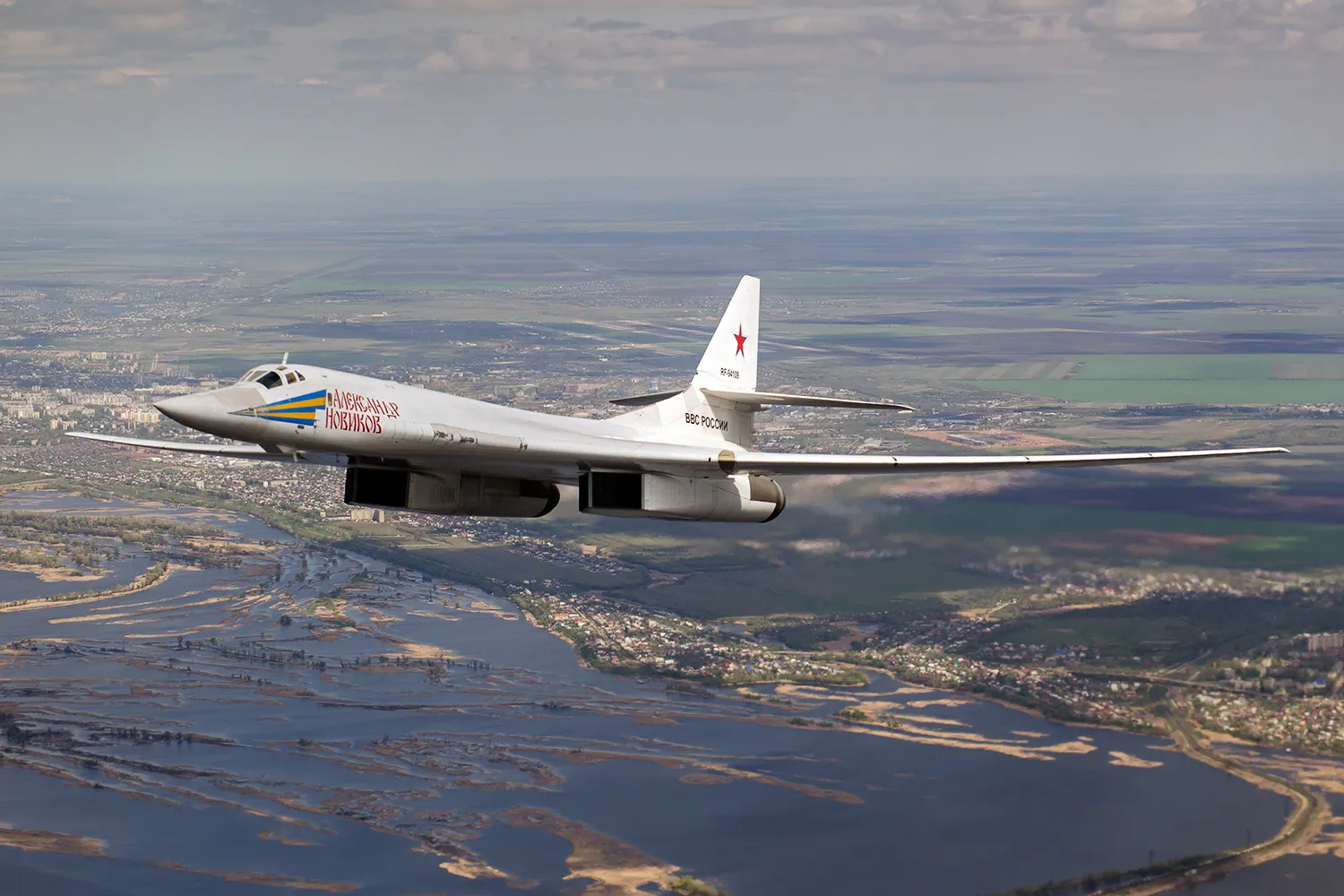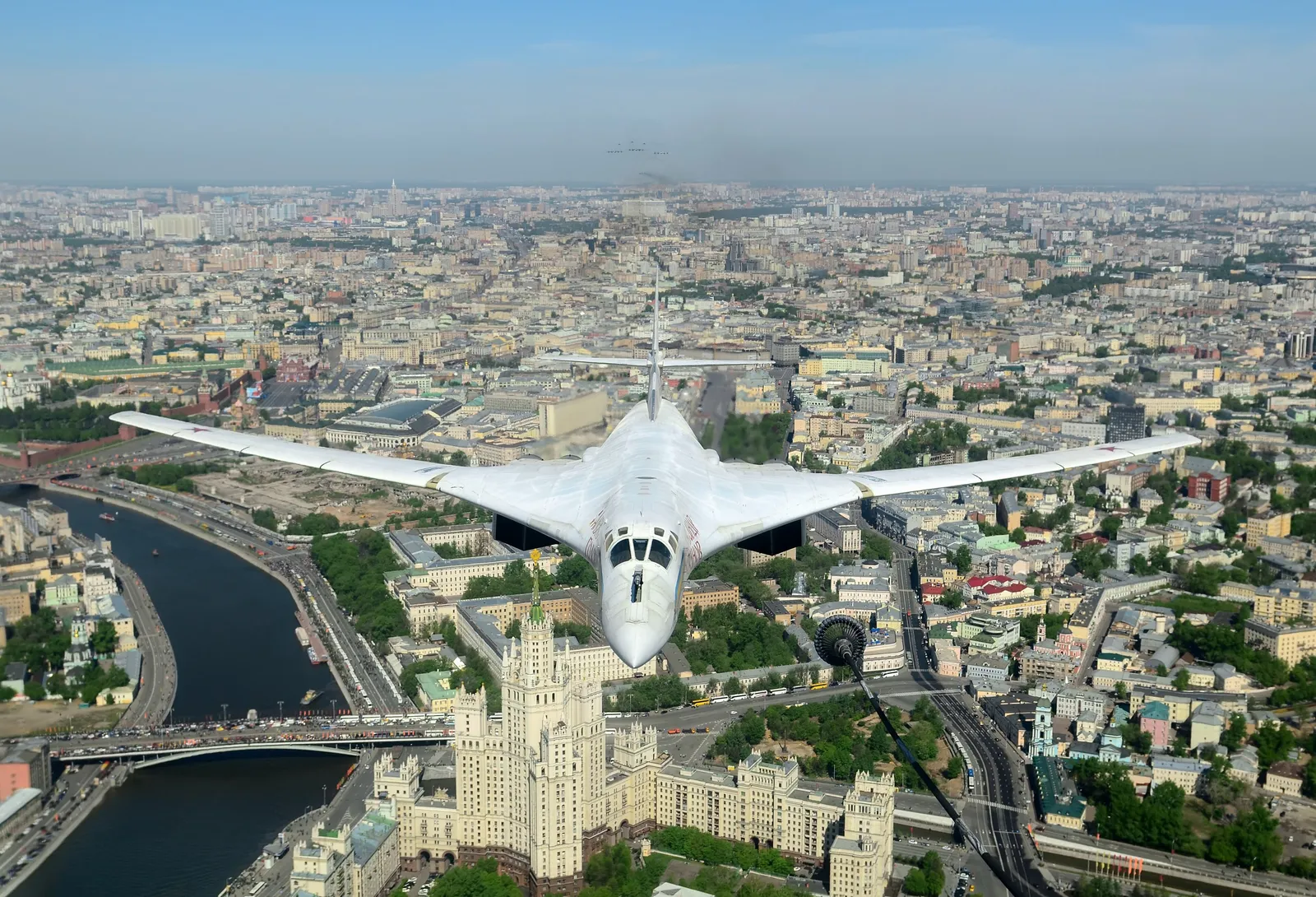
- Side
- Russia

UNITED24 Media reported that Russian Tu-160 bombers launched 36 Kh-101 cruise missiles against targets across Ukraine on June 6, 2025.
Role detailsThe Tupolev Tu-160 is a Soviet-designed variable-geometry strategic bomber built around internal long-range cruise-missile carriage. Known to NATO as Blackjack and nicknamed White Swan, it remains Russia's heaviest combat aircraft and has documented Kh-101 missile-launch use in Syria and Ukraine.
UNITED24 Media reported that Russian Tu-160 bombers launched 36 Kh-101 cruise missiles against targets across Ukraine on June 6, 2025.
Role detailsAviation International News reported a Kh-101 separating from a Tu-160 bomber during Russia's November 2015 strikes in Syria.
Role detailsModernized Tu-160 designations are treated here as same-page designations rather than separate catalog records.
| Designation | Source-backed context | Catalog handling |
|---|---|---|
| Tu-160M | UAC describes the Tu-160M as a deeply modernized strategic missile carrier developed under a broad combat-aircraft modernization program. | Covered by this Tu-160 family page. |
| Tu-160M2 | Jamestown reported Russian plans for Tu-160M2 production using the same basic airframe with new avionics, while noting industrial and engine-production constraints. | Covered as a modernization and resumed-production designation, not a separate weapon record. |
Open sources tie the Tu-160 to long-range cruise missiles carried internally in its rotary launchers.
| Carried item | Item type | Carriage evidence |
|---|---|---|
 | Air-launched cruise missile family | TWZ describes the Tu-160's two internal rotary launchers as able to carry Kh-55-series missiles, while UNITED24 Media reproduced a Defense Express caption tying Kh-55/555 missiles to Tu-160 internal rotary launchers at Engels Air Base. Sources: Russia's Strategic Bomber Trio Poses With Nearly All Its Weapons, Russia Forced to Deploy Rare Tu-160 Bombers Amid Tu-95 Losses in Operation Spider Web |
 | Air-launched cruise missile | CSIS lists the Tu-160 Blackjack as a Kh-101/Kh-102 launch platform, and AIN reported a Kh-101 separating from a Tu-160 bomber during Russia's November 2015 strikes in Syria. Sources: Kh-101 / Kh-102, Latest Russian Strikes on Syria Employ New Cruise Missile |
The Tu-160's strike role is centered on internal cruise-missile carriage rather than external stores.
| Feature | Documented detail | Reader value |
|---|---|---|
| Airframe role | UAC describes the aircraft as an intercontinental strategic missile carrier armed with long-range cruise missiles. | Frames the bomber as a standoff launch platform. |
| Internal bays | TWZ describes two tandem internal bays, each with a rotary launcher for six Kh-55-series or Kh-101/102 missiles. | Explains why carried-munition records are central to the page. |
| Conflict loadout reporting | UNITED24 Media reported Tu-160 Kh-101 launches against Ukraine after losses to Russia's Tu-95 fleet. | Shows how the bomber appears in current conflict reporting. |
UAC dates the first Tu-160 test-aircraft flight to December 18, 1981.
Sources: Tu-160
UAC says tests of the first production aircraft began in October 1984.
Sources: Tu-160
UAC says Tu-160 aircraft reached an active long-range aviation unit in the Ukrainian SSR in April 1987.
Sources: Tu-160
Russian Strategic Nuclear Forces reported Tu-160 and Tu-95MS participation in the November 2015 Syria strikes, with Tu-160 aircraft among the bombers launching long-range cruise missiles.
Sources: Tu-95MS and Tu-160 strategic bombers used in Syria strikes
UNITED24 Media reported that Russia used Tu-160 bombers in a 36-missile Kh-101 strike wave against targets across Ukraine.
Sources: Russia Forced to Deploy Rare Tu-160 Bombers Amid Tu-95 Losses in Operation Spider Web