Munitions

5V28 surface-to-air missile

Also known as
  • 5V28
  • V-880
  • 5V28V
  • 5V28E
  • SA-5 Gammon missile

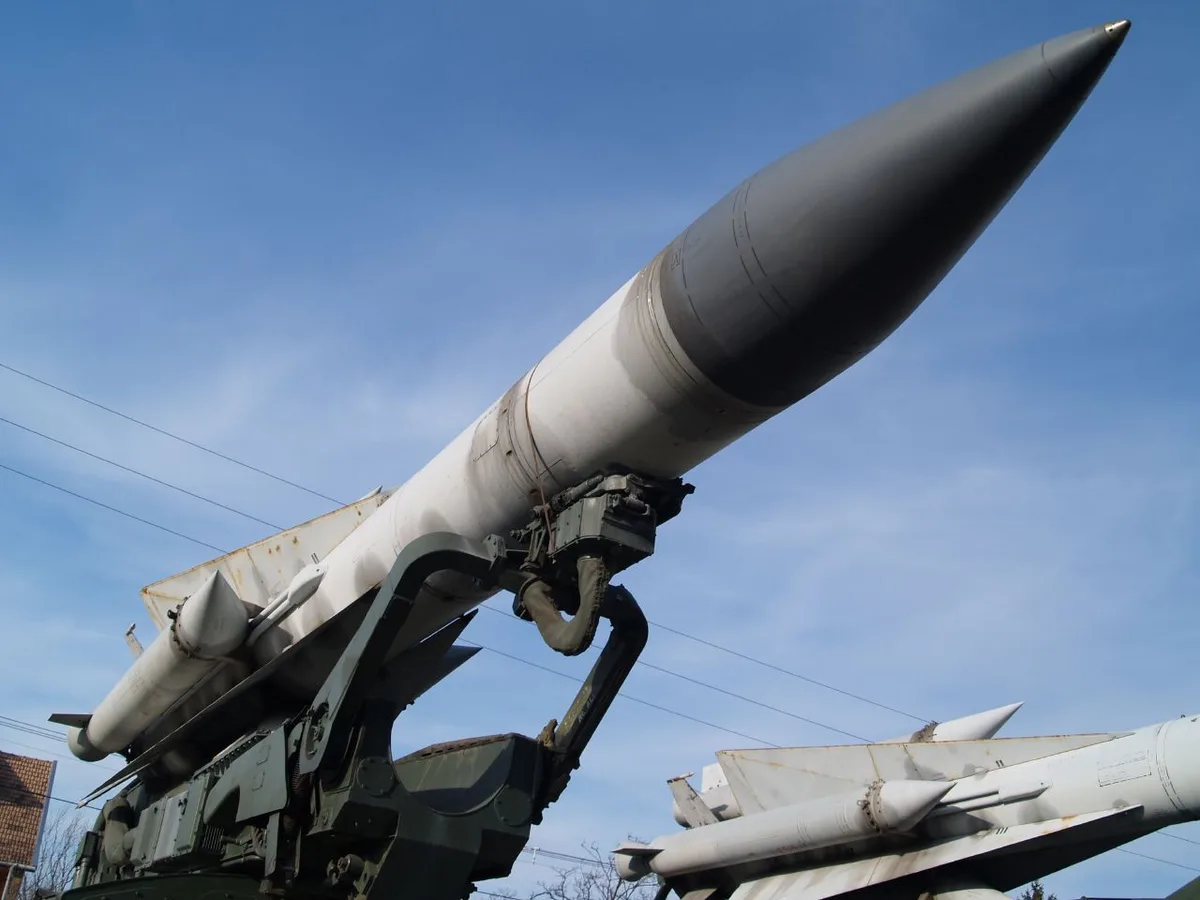
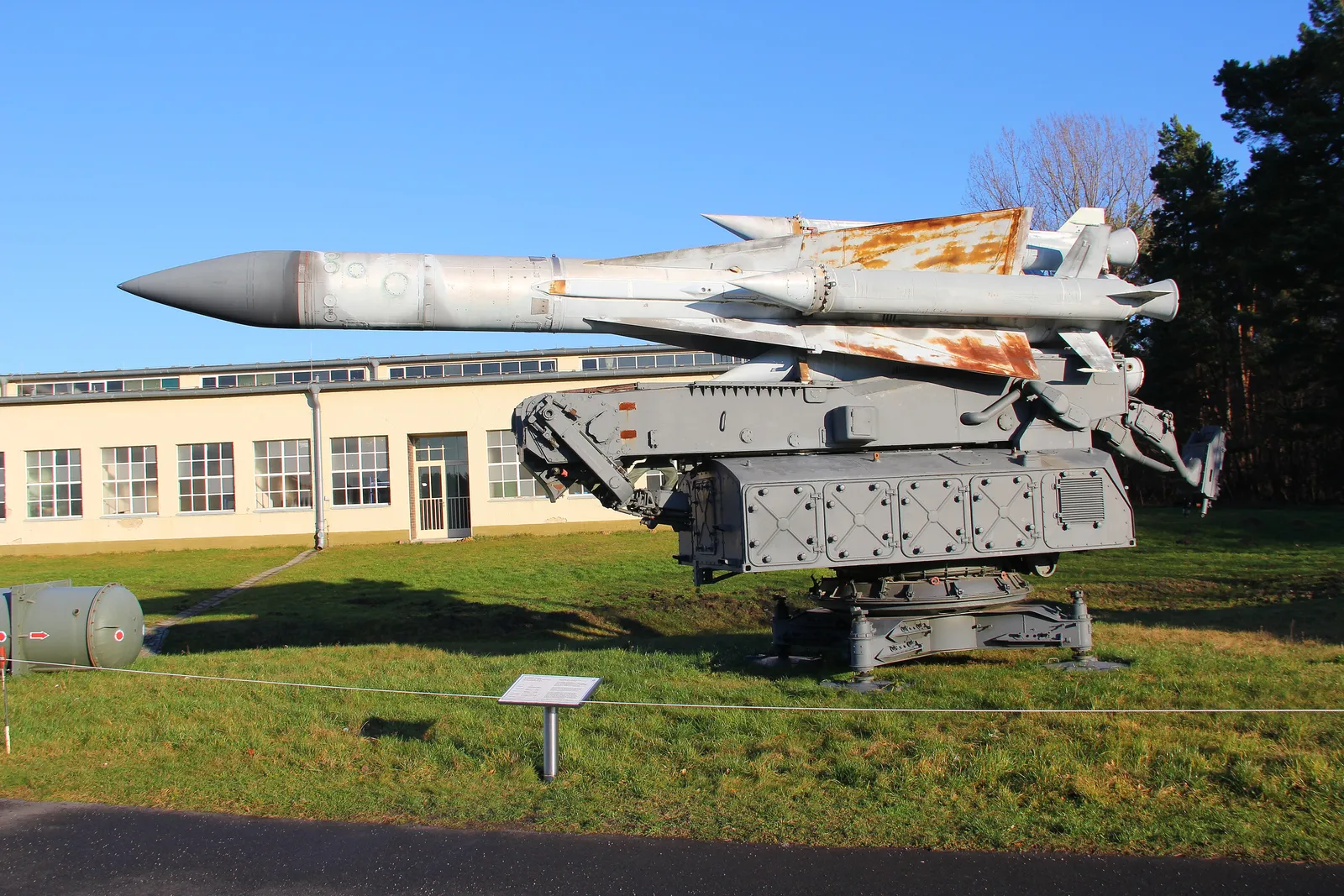
The 5V28 is the large missile used by later S-200 / SA-5 Gammon air-defense complexes. The record documents its S-200 launch relationship, variant designations, liquid-fueled preparation burden, and direct Ukrainian 5V28 launch footage from the full-scale phase of the 2014 Russia-Ukraine War.

Role in Conflicts

Ukrainian military-intelligence footage released in May 2025 showed 5V28-series S-200 missiles being prepared and launched during the full-scale Russian invasion; defense reporting linked the reactivated missile to long-range aircraft engagements and possible adapted strikes against Russian targets.

Role details
Profile / Specs

Profile

Origin
Soviet Union
Type
Long-range surface-to-air missile interceptor
Service note
Cold War missile retained in S-200 inventories
Designer
Fakel Machine-Building Design Bureau
Designed
1960s-1970s
Produced
1970s-1980s as part of later S-200 family production

Specifications

Compatible system
S-200 / SA-5 Gammon
Missile length
About 10.7 m
Diameter
About 0.86 m
Wingspan
About 2.85 m
Launch weight
About 7,000 kg
Warhead
About 217 kg high-explosive fragmentation, with nuclear-capable variants
Guidance
Radar-command midcourse with semi-active radar homing / illumination terminal guidance
Propulsion
Four jettisonable solid boosters plus a liquid-fuel sustainer
Launcher
5P72-series semi-fixed single-rail launcher; 5P72V documented in Ukrainian footage
Published range
About 200 km for baseline 5V28, 200-250 km for Vega-family references, and up to about 300 km for late Dubna-family variants
Designation Notes

S-200 missile references separate the early Angara missile from the later Vega-family 5V28 line. This record groups the 5V28-series interceptor designations used with later S-200 configurations.

5V21 / V-860

Earlier S-200 Angara missile family, not the main subject of this record.

5V28 / V-880

Later Vega-family missile associated with S-200V, S-200M, and S-200VE references.

5V28E / V-880E

Export Vega-E missile designation, documented with a conventional high-explosive warhead.

5V28V and late variants

Improved Dubna-family references use closely related 5V28-series designations for longer-range configurations.

Launch System

The 5V28 is treated as a launched munition in the catalog because it depends on the wider S-200 radar, launcher, preparation, and command system.

LauncherLauncher typeLaunch evidence
S-200 / SA-5 Gammon, Long-range surface-to-air missile system, Air DefenseS-200 / SA-5 GammonLong-range surface-to-air missile system

Later S-200 variants fire 5V28-series missiles from semi-fixed launch equipment; 2025 Ukrainian footage showed 5V28 missiles launched from a standard stationary 5P72V launcher.

Sources: S-200 (SA-5 Gammon), First Detailed Video of Ukraine Using S-200 Missile, Ukraine Demonstrates S-200 Launches

Timeline

5V28 surface-to-air missile Key Events

  1. S-200 family enters Soviet service

    The S-200 family entered service as a long-range Soviet air-defense system; later Vega-family configurations introduced the 5V28 missile.

    Sources: S-200 (SA-5 Gammon)

  2. Ukrainian 5V28 launch footage analyzed

    Defense reporting identified Ukrainian footage of S-200 combat launches as 5V28 missiles fired from standard 5P72V launchers.

    Sources: First Detailed Video of Ukraine Using S-200 Missile, Ukraine Reactivated S-200 In Action, Ukraine Demonstrates S-200 Launches

Media
Related Weapon Systems
S-200 / SA-5 Gammon, Long-range surface-to-air missile system, Air DefenseAir DefenseS-200 / SA-5 GammonLong-range surface-to-air missile systemThe S-200, known to NATO as the SA-5 Gammon, is a Soviet long-range surface-to-air missile system built around large radar-guided interceptors and semi-fixed launch sites. It appears in the catalog through Libyan SA-5 launches during the 1986 Gulf of Sidra confrontation, Syrian strategic air-defense fire during Israeli and coalition strike episodes, and Ukrainian reactivation for very long-range aircraft engagements and possible ground-attack use in the 2014 Russia-Ukraine War.
Kh-22, Air-launched supersonic anti-ship cruise missile, MunitionsMunitionsKh-22Air-launched supersonic anti-ship cruise missileThe Kh-22, NATO reporting name AS-4 Kitchen, is a large Soviet air-launched cruise missile designed by Raduga for attacks on carrier groups, radar-contrast surface targets, and major fixed targets. Its liquid-propellant rocket motor, supersonic flight profile, and roughly one-ton conventional or nuclear warhead made it a heavy standoff weapon for Tu-22, Tu-22M, and modified Tu-95K-22 bomber variants. Russia has repurposed Kh-22-family missiles for land attack in the 2014 Russia-Ukraine War, where the missile's naval-targeting heritage, large warhead, and high terminal speed have produced severe urban-strike risks and a difficult air-defense problem.
Pantsir-S1, Self-propelled short-range surface-to-air missile and anti-aircraft gun system, Air DefenseAir DefensePantsir-S1Self-propelled short-range surface-to-air missile and anti-aircraft gun systemThe Pantsir-S1 is a Russian mobile point-defense system that combines 57E6-family command-guided surface-to-air missiles, twin 30 mm 2A38M automatic cannon, target-acquisition radar, engagement radar, and electro-optical fire control on a wheeled combat vehicle. It is designed to protect military units, air-defense sites, infrastructure, and longer-range air-defense formations against aircraft, helicopters, cruise missiles, precision weapons, and UAVs, with documented or reported conflict relevance in Ukraine, Syria, Libya, Yemen, and Sudan.
Kh-32, Supersonic air-launched anti-ship and land-attack cruise missile, ArtilleryArtilleryKh-32Supersonic air-launched anti-ship and land-attack cruise missileThe Kh-32 is a Russian supersonic air-launched cruise missile derived from the Kh-22 family for long-range attacks on ships and fixed ground targets. Built by the Raduga design bureau within Russia's Tactical Missiles Corporation network, it is carried by Tu-22M3-series bombers and combines a high-altitude flight profile, inertial navigation, and terminal radar homing. Russia has used the Kh-22/Kh-32 family against Ukraine, where its speed, steep terminal profile, and anti-ship design heritage make interception difficult and raise accuracy risks when fired at urban land targets.

Sources