
Egypt reportedly fired three R-17 missiles toward Israeli forces in the Sinai during the final stage of the 1973 war; open-source summaries note that the inaccurate missiles apparently failed to hit their intended targets.
Munitions
R-17 Scud-B ballistic missile
Also known as
- R-17 Elbrus
- R-300 Elbrus
- 8K14
- 9K72 Elbrus
- SS-1C Scud-B
- Scud-B
- R-17E
The R-17 Elbrus, known to NATO as the SS-1C Scud-B, is a Soviet road-mobile, liquid-fueled short-range ballistic missile built for deep strikes with conventional, chemical, or nuclear payloads. Its combat record spans Egyptian launches in 1973, Iranian and Iraqi city strikes in the 1980-1988 war, Libyan missile attempts in 1986 and 2011, South Yemeni strikes in 1994, Armenian strikes on Ganja in 2020, and Houthi-aligned use of inherited Yemeni stocks, illustrating the lasting political and civilian risk of older inaccurate ballistic missiles.
Role in Conflicts


Both belligerents used Scud-B or close Scud-B variants for city and rear-area strikes: Iran fired nearly 100 Scud-B missiles after purchases from Libya, Syria, and North Korea, while Iraq fired hundreds of Scud-Bs and longer-range derivatives at Iran.
- Side
- Libya

After the April 1986 U.S. bombing raid on Libya, Libyan forces fired two conventionally armed Scud-B missiles at U.S. naval facilities on Lampedusa; the missiles missed their target.
South Yemeni forces fired Russian-made Scud missiles from the Aden area toward Sanaa in May 1994; The Nonproliferation Review reported five missiles fired on May 6 and said South Yemen had six Scud-B missiles before unification.
Gaddafi government forces fired a Scud-B missile from the Sirte area toward the Brega front in August 2011, according to later arms-control reporting and U.S. military officials cited by VOA and Al Jazeera; UK Ministry of Defence reporting later said RAF aircraft destroyed three camouflaged Scud launchers near Bani Walid.

Armenian forces fired Scud-B ballistic missiles at Ganja during the 2020 war; Human Rights Watch documented Scud-B remnants from strikes on October 11 and October 17, while CSIS assessed the attacks as part of Armenia's limited ballistic-missile use.

Houthi-aligned forces inherited and fielded former Yemeni R-17E Elbrus/Scud-B missiles after taking Sanaa; later reporting says four surviving prewar R-17 Scud-B or Hwasong-6 missiles were fired into Saudi Arabia, while broader 2015 Scud-launch reporting often does not distinguish the exact variant.
Role detailsProfile / Specs
Profile
- Origin
- Soviet Union
- Built by
- Votkinsk Machine Building Plant
- Type
- Short-range ballistic missile
- Service note
- Cold War design, still retained by some post-Soviet and export operators
- Designer
- Viktor Makeyev
- Designed
- Late 1950s to early 1960s
- Produced
- 1959-1980s production period reported for Scud family missiles
Specifications
- Range
- About 300 km for Scud-B
- Guidance
- Inertial guidance
- Accuracy
- About 450-900 m CEP
- Warhead
- Single conventional, chemical, or nuclear-capable payload; conventional payload about 985 kg
- Propulsion
- Single-stage liquid propellant
- Launch platform
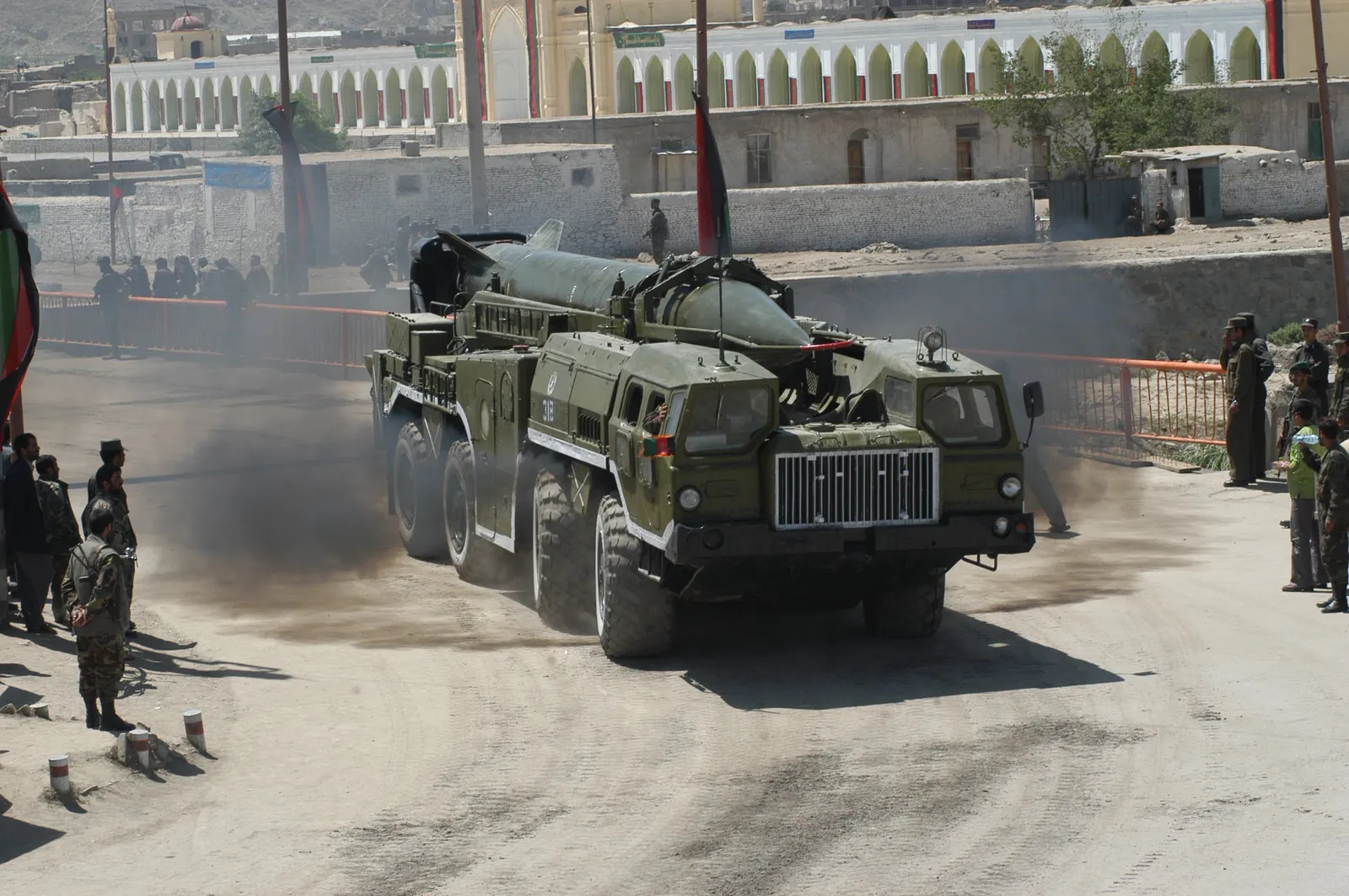
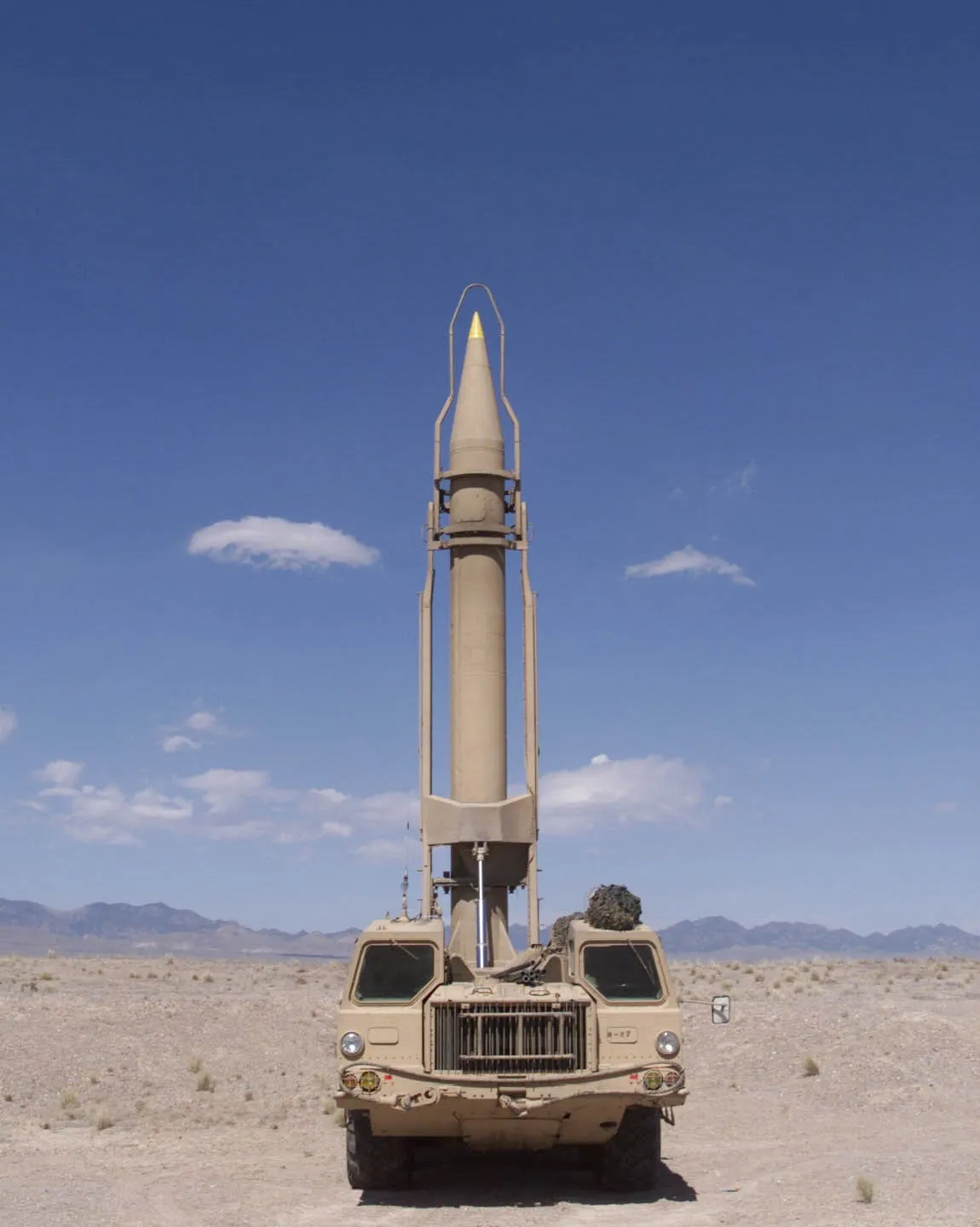
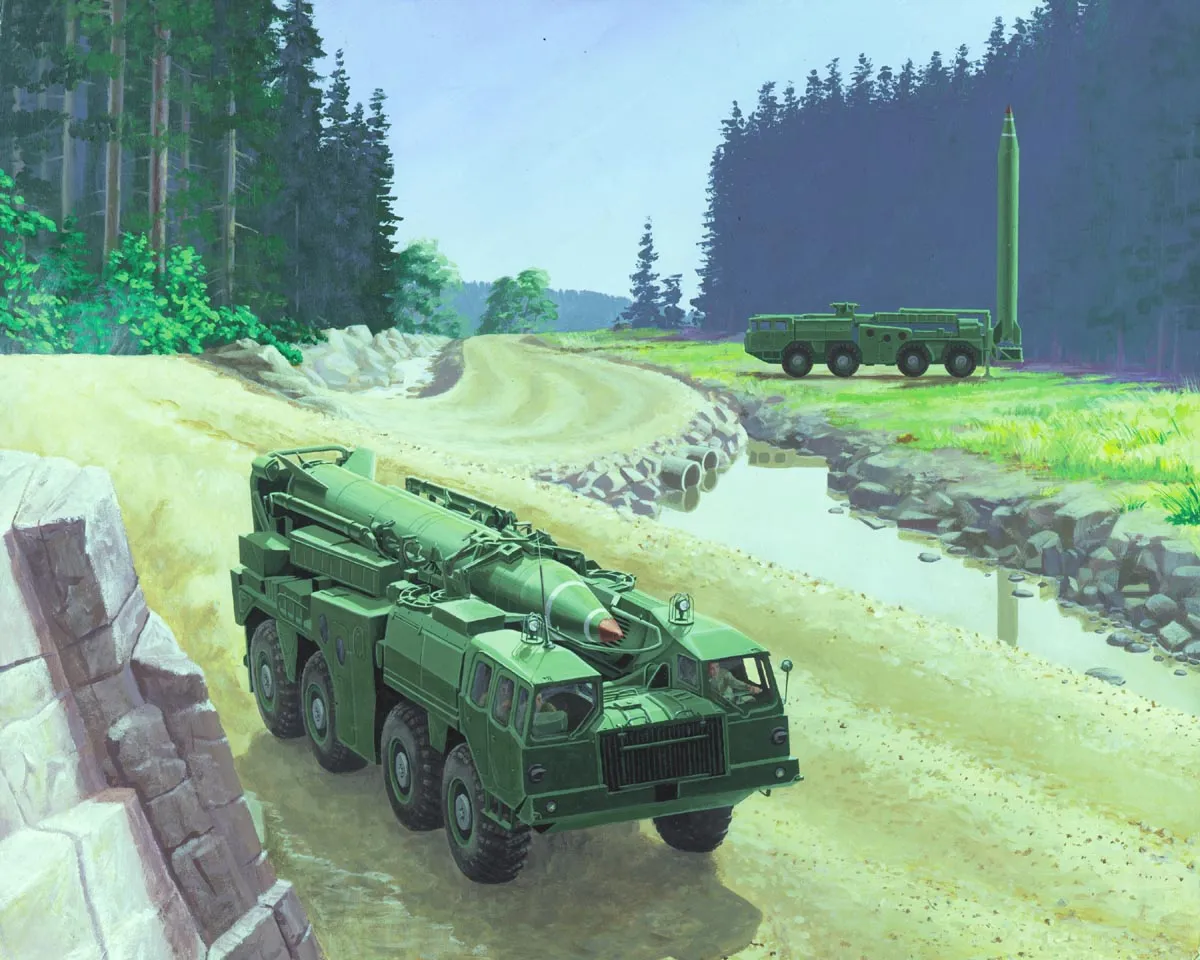
- Road-mobile transporter-erector-launcher
Design Characteristics
The R-17 kept the Scud family's simple single-stage, liquid-fueled layout while improving range and mobility over earlier R-11 systems. Its military value came less from precision than from a road-mobile launch cycle, a large single warhead, and the political effect of being able to hit rear areas.
Launch cycle
CSIS Missile Threat describes a typical Scud-B launch sequence as taking about one hour.
Guidance
Inertial guidance and several-hundred-meter accuracy made it a blunt area-strike weapon rather than a precision missile.
Payload class
Sources describe conventional high explosive, chemical, and nuclear-capable warhead options, with conventional payloads near the one-ton class.
Variants
The Soviet R-17/8K14 was the baseline Scud-B missile; export, foreign-built, and extended-range Scud-family systems kept the same liquid-fueled road-mobile lineage while changing range, payload, or production origin.
| Variant | Configuration | Designation notes |
|---|---|---|
| R-17E export variant | Export Scud-B configuration | Exported R-17E/Scud-B missiles equipped multiple foreign operators, including Afghan and Yemeni stocks discussed in open sources. Sources: R-11 (SS-1) Scud, The Houthi War Machine: From Guerrilla War to State Capture |
 | North Korean Scud-B derivative | CSIS describes the Shahab-1/Hwasong-5 line as a Scud-B variant with Scud-B, R-17, and SS-1C alternate names. Sources: Shahab-1 Scud B Variant |
 | Extended-range Scud-family member | The Scud-C family extended Scud-B reach by reducing payload and trading accuracy, making it adjacent to but distinct from the 300 km R-17 baseline. Sources: R-11 (SS-1) Scud |
Launch Platforms
The missile's battlefield use depended on road-mobile erector-launcher vehicles that could move, erect, fuel, and fire the single-stage liquid-fueled round.
| Launcher | Launcher type | Launch evidence |
|---|---|---|
 | Road-mobile transporter-erector-launcher | Open sources tie R-17/Scud-B operations and Scud-B variants to MAZ launchers; CSIS specifically identifies the Shahab-1/Scud-B variant as launched from the Soviet/Russian MAZ-543P TEL. Sources: R-17 Elbrus RussianSpaceWeb, Shahab-1 Scud B Variant, R-17 Elbrus (SS-1 Scud-B) |
Timeline
R-17 Scud-B ballistic missile Key Events
R-17 development approved
The Soviet government approved R-17 development as a longer-range, more mobile successor in the R-11/Scud line.
Sources: R-17 Elbrus RussianSpaceWeb
Soviet Army adoption
RussianSpaceWeb reports that the R-17 was adopted into Soviet Army armament in March 1962 after testing at Kapustin Yar.
Sources: R-17 Elbrus RussianSpaceWeb, R-11 (SS-1) Scud
First reported combat launches
Egypt reportedly fired three R-17 missiles toward Israeli forces in the Sinai during the Yom Kippur War.
Sources: R-17 Elbrus RussianSpaceWeb
Iran begins Scud-B launches
CSIS says Iran first launched Scud-B missiles against Iraq in March 1985 after acquiring missiles and launch equipment from Libya and Syria.
Sources: Shahab-1 Scud B Variant
Libyan government Scud launch reported
Voice of America reported U.S. official attribution that Gaddafi government forces fired a Scud missile during the Libyan conflict.
Sources: US: Gadhafi Fires First Scud Missile of Libyan Conflict, Gaddafi Forces Fire First Scud Missile
Ganja strike remnants documented
Human Rights Watch documented Scud-B remnants after Armenian missile strikes on Ganja during the 2020 Nagorno-Karabakh war.
Sources: Armenia: Unlawful Rocket, Missile Strikes on Azerbaijan
Media
R-17 Scud-B ballistic missile Videos
R-17 Scud-B ballistic missile Images
Related Weapon Systems


Sources
R-17 Elbrus RussianSpaceWebPublisher: RussianSpaceWeb.com | Note: Supports R-17 development, production, basic specifications, Soviet export context, and direct conflict-use references for the 1973 Yom Kippur War and 1980 Iran-Iraq War. | Accessed: 2026-07-01Shahab-1 Scud B VariantPublisher: Missile Threat, Center for Strategic and International Studies | Note: Supports 1980 Iran-Iraq War direct use: Iranian Scud-B purchases, launch history, and Shahab-1/Scud-B variant context. | Accessed: 2026-07-01Iraq Missile OverviewPublisher: Nuclear Threat Initiative | Note: Supports 1980 Iran-Iraq War direct use: Iraqi Scud-B and Al-Hussein launches against Iran and Scud-B acquisition and modification context. | Accessed: 2026-07-01US: Gadhafi Fires First Scud Missile of Libyan ConflictPublisher: Voice of America | Note: Supports 2011 First Libyan Civil War direct use: U.S. military-official attribution that Libyan government forces fired a Scud missile during the conflict. | Accessed: 2026-07-01How Did Gadhafi Keep His Scud Missiles for So Long?Publisher: WIRED | Note: Supports 1981 U.S.-Libya Confrontations direct use and 2011 First Libyan Civil War direct use: Libyan forces fired Scud-B missiles at Lampedusa after the 1986 U.S. strike and Gaddafi forces fired a Scud-B as the regime collapsed in 2011. | Accessed: 2026-07-01Gaddafi Forces Fire First Scud MissilePublisher: Al Jazeera | Note: Supports 2011 First Libyan Civil War direct use: Scud missile fired from near Sirte toward the Brega front, attributed to Gaddafi forces by a U.S. military official. | Accessed: 2026-07-01Ballistic, Cruise Missile, and Missile Defense Systems DevelopmentsPublisher: The Nonproliferation Review | Note: Supports 1994 Yemeni Civil War direct use: South Yemeni forces fired Scud missiles from Aden toward Sanaa, with South Yemen reported to have held Scud-B missiles before unification. | Accessed: 2026-07-01RAF Destroys Gaddafi Scud Missile LaunchersPublisher: UK Ministry of Defence | Note: Supports 2011 First Libyan Civil War Scud launcher context: RAF aircraft destroyed three camouflaged launchers near Bani Walid after NATO surveillance identified them. | Accessed: 2026-07-01Armenia: Unlawful Rocket, Missile Strikes on AzerbaijanPublisher: Human Rights Watch | Note: Supports 2020 Nagorno-Karabakh Conflict direct use: fired by Armenian forces at Ganja on October 11 and October 17, 2020, with Scud-B remnants documented at impact sites. | Accessed: 2026-06-20The Air and Missile War in Nagorno-KarabakhPublisher: Center for Strategic and International Studies | Note: Supports 2020 Nagorno-Karabakh Conflict direct use: used by Armenia in reported Scud and Tochka attacks on Ganja, and supports conflict missile context. | Accessed: 2026-06-20The Houthi War Machine: From Guerrilla War to State CapturePublisher: Combating Terrorism Center at West Point | Note: Supports 2014 Yemen Civil War direct use context: fielded by Houthi-aligned forces after they inherited R-17E Elbrus (SS-1C Scud-B) missiles during the seizure of Sanaa. | Accessed: 2026-06-20Yemen's Southern HezbollahPublisher: The Washington Institute for Near East Policy | Note: Supports 2014 Yemen Civil War direct use context: fired by Houthi-aligned forces, with four surviving prewar R-17 Scud-B or Hwasong-6 missiles reported fired into Saudi Arabia. | Accessed: 2026-06-20The Missile War in YemenPublisher: Center for Strategic and International Studies | Note: Supports 2014 Yemen Civil War direct use context: fired by Houthi-aligned forces as early Scud missiles from inherited Yemeni missile stocks, while noting variant ambiguity in some 2015 launch reporting. | Accessed: 2026-06-20R-11 (SS-1) ScudPublisher: Missile Threat, Center for Strategic and International Studies | Note: Supports Scud family background, Soviet origin, road-mobile basing, liquid propulsion, warhead classes, and Scud-B specifications. | Accessed: 2026-06-20R-17 Elbrus (SS-1 Scud-B)Publisher: Missile Defense Advocacy Alliance | Note: Supports Scud-B designation, designer/producer attribution, range, guidance, warhead, payload, propellant, and TEL launch context. | Accessed: 2026-06-20What's a Scud?Publisher: Smithsonian Magazine | Note: Supports Scud background, R-17/Scud-B development context, Votkinsk production, proliferation, and inaccuracy context. | Accessed: 2026-06-20R-17 Elbrus Scud missile imagePublisher: Wikimedia Commons | Note: Supports image provenance and CC BY-SA 4.0 licensing for the primary Scud missile setup image. | Accessed: 2026-06-20SCUD 2 imagePublisher: Wikimedia Commons | Note: Supports image provenance and public-domain licensing for a Scud missile in Afghan National Army service. | Accessed: 2026-06-20MAZ-543 TEL front view imagePublisher: Wikimedia Commons | Note: Supports image provenance and U.S. Air Force public-domain licensing for a MAZ-543 TEL used to represent Scud missile launchers. | Accessed: 2026-06-20Scud B by Dennis MosherPublisher: Wikimedia Commons | Note: Supports image provenance and Defense Intelligence Agency public-domain status for a Scud-B reference illustration. | Accessed: 2026-06-20