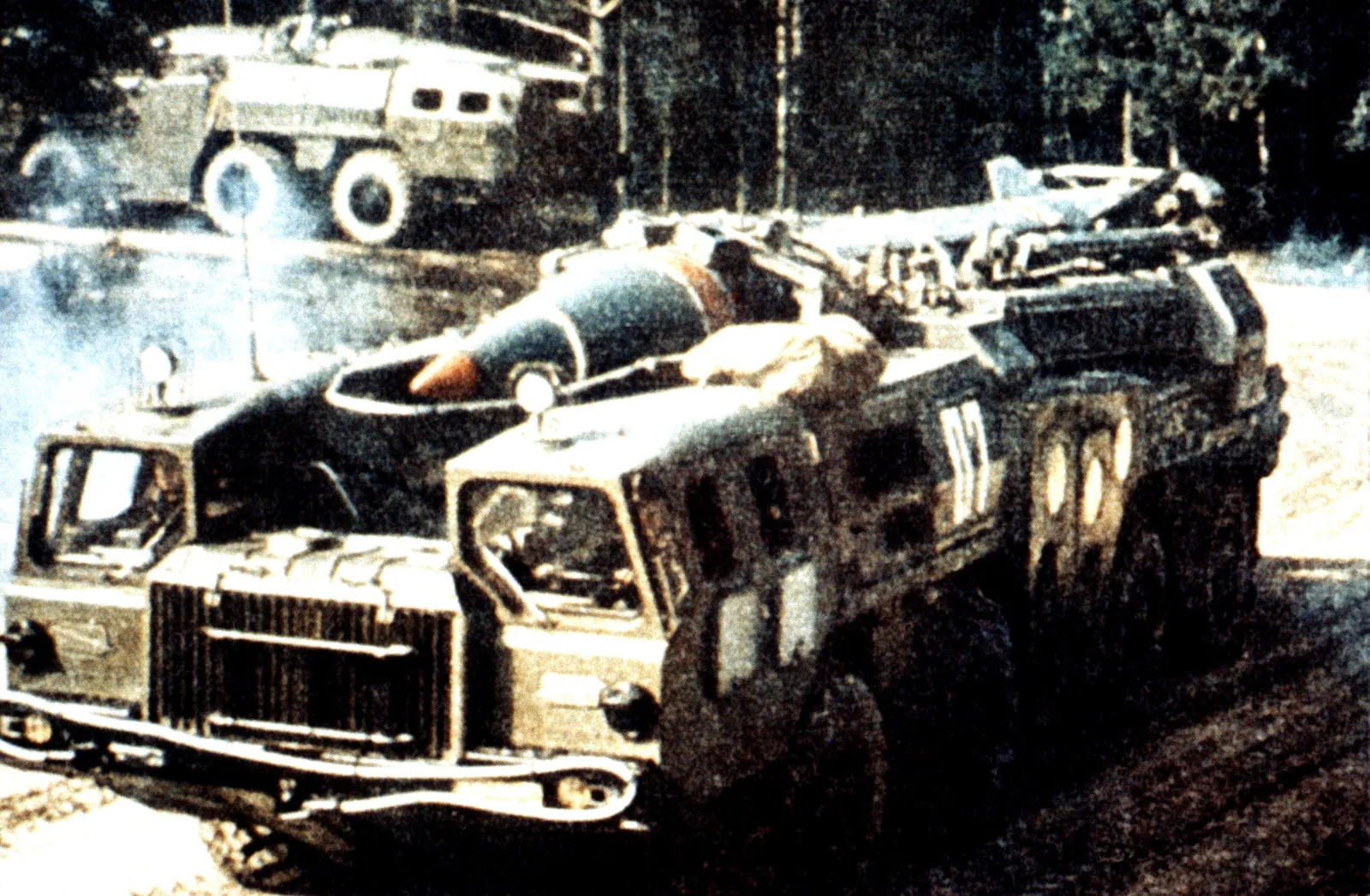
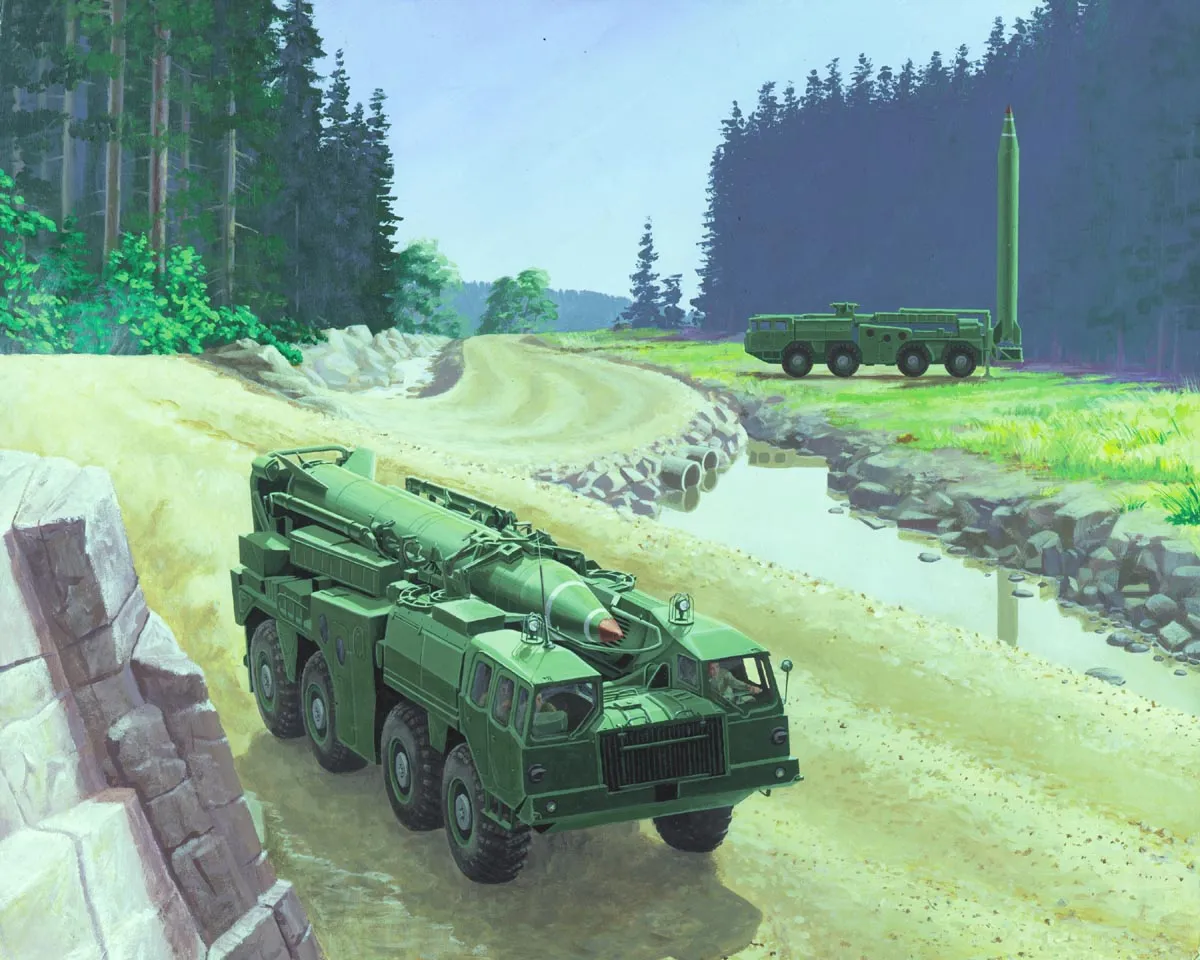
Iran received North Korean Hwasong-5 missiles, known in Iranian service as Shehab-1/Shahab-1, from 1987 into early 1988; CNS reporting says those missiles played a significant role in the 1988 War of the Cities missile campaign.
Hwasong-5 ballistic missile
- Hwasong 5
- Hwaseong-5
- Scud-B variant
- Shehab-1
- Shahab-1
The Hwasong-5 is North Korea's Scud-B-derived short-range ballistic missile, a road-mobile liquid-fueled weapon with roughly 300 km range and a near-1,000 kg payload class. Iran used North Korean-supplied Hwasong-5/Shehab-1 missiles in the 1988 War of the Cities, while Houthi-aligned forces later inherited Yemeni Hwasong-5/6 stocks that were mostly converted into Burkan-series missiles.
Role in Conflicts
Houthi-aligned forces fielded inherited pre-war Yemeni Army Hwasong-5/6 ballistic-missile stocks during the 2014 Yemen Civil War; Oryx assesses most were converted into Burkan missiles and the remaining stocks were depleted.
Role detailsExport and Derivative Path
The Hwasong-5 was more than a North Korean service missile: it became an export baseline for Scud-B-class missile forces and local-production programs.
| Path | Documented context | Why it matters |
|---|---|---|
| Iran | CNS reports Hwasong-5 deliveries to Iran from July 1987 into early 1988, where the missile was known as Shehab-1; CSIS describes Shahab-1 as nearly identical to the Hwasong-5. | Connects North Korean deliveries to Iranian operational use during the 1988 missile campaign. |
| Yemen | Oryx lists Yemeni Hwasong-5/6 stocks inherited by Houthi-aligned forces and assesses most were converted into Burkan missiles. | Shows how inherited Scud-family stocks fed later local conversion programs. |
| Syria | IISS describes North Korean assistance to Syria's Jabal Taqsis production facility for Scud-B/Hwasong-5 and Scud-C/Hwasong-6 technology. | Shows a local-production path for the same missile technology outside North Korea. |
| North Korea | U.S. defense reporting and CSIS place Hwasong-5 production and service in the mid-1980s before the longer-range Hwasong-6 follow-on. | Anchors the development chronology and the later Hwasong-6 family link. |

Profile / Specs
Profile
- Origin
- North Korea; exported examples served in Iran and pre-war Yemeni Army stocks
- Built by
- North Korean defense industry
- Built in
- North Korea
- Type
- Road-mobile short-range ballistic missile
- Service note
- Entered North Korean service in the mid-1980s; documented in 1980 Iran-Iraq War and 2014 Yemen Civil War missile inventories
- Designer
- North Korean missile program, derived from the Soviet R-17/Scud-B
- Designed
- Early 1980s
- Unit cost
- Not publicly established
- Produced
- Mid-1980s to early 1990s
- Number built
- About 300 missiles reported by CSIS/Jane's-derived estimates
- Developed from
- Soviet R-17/SS-1C Scud-B ballistic missile
- Developed into
- Hwasong-6, Shahab-1/Shehab-1, Syrian Golan-1 production, and Yemeni Burkan-series conversions
Specifications
- Range
- About 300 km
- Warhead
- Single warhead, about 985 kg high explosive or submunition payload class
- Propulsion
- Single-stage liquid-fueled rocket motor
- Dimensions
- 10.94 m length and 0.88 m diameter
- Launch weight
- About 5,860 kg
- Guidance
- Inertial guidance
- Accuracy
- About 450 m CEP
- Launch platform
- Road-mobile TEL, including MAZ-543-derived launch vehicles or converted trucks
Variants
The Hwasong-5 sits at the center of several Scud-B-derived export and local-production lines, with later systems trading payload, range, or local production arrangements against the original North Korean baseline.
| Variant | Configuration | Designation notes |
|---|---|---|
| Shahab-1 / Shehab-1 | Iranian Hwasong-5 derivative and local-production designation | CSIS describes Shahab-1 as nearly identical to the Hwasong-5 and developed from North Korean assistance to Iran's Scud-B infrastructure. Sources: Shahab-1 (Scud B-Variant), A History of Ballistic Missile Development in the DPRK |
![]() | Longer-range follow-on | The Hwasong-6 extended the Hwasong-5/Scud-B family by reducing payload to gain additional range. |
![]() | Yemeni conversion lineage | Oryx assesses that most Yemeni Hwasong-5/6 stocks held by Houthi-aligned forces were converted into Burkan-series missiles. Sources: Houthi Drone And Missile Handbook |
| Golan-1 | Syrian local-production line | IISS describes North Korean assistance to Syria's Jabal Taqsis facility for technology tied to the Scud-B/Hwasong-5 and Scud-C/Hwasong-6 lines. Sources: Ballistics after Bashar |
Launch Vehicles
The Hwasong-5 is a road-mobile missile launched from Scud-family transporter-erector-launchers or converted trucks.
| Launcher | Launcher type | Launch evidence |
|---|---|---|
![]() | Transporter-erector-launcher | CSIS identifies the Hwasong-5 as launchable from a North Korean-built copy of the MAZ-543 Scud-B TEL, with converted commercial trucks also used. Sources: Hwasong-5 |
Timeline
Hwasong-5 ballistic missile Key Events
Flight tests begin
North Korea began Hwasong-5 flight testing after reverse-engineering Scud-B missiles obtained through Egyptian channels.
Sources: Hwasong-5, North Korea's Military Threat report
Production and early service
CSIS and U.S. defense reporting place serial production and North Korean service in the mid-1980s, before wider export deliveries.
Sources: Hwasong-5, North Korea's Military Threat report
Iran deliveries start
CNS reporting says Hwasong-5 deliveries to Iran began in July 1987 and continued into early 1988, where the missile was known as Shehab-1.
Sources: A History of Ballistic Missile Development in the DPRK
1980 Iran-Iraq War use
Iranian Hwasong-5/Shehab-1 missiles were used in the second War of the Cities in 1988.
Sources: A History of Ballistic Missile Development in the DPRK
Yemen acquisition reported
Yemen acquired Hwasong-5 missiles before the later collapse and capture of state missile stocks.
Sources: Hwasong-5, Houthis
Houthi-aligned forces inherit stocks
After the Yemen conflict widened, Houthi-aligned forces controlled inherited pre-war Yemeni ballistic-missile stocks that included Hwasong-5/6 systems.
Sources: Houthi Drone And Missile Handbook, Houthis
Media
Hwasong-5 ballistic missile Images
Related Weapon Systems