Munitions

Hwasong-11D tactical ballistic missile

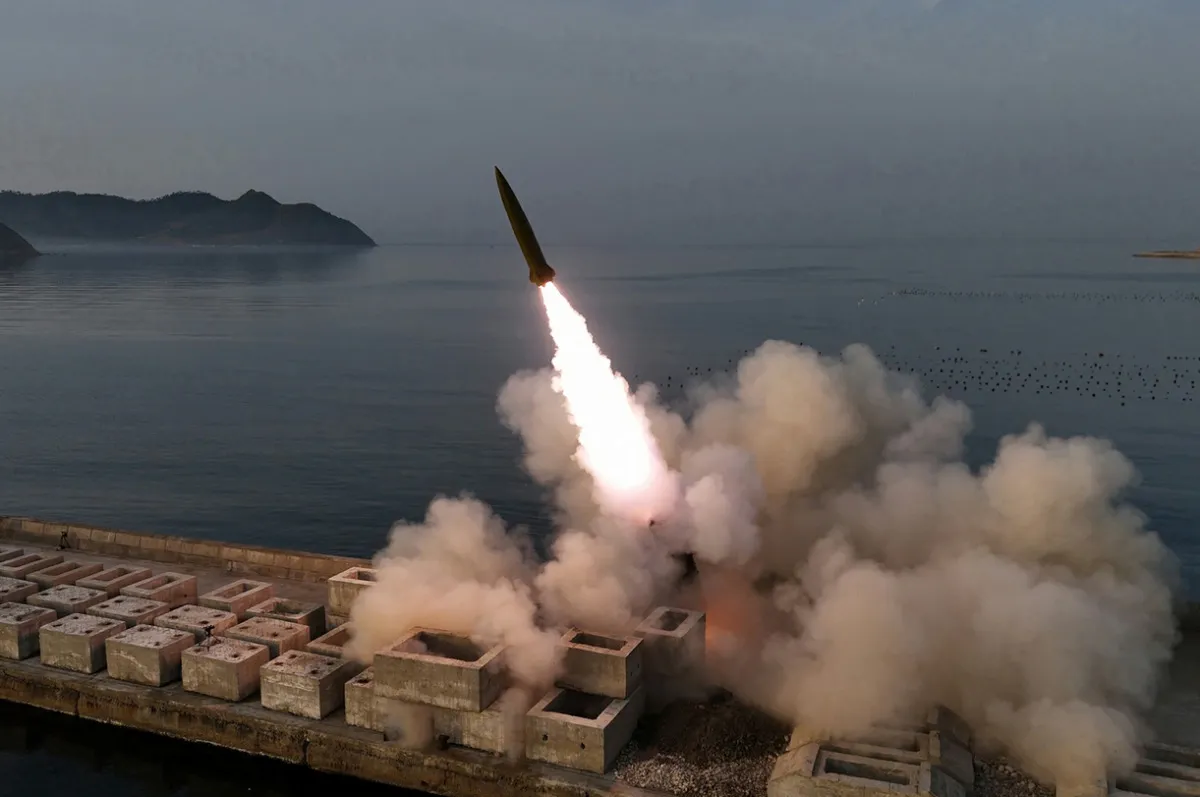
The Hwasong-11D is a North Korean road-mobile, solid-propellant short-range ballistic missile in the Hwasong-11 family. Open reporting ties it to first flight tests in April 2022, a May 2024 public rollout that highlighted 99 launchers and a claimed autonomous navigation upgrade, and April 2026 warhead testing.

Documented Test History

The public record for Hwasong-11D is built around three milestones: an initial 2022 flight test, a larger 2024 rollout with claimed navigation upgrades, and 2026 warhead testing.

DateWhat was reportedWhy it stands out
2022-04First flight tests were reported for Hwasong-11D, with 38 North describing about 110 km range and 25 km apogee.Shows the missile entered the open record before the 2024 publicity cycle.
2024-05North Korea displayed 99 road-mobile launchers and claimed an autonomous navigation system for the improved small solid SRBM.Marks the system's public rollout and launcher display.
2026-04North Korean reporting tied improved Hwasong-11D tests to cluster bomb and fragmentation mine warheads.Highlights the missile's continuing conventional role.

Profile

Origin
North Korea
Built by
North Korean defense industry
Type
Small solid-propellant tactical ballistic missile
Service note
First flight-tested in 2022; public rollouts and guidance claims reported in 2024-2026
Produced
2022 onward; production scale not publicly disclosed

Also Known As

  • HS-11D
  • Hwasong-11D
  • improved Hwasong-11D
ballistic missileshort-range ballistic missilesolid fuelroad-mobileprecision fires

Specifications

Class
Short-range ballistic missile
Propulsion
Single-stage solid propellant
Basing
Road-mobile transporter-erector-launcher system
First reported flight test
April 2022
2022 reported range
About 110 km
2022 reported apogee
About 25 km
2024 reported range
About 300 km
Guidance
North Korea claimed an autonomous navigation upgrade in 2024; 38 North assessed the system likely uses inertial guidance with satellite-navigation updates
Warhead testing
North Korean reporting in April 2026 linked the Hwasong-11D to cluster bomb and fragmentation mine warhead tests

Service And Conflict Use

Service History

In service
North Korean reporting tied the Hwasong-11D to first flight tests in 2022, a May 2024 public rollout with an autonomous-navigation claim, and April 2026 cluster-warhead testing.
Used by
Korean People's Army

Timeline

Hwasong-11D tactical ballistic missile Key Events

  1. First flight tests reported

    38 North described Hwasong-11D as having its first flight tests in April 2022 and said the early launches showed roughly 110 km of range and a 25 km apogee.

    Sources: North Korea Claims “Autonomous” Guidance and Big Deployments of Its New Small Solid SRBM

  2. Public rollout and autonomy claim

    In May 2024 reporting, North Korea claimed a new autonomous navigation system for the missile and publicly displayed 99 road-mobile launchers; 38 North said the reported range had reached about 300 km.

    Sources: North Korea Claims “Autonomous” Guidance and Big Deployments of Its New Small Solid SRBM

  3. Cluster-warhead testing reported

    38 North's April 2026 analysis said North Korean reporting tied Hwasong-11D to cluster bomb and fragmentation mine warhead tests, reinforcing its conventional role.

    Sources: Cluster Warhead Tests Underscore the Important Conventional Role of North Korea’s SRBMs

Related Weapon Systems

North Korean KN-23 / KN-24, Road-mobile short-range ballistic missile family, ArtilleryArtilleryNorth Korean KN-23 / KN-24Road-mobile short-range ballistic missile familyThe KN-23 and KN-24 are North Korean solid-fuel short-range ballistic missiles in the Hwasong-11 family. The KN-23 is a road-mobile, quasi-ballistic SRBM with an estimated maximum range of about 690 km, while the KN-24 is a smaller ATACMS-like tactical ballistic missile assessed at roughly 410 km. North Korean 2026 reporting on cluster-warhead testing adds a conventional submunition role to the family, while recovered debris in Ukraine and U.S., Ukrainian, and independent field reporting tie the missiles to Russian strikes in the Russia-Ukraine War.
Ghadr/Qadr Ballistic Missile, Medium-range ballistic missile, ArtilleryArtilleryGhadr/Qadr Ballistic MissileMedium-range ballistic missileThe Ghadr/Qadr family is an Iranian road-mobile medium- to intermediate-range ballistic missile line derived from the Shahab-3, with open-source references using Ghadr, Qadr, Ghadr-1, Ghadr-110, and Qadr-H labels unevenly across variants. CSIS and Iran Watch describe Ghadr-class missiles as deployed Iranian systems with roughly 1,600-1,950 km range and a payload near 750-800 kg, while Iran's June 2025 claim of Qadr-H/Kheibar missile firing connects the family to the Israel-Iran Conflict as a long-range strike weapon.

Related News

Sources