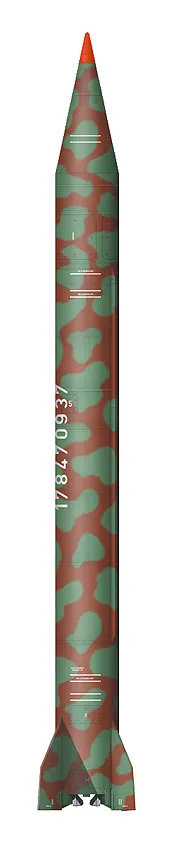

Houthi-aligned forces fired inherited Scud-C/Hwasong-6-type short-range ballistic missiles from Yemen in cross-border attacks on Saudi Arabia; UN investigators reported a first confirmed Scud-C-type launch on June 29, 2015 and assessed several 2016-2017 extended-range launches as locally modified Scud-C/Hwasong-6-type missiles.
Role detailsMunitions
Hwasong-6 ballistic missile
Also known as
- R-17M Elbrus
- SS-1-C
- Scud-C
- Scud C
- Scud Mod C
- Shahab-2
- Shehab-2
- Hwasong 6
- Hwaseong-6
The Hwasong-6 is North Korea's Scud-C variant, a road-mobile, liquid-fueled short-range ballistic missile developed to extend range by trimming payload relative to the earlier Hwasong-5. It entered Korean People's Army service in 1992 and later spread abroad as an export and derivative missile family seen in Iran, Syria, and Yemen.
Role in Conflicts
Related Missile Family
Sources describe Hwasong-6 as a North Korean Scud-C-derived missile and link it to the earlier Hwasong-5 family as a higher-range, lower-payload follow-on.
| Related entry | Relationship | Evidence |
|---|---|---|
 | Earlier family member | CSIS and U.S. defense reporting describe Hwasong-6 as a Scud-C-derived follow-on to the Hwasong-5 design. |
 | Design lineage | CSIS identifies Hwasong-6 as the North Korean-produced Scud-C variant. |
Profile / Specs
Profile
- Origin
- North Korea
- Built by
- North Korean defense industry
- Type
- Short-range ballistic missile
- Service note
- Late Cold War design; documented in 2014 Yemen Civil War missile use
- Designer
- North Korean missile development organizations
- Designed
- 1984
- Unit cost
- Estimated $1.5 million to $2 million per Hwasong-5/6 missile in late-1990s export reporting.
- Produced
- 1989-1991 initial production; full-scale production from 1990 or 1991
- Number built
- Unknown for Hwasong-6 alone; CSIS cites estimates of 200-400 in North Korean inventory and possible exports of as many as 400, while CNS estimated 600-1,000 Hwasong-5/6 missiles combined by the end of 1999.
Specifications
- Range
- About 500 km
- Warhead
- Single 700-770 kg warhead; high-explosive or chemical payloads are reported, while biological and nuclear options are assessed more cautiously in specialist reporting
- Length
- 10.94 m
- Diameter
- 0.88 m
- Launch weight
- About 6,095 kg
- Propulsion
- Single-stage liquid propellant
- Basing
- Road-mobile
- Guidance
- Inertial guidance
- Accuracy
- About 1,000 m CEP
Variants
Sources use Hwasong-6, Scud-C, Shahab-2/Shehab-2, and Syrian Scud-C production language for closely related extended-range Scud-family missiles. Linked rows are limited to existing public catalog records.
| Variant | Configuration | Designation notes |
|---|---|---|
| Family designation / Soviet Scud-C class | CSIS identifies Hwasong-6 as the North Korean-produced variant of the Russian Scud-C. Sources: Hwasong-6 |
| Earlier Scud-B-derived family member | The Hwasong-6 extended the Hwasong-5 line by trading payload for longer range. Sources: Hwasong-6 |
| Shahab-2 / Shehab-2 | Iranian Scud-C/Hwasong-6 designation | CSIS and NTI identify Shahab-2 as Iran's Scud-C/Hwasong-6-related missile; this row remains unlinked because the existing Shehab-2 catalog record is a Hamas UAV. Sources: Hwasong-6, Iranian Ballistic Missile Models, Shahab-2 (Scud C-Variant) |
| Syrian Scud-C / Hwasong-6 production | Syrian production derivative | CSIS reports Syrian receipt and later production capability for Scud-C variants tied to the Hwasong-6 export line. Sources: Hwasong-6 |
Launch Vehicles
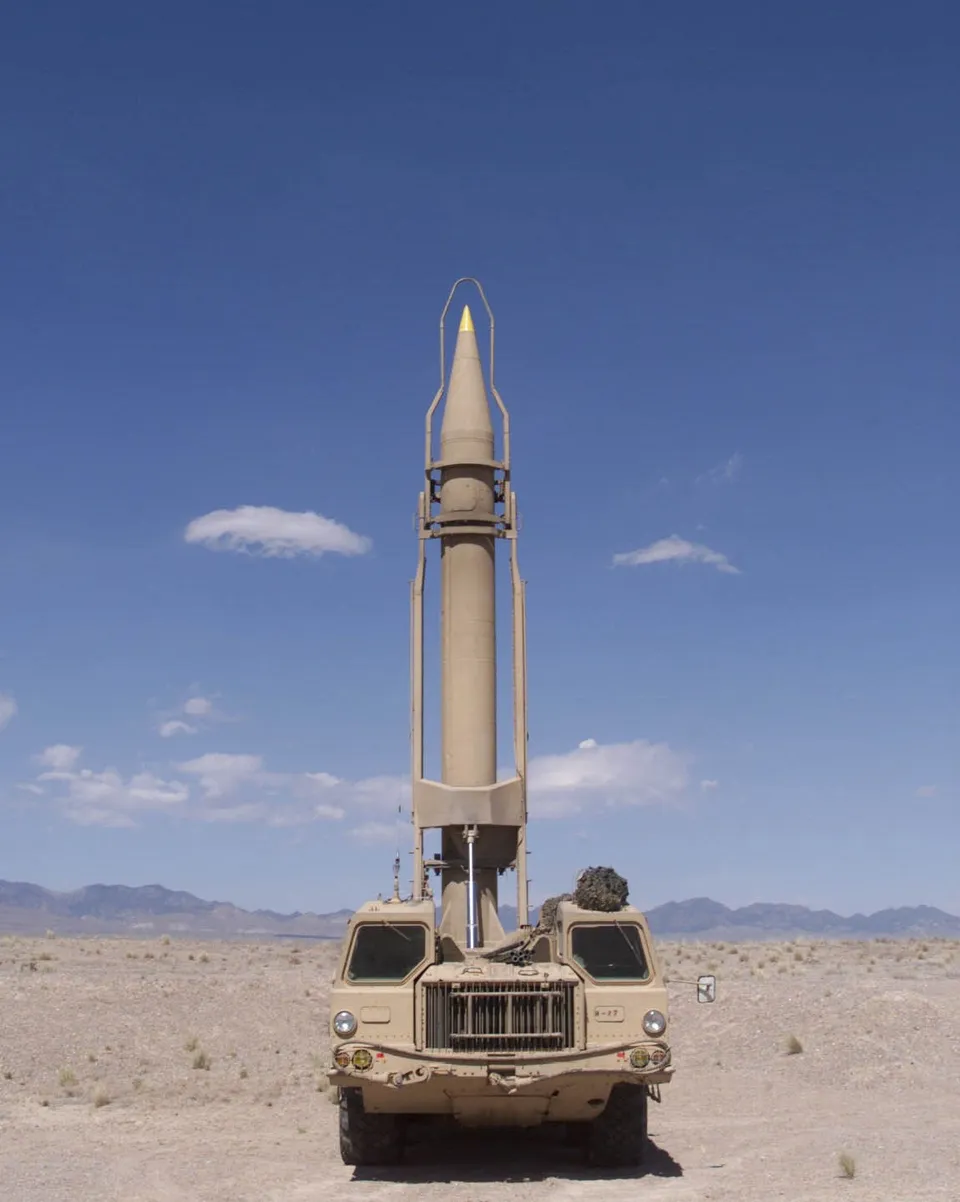
Hwasong-6/Scud-C missiles were fielded with road-mobile transporter-erector-launchers, including MAZ-543-family chassis and DPRK-produced TELs described in proliferation reporting.
| Launcher | Launcher type | Launch evidence |
|---|---|---|
 | Road-mobile transporter-erector-launcher | CNS describes Hwasong-6 missiles moving with associated TELs and a 1991 Shehab 2/Hwasong 6 test from a DPRK-produced TEL; CSIS also documents Hwasong-6 missiles transferred with MAZ 543 TELs. Sources: A History of Ballistic Missile Development in the DPRK, Hwasong-6 |
Timeline
Hwasong-6 ballistic missile Key Events
Development begins
North Korea began Hwasong-6 development as a longer-range Scud-C derivative that reduced payload to extend range.
Sources: North Korea's Military Threat report, Hwasong-6
Initial production starts
U.S. defense reporting places initial production in 1989, before full-scale production began in 1990 or 1991.
Sources: North Korea's Military Threat report, A History of Ballistic Missile Development in the DPRK
First reported test
CNS reporting places the first Hwasong-6 test launch at Musudan-ri in June 1990.
Sources: A History of Ballistic Missile Development in the DPRK
Export users emerge
Iranian and Syrian Hwasong-6 acquisition and test activity began around 1991, establishing the missile's wider Scud-C export family.
Sources: A History of Ballistic Missile Development in the DPRK, Iranian Ballistic Missile Models, Hwasong-6
North Korean service
The missile is reported in service with the DPRK rocket force from 1992.
Sources: North Korea's Military Threat report, Hwasong-6
2014 Yemen Civil War launch
UN investigators assessed a May 2017 attack on Saudi Arabia as a Hwasong-6 derivative fired by Houthi-aligned forces.
Sources: Final report of the Panel of Experts on Yemen, Houthi Terror Scuds Now Threaten Most of Saudi Arabia
Deployment And Test Context
Test site
NTI identifies Tonghae/Musudan-ri as a launch ground used to flight-test Hwasong-5 and Hwasong-6 missiles.
Forward basing
CSIS Beyond Parallel reports that Kumchon-ni was associated with Hwasong-6-class missiles during the early 1990s before later Scud-ER deployment.
Current context
The Bulletin of the Atomic Scientists describes Hwasong-5 and Hwasong-6 as older liquid-fueled Scud-derived SRBMs as North Korea emphasizes newer solid-fuel short-range missiles.
Media
Hwasong-6 ballistic missile Images
Related Weapon Systems


Sources
Hwasong-6Publisher: CSIS Missile Threat | Note: Supports Hwasong-6 background, North Korean origin, Scud-C relationship, possessors, service history, and core missile specifications. | Accessed: 2026-07-04North Korea's Military Threat reportPublisher: U.S. Department of Defense | Note: Supports Hwasong-6 development starting in 1984, production beginning in 1989, full-scale production from 1990 or 1991, and early North Korean service context. | Accessed: 2026-07-04Iranian Ballistic Missile ModelsPublisher: Nuclear Threat Initiative | Note: Supports the Shahab-2 designation and the broader Hwasong-6 / Scud-C export-family context in Iran. | Accessed: 2026-07-04A History of Ballistic Missile Development in the DPRKPublisher: Center for Nonproliferation Studies | Note: Supports Hwasong-6 production-rate, test, warhead-caveat, export, launcher, estimated cost, and combined Hwasong-5/6 production context. | Accessed: 2026-07-04Shahab-2 (Scud C-Variant)Publisher: CSIS Missile Threat | Note: Supports Shahab-2 as Iran's Scud-C variant derived from the Hwasong-6 export line. | Accessed: 2026-07-04The Missile War in YemenPublisher: Center for Strategic and International Studies | Note: Supports 2014 Yemen Civil War direct use: Houthi-aligned forces fired Scud-C/Hwasong-6-class missiles from inherited Yemeni stocks, including the first confirmed Scud-C launch in June 2015 and later modified Scud-C/Hwasong-6-type launches. | Accessed: 2026-07-04Houthi Terror Scuds Now Threaten Most of Saudi ArabiaPublisher: Breaking Defense | Note: Supports 2014 Yemen Civil War direct use: a UN Panel-investigated missile fired by Houthi-aligned forces in May 2017 was assessed as a Hwasong-6 variant. | Accessed: 2026-07-04Final report of the Panel of Experts on YemenPublisher: United Nations Security Council | Note: Supports 2014 Yemen Civil War direct use: the UN Panel of Experts investigated ballistic missiles fired by Houthi-aligned forces, reported confirmed Scud-C-type launches, and assessed several 2016-2017 launches as locally modified Scud-C/Hwasong-6-type missiles. | Accessed: 2026-07-04Hwasong 6 imagePublisher: Wikimedia Commons | Note: Supports image provenance and Creative Commons licensing for the primary Hwasong-6 image. | Accessed: 2026-07-04MAZ-543 TEL for Scud missiles imagePublisher: Wikimedia Commons | Note: Supports image provenance and public-domain status for a Scud-family transporter-erector-launcher reference image. | Accessed: 2026-07-04Undeclared North Korea: The Kumchon-ni Missile Operating BasePublisher: CSIS Beyond Parallel | Note: Supports deployment context for Hwasong-6-class missiles at a North Korean tactical missile belt operating base. | Accessed: 2026-07-04Tonghae Satellite Launching GroundPublisher: Nuclear Threat Initiative | Note: Supports test-site context: Tonghae/Musudan-ri has been used to flight-test Hwasong-5 and Hwasong-6 missiles. | Accessed: 2026-07-04North Korean nuclear weapons, 2024Publisher: Bulletin of the Atomic Scientists | Note: Supports current force-context caveats for Hwasong-5/6 as older liquid-fueled Scud-derived short-range ballistic missiles. | Accessed: 2026-07-04