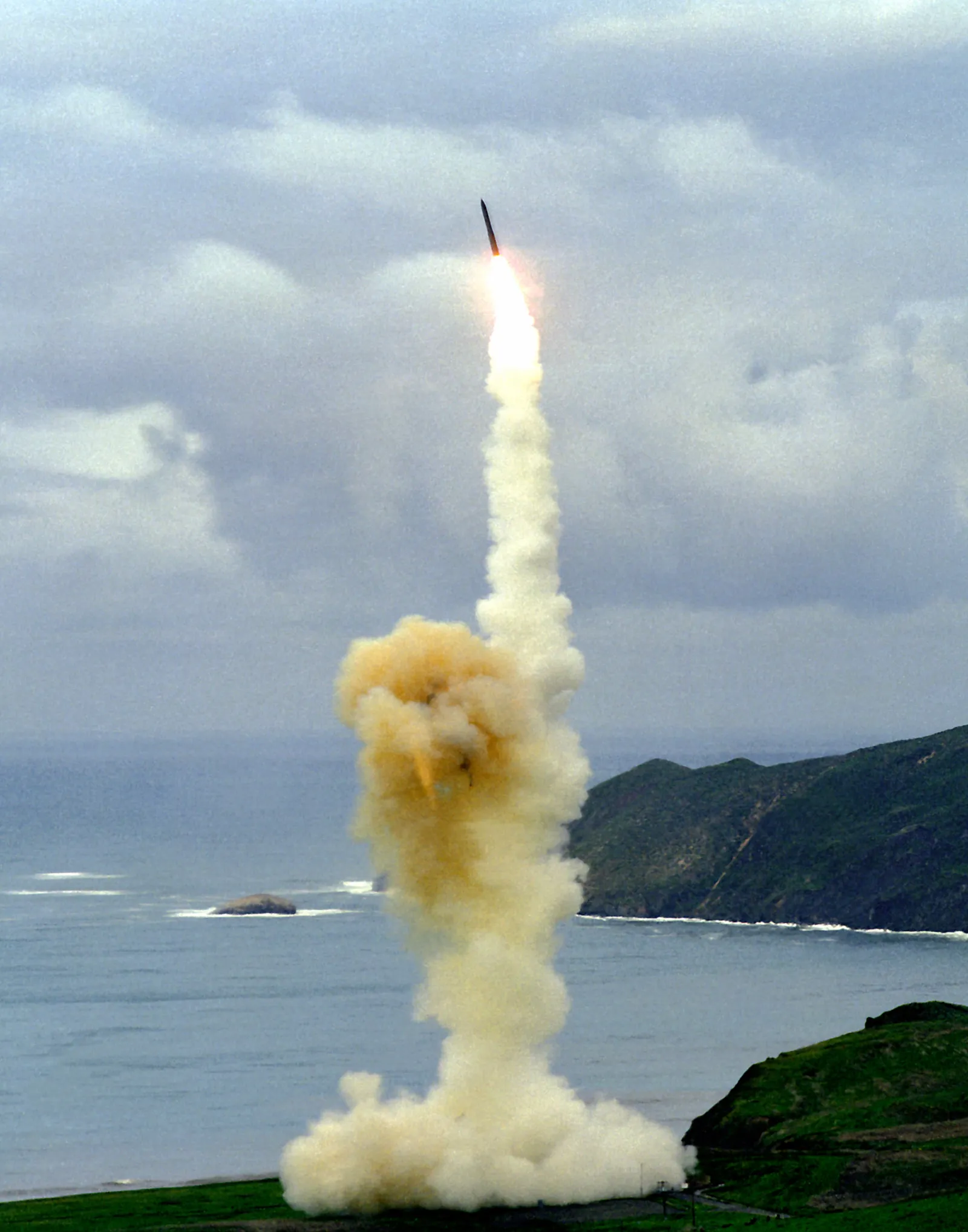


Used by both Iran and Iraq during the 1980-1988 war, with CSIS reporting more than 600 Scud and North Korean Scud-variant launches by the two belligerents.
Artillery
Ballistic missile
Also known as
- SRBM
- MRBM
- IRBM
- ICBM
- Short-range ballistic missile
- Medium-range ballistic missile
- Intermediate-range ballistic missile
- Intercontinental ballistic missile
Ballistic missiles are rocket-propelled weapons that accelerate during boost, then place a payload on a mostly unpowered ballistic path through midcourse and terminal flight. The class spans short-range battlefield missiles, submarine-launched systems, and intercontinental weapons; in recent cataloged conflicts, open sources document Iranian and Houthi use when strike reports identify broad ballistic-missile salvos but not always a single missile model.
Role in Conflicts
- Side
- Iraq
Used by Iraq in the 1991 Persian Gulf War through Al Hussein missiles, the Iraqi improved Scud B variant that shaped coalition missile-defense and Scud-hunting operations.
Role details
Used by Iran/IRGC in the Syrian Civil War for 2017 and 2018 ballistic-missile strikes against Islamic State targets in eastern Syria; the catalog maps this foreign allied use to the Syrian government and allies side.
Role details
Used extensively by Houthi-aligned forces after the Saudi-led intervention, with CSIS describing hundreds of ballistic missiles fired at Arab coalition bases, population centers, and infrastructure.
Role details- Side
- Russia

Used by Russia during the full-scale invasion period through Iskander-M short-range ballistic missile launches against targets in Ukraine.
Role details- Side
- Iran
Used by Iran in January 2020 when more than a dozen ballistic missiles targeted Al Asad and Erbil bases hosting U.S. and coalition personnel in Iraq.


Used sparingly by both Armenia/Artsakh and Azerbaijan; CSIS describes Armenian Tochka and Scud attacks on Ganja and Azerbaijani LORA use against a bridge.
- Side
- Houthi movement
Used by Houthi-aligned forces in the Red Sea Crisis as anti-ship ballistic missiles launched from Yemen toward commercial shipping in the Southern Red Sea and Gulf of Aden.
- Side
- Iran
Used in Iran's April 13-14, 2024 strike package against Israel; U.S. defense reporting described more than 110 medium-range ballistic missiles among the weapons launched from Iran, Syria, and Yemen.
- Side
- Iran
Used by Iran in the 2025 Israel-Iran Conflict for long-range missile salvos against Israeli targets in June 2025; congressional and open-source reporting described waves of ballistic missiles while often leaving exact missile models unidentified.
Role detailsProfile / Specs
Profile
- Origin
- Global
- Built by
- Various manufacturers
- Built in
- Multiple countries
- Type
- Ballistic missile
- Service note
- 1940s-present
- Designer
- Multiple design bureaus
- Designed
- 1940s
- Unit cost
- Varies widely by missile class and national program
- Produced
- 1940s-present
- Number built
- Not publicly disclosed
Specifications
- Definition
- Rocket-powered missile that follows a ballistic trajectory for most of its flight after powered ascent.
- Flight phases
- Boost, midcourse, and terminal; the powered boost phase ends when the rocket engine or stages stop firing.
- Range classes
- Common U.S. classes: SRBM up to 1,000 km, MRBM 1,000-3,000 km, IRBM 3,000-5,500 km, and ICBM over 5,500 km.
- Launch platform
- Fixed silos, mobile launchers, ships, submarines, and aircraft are all used by different missile families.
- Core elements
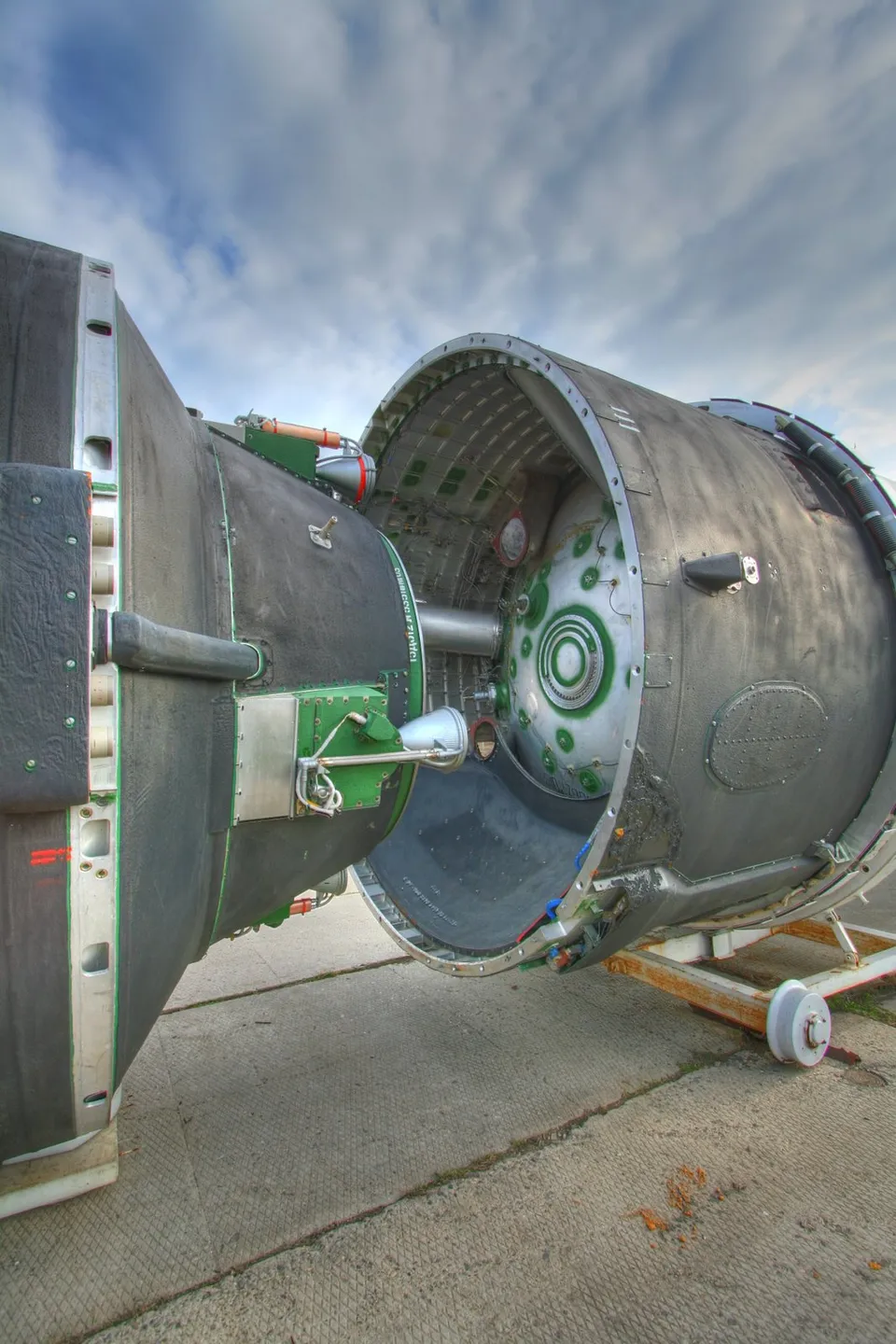
- Rocket motor or stages, propellant, structural frame, guidance and control system, and payload or warhead.
- Guidance
- Usually inertial or preplanned after boost, with some modern missiles adding updates, independent warhead maneuvering, or terminal guidance.
- Warhead
- Conventional, chemical, biological, or nuclear payloads are all possible depending on the missile family.
- Range tradeoff
- Reach varies with missile design, payload mass, trajectory, and propulsion; discarded stages reduce dead weight on longer-range systems.
Flight Profile And Range Classes
Ballistic-missile pages often mix battlefield-range systems, theater weapons, submarine-launched missiles, and strategic ICBMs. The shared technical boundary is the powered boost followed by a mostly ballistic path, while range class, basing mode, payload, and guidance determine the military role.
Boost
Rocket motors or stages accelerate the missile until powered flight ends; after that point the missile or payload follows the planned trajectory unless a maneuvering vehicle or terminal guidance changes the path.
Midcourse
The payload coasts through the longest portion of flight, with long-range systems using high-altitude trajectories and, in some designs, multiple stages or separated reentry vehicles.
Terminal
The payload descends toward the target at high speed; modern defenses and maneuvering reentry designs concentrate much of their complexity in this final phase.
Range classes
Common U.S. classes are SRBM up to 1,000 km, MRBM 1,000-3,000 km, IRBM 3,000-5,500 km, and ICBM above 5,500 km.
Sources: FAS Ballistic Missile Basics; Making Sense of Ballistic Missile Defense; Ballistic vs. Cruise Missiles Fact Sheet.
Variants
Range-class labels vary by national taxonomy, but U.S. and arms-control references commonly separate short-, medium-, intermediate-, and intercontinental-range ballistic missiles by maximum reach.
| Variant | Configuration | Designation notes |
|---|---|---|
| Short-range ballistic missile | SRBM range class | Common U.S. taxonomy places SRBMs at up to 1,000 km, while some schemes split close-range missiles below that band. Sources: Ballistic missile |
| Medium-range ballistic missile | MRBM range class | Common U.S. taxonomy places MRBMs between 1,000 and 3,000 km. Sources: Ballistic missile |
| Intermediate-range ballistic missile | IRBM range class | Common U.S. taxonomy places IRBMs between 3,000 and 5,500 km. Sources: Ballistic missile |
| Intercontinental ballistic missile | ICBM range class | ICBM is generally used for ballistic missiles exceeding 5,500 km maximum range. Sources: Ballistic missile |
Ballistic Missile Submarines
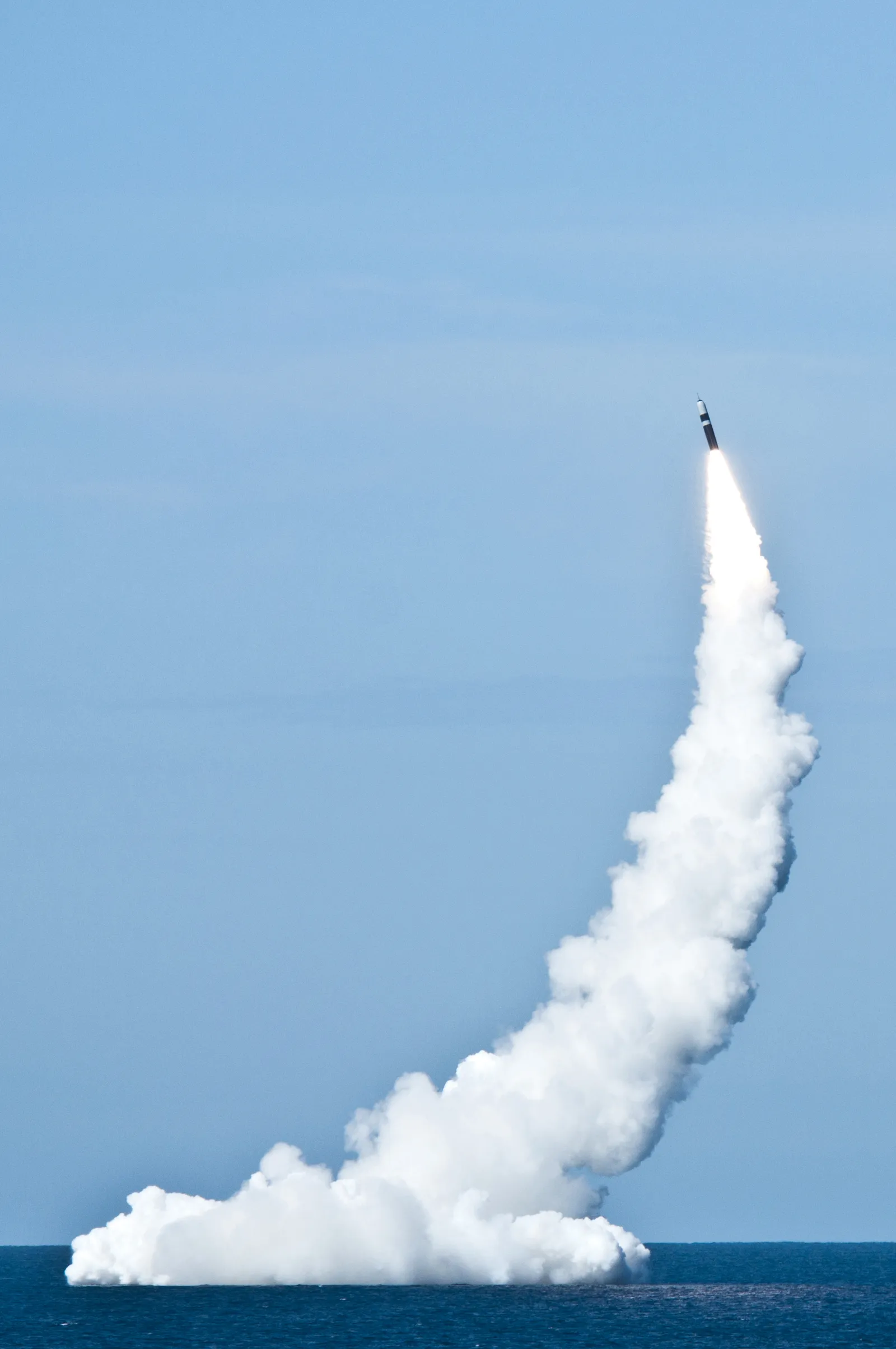
Open-source naval and missile references document ballistic-missile submarines as one of the main launch-platform families for submarine-launched ballistic missiles.
| Launcher | Launcher type | Launch evidence |
|---|---|---|
 | Nuclear-powered ballistic missile submarine | U.S. Navy documentation says Trident II D5 missiles are deployed aboard Ohio-class submarines, with each submarine carrying up to 20 D5 missiles. Sources: U.S. Navy Trident II D5 Missile |
 | Ballistic missile submarine | Royal Navy documentation says Dreadnought-class submarines will be capable of launching Trident 2 D5 missiles. Sources: Royal Navy Dreadnought class |
 | Nuclear-powered ballistic missile submarine | CSIS reports that a Borei-class submarine test-fired four Bulava ballistic missiles in a submerged launch, showing the class launches ballistic missiles. |
 | Nuclear-powered ballistic missile submarine | Royal Navy says each Vanguard-class submarine is armed with Trident 2 D5 missiles and that the missiles can be fired from the boat's ballistic-missile tubes. Sources: Vanguard Class Nuclear Submarine |
 | Nuclear-powered ballistic missile submarine | CSIS says the final Triomphant-class SSBN was to be modified to launch M51 nuclear ballistic missiles. Sources: Final French SSBN Begins M51 Modifications - Missile Threat - CSIS |
Carrier Submarines
Open-source missile references describe several ballistic missiles as submarine-carried weapons aboard active SSBN classes.
| Carrier | Carrier type | Carriage evidence |
|---|---|---|
 | Nuclear-powered ballistic missile submarine | CSIS says the SS-N-23 entered operational service aboard Delta IV SSBNs, with 112 missiles on seven Delta IV submarines by 1991. |
 | Nuclear-powered ballistic missile submarine | CSIS says the JL-2 is paired with China's Type 094 SSBN and that each Jin-class boat can carry up to 12 JL-2 SLBMs. Sources: JL-2 | Missile Threat - CSIS |
Timeline
Ballistic missile Key Events
A-4/V-2 reaches successful test flight
The Peenemuende program's A-4 test vehicle reached about 60 miles altitude and 125 miles range, a key milestone in practical ballistic-missile development.
Sources: V-2 Missile
V-2 enters operational use
German V-2 launches against Paris and London marked the first operational use of a modern long-range ballistic missile.
Sources: V-2 Missile, V-2 with Meillerwagen
R-7 opens the ICBM era
Smithsonian history identifies the Soviet R-7 as the first intercontinental ballistic missile, linking military missile development to the launch-vehicle line that put Sputnik into orbit.
Sources: The Military Rockets that Launched the Space Age
Atlas becomes the first deployed U.S. ICBM
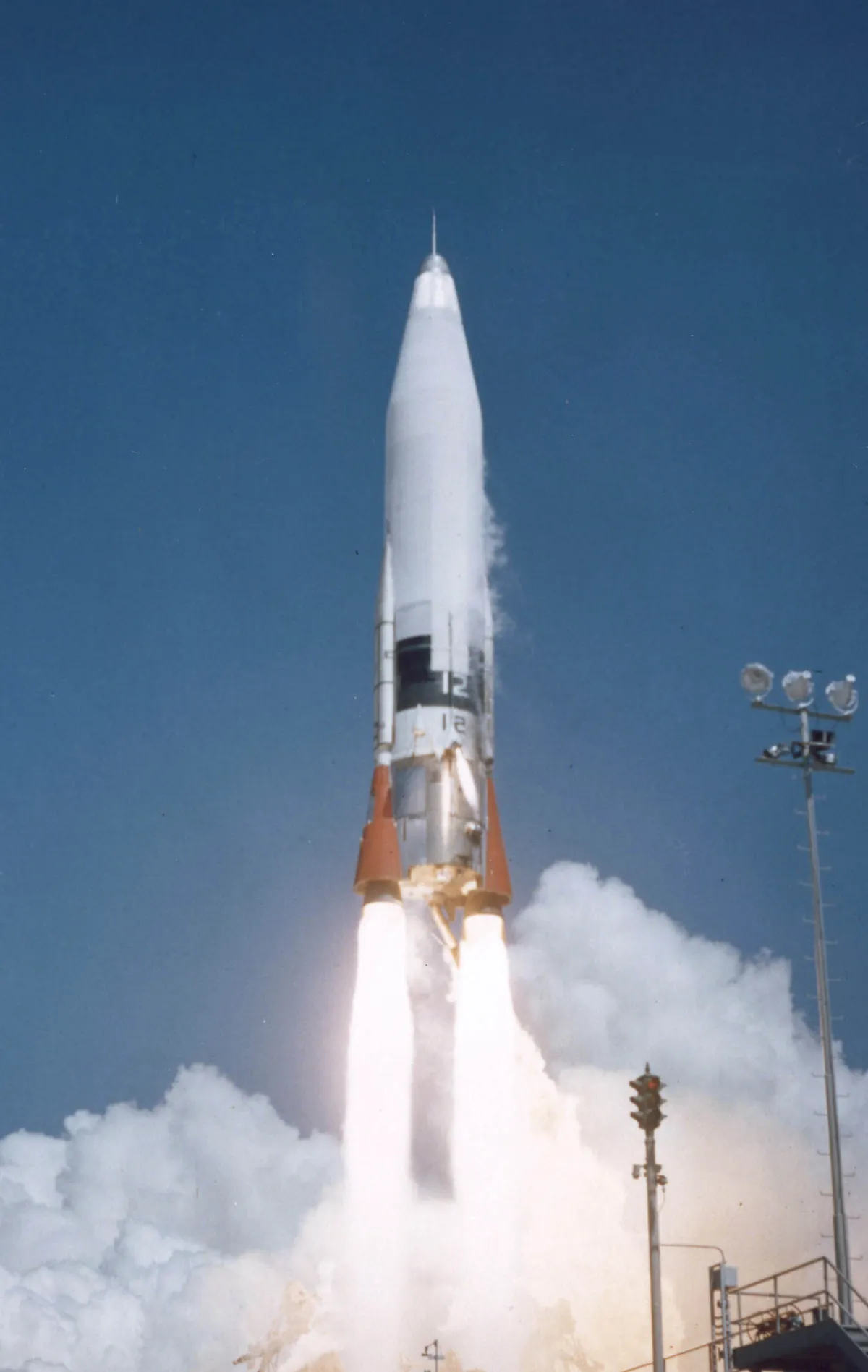
CSIS records the SM-65 Atlas as the first operational U.S. intercontinental ballistic missile, with service beginning in 1959.
Sources: SM-65 Atlas
Minuteman III enters service
CSIS describes Minuteman III as a solid-fueled ICBM entering service in 1970, making it a long-lived example of silo-based ballistic-missile design.
Sources: Minuteman III
Related Weapon Systems


Related News
Sources
Missile Threat homePublisher: CSIS Missile Defense Project | Note: Supports general ballistic-missile background and the broader missile-threat context for the class entry. | Accessed: 2026-07-04Ballistic missilePublisher: Britannica | Note: Supports the basic definition, flight profile, launch-platform diversity, and broad payload/range classification of ballistic missiles. | Accessed: 2026-07-04FAS Ballistic Missile BasicsPublisher: Federation of American Scientists | Note: Supports ballistic-missile definition, range-class boundaries, rocket components, propulsion, staging, and guidance context. | Accessed: 2026-07-04Making Sense of Ballistic Missile DefensePublisher: National Academies Press | Note: Supports boost, midcourse, and terminal phase context for ballistic-missile flight and defense. | Accessed: 2026-07-04Ballistic vs. Cruise Missiles Fact SheetPublisher: Center for Arms Control and Non-Proliferation | Note: Supports broad ballistic-missile flight-profile and range-class explanation. | Accessed: 2026-07-04V-2 MissilePublisher: Smithsonian National Air and Space Museum | Note: Supports V-2 development, 1942 test context, 1944 operational use, and the V-2 as an early long-range ballistic missile. | Accessed: 2026-07-04V-2 with MeillerwagenPublisher: National Museum of the United States Air Force | Note: Supports V-2 operating context, launch sequence, unpowered trajectory, and September 1944 operational-use date. | Accessed: 2026-07-04The Military Rockets that Launched the Space AgePublisher: Smithsonian National Air and Space Museum | Note: Supports the R-7 ICBM and ballistic-missile-to-space-launch development context. | Accessed: 2026-07-04SM-65 AtlasPublisher: CSIS Missile Defense Project | Note: Supports Atlas as an early deployed U.S. intercontinental ballistic missile and timeline context. | Accessed: 2026-07-04Minuteman IIIPublisher: CSIS Missile Defense Project | Note: Supports Minuteman III timeline, solid-fueled ICBM, and reentry-vehicle context. | Accessed: 2026-07-04Royal Navy Dreadnought classPublisher: Royal Navy | Note: Supports Dreadnought-class submarine launch-platform context for ballistic missiles and Trident 2 D5 compatibility. | Accessed: 2026-07-04U.S. Navy Trident II D5 MissilePublisher: U.S. Navy | Note: Supports Ohio-class submarine launch-platform context for Trident II D5 ballistic missiles and the gallery's submarine-launched missile context. | Accessed: 2026-07-04Vanguard Class Nuclear SubmarinePublisher: Royal Navy | Note: Supports Vanguard-class submarine launch-platform context for Trident 2 D5 ballistic missiles. | Accessed: 2026-07-04Russia Successfully Tests Bulava SLBM SalvoPublisher: CSIS Missile Defense Project | Note: Supports Borei-class submarine launch-platform context for Bulava ballistic missiles. | Accessed: 2026-07-04R-29RM Shtil (SS-N-23) | Missile Threat - CSISPublisher: CSIS Missile Defense Project | Note: Supports Delta IV-class submarine carriage context for the SS-N-23 ballistic missile. | Accessed: 2026-07-04Final French SSBN Begins M51 Modifications - Missile Threat - CSISPublisher: CSIS Missile Defense Project | Note: Supports Le Triomphant-class submarine launch-platform context for M51 ballistic missiles. | Accessed: 2026-07-04JL-2 | Missile Threat - CSISPublisher: CSIS Missile Defense Project | Note: Supports Type 094 / Jin-class submarine carriage context for the JL-2 ballistic missile. | Accessed: 2026-07-04Minuteman3launch.jpgPublisher: Wikimedia Commons | Note: Image provenance and licensing context for the primary ballistic-missile launch image used on the entry. | Accessed: 2026-07-04Intercontinental_ballistic_missile_SS-18_Mod_5_-_two_stages.jpgPublisher: Wikimedia Commons | Note: Image provenance and licensing context for the supporting missile-structure image used in the gallery. | Accessed: 2026-07-04Atlas_missile_test_launch.jpgPublisher: Wikimedia Commons | Note: Image provenance and licensing context for the supporting test-launch image used in the gallery. | Accessed: 2026-07-04Trident II D5 launch from USS NevadaPublisher: Wikimedia Commons | Note: Image provenance and public-domain licensing context for the submarine-launched Trident II D5 gallery image. | Accessed: 2026-07-04R-11 (SS-1) ScudPublisher: CSIS Missile Defense Project | Note: 1980 Iran-Iraq War: used by Iran and Iraq through more than 600 Scud and Scud-variant launches. 1990 Gulf War: used by Iraq through the Al Hussein improved Scud B variant. | Accessed: 2026-07-04Iran's Missiles: Timeline of AttacksPublisher: The Iran Primer / United States Institute of Peace | Note: 2011 Syrian Civil War: Iranian/IRGC ballistic-missile strikes against Islamic State targets in Syria. 2020 United States-Iran Conflict: Iran used ballistic missiles against Al Asad and Erbil bases. | Accessed: 2026-07-04Report: The Missile War in YemenPublisher: CSIS Missile Defense Project | Note: 2014 Yemen Civil War: Houthi-aligned forces used hundreds of ballistic missiles against Arab coalition bases, population centers, and infrastructure. | Accessed: 2026-07-04DOD Statement on Iranian Ballistic Missile Attacks in IraqPublisher: U.S. Department of War | Note: 2020 United States-Iran Conflict: Iran launched more than a dozen ballistic missiles against U.S. and coalition forces at Al Asad and Erbil. | Accessed: 2026-07-049K720 Iskander (SS-26)Publisher: CSIS Missile Defense Project | Note: 2014 Russia-Ukraine War: Russia used Iskander-M short-range ballistic missiles against targets in Ukraine. | Accessed: 2026-07-04The Air and Missile War in Nagorno-KarabakhPublisher: CSIS Missile Defense Project | Note: 2020 Nagorno-Karabakh Conflict: Armenia/Artsakh and Azerbaijan used ballistic missiles, including Armenian Tochka and Scud attacks and Azerbaijani LORA use. | Accessed: 2026-07-04CENTCOM Feb. 18 Red Sea ActivitiesPublisher: U.S. Central Command | Note: 2023 Red Sea Crisis: Houthi-aligned forces launched anti-ship ballistic missiles from Yemen toward MV Rubymar, with one missile striking the vessel. | Accessed: 2026-07-04Sinking of Motor Vessel RubymarPublisher: U.S. Central Command | Note: 2023 Red Sea Crisis: MV Rubymar sank after being struck by a Houthi anti-ship ballistic missile on February 18, 2024. | Accessed: 2026-07-04DOD Iran Airborne Attacks Against IsraelPublisher: U.S. Department of Defense | Note: 2024 Iran-Israel Exchange: U.S. defense reporting counted more than 110 medium-range ballistic missiles among weapons launched at Israel in the April 13-14, 2024 attack. | Accessed: 2026-07-04USNI CRS Israel-Iran Conflict ReportPublisher: U.S. Naval Institute News | Note: 2025 Israel-Iran Conflict: reproduces CRS reporting that Iran retaliated by launching waves of ballistic missiles against Israel. | Accessed: 2026-07-04Iran launches waves of missiles at Israel in response to attacksPublisher: Al Jazeera | Note: 2025 Israel-Iran Conflict: used by Iran in June 2025 ballistic-missile waves launched at Israel after Israeli strikes on Iran. | Accessed: 2026-07-04Iran: Impacts of June 2025 Israel and US strikesPublisher: UK House of Commons Library | Note: 2025 Israel-Iran Conflict: ballistic missiles were fired by Iran against Israel during the June 2025 fighting, and most were intercepted. | Accessed: 2026-07-04