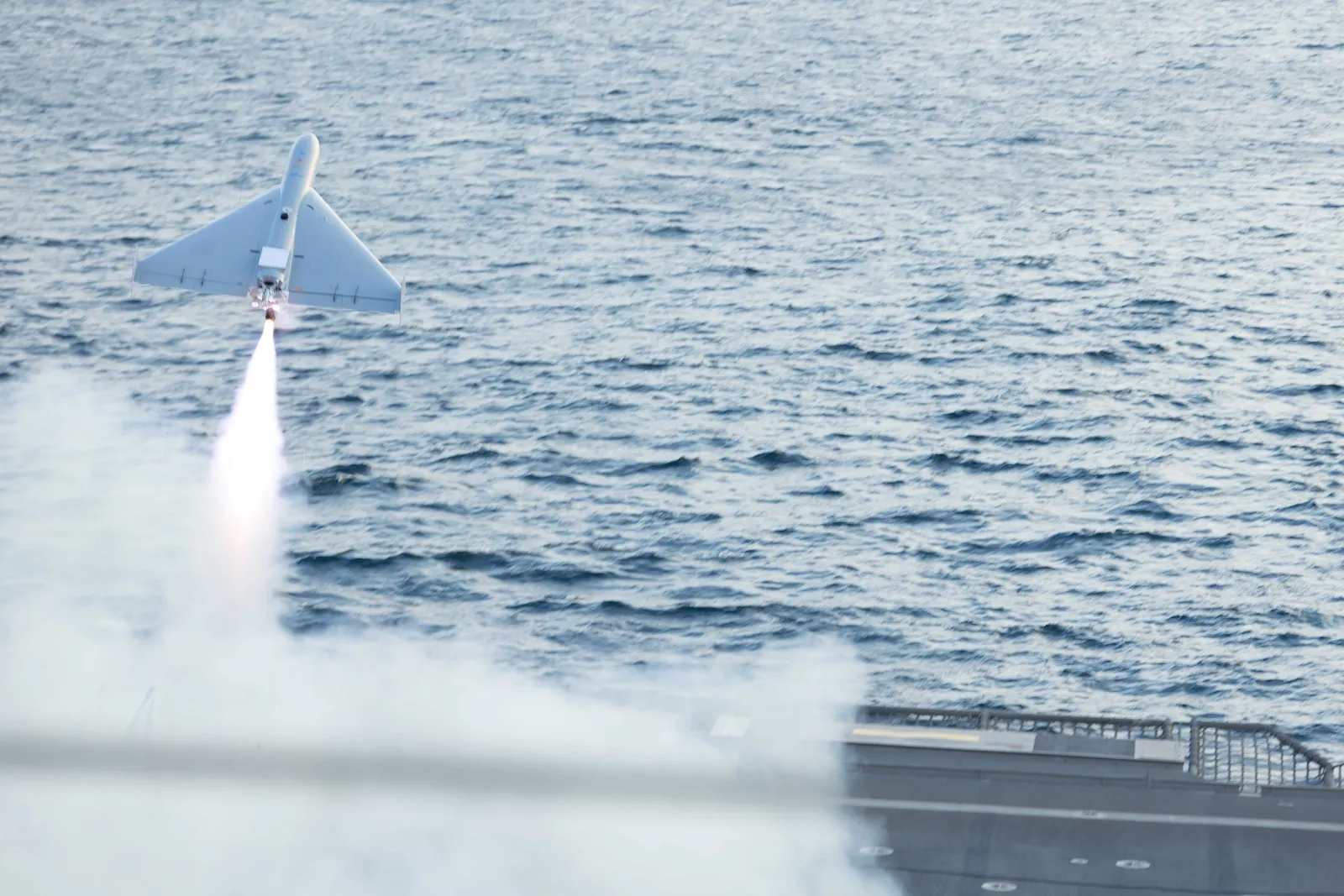


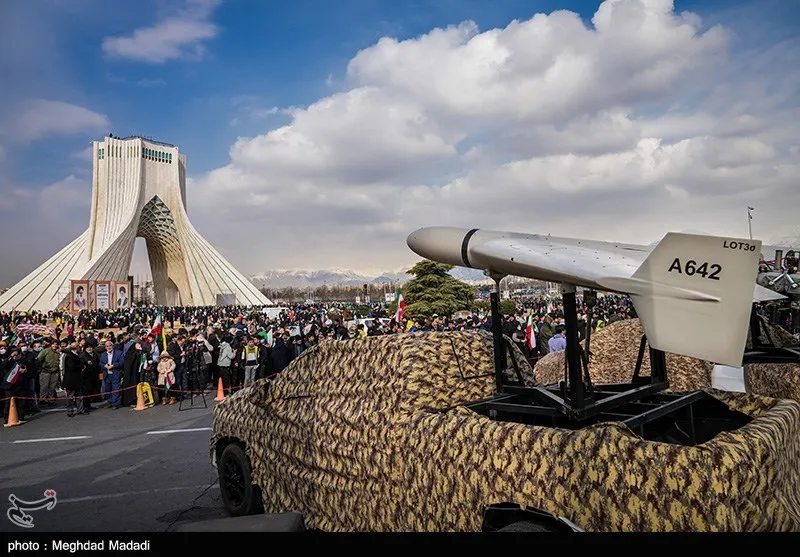
Russia has used Iranian-designed Shahed/Geran one-way attack UAVs for repeated long-range strikes against Ukrainian military, air-defense, energy, and urban targets, while the United States supplied Phoenix Ghost one-way attack drones for Ukrainian tactical use in the east.
Role detailsAircraft & UAVs
One-way attack UAV
Also known as
- OWA UAV
- OWA-UAV
- OWA drone
- One-way attack drone
- One-way attack UAS
- OWA UAS
- Kamikaze drone
- Kamikaze UAV
- Suicide drone
- Suicide UAV
- Exploding drone
- Expendable strike UAV
- Disposable strike UAV
- Explosive UAV
- Explosive FPV drone
- FPV strike UAV
- Loitering munition
One-way attack UAVs are expendable unmanned aircraft built or adapted to carry an explosive payload to a target and be consumed in the attack. This class-level entry covers cases where sources document one-way attack drones, kamikaze drones, or disposable explosive UAVs in conflict but do not identify a single named model suitable for a more specific catalog record.
Role in Conflicts

Houthi-aligned forces used one-way attack UAVs including Qasef and Samad-family systems for strikes against coalition air-defense radars, military sites, and regional infrastructure during the Yemen war.
Role details

During the 2026 Operation Epic Fury escalation, CSIS assessed that Iran relied heavily on long-range one-way attack drones in retaliatory waves against Gulf targets, while CENTCOM stated that U.S. forces employed Group 3 one-way attack drones in combat through Task Force Scorpion Strike.
- Side
- Hezbollah

Guardian reporting on the renewed southern Lebanon fighting describes Hezbollah using cheap, disposable explosive-equipped FPV UAVs against Israeli soldiers, tanks, and bulldozers; the source identifies FPV drones rather than a named factory model.
- Side
- Houthi movement
CENTCOM reported that the Houthis launched Iranian-designed one-way attack UAVs from Yemen toward southern Red Sea shipping lanes on January 9, 2024, as part of a mixed drone and missile attack.
Role details- Side
- Iran
U.S. defense reporting says Iran and proxy groups launched more than 300 airborne weapons at Israel in April 2024, including more than 150 UAVs, and that CENTCOM forces destroyed more than 80 one-way attack UAVs.
Role details- Side
- Iran
CSIS assessed that Iran fired more than 1,000 one-way attack drones during the June 2025 Israel-Iran war, making expendable UAV salvos part of the conflict's missile-and-drone strike pattern.
Role details- Side
- United States
The War Zone and National Interest assessed public video and official comments as evidence that U.S. forces used, or very likely used, one-way attack UAVs during Operation Absolute Resolve; the exact drone model remains unconfirmed in open sources.
Profile / Specs
Profile
- Origin
- Various
- Type
- Expendable strike UAV / loitering munition class
- Service note
- Modern conflicts, especially 2020s
- Designer
- Various
- Designed
- Modern one-way attack UAV designs expanded rapidly in the 2010s and 2020s
- Unit cost
- Varies widely by model; reported examples range from low-cost FPV systems to larger long-range aircraft
- Produced
- Varies by model and user
- Number built
- Unknown; production is distributed across many models and operators
Specifications
- Crew
- Uncrewed; remotely piloted, preprogrammed, autonomous, or semi-autonomous depending on model
- Payload
- Explosive warhead or improvised explosive payload; size varies by airframe
- Launch method
- Ground rail, catapult, rocket-assisted launch, vehicle launch, ship launch, or hand/field launch depending on model
- Guidance
- May use operator video control, GNSS/inertial navigation, terminal guidance, or autonomous flight modes
- Recovery
- None; designed to be expended on impact or detonation
Class Scope
This record is for source-backed conflict references to one-way attack UAVs when the public source identifies an expendable attack drone class but not a single named model, or when a class-level comparison is clearer than forcing the claim into one airframe page.
Long-range fixed-wing
Rail, catapult, container, vehicle, or ship-launched aircraft such as Shahed-family, Samad-family, Bober, Phoenix Ghost, and LUCAS-style systems.
Sources: CSIS Missile Threat Shahed-131 and -136; U.S. Launches One-Way-Attack Drone Force in the Middle East.
Explosive FPV
Short-range operator-guided first-person-view drones fitted with explosive payloads for terminal attacks against troops, vehicles, and equipment.
Source: How Hezbollah's $300 Drones Are Challenging Israeli Military.
Named system pages
When open sources identify a specific model, the stronger research path is usually the dedicated record, such as Shahed-136, Bober, Phoenix Ghost, or Samad-3 UAV.
This class page keeps generic or mixed-model evidence from being overstated as one named weapon.
Variants
This class-level record groups expendable attack UAV forms by employment pattern rather than treating every drone as one family.
| Variant | Configuration | Designation notes |
|---|---|---|
| Long-range fixed-wing one-way attack UAV | Preprogrammed or semi-autonomous standoff strike aircraft | Shahed-family, Samad-family, Bober, Phoenix Ghost, and LUCAS-style systems illustrate the longer-range branch of the class, usually launched from rails, catapults, containers, or vehicles. Sources: CSIS Missile Threat Shahed-131 and -136, Pentagon Press Briefing on Phoenix Ghost, U.S. Launches One-Way-Attack Drone Force in the Middle East |
| Explosive FPV strike UAV | Short-range operator-guided terminal attack drone | Southern Lebanon reporting describes Hezbollah using low-cost explosive FPV UAVs against soldiers, armored vehicles, and bulldozers where sources do not identify a named factory model. Sources: How Hezbollah's $300 Drones Are Challenging Israeli Military |
| Maritime or regional attack UAV | Ship-lane, port, base, or infrastructure strike weapon | Houthi and Iranian use shows the same one-way attack pattern adapted to maritime lanes and regional standoff campaigns, often mixed with missiles to saturate defenses. Sources: CENTCOM Statement on 26th Houthi Attack, DIA Iran Enabling Houthi Attacks, CSIS Iran Drone Campaign in the Gulf |
Timeline
One-way attack UAV Key Events
Houthi and Iranian-linked UAV attacks demonstrate regional standoff use
CSIS and CAR reporting describe Houthi use of Qasef and Samad-family attack UAVs in the Yemen war, including anti-air-defense and long-range regional strike roles.
Sources: The Missile War in Yemen, Iranian Technology Transfers to Yemen
Russia begins mass use of Shahed-family attack UAVs in Ukraine
CSIS and DIA reporting connect Russia's Ukraine campaign to Iranian Shahed one-way attack UAV transfers and later domestic Geran-family production.
Sources: CSIS Missile Threat Shahed-131 and -136, DIA Iranian UAVs in Ukraine
CENTCOM reports a large Red Sea one-way attack UAV launch
CENTCOM said Houthi forces launched Iranian-designed one-way attack UAVs from Yemen toward southern Red Sea shipping lanes as part of a mixed drone and missile attack.
Sources: CENTCOM Statement on 26th Houthi Attack
CENTCOM intercepts Iranian one-way attack UAVs aimed at Israel
U.S. defense reporting said U.S. forces destroyed more than 80 one-way attack UAVs during Iran's April 2024 attack on Israel.
Sources: Israel, U.S., Partners Neutralize Iranian Airborne Attacks
CENTCOM fields LUCAS one-way attack drones
U.S. Central Command announced Task Force Scorpion Strike and LUCAS, a low-cost one-way attack drone force intended to give U.S. commanders an expendable strike option in the Middle East.
Sources: U.S. Launches One-Way-Attack Drone Force in the Middle East
Media
One-way attack UAV Videos
One-way attack UAV Images
Related Weapon Systems


Related News
Sources
U.S. Launches One-Way-Attack Drone Force in the Middle EastPublisher: U.S. Central Command | Note: Official source for one-way-attack drone background, LUCAS launch methods, autonomous operation, and U.S. Task Force Scorpion Strike context. | Accessed: 2026-06-22Six Houthi Drone Warfare StrategiesPublisher: ACLED | Note: Supports background classification of one-way attack unmanned aircraft as expendable munitions that explode above or crash into targets. | Accessed: 2026-06-22CSIS Missile Threat Shahed-131 and -136Publisher: CSIS Missile Threat | Note: 2014 Russia-Ukraine War: supports Russian use of Shahed/Geran one-way attack UAVs in Ukraine. 2020 United States-Iran Conflict: supports Iranian one-way attack UAV use during the 2026 escalation. 2023 Red Sea Crisis: supports Houthi use of Waid/Shahed-136-class one-way attack UAVs in Red Sea attacks. | Accessed: 2026-07-02DIA Iranian UAVs in UkrainePublisher: Defense Intelligence Agency | Note: Supports 2014 Russia-Ukraine War direct use by documenting Iranian one-way attack UAV transfers to Russia for its war in Ukraine. | Accessed: 2026-07-02UK Biggest Ever Drone Package for UkrainePublisher: UK Ministry of Defence | Note: Supports 2014 Russia-Ukraine War direct use by reporting Russian one-way attack drone launch volumes against Ukraine while announcing UK drone support. | Accessed: 2026-07-02Pentagon Press Briefing on Phoenix GhostPublisher: U.S. Department of War | Note: Supports 2014 Russia-Ukraine War direct use by identifying Phoenix Ghost as a one-way attack drone supplied for Ukrainian requirements in eastern Ukraine. | Accessed: 2026-07-02Guide To Ukraine's Long Range Attack DronesPublisher: Covert Shores | Note: Supports background on Ukrainian long-range one-way attack UAV examples including Bober/UJ-26 and related deep-strike airframes. | Accessed: 2026-07-02CENTCOM SASC Posture Statement 2026Publisher: U.S. Central Command | Note: Supports 2020 United States-Iran Conflict direct use by stating that U.S. forces employed Group 3 one-way attack drones in combat during Operation EPIC FURY. | Accessed: 2026-07-02The Missile War in YemenPublisher: Center for Strategic and International Studies | Note: Supports 2014 Yemen Civil War direct use by documenting Houthi Samad and other UAV attacks against regional and coalition targets. | Accessed: 2026-07-02Iranian Technology Transfers to YemenPublisher: Conflict Armament Research | Note: Supports 2014 Yemen Civil War direct use by documenting Qasef-1 UAVs used by Houthi forces to attack coalition Patriot air-defense systems in Yemen. | Accessed: 2026-07-02DIA Iran Enabling Houthi AttacksPublisher: Defense Intelligence Agency | Note: 2023 Red Sea Crisis: supports Houthi use of Shahed/Waid-class one-way attack UAVs in attacks against regional infrastructure and commercial shipping; also supports Houthi one-way attack UAV background and comparison data. | Accessed: 2026-07-02CSIS Iran Drone Campaign in the GulfPublisher: Center for Strategic and International Studies | Note: Supports 2020 United States-Iran Conflict direct use during the 2026 escalation: Iranian long-range one-way attack drone waves against Gulf targets. | Accessed: 2026-07-02Israel, U.S., Partners Neutralize Iranian Airborne AttacksPublisher: U.S. Department of Defense | Note: Supports 2024 Iran-Israel Exchange direct use by reporting Iranian UAV launches against Israel and CENTCOM destruction of more than 80 one-way attack UAVs. | Accessed: 2026-07-02How Would Iran Respond to a U.S. Attack?Publisher: Center for Strategic and International Studies | Note: Supports 2025 Israel-Iran Conflict direct use by assessing Iranian one-way attack drone launch volume during the June 2025 war with Israel. | Accessed: 2026-07-02How Hezbollah's $300 Drones Are Challenging Israeli MilitaryPublisher: The Guardian | Note: Supports 2023 Israel-Hezbollah Conflict direct use: explosive-equipped FPV UAVs used by Hezbollah against Israeli soldiers, tanks, and bulldozers in southern Lebanon. | Accessed: 2026-06-22CENTCOM Statement on 26th Houthi AttackPublisher: U.S. Central Command | Note: Supports 2023 Red Sea Crisis direct use: Iranian-designed one-way attack UAVs were used by the Houthi movement in a launch from Yemen toward southern Red Sea shipping lanes. | Accessed: 2026-06-22Did The U.S. Use Kamikaze Drones To Strike Venezuela?Publisher: The War Zone | Note: Supports 2026 United States-Venezuela Conflict caveated direct use: public video and official comments indicate one-way attack UAVs were likely used by U.S. forces during Operation Absolute Resolve. | Accessed: 2026-06-22The US Military Bombarded Venezuela with Drones During the Maduro RaidPublisher: The National Interest | Note: Supports 2026 United States-Venezuela Conflict direct use reporting: evidence from Venezuela indicates one-way attack UAVs used by U.S. forces against ground targets, while model identity remains unconfirmed. | Accessed: 2026-06-22LUCAS One-Way Attack Drone ImagePublisher: Wikimedia Commons | Note: Public-domain U.S. military image provenance for the primary LUCAS one-way attack drone gallery image. | Accessed: 2026-06-22Shahed-136 Display ImagePublisher: Wikimedia Commons | Note: CC BY 4.0 image provenance for a representative Shahed-136 loitering munition displayed on a launcher. | Accessed: 2026-06-22Shahed-136 Debris ImagePublisher: Wikimedia Commons | Note: Public-domain U.S. Navy graphic provenance for Shahed-136 debris fragments from a maritime UAV attack. | Accessed: 2026-06-22