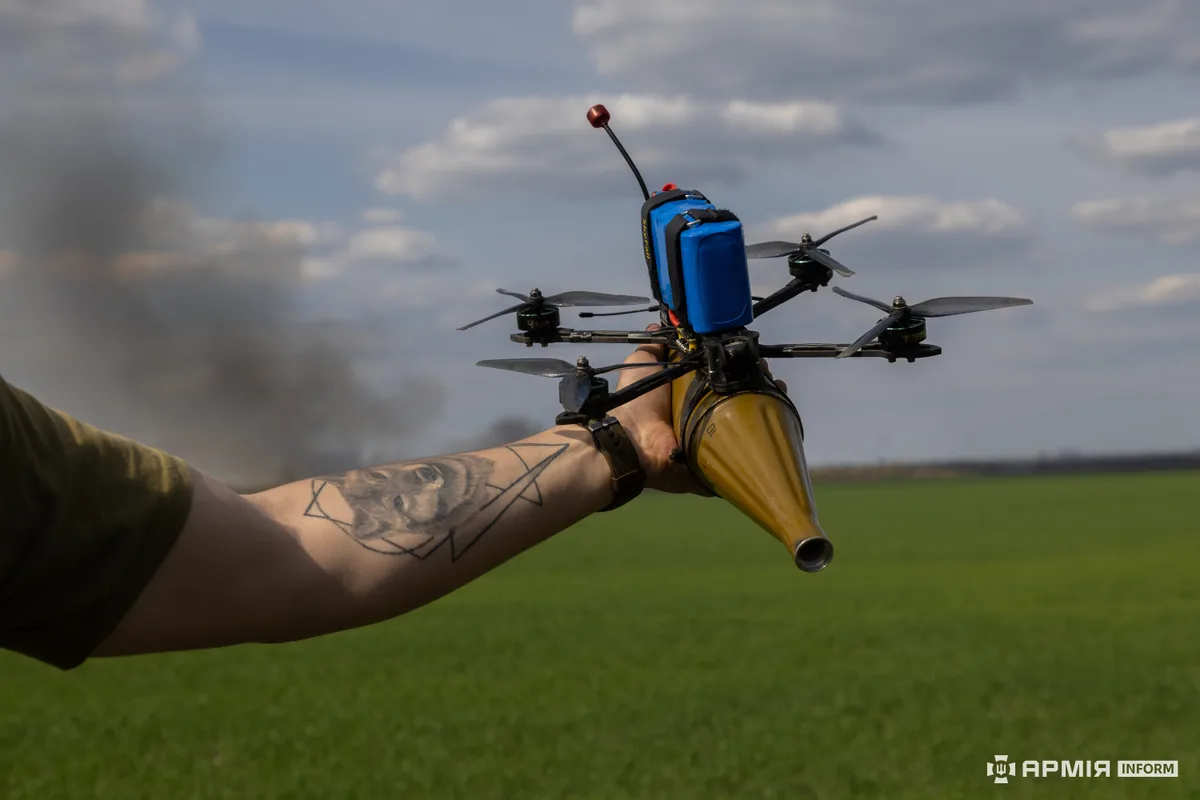


Used at scale by Ukrainian and Russian forces as short-range, operator-piloted UAVs for precision attack, reconnaissance support, and drone-on-drone engagements; Ukrainian procurement data also shows many FPV models and manufacturers being supplied directly to combat units.
Role detailsAircraft & UAVs
FPV drones
FPV drones are small first-person-view UAVs adapted from racing-drone and commercial quadcopter technology into tactical reconnaissance and one-way attack systems. Russia and Ukraine turned them into mass battlefield consumables, while later reporting from Lebanon, Mali, Myanmar, Syria, Sudan, and Mexico shows the same control-link, payload, and low-cost adaptation pattern spreading to state forces, insurgents, and organized armed groups.
Role in Conflicts
- Side
- Hezbollah
- Role in conflict
- Fiber-optic FPV strike

Used by Hezbollah in southern Lebanon as small explosive-equipped fiber-optic FPV drones against Israeli soldiers, tanks, bulldozers, and armored vehicles; reporting describes operator-guided impact attacks with tethered control links that are difficult to jam.
- Role in conflict
- Armed COTS drone attacks on military positions

Used by ISWAP and Boko Haram-linked militants as armed commercial quadcopter or COTS drones in attacks on Nigerian military positions in Borno and Yobe states; sources describe armed drones and likely FPV-style commercial models rather than a named military variant.
- Side
- Rebel and jihadist armed groups
- Role in conflict
- FPV strike and target-observation
Used by 2012 Mali War rebel forces in northern Mali for first-person-view drone attacks on Malian army and Wagner-aligned targets, including documented strikes and reconnaissance of bases around Goundam, Léré, and Tin Zaouatine.
- Side
- People's Defense Forces and ethnic armed organizations
- Role in conflict
- Fiber-optic FPV strike against low-flying aircraft

Used by Myanmar resistance forces as part of an expanding small-drone campaign against junta forces; reporting describes a fiber-optic FPV drone striking a Myanmar military Mi-17 during fighting near Bhamo.
Used by Hayat Tahrir al-Sham and aligned opposition forces during late-2024 fighting, with FPV drones appearing alongside larger quadcopters and fixed-wing UAVs for short-range attack and battlefield observation.
Role details- Role in conflict
- Small kamikaze FPV strike

Used by Sudanese Armed Forces units as small one-way attack FPV drones against Rapid Support Forces positions; reporting describes commercial-style quadcopters adapted with explosive payloads.
Used or tested by Mexican organized criminal groups within a broader weaponized-drone campaign, including reporting on cartel FPV systems and explosive-drone attacks tied to Jalisco New Generation Cartel and other groups.
Control Links And Payload Patterns
FPV drone battlefield value is shaped less by a single model name than by how the airframe is controlled, what payload it carries, and whether the sortie is recoverable or expendable.
| Pattern | Typical purpose | Documented context |
|---|---|---|
| Radio FPV link | Short-range strike, scouting, and target correction | Ukraine and Russia use radio-controlled FPV drones at scale, while electronic warfare and weather can limit sortie success. |
| Fiber-optic link | Jamming-resistant one-way attack | Hezbollah and Myanmar resistance reporting shows tethered FPV drones used against military targets where radio jamming is a central threat. |
| Integrated mortar payload | Purpose-built explosive warhead | Ukrainian Armor examples pair FPV airframes with 60 mm, 82 mm, and 120 mm mortar munitions as integrated payloads. |
| Interceptor fit | Counter-UAV impact or close interception | Ukraine reporting documents drone-on-drone engagements, showing FPV aircraft moving beyond ground attack alone. |
Sources: First 100,000 FPV drones delivered to Ukrainian military through the DOT-Chain Defence procurement platform; I Fought in Ukraine and Here's Why FPV Drones Kind of Suck; How Hezbollah's $300 drones are challenging Israeli military; Mi-17 Appears To Have Been Downed By FPV Drone In Myanmar; Ukrainian Armor codifies FPV drone with 82mm mine; Bayraktars and Grenade-Dropping Quadcopters II: Year Two of Ukraine-Russia Drone Warfare.
Profile / Specs
Profile
- Origin
- Various commercial and military supply chains
- Built by
- Various manufacturers
- Built in
- Various
- Type
- First-person-view small UAV / one-way attack drone
- Service note
- 2010s-present; mass battlefield use during the 2014 Russia-Ukraine War
- Designer
- Distributed commercial and military UAV designers
- Designed
- Civil FPV designs predate the war; combat adaptations expanded rapidly from 2022 onward
- Unit cost
- Often treated as low-cost expendable systems; exact cost varies by airframe, payload, link, and sensor fit
- Produced
- Mass wartime production and assembly from 2022 onward
Specifications
- Control method
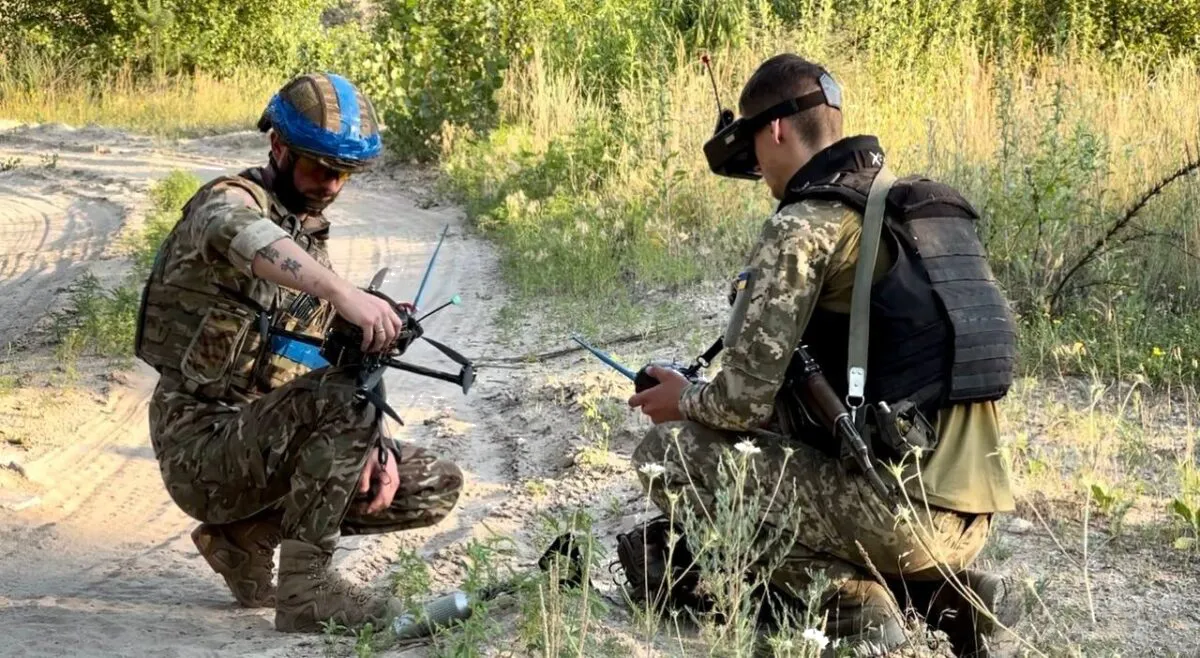
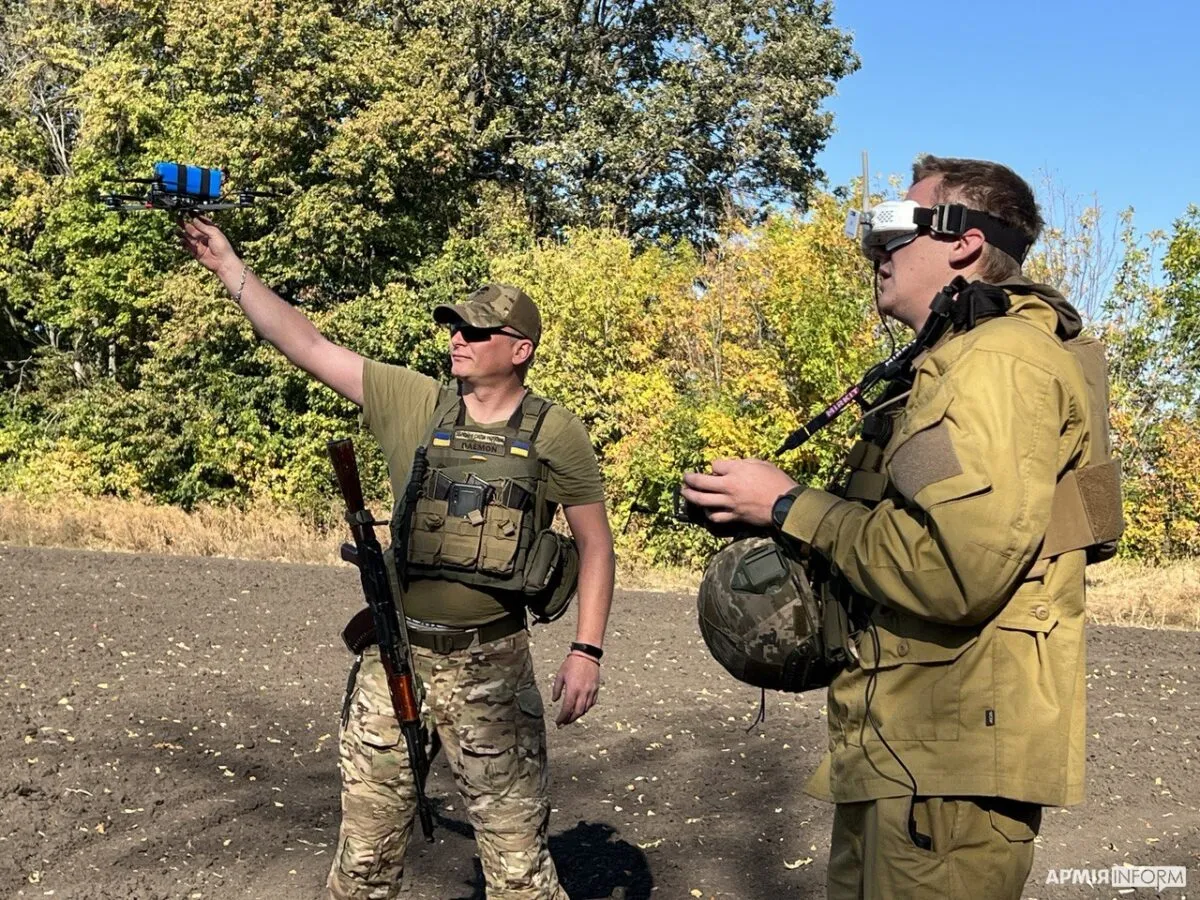
- Manual first-person piloting through an onboard video feed to goggles or a display; some newer variants use fiber-optic control links to resist jamming.
- Typical airframe
- Small quadcopter or racing-drone-style UAV; Ukrainian procurement channels list more than 180 FPV models from 40 manufacturers.
- Payload
- Varies by airframe and mission; common one-way attack examples carry a small explosive charge, with some reported frontline types carrying up to about 1.5 kg.
- Representative endurance
- A U.S. 7-inch FPV example, Red Cat's FANG F7, lists more than 12 minutes of stable flight with a 6S battery and added user payload.
- Battlefield limitations
- Short endurance, weather sensitivity, operator workload, radio-link vulnerability, and electronic warfare can limit sortie success.
Variants
FPV drone records describe a tactical class rather than one factory model; the rows below group common battlefield configurations by control link, payload, and mission.
| Variant | Configuration | Designation notes |
|---|---|---|
| Radio-controlled FPV strike drone | Baseline one-way attack configuration | A small quadcopter or racing-drone-style airframe is manually flown from its camera feed toward a target, usually carrying an improvised or integrated explosive payload. Sources: I Fought in Ukraine and Here's Why FPV Drones Kind of Suck, First 100,000 FPV drones delivered to Ukrainian military through the DOT-Chain Defence procurement platform |
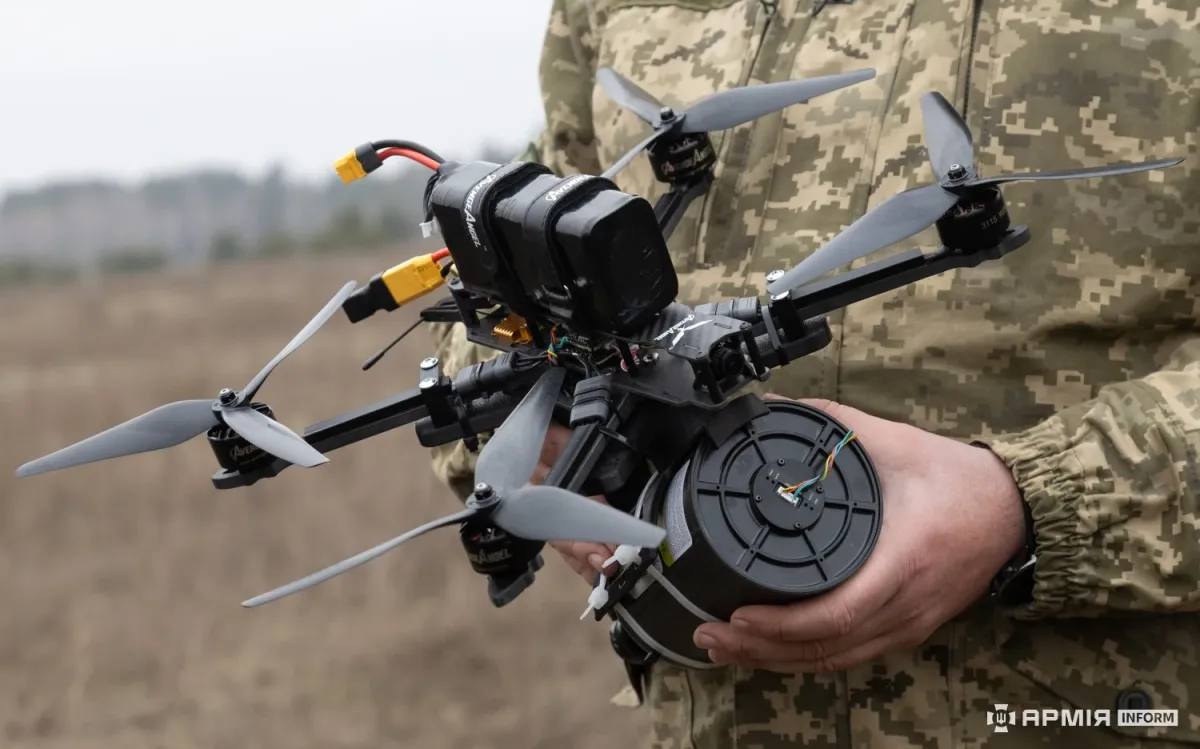
| Fiber-optic-controlled FPV drone | Jamming-resistant tethered-control configuration | The radio link is replaced or supplemented by a trailing fiber-optic cable, making the drone harder to jam at the cost of spool weight and handling constraints. Sources: How Hezbollah's $300 drones are challenging Israeli military, Mi-17 Appears To Have Been Downed By FPV Drone In Myanmar |
| Reusable FPV training and ISR drone | Operator training, observation, and target finding | Unarmed or recoverable FPV airframes can train pilots, scout targets, or support strike teams without being expended on impact. Sources: Bayraktars and Grenade-Dropping Quadcopters II: Year Two of Ukraine-Russia Drone Warfare |
| FPV interceptor drone | Counter-UAV and short-range interception | Some FPV airframes are flown directly against enemy UAVs or other low-flying targets, extending the drone-on-drone role documented in Ukraine. Sources: Bayraktars and Grenade-Dropping Quadcopters II: Year Two of Ukraine-Russia Drone Warfare |
Carried Munitions
Ukrainian Armor has documented FPV drone variants built around specific mortar munitions as integrated payloads or warheads.
| Carried item | Item type | Carriage evidence |
|---|---|---|
 | 60-mm mine | Ukrainian Armor codified an FPV drone based on a 60-mm mine, making the mine the drone's integrated warhead. Sources: Ukrainian Armor codified its own FPV drone based on a 60-mm mine |
 | 82-mm mine | Ukrainian Armor codified the UB82D as an FPV drone with an integrated 82-mm mine. |
 | 120-mm mortar round | Militarnyi describes a Ukrainian Armor wing-type FPV drone equipped with a 120 mm mortar round as its payload. Sources: Ukrainian Armor Develops FPV Drone With 120mm Mortar Round |
Timeline
FPV drones Key Events
Drone Coalition scales FPV supply for Ukraine
The United Kingdom and Latvia announced a drone capability coalition to supply Ukraine with thousands of FPV drones for battlefield awareness and explosive attacks.
Sources: UK to supply thousands of drones as co-leader of major international capability coalition for Ukraine
HTS FPV drone use documented in Syria
GNET documented Hayat Tahrir al-Sham's use of FPV and other UAVs during the Syrian opposition offensive that ended Assad-government control in key areas.
Sources: The Drones of Hayat Tahrir al-Sham: The Development and Use of UAS in Syria
Myanmar Mi-17 FPV strike reported
The War Zone reported that Myanmar resistance forces appeared to have used a fiber-optic FPV drone against a junta Mi-17 helicopter near Bhamo.
Sources: Mi-17 Appears To Have Been Downed By FPV Drone In Myanmar
Hezbollah fiber-optic FPV attacks reported in Lebanon
The Guardian reported Hezbollah fiber-optic FPV attacks against Israeli soldiers, armored vehicles, tanks, and bulldozers in southern Lebanon.
Sources: How Hezbollah's $300 drones are challenging Israeli military
Media
FPV drones Videos
Related Weapon Systems


Related News
Sources
First 100,000 FPV drones delivered to Ukrainian military through the DOT-Chain Defence procurement platformPublisher: Ministry of Defence of Ukraine | Note: Supports 2014 Russia-Ukraine War direct conflict use by documenting Ukrainian delivery of FPV drones to military units, plus the number of available models and manufacturers. | Accessed: 2026-06-20UK and NATO nations ramp up response to Putin's aggression in Ukraine and incursions into EuropePublisher: UK Ministry of Defence | Note: Supports Ukraine conflict-use context for supplied short-range FPV drones used for precision strikes, reconnaissance, and disruption behind the front line. | Accessed: 2026-06-20UK to supply thousands of drones as co-leader of major international capability coalition for UkrainePublisher: UK Ministry of Defence | Note: Supports 2014 Russia-Ukraine War direct conflict use by describing FPV drones supplied to Ukraine and their use for situational awareness and attacks on positions, armored vehicles, and ships with explosive ordnance. | Accessed: 2026-06-20Bayraktars and Grenade-Dropping Quadcopters II: Year Two of Ukraine-Russia Drone WarfarePublisher: Army University Press | Note: Supports 2014 Russia-Ukraine War context for FPV UAV use, including drone-on-drone attacks and electronic-warfare limits for small UAVs. | Accessed: 2026-06-20I Fought in Ukraine and Here's Why FPV Drones Kind of SuckPublisher: War on the Rocks | Note: Supports 2014 Russia-Ukraine War direct conflict use through firsthand Ukrainian-service FPV drone analysis, and supports layout, one-way attack role, payload scale, and operational limitations. | Accessed: 2026-06-20FANG F7Publisher: Red Cat Holdings | Note: Manufacturer page for a representative 7-inch FPV small UAS, supporting example endurance, frame, control, battery, and video-system specifications. | Accessed: 2026-06-20Blue UAS Refresh List, Framework Platforms and Capabilities SelectedPublisher: Defense Innovation Unit | Note: Supports background on military evaluation of FPV platforms and relevant capability criteria such as endurance, range, payload, communications, and resilience to EW jamming. | Accessed: 2026-06-20How Hezbollah's $300 drones are challenging Israeli militaryPublisher: The Guardian | Note: Supports 2023 Israel-Hezbollah Conflict direct use by reporting Hezbollah fiber-optic FPV drone attacks on Israeli soldiers, tanks, bulldozers, and other military targets in southern Lebanon. | Accessed: 2026-06-20Israeli forces face challenges as Hezbollah ramps up use of FPV dronesPublisher: FDD's Long War Journal | Note: Supports 2023 Israel-Hezbollah Conflict direct use by documenting Hezbollah fiber-optic FPV attacks on Israeli armored vehicles and Israeli claims about the scale of FPV launches after renewed fighting in March 2026. | Accessed: 2026-06-20Ukrainian drones provide support for northern Mali's rebelsPublisher: Le Monde | Note: Supports 2012 Mali War direct use by reporting that northern Mali rebels used drones to attack Malian army bases and Wagner targets in 2012 Mali War fighting around Goundam, Léré, and Tin Zaouatine. | Accessed: 2026-06-22African Non-State Actors Put Drones on the AttackPublisher: Lawfare | Note: Supports 2012 Mali War direct use by describing a first-person-view drone attack carried out by a Malian rebel group in the 2012 Mali War context. | Accessed: 2026-06-22Mi-17 Appears To Have Been Downed By FPV Drone In MyanmarPublisher: The War Zone | Note: Supports 2021 Myanmar Civil War direct use by reporting that Myanmar resistance forces used a fiber-optic FPV drone against a junta Mi-17 helicopter. | Accessed: 2026-06-30The Drones of Hayat Tahrir al-Sham: The Development and Use of UAS in SyriaPublisher: Global Network on Extremism and Technology | Note: Supports 2011 Syrian Civil War direct use by documenting Hayat Tahrir al-Sham and allied opposition use of FPV drones and other UAVs in Syria. | Accessed: 2026-06-30Kamikaze Drone Videos From Sudan Conflict Signal Rapid ProliferationPublisher: Forbes | Note: Supports 2023 Sudan War direct use by reporting that Sudanese Armed Forces used FPV-style kamikaze drones against Rapid Support Forces positions. | Accessed: 2026-06-30Cartels in Mexico take a leap forward with narco-dronesPublisher: El Pais | Note: Supports 2006 Criminal Violence in Mexico direct use by reporting that Mexican criminal groups used explosive drones and FPV-type narco-drone tactics in cartel violence. | Accessed: 2026-06-30Illicit Innovation: Latin America Is Not Prepared to Fight Criminal DronesPublisher: Center for Strategic and International Studies | Note: Supports 2006 Criminal Violence in Mexico direct use by documenting organized-crime drone attacks in Mexico and the spread of cartel weaponized-drone tactics. | Accessed: 2026-06-30Nigerian soldiers repel attack by Islamic militants and kill 80 fightersPublisher: Associated Press | Note: Supports 2009 Boko Haram Insurgency direct use: armed drones were used by suspected Boko Haram or ISWAP militants during the Mallam Fatori base attack, with armed drone components reportedly recovered. | Accessed: 2026-06-21Lake Chad Basin insurgents raise the stakes with weaponised dronesPublisher: Institute for Security Studies | Note: Supports 2009 Boko Haram Insurgency direct use: armed drones were used by ISWAP in the Lake Chad Basin, including the Wajiroko attack in Borno State and subsequent attacks in Damaturu and Abadam. | Accessed: 2026-06-21Nigeria's armed groups are entering the drone age and the state must respondPublisher: LSE Africa at LSE | Note: Supports 2009 Boko Haram Insurgency direct use: armed drones were used by ISWAP and Boko Haram-linked groups during assaults on Nigerian military barracks, and the article assesses likely off-the-shelf FPV models. | Accessed: 2026-06-21Nigerian Terrorists Increase COTS Armed Drone UsePublisher: Africa Defense Forum | Note: Supports 2009 Boko Haram Insurgency direct use: armed drones were used by Nigerian terrorist groups in northeastern Nigeria and were recovered after Boko Haram attacks on forward operating bases. | Accessed: 2026-06-21Escalating Drone Threat in the Sahel and West AfricaPublisher: Castor Vali | Note: Supports 2009 Boko Haram Insurgency direct use: armed drones were used by ISWAP in Nigeria, with imagery assessed as showing first-person-view consumer drones and commercial drones used for explosive drops or suicide attacks. | Accessed: 2026-06-21UA military FPV drones 10Publisher: Wikimedia Commons | Note: Primary image provenance; Commons states the ArmyInform/Ministry of Defence of Ukraine image is licensed under Creative Commons Attribution 4.0. | Accessed: 2026-06-20UA FPV strike drones 01Publisher: Wikimedia Commons | Note: Gallery image provenance; Commons states the ArmyInform/Ministry of Defence of Ukraine image is licensed under Creative Commons Attribution 4.0. | Accessed: 2026-06-20UA military FPV drones 07Publisher: Wikimedia Commons | Note: Gallery image provenance; Commons states the ArmyInform image of Ukrainian loitering munitions made from FPV drones is licensed under Creative Commons Attribution 4.0. | Accessed: 2026-06-21UA fiber-optic FPV drone 01Publisher: Wikimedia Commons | Note: Gallery image provenance for a fiber-optic FPV drone image hosted on Commons. | Accessed: 2026-06-21Ukrainian Armor codified its own FPV drone based on a 60-mm minePublisher: Oboronka | Note: Supports the carriedBy relationship by documenting a Ukrainian Armor FPV drone built around a 60-mm mine as its integrated warhead. | Accessed: 2026-06-28Ukrainian Armor codifies FPV drone with 82mm minePublisher: Oboronka | Note: Supports the carriedBy relationship by documenting the UB82D as an FPV drone with an integrated 82-mm mine. | Accessed: 2026-06-28Ukrainian Armor Develops FPV Drone With 120mm Mortar RoundPublisher: Militarnyi | Note: Supports the carriedBy relationship by documenting a Ukrainian Armor wing-type FPV drone equipped with a 120 mm mortar round payload. | Accessed: 2026-06-28