Aircraft & UAVs

South Korean unnamed reconnaissance, attack, and long-range explosive drones

Also known as
  • South Korean drone warriors
  • South Korean drone program
  • K-LUCAS
  • K-Low-cost Uncrewed Combat Attack System
  • K-루카스
  • 한국형 장거리 자폭무인기
  • 국방 드론·대드론 발전 정책
  • National Defense Drone Headquarters drone program
  • South Korean low-cost expendable drones
  • South Korean short-range reconnaissance drones

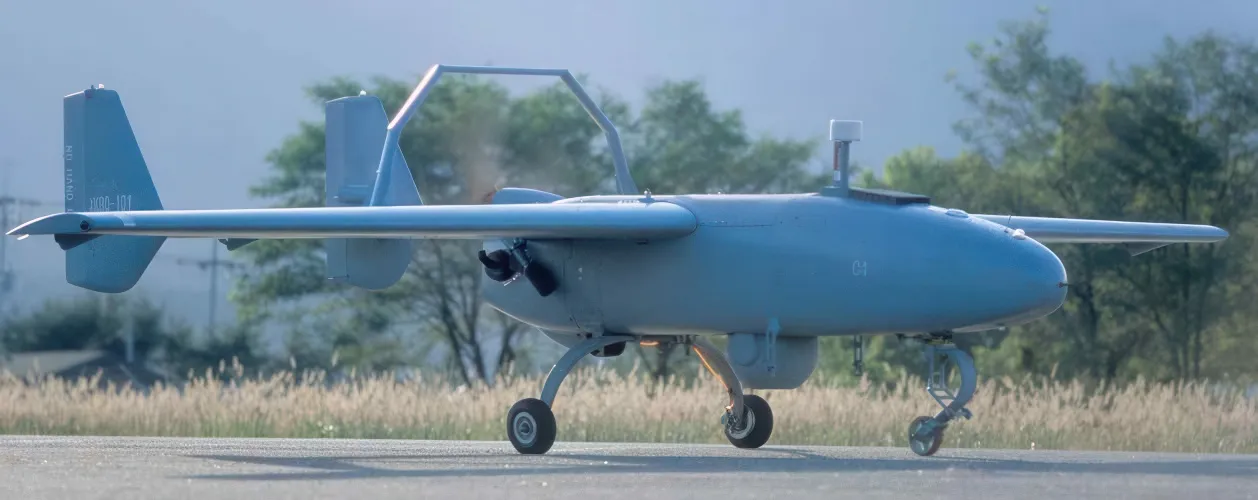
South Korean unnamed reconnaissance, attack, and long-range explosive drones are a South Korean military UAV family and force-development program built around mass operator training, short-range reconnaissance drones, small loitering munitions, and the K-LUCAS long-range one-way attack concept. The June 2026 policy links these drones to service-wide surveillance and strike missions, rapid acquisition of expendable systems, Korean-made training-drone procurement, and a response to North Korean unmanned threats rather than a single publicly named airframe.

Role in Conflicts

Side
Unconfirmed conflict context

Public 2026 reporting tied South Korea's unnamed reconnaissance, attack, low-cost expendable, and K-LUCAS drone plans to countering North Korean unmanned and missile threats, while leaving individual combat employment by model unconfirmed.
Program Structure

The June 2026 policy describes a force-wide drone package rather than one single model. Its public shape is a training fleet, a low-cost expendable layer, a named long-range attack system, and a reorganized command structure for service-level drone operations.

Training base

A 500,000-person drone-warrior goal supported by Korean-made commercial training drones for army, navy, air force, and marine units.

Training fleet

The briefing describes more than 11,000 drones in 2026 and about 60,000 by 2029, roughly one per squad.

Expendable layer

More than 20,000 low-cost drones are planned, including short-range reconnaissance drones and small suicide drones.

Named strike system

K-LUCAS is the public long-range suicide-UAV example, described as a Korean-style low-cost uncrewed combat attack system.

Industrial goal

Official material describes Korean-made training drones and a plan to localize core components, with full domestic parts framed as a planning objective.

Profile / Specs

Profile

Origin
South Korea
Type
Unmanned aerial vehicle family
Service note
2020s South Korean drone expansion and training program
Produced
2026-2030 planned expansion

Specifications

Role
Reconnaissance, attack, loitering munition, training, and counter-drone force-development program
Training scale
500,000 drone warriors
Training drone procurement
More than 11,000 Korean-made training commercial drones in 2026, expanding to about 60,000 by 2029
Low-cost expendables
More than 20,000 short-range reconnaissance drones and small suicide drones planned by 2030
Long-range suicide UAV
K-LUCAS / K-루카스, officially expanded as K-Low-cost Uncrewed Combat Attack System
Future capability
AI-based swarm systems under development or acquisition planning
Counter-drone layer
Laser, high-power microwave, interceptor-drone, and frontline counter-drone systems referenced in the 2026 policy
Supply chain
Korean-made training-drone procurement and core-component localization plan
Organization
Drone Operations Command planned for reorganization into the National Defense Drone Headquarters / 국방드론본부
Design Reference Context

K-LUCAS is publicly framed as South Korea's long-range counterpart to the U.S. LUCAS concept and the Iranian Shahed-136 style of affordable one-way attack drone. Public material does not identify an exact airframe, engine, warhead, range, seeker, manufacturer, or unit cost for K-LUCAS.

Timeline

South Korean unnamed reconnaissance, attack, and long-range explosive drones Key Events

  1. North Korean drones violate South Korean airspace

    South Korea scrambled jets and fired warning shots after five North Korean drones crossed the military demarcation line, helping make counter-drone preparedness a higher priority.

    Sources: South Korea scrambles jets as North Korean drones violate airspace

  2. Drone Operations Command launches

    South Korea launched a joint Drone Operations Command near Pocheon to oversee unmanned surveillance, reconnaissance, strike, psychological-warfare, and electromagnetic-warfare missions after North Korean drone incursions.

    Sources: S. Korea launches Drone Operations Command amid N. Korean threats

  3. South Korea announces drone and counter-drone policy

    South Korea announced the Defense Drone and Anti-Drone Development Policy, covering 500,000 drone warriors, about 60,000 Korean-made training drones by 2029, more than 20,000 low-cost expendable drones, K-LUCAS fielding, and the National Defense Drone Headquarters reorganization.

    Sources: 한국형 장거리 자폭 드론 전력화 추진...50만 드론 전사 양성, 국방 드론·대드론 발전 정책 발표

Media
Related Weapon Systems
FPV drones, First-person-view small UAV / one-way attack drone, Aircraft & UAVsAircraft & UAVsFPV dronesFirst-person-view small UAV / one-way attack droneFPV drones are small first-person-view UAVs adapted from racing-drone and commercial quadcopter technology into tactical reconnaissance and one-way attack systems. Russia and Ukraine turned them into mass battlefield consumables, while later reporting from Lebanon, Mali, Myanmar, Syria, Sudan, and Mexico shows the same control-link, payload, and low-cost adaptation pattern spreading to state forces, insurgents, and organized armed groups.
Shahed-107, Long-range explosive-reconnaissance UAV / loitering munition, Aircraft & UAVsAircraft & UAVsShahed-107Long-range explosive-reconnaissance UAV / loitering munitionThe Shahed-107 is an Iranian high-wing one-way attack UAV first reported as a Shahed-101-family explosive-reconnaissance design offered to Russia and later documented by Ukrainian intelligence through recovered or examined Shahed-107 components. Public sources distinguish between early 1,500 km range claims from Iranian media and a DIU-assessed battlefield sample with a 15 kg warhead, DLE 111 two-stroke engine, 28 L fuel tank, X-shaped tail, anti-jam navigation equipment, and about 300 km operational range.
SkyFall P1-SUN, Counter-UAS interceptor drone, Air DefenseAir DefenseSkyFall P1-SUNCounter-UAS interceptor droneSkyFall P1-SUN is a Ukrainian counter-UAS interceptor drone built for low-cost defense against Shahed-type one-way attack UAVs and similar aerial targets. SkyFall designed the compact FPV aircraft around a modular, partly 3D-printed airframe, small explosive payload, high-speed pursuit, and mass production, while the P1-SUN Long upgrade adds AI-assisted terminal detection for Ukraine's fast-growing interceptor layer in the 2014 Russia-Ukraine War.
BARS-SM Gladiator, Long-range one-way attack UAV / drone-missile, Aircraft & UAVsAircraft & UAVsBARS-SM GladiatorLong-range one-way attack UAV / drone-missileBARS-SM Gladiator is a Ukrainian long-range one-way attack unmanned system publicly named by Ukraine's General Staff in the May 16-17, 2026 strikes on Moscow-region military-industrial and fuel-logistics targets. Open sources treat it as a previously little-known Bars-family weapon, so the record separates the confirmed Ukrainian conflict-use claim from family-level range, payload, speed, and manufacturer details that remain only partly disclosed.

Related News

Sources