Naval Systems

Vanguard-class submarine

Also known as
  • Vanguard class
  • Vanguard-class submarine
  • Vanguard-class submarines
  • Vanguard SSBN
  • HMS Vanguard class
  • Royal Navy Vanguard class

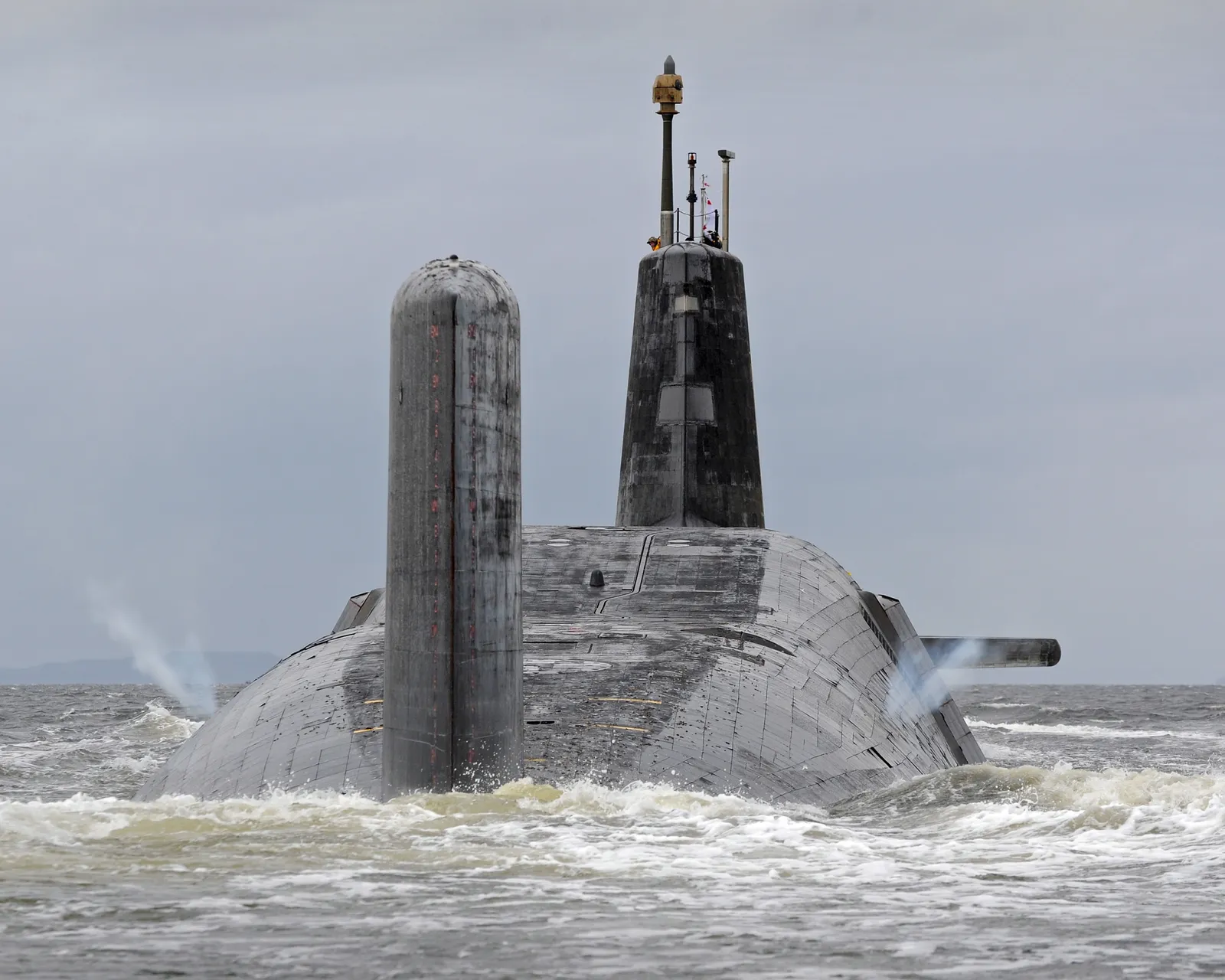
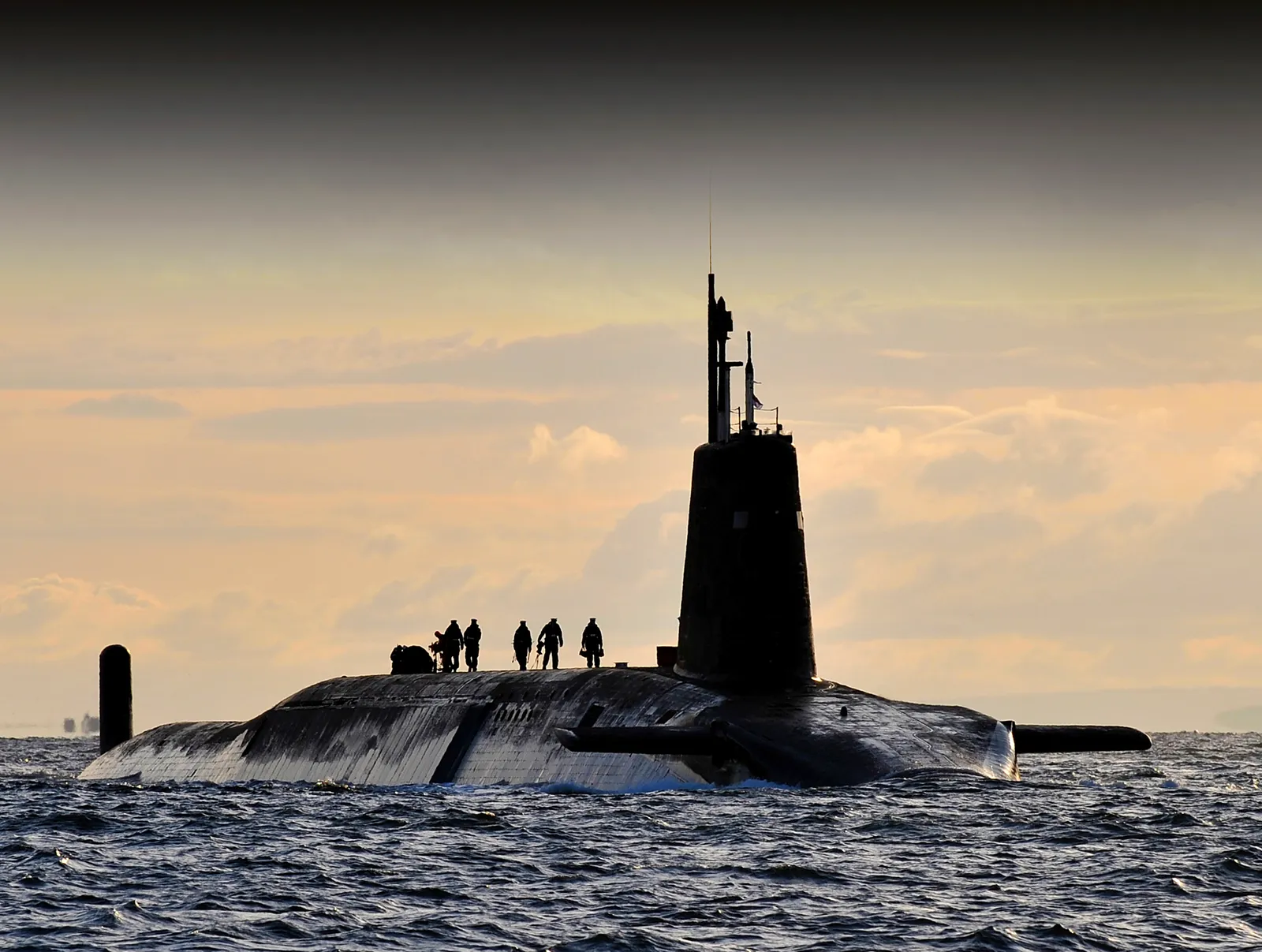
The Vanguard-class submarine is the Royal Navy's four-boat nuclear-powered ballistic missile submarine class for the United Kingdom's continuous at-sea nuclear deterrent. Built at Barrow-in-Furness by Vickers Shipbuilding and Engineering, the class carries Trident II D5 missiles, remains in service as the UK's single nuclear delivery platform, and is being sustained until Dreadnought-class submarines replace it in the 2030s.

Profile / Specs

Profile

Origin
United Kingdom
Type
Nuclear-powered ballistic missile submarine
Service note
1993-present
Produced
1986-1999
Number built
4
Developed from
Resolution-class Polaris ballistic-missile submarines
Developed into
Dreadnought-class submarine

Specifications

Class size
4 submarines: HMS Vanguard, Vengeance, Victorious and Vigilant
Displacement
15,900 tonnes submerged
Length
150 m
Beam
12.8 m
Submerged speed
Over 25 knots
Crew
132 officers and ratings
Propulsion
Rolls-Royce PWR 2 nuclear reactor providing steam for propulsion and electricity
Missile tubes
16 independently controlled tubes for Trident II D5 missiles
Torpedo tubes
Four 533 mm torpedo tubes
Armament
Trident II D5 submarine-launched ballistic missiles; Spearfish heavyweight torpedoes documented in Vanguard-class testing
Periscopes
CK51 search periscope and CH91 attack periscope combined into an optronic mast
Class Boats

The Vanguard class consists of four Royal Navy ballistic-missile submarines. The boats are maintained for continuous at-sea deterrent patrols rather than conventional combat tasking.

BoatPennantCatalog context
HMS VanguardS28Lead boat of the class and the submarine named in the 1994 and 2024 Trident test-operation sources.
HMS VictoriousS29Second Vanguard-class boat; Royal Navy reporting says its life-extension work is intended to support patrols into the 2030s.
HMS VigilantS30Third boat of the class and part of the four-submarine deterrent force listed by the Royal Navy.
HMS VengeanceS31Fourth boat of the class; the selected documentary preview focuses on life aboard this Vanguard-class submarine.
Ballistic Missile Armament

Royal Navy and U.S. Navy sources identify the Vanguard class as a launch platform for Trident II D5 submarine-launched ballistic missiles.

Launched itemItem typeLaunch evidence
Trident II D5 fleet ballistic missile, Submarine-launched ballistic missile, MunitionsTrident II D5 fleet ballistic missileSubmarine-launched ballistic missile

Royal Navy class material says each Vanguard-class submarine is armed with Trident 2 D5 missiles, and the U.S. Navy fact file lists UK Vanguard-class submarines as a Trident II D5 platform.

Sources: Vanguard Class Nuclear Submarine, Trident II (D5) Missile | U.S. Navy Fact File

Deterrent And Defensive Fit

The class is primarily a strategic-deterrent platform, but public sources also document its self-defence and readiness testing context.

System areaDocumented fit or eventReader context
Strategic missilesTrident II D5 missiles in independently controlled launch tubes.Royal Navy and parliamentary sources describe the Trident system as the boat's central deterrent payload.
Conventional torpedo armamentFour 533 mm torpedo tubes; latest Spearfish version tested from a Vanguard-class submarine in 2024.The torpedo row explains the class's documented non-nuclear defensive weapon path without treating it as conflict use.
Successor platformDreadnought-class ballistic-missile submarines planned to replace Vanguard in the 2030s.UK government material frames Dreadnought as the next nuclear-deterrent platform rather than a parallel combat class.
Timeline

Vanguard-class submarine Key Events

  1. Devonshire Dock Hall opens for Vanguard construction

    BAE Systems Heritage describes the Devonshire Dock Hall at Barrow as built to support construction of the Vanguard-class nuclear-deterrent submarines.

    Sources: Barrow-in-Furness - BAE Systems Heritage

  2. HMS Vanguard commissioned

    The Royal Navy identifies HMS Vanguard as the lead boat and says the submarine was commissioned in 1993 as the Trident carrier.

    Sources: HMS Vanguard (S28)

  3. First UK Trident II D5 submarine test firing

    A UK Parliament answer recorded HMS Vanguard's successful unarmed Trident II D5 test firing, the first such launch by a UK submarine.

    Sources: Trident II D5 Missile Test Firing

  4. HMS Vanguard completes post-maintenance test operation

    A written ministerial statement said HMS Vanguard and crew were certified to rejoin the operational cycle after a Demonstration and Shakedown Operation, while noting an event-specific missile-test anomaly.

    Sources: HMS Vanguard DASO Statement

  5. Spearfish Mod 1 tested from a Vanguard-class boat

    The Royal Navy reported sea-acceptance testing of the latest Spearfish torpedo version from a Vanguard-class submarine off Scotland.

    Sources: Vanguard-class Spearfish Trials

Media

Vanguard-class submarine Images

Related Weapon Systems
Ohio-class ballistic missile submarine, Nuclear-powered ballistic missile submarine, Naval SystemsNaval SystemsOhio-class ballistic missile submarineNuclear-powered ballistic missile submarineThe Ohio-class ballistic missile submarine is the U.S. Navy's current sea-based strategic-deterrent SSBN class and the launch platform for Trident II D5/D5LE missiles. Four early Ohio hulls were converted to SSGNs, leaving 14 SSBNs in strategic service; Navy sources describe each remaining SSBN as carrying up to 20 missiles after New START tube deactivation and operating on alternating Blue and Gold crews for sustained patrol availability.
Delta IV-class submarine, Nuclear-powered ballistic missile submarine class, Naval SystemsNaval SystemsDelta IV-class submarineNuclear-powered ballistic missile submarine classThe Delta IV-class submarine is the Soviet Project 667BDRM Delfin nuclear-powered ballistic-missile submarine, built by Sevmash for the Northern Fleet and retained by Russia as an aging but still visible sea-based nuclear deterrent. The class carries a D-9RM missile system with 16 R-29RM-family SLBMs, four 533 mm torpedo tubes, and modernized Sineva/Layner-era missiles; public sources distinguish the seven boats built from smaller operational counts as individual hulls cycle through overhaul or replacement by Borei-class SSBNs.
Type 094 / Jin-class ballistic missile submarine, Chinese People's Liberation Army Navy nuclear-powered ballistic missile submarine class, Naval SystemsNaval SystemsType 094 / Jin-class ballistic missile submarineChinese People's Liberation Army Navy nuclear-powered ballistic missile submarine classThe Type 094 / Jin-class is the People's Liberation Army Navy's operational nuclear-powered ballistic missile submarine class and China's first credible sea-based nuclear-deterrent platform. U.S. defense reporting describes six operational Jin-class boats carrying up to 12 JL-2 or JL-3 submarine-launched ballistic missiles, while open-source references place construction at Bohai Shipyard in Huludao.
Upholder/Victoria-class submarine, Diesel-electric patrol submarine, Naval SystemsNaval SystemsUpholder/Victoria-class submarineDiesel-electric patrol submarineThe Upholder/Victoria class is a four-boat Type 2400 diesel-electric submarine line designed in the United Kingdom as the Royal Navy's late-Cold-War successor to the Oberon class. The Vickers Shipbuilding and Engineering design was ordered for HMS Upholder in 1983, followed by three Cammell Laird-built boats, but the Royal Navy withdrew the class in 1994 as it moved to an all-nuclear submarine force. Canada acquired the reserve boats in 1998, renamed them as the Victoria class, and rebuilt them around Canadian fire-control, communications, and Mk 48 heavyweight-torpedo requirements. Current Royal Canadian Navy and National Defence material frames the class as Canada's covert underwater-surveillance and deterrence force while Victoria Class Modernization keeps the boats in service into the mid-to-late 2030s.

Sources