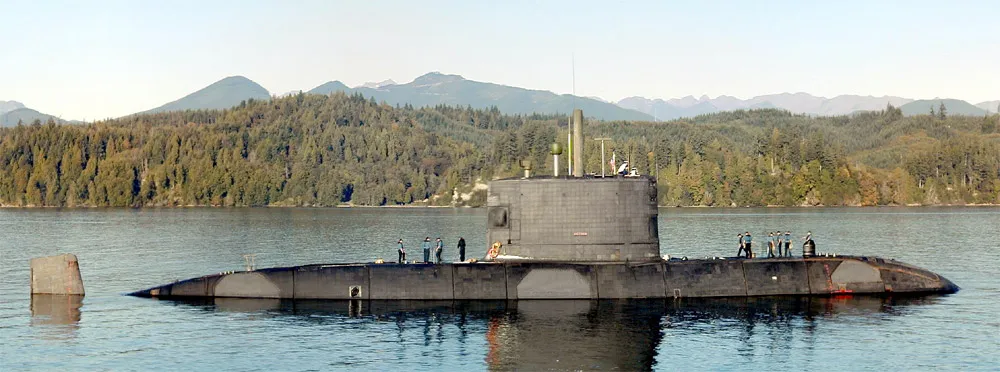
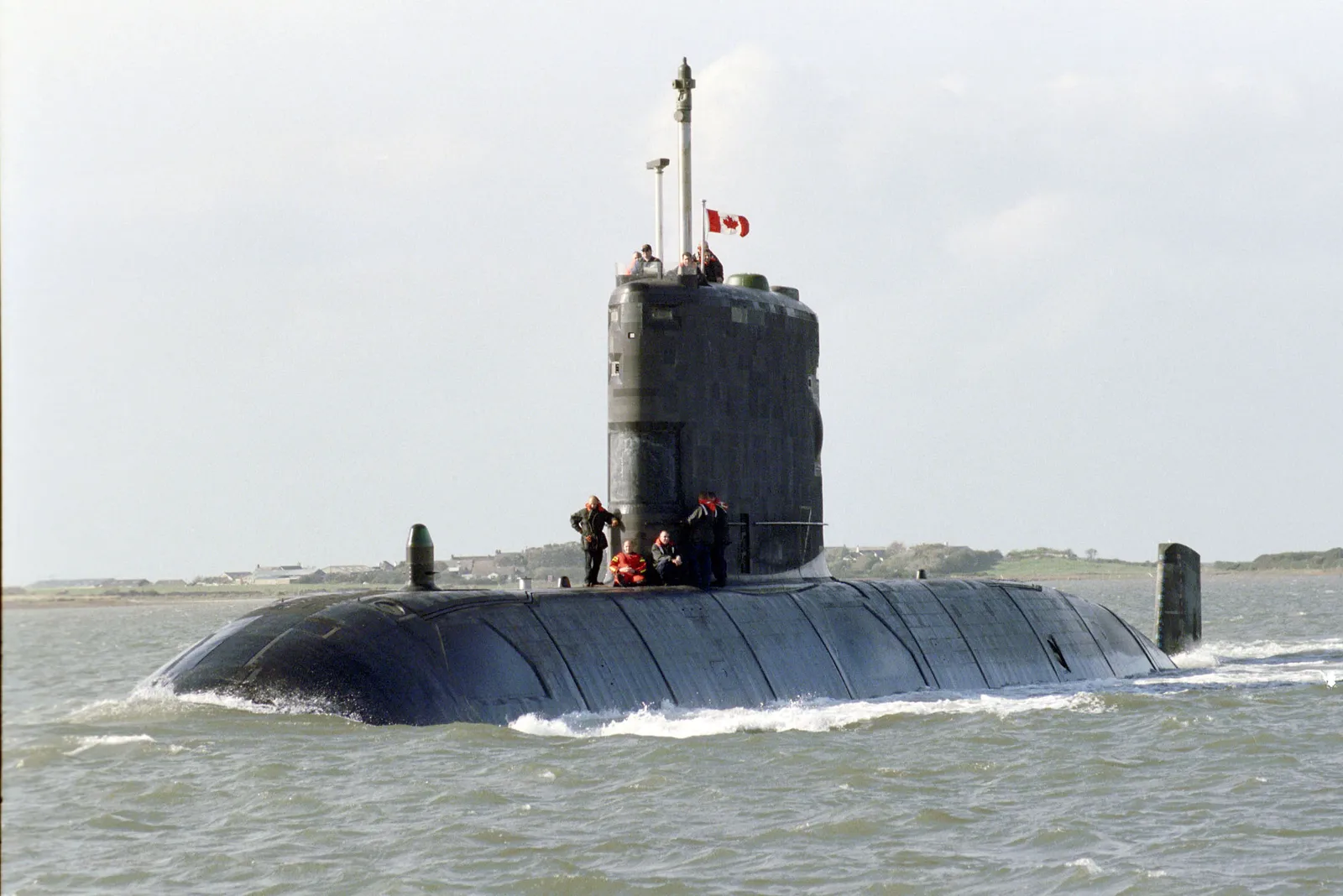
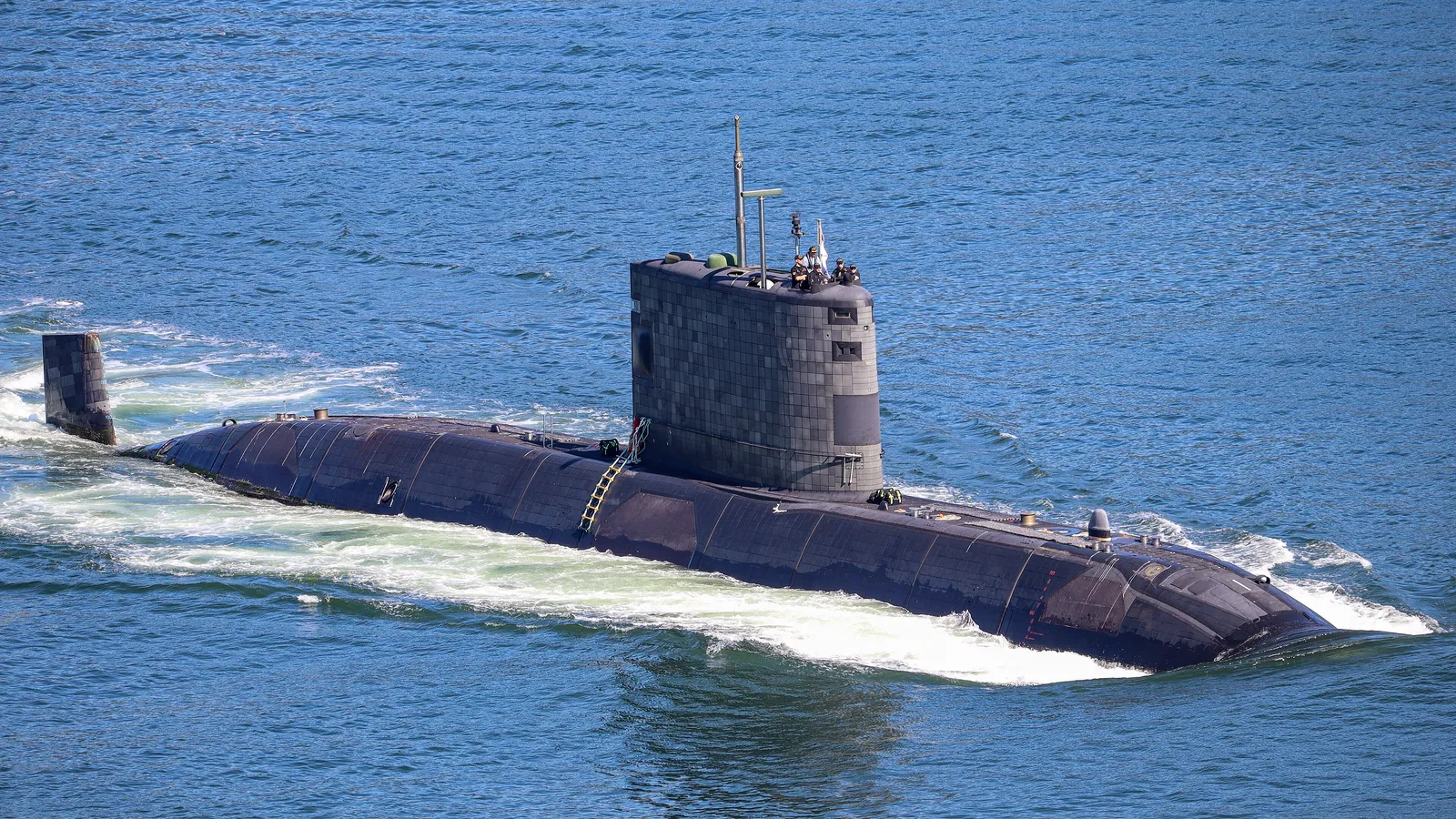
- Design role
- ASW surveillance and attack in deep and shallow water, including barrier operations that could free SSNs for wider tasks
- Royal Navy tasking concept
- GIUK-gap patrol against Soviet submarines was identified in Parliament as the class's primary late-Cold-War role
- Displacement
- Approximately 2,200 tonnes surfaced / 2,450 tonnes dived in Canadian modernization data
- Length
- 70.3 m
- Speed
- 12 knots surfaced; 20 knots submerged
- Patrol endurance
- Approximately 8 weeks in Canadian modernization data
- Diving depth
- Greater than 200 m
- Crew
- 48 crew and 5 trainees in Canadian modernization data
- Home ports
- Esquimalt, British Columbia, and Halifax, Nova Scotia
- Propulsion features
- Two 1.4 MW diesel generators and a single 4 MW main motor were part of the Type 2400 requirement
- Sensors as designed
- Bow sonar, towed array, flank array, passive ranging, two electrically controlled periscopes, ESM mast, radar, and communications masts
- Armament
- Six 533 mm bow torpedo tubes; Canadian service moved from Mk 48 Mod 4M to Mk 48 Mod 7AT heavyweight torpedoes
- Fire-control and weapon interface
- Canadianization added fire-control changes for in-service Mk 48 torpedoes; the Mod 7AT upgrade adds a Weapon Control Manager interface in the fire-control system
- Sonar modernization
- HMCS Corner Brook received the BQQ-10 sonar suite, replacing the previous 2040 sonar suite with higher post-receipt processing and updated operator displays
- Victoria Class Modernization
- A 12-project program with nine projects in implementation and three in definition, intended to keep the submarines operational into the mid-to-late 2030s