Profile
- Origin
- United Kingdom
- Built by
- BAE Systems
- Type
- Nuclear-powered ballistic missile submarine
- Service note
- Under construction; planned Royal Navy service from the early 2030s
- Produced
- 2016-present
- Number built
- 4 planned; under construction
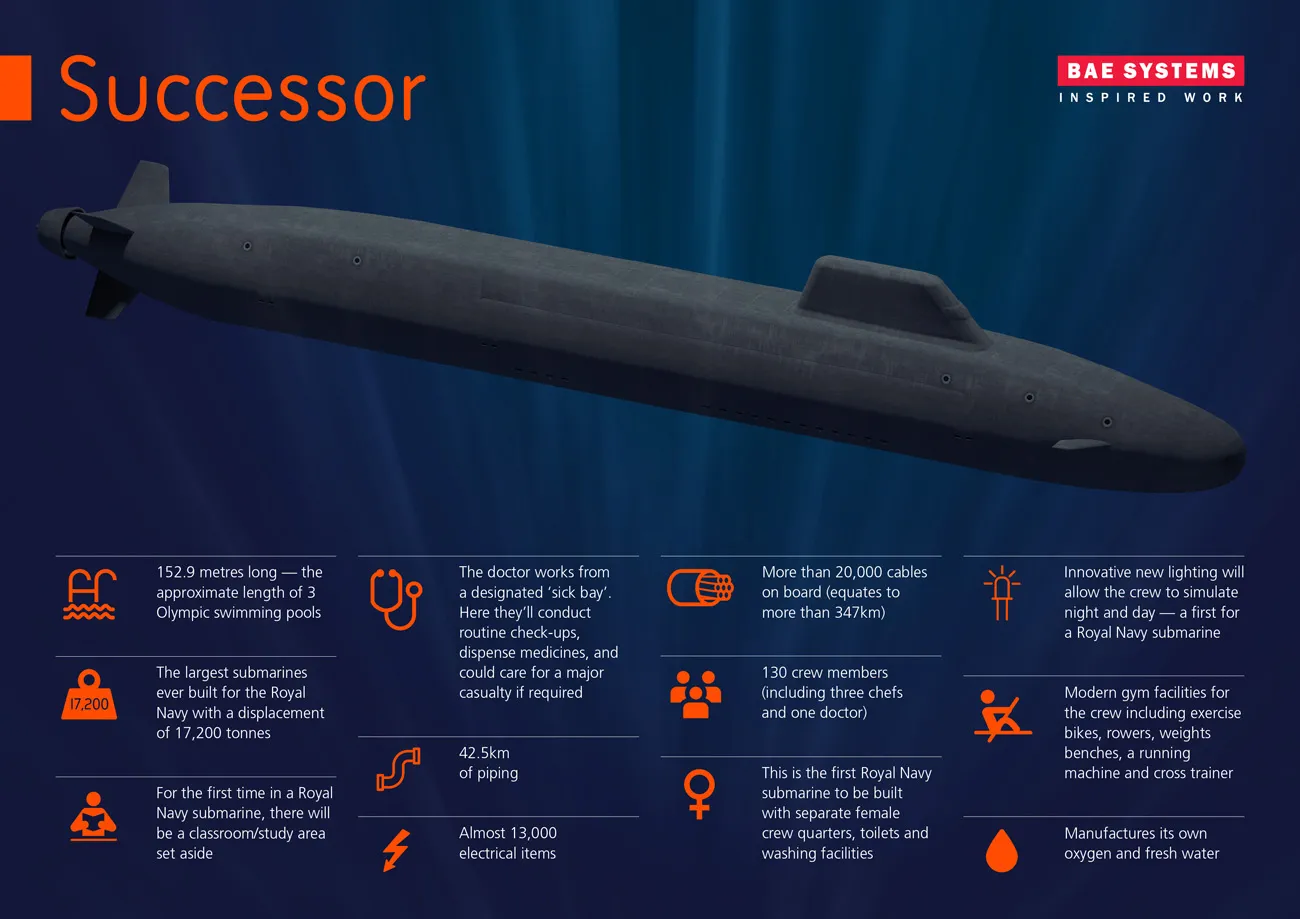
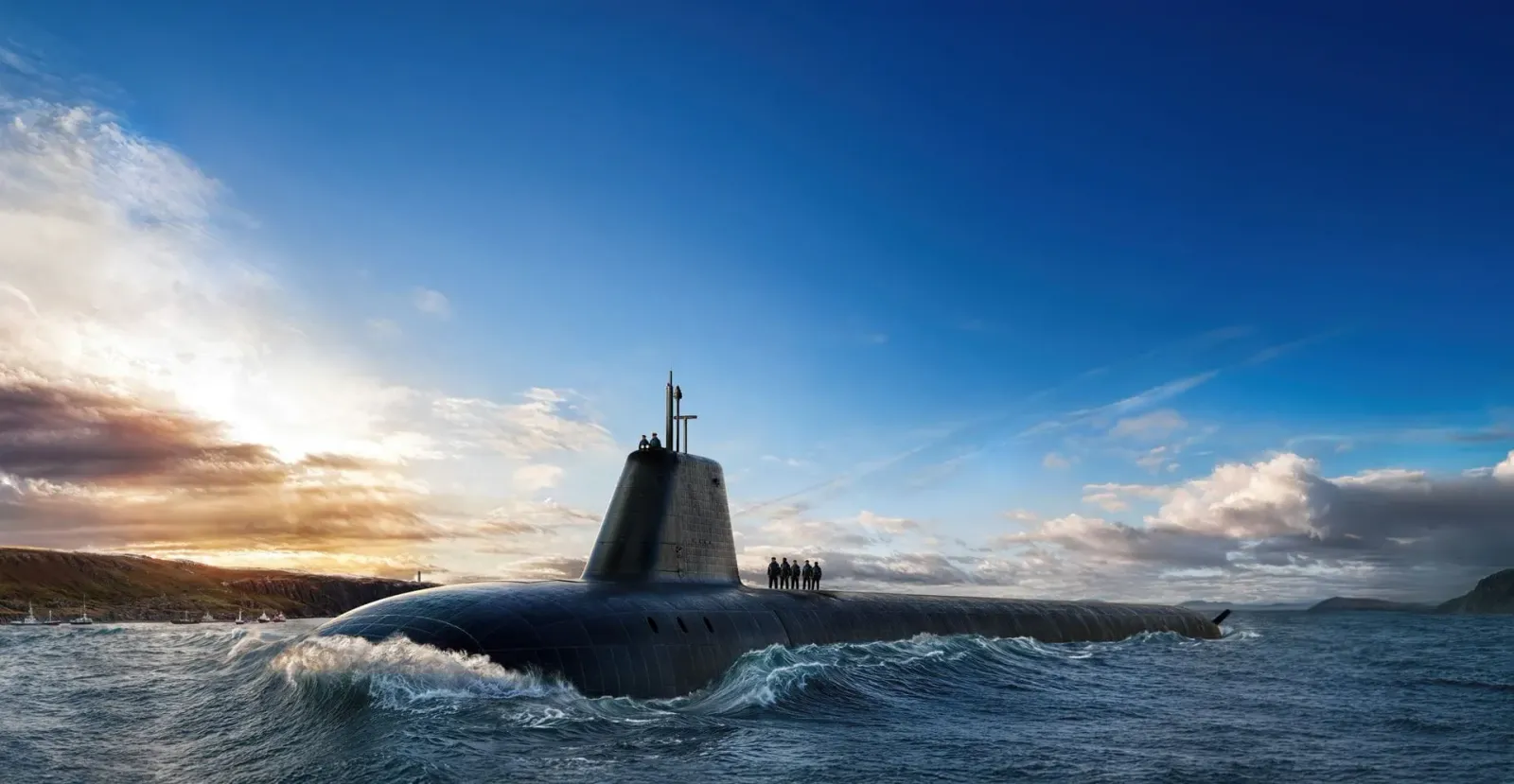
The Dreadnought-class submarine is the Royal Navy's four-boat replacement for the Vanguard-class strategic-deterrent force, designed and built by BAE Systems at Barrow-in-Furness with the Dreadnought Alliance. The class is a future nuclear-powered ballistic missile submarine platform for Trident II D5 missiles, with the lead boat's keel laid in March 2025 and service planned from the early 2030s.
The class is planned as four Royal Navy ballistic-missile submarines built at Barrow-in-Furness to sustain the United Kingdom's continuous at-sea deterrent as Vanguard-class boats retire.
| Boat | Program status | Catalog context |
|---|---|---|
| HMS Dreadnought | Lead boat; keel laid in March 2025. | First boat of the class and planned Vanguard-class replacement from the early 2030s. |
| HMS Valiant | Second boat; construction work identified by BAE Systems as underway. | Part of the four-boat deterrent replacement programme. |
| HMS Warspite | Third boat; steel cut in February 2023. | Marks continued build progress at BAE Systems' Barrow shipyard. |
| HMS King George VI | Fourth named boat in the planned class. | Completes the named four-submarine Dreadnought-class plan. |
The Dreadnought programme pairs the Trident launch role with updated submarine sensor and control systems rather than treating the boat only as a missile container.
| System area | Supplier or source | Reader context |
|---|---|---|
| Sonar suite | Thales Sonar 2076 | Royal Navy reporting says all four boats will receive Sonar 2076, including bow, flank and towed-array systems. |
| Above-water sensors | Combat System Mast | The same Royal Navy source describes updated digital periscope masts for visual and situational awareness. |
| Manoeuvring controls | BAE Systems AVCM | BAE Systems describes the Active Vehicle Control Management system as adapting flight-control technology to manage heading, pitch, depth and buoyancy. |
Royal Navy material identifies the Dreadnought class as the successor ballistic-missile submarine platform for Trident II D5 missiles.
| Launched item | Item type | Launch evidence |
|---|---|---|
 | Submarine-launched ballistic missile | The Royal Navy says Dreadnought-class submarines will be capable of launching Trident 2 D5 missiles as they replace the Vanguard-class deterrent boats. Sources: Royal Navy Dreadnought class |
The Ministry of Defence announced that the first Successor submarine would be named Dreadnought and that the name would become the class name.
Sources: New Successor Submarines Named
The Ministry of Defence and Submarine Delivery Agency reported that steel had been cut on Warspite, the third of four Dreadnought-class submarines.
Sources: Nuclear submarine steel cut milestone
BAE Systems announced that the keel of the first Dreadnought-class submarine had been laid at Barrow-in-Furness, with the final major unit preparing for integration.
Sources: BAE Systems Dreadnought keel laid