Naval Systems

River-class destroyer

Also known as
  • Canadian Surface Combatant
  • Canadian Surface Combatant (CSC)
  • CSC
  • RCD
  • River class destroyer
  • River-Class Destroyer
  • DDGH River
  • HMCS Fraser

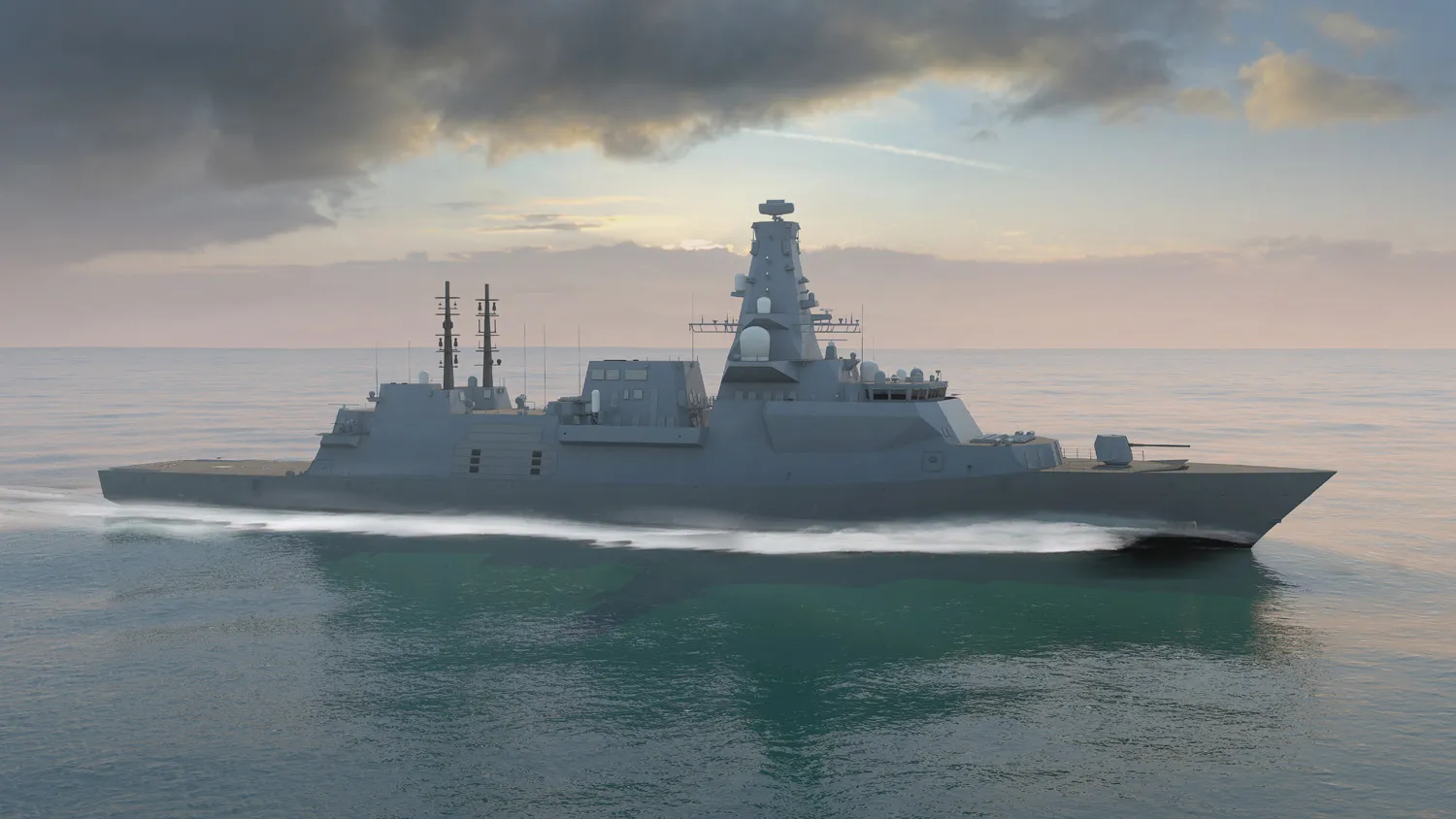
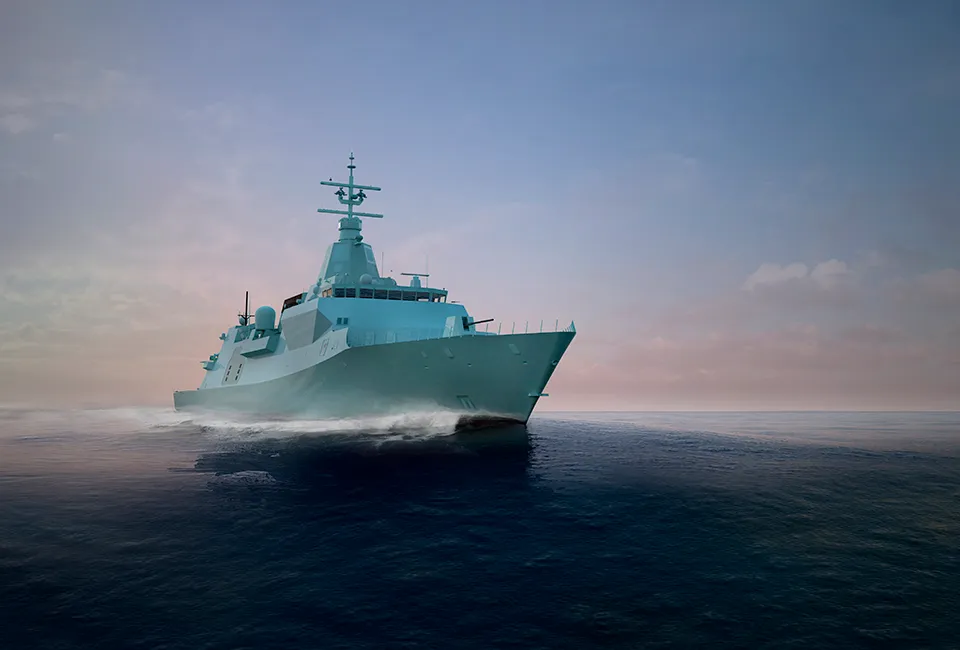
The River-class destroyer is Canada's future guided-missile destroyer class, a 15-ship Royal Canadian Navy program based on BAE Systems' Type 26 Global Combat Ship and built through Irving Shipbuilding with Lockheed Martin Canada as design lead. Current official fact sheets describe a SPY-7/Aegis combat-system architecture, a 24-cell Mk 41 vertical launch battery for SM-2, ESSM, and Tomahawk missiles, Naval Strike Missile, Rolling Airframe Missile, Mk 54 torpedoes, and a CH-148 Cyclone aviation facility.

Role in Conflicts

Side
Unconfirmed conflict context

Exact model: River-class destroyer, the Royal Canadian Navy's Type 26-based Canadian Surface Combatant. Official Canadian sources place the lead ship under construction with delivery expected in the early 2030s, and no direct combat-use record is available.

Profile / Specs

Specifications

Displacement
7,800 tonnes
Length
151.4 metres
Beam
20.75 metres
Navigational draught
Approximately 8 metres
Top speed
27 knots
Range
7,000 nautical miles
Complement
210
Radar
LM SPY-7 solid-state 3D AESA radar
Combat system
Aegis Combat System with Lockheed Martin Canada Canadian Tactical Interface
Vertical launch system
24-cell Lockheed Martin Mk 41
Area air-defense missile
Raytheon Standard Missile-2
Point-defense missile
Raytheon Evolved Sea Sparrow Missile
Naval fires missile
Raytheon Tomahawk
Close-in air defense
Rolling Airframe Missile
Anti-ship missile
Kongsberg Naval Strike Missile
Anti-submarine weapons
Mk 54 lightweight torpedoes with twin launch tubes
Main gun
BAE 127 mm main gun system
Aviation facility
1 x CH-148 Cyclone helicopter plus space for remotely piloted systems
Propulsion
CODLOG with GE electric motors, Rolls-Royce MT30 gas turbine, and Rolls-Royce MTU diesel generators
Batch 1 cost estimate
CA$22.2 billion for the first three ships, excluding taxes
Carried Weapons And Aircraft

The 2026 Royal Canadian Navy fact sheet describes the River-class armament as a layered missile, gun, torpedo, and aviation fit centered on a 24-cell Mk 41 vertical launch system and shipboard helicopter facilities.

Carried itemItem typeCarriage evidence
Standard Missile-2 (SM-2), Shipboard surface-to-air missile family, MunitionsStandard Missile-2 (SM-2)Area air-defense missile

The RCN fact sheet lists Raytheon Standard Missile-2 as the River-class area air-defense missile for the bow vertical launch system.

Sources: River-Class Destroyer Fact Sheet (2026)

Evolved Sea Sparrow Missile, Ship self-defense missile, MunitionsEvolved Sea Sparrow MissilePoint-defense missile

The RCN fact sheet lists Raytheon Evolved Sea Sparrow as the River-class point-defense missile carried in the bow weapons fit.

Sources: River-Class Destroyer Fact Sheet (2026)

BGM-109 Tomahawk Land Attack Missile, Ship- and submarine-launched land-attack cruise missile, MunitionsBGM-109 Tomahawk Land Attack MissileNaval fires missile

The RCN fact sheet lists Raytheon Tomahawk for naval fires support in the River-class bow weapons fit.

Sources: River-Class Destroyer Fact Sheet (2026)

CH-148 Cyclone, Maritime helicopter, Aircraft & UAVsCH-148 CycloneEmbarked maritime helicopter

The RCN fact sheet lists one CH-148 Cyclone helicopter and space for remotely piloted systems in the River-class aviation facilities.

Sources: River-Class Destroyer Fact Sheet (2026)

Combat Sensors

The River-class sensor and command suite combines SPY-7, Aegis, the Canadian Tactical Interface, Cooperative Engagement Capability, and underwater-warfare sensors.

Carried itemItem typeCarriage evidence
AN/SPY-7 radar, Solid-state S-band AESA radar family, Air DefenseAN/SPY-7 radarSolid-state 3D AESA radar

The RCN fact sheet identifies the LM SPY-7 solid-state 3D AESA radar as the River-class surveillance and weapon sensor radar.

Sources: River-Class Destroyer Fact Sheet (2026)

Combat-System Architecture

The River-class design concentrates air defence, land-attack, anti-ship, anti-submarine, and aviation functions in one large surface combatant rather than splitting them across separate destroyer and frigate classes.

LayerDocumented equipmentRole in the ship
Air and missile defenceSPY-7 radar, Aegis Combat System with Canadian Tactical Interface, Cooperative Engagement Capability, SM-2, ESSM, and Rolling Airframe MissileProvides long-range surveillance, sensor networking, area air defence, point defence, and close-in defence.
Strike and surface warfareTomahawk, Naval Strike Missile, BAE 127 mm gun, and two stabilized 30 mm gunsGives the class land-attack, anti-ship, naval fires, and close surface-engagement options.
Underwater warfareS2087 towed low-frequency active/passive sonar, S2150 hull-mounted sonar, SEA SENTOR torpedo countermeasures, sonobuoy processing, and Mk 54 torpedoesBuilds the Type 26 lineage around anti-submarine search, tracking, self-protection, and attack functions.
Aviation and mission bayCH-148 Cyclone facilities, remotely piloted systems space, multi-role boats, and modular mission-support capacityExtends surveillance, anti-submarine, boarding, and off-board mission options beyond the ship itself.

Sources: River-Class Destroyer Fact Sheet (2026); River-class destroyer overview.
Timeline

River-class destroyer Key Events

  1. Preferred bidder identified

    The Government of Canada and Irving Shipbuilding identified Lockheed Martin Canada as the preferred bidder for the future Canadian Surface Combatants.

    Sources: River-class Destroyer Project

  2. Definition contract awarded

    Canada announced the selection of Lockheed Martin Canada for the design team, with the winning bid based on the BAE Systems Type 26 Global Combat Ship.

    Sources: River-class Destroyer Project

  3. Construction activities begin and the class is named

    Canada celebrated the start of construction activities for the Canadian Surface Combatants and announced that the new fleet would be known as River-class destroyers.

    Sources: Construction begins for River-class destroyers

  4. Construction contract awarded

    The Government of Canada awarded Irving Shipbuilding the Batch 1 construction contract covering the first three River-class destroyers.

    Sources: River-class destroyer construction contract, River-class Destroyer Project

  5. Full-rate production begins

    The River-class Destroyer Project entered full-rate production on the first ship.

    Sources: River-class Destroyer Project

  6. Keel laid for future HMCS Fraser

    Canada held the ceremonial keel laying for the first River-class destroyer, the future HMCS Fraser, at Halifax Shipyard.

    Sources: River-class destroyer keel laying

First Batch Ships

Canada's first implementation contract covers the initial three River-class destroyers. The names link the new class to waterways reaching the Pacific, Atlantic, and Arctic oceans and to earlier Royal Canadian Navy ships.

ShipBatch contextStatus or naming context
HMCS FraserLead River-class destroyerKeel-laying ceremony held at Halifax Shipyard on 2026-06-12; delivery expected in the early 2030s.
HMCS Saint-LaurentInitial three-ship batchNamed in 2024 as one of the first three River-class ships.
HMCS MackenzieInitial three-ship batchNamed in 2024 as one of the first three River-class ships.

Sources: Construction begins for River-class destroyers; River-class destroyer keel laying; River-class Destroyer Project.

Media
Related Weapon Systems
Hobart-class air warfare destroyer, Guided-missile destroyer, Naval SystemsNaval SystemsHobart-class air warfare destroyerGuided-missile destroyerThe Hobart-class air warfare destroyer is Australia's three-ship Aegis-equipped guided-missile destroyer class, adapted from Navantia's F100 design and built in Australia by the Air Warfare Destroyer Alliance. Its public record is strongest as a fleet air-defense, escort, surface-strike, and undersea-warfare platform: the class combines AN/SPY-1D(V), Aegis Baseline 7.1, SM-2, ESSM, Harpoon, helicopter facilities, torpedoes, and a 48-cell Mk 41 vertical launch system, with later Australian test firings adding Naval Strike Missile, SM-6, and Tomahawk integration context.
Arleigh Burke-class guided-missile destroyer, Guided-missile destroyer, Naval SystemsNaval SystemsArleigh Burke-class guided-missile destroyerGuided-missile destroyerThe Arleigh Burke class is the U.S. Navy's long-running DDG 51 guided-missile destroyer family, built around the Aegis Weapon System, Mk 41 vertical launch cells, gas-turbine propulsion, and multi-mission air, surface, subsurface, ballistic-missile-defense, and land-attack roles. The class entered service with USS Arleigh Burke in 1991, spans Flight I through Flight III hulls, and continues in production with the Flight III configuration centered on AN/SPY-6(V)1 radar and Aegis Baseline 10.
River-class offshore patrol vessel, Offshore patrol vessel, Naval SystemsNaval SystemsRiver-class offshore patrol vesselOffshore patrol vesselThe River-class offshore patrol vessel is the Royal Navy's British-built patrol-ship family for territorial-water security, maritime security, law-enforcement support, and sustained overseas presence. BAE Systems and Royal Navy sources distinguish the early Batch 1 ships from the larger Batch 2 vessels, whose 90 metre hull, 30 mm gun, Merlin-capable flight deck, and rotating forward-deployed crews make them useful for Caribbean, South Atlantic, Mediterranean, West African, and Indo-Pacific tasks. HMS Trent gives the class a specific documented crisis role through its 2023-2024 deployment to Guyana during the Guyana-Venezuela Essequibo crisis.
CMS 330, Naval combat management system, Naval SystemsNaval SystemsCMS 330Naval combat management systemCMS 330 is a Canadian naval combat management system from Lockheed Martin Canada, originally developed for the Royal Canadian Navy's Halifax-class frigates and later exported or adapted across allied surface fleets. Public Canadian sources describe it as the central software layer that integrates ship sensors, weapons, communications, and information sources for situational awareness and combat-system coordination, with current users or planned integrations including Canada, New Zealand, Chile, and Germany.
Harry DeWolf-class offshore patrol vessel, Arctic and offshore patrol vessel, Naval SystemsNaval SystemsHarry DeWolf-class offshore patrol vesselArctic and offshore patrol vesselThe Harry DeWolf-class offshore patrol vessel is Canada's Arctic and Offshore Patrol Ship class, built by Irving Shipbuilding under the National Shipbuilding Strategy for Arctic sovereignty, domestic patrol, and international operations. Six Royal Canadian Navy ships were delivered from 2020 to 2025, and two Canadian Coast Guard variants, CCGS Donjek and CCGS Sermilik, extend the design toward fisheries enforcement, search and rescue, icebreaking, science, aids-to-navigation, and low-Arctic patrol work.

Sources