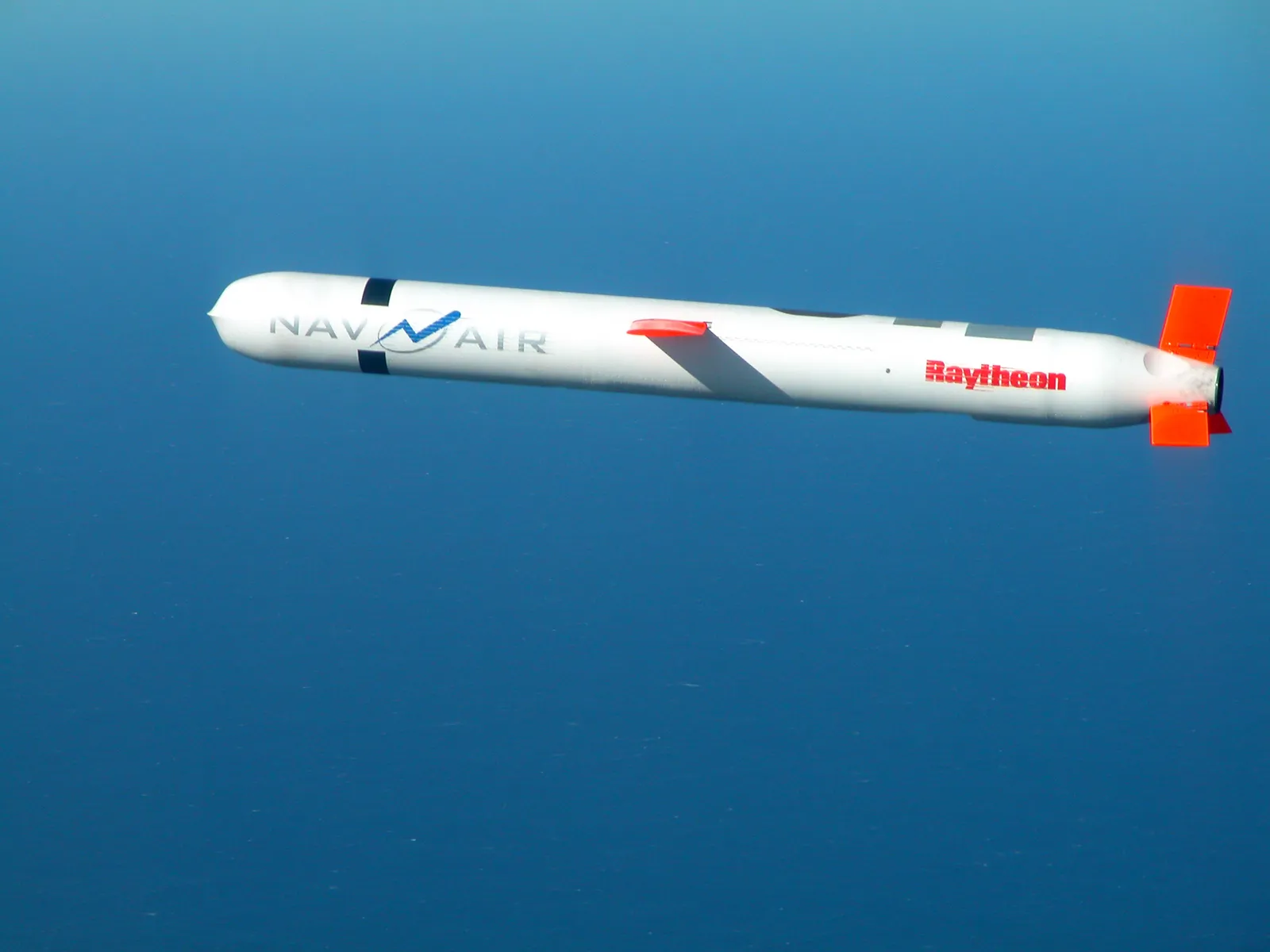

U.S. and British ships and submarines fired Tomahawk cruise missiles at Libyan radar and anti-aircraft sites during the opening phase of Operation Odyssey Dawn.
Munitions
BGM-109 Tomahawk Land Attack Missile
Also known as
- Tomahawk
- BGM-109
- RGM-109
- UGM-109
- TLAM
- Tomahawk Land Attack Missile
- Tactical Tomahawk
The BGM-109 Tomahawk Land Attack Missile, often abbreviated TLAM, is a U.S. long-range subsonic cruise missile used for deep precision strikes from naval surface ships and submarines, with newer variants also adding maritime-strike and warhead modernization paths. Documented combat use spans the 1991 Gulf War through Libya, Syria, Yemen, the Red Sea Crisis, Operation Inherent Resolve, and U.S. strikes on Iranian targets during the 2020 United States-Iran Conflict and 2025 Israel-Iran Conflict.
Role in Conflicts
- Side
- Opposition and anti-government forcesU.S., UK, and French strike forces

U.S. Navy destroyers fired 59 Tomahawk Land Attack Missiles at Shayrat Airfield in April 2017 after the Syrian government's Khan Sheikhoun chemical attack. In the April 2018 U.S., UK, and French strike phase of the same war, U.S. Navy ships and USS John Warner fired Tomahawk Land Attack Missiles against Syrian government chemical-weapons-related facilities near Damascus and Homs.
Role details2014 Operation Inherent Resolve: U.S. military and partner nation forces used Tomahawk Land Attack Missiles in the September 23, 2014 strikes against ISIL targets in Syria.
- Side
- United States

USS Nitze fired Tomahawk cruise missiles against three Houthi-controlled coastal radar sites in Yemen in October 2016 after missile attacks on U.S. ships near the Bab el-Mandeb.
Role detailsU.S. Navy surface and subsurface platforms launched Tomahawk Land Attack Missiles during January 2024 strikes on Houthi radar, launch, production, and command sites tied to attacks on Red Sea shipping.
Role details- Side
- United States
U.S. forces fired Tomahawk missiles during Operation Midnight Hammer strikes on Iranian nuclear facilities in June 2025 and during Operation Epic Fury strikes against Iranian military targets in 2026.
- Side
- United States
During Operation Midnight Hammer on June 22, 2025, a U.S. guided-missile submarine fired Tomahawk missiles as part of the strike package against Iranian nuclear facilities.
Profile / Specs
Profile
- Origin
- United States
- Built by
- Raytheon
- Type
- Ship- and submarine-launched land-attack cruise missile
- Service note
- Modern ship- and submarine-launched precision strike
Specifications
- Launch platforms
- U.S. Navy surface ships and U.S./UK submarines
- Range
- Block IV/V TLAM-E: about 900 nautical miles / 1,000 statute miles / 1,600 km
- Role
- Long-range subsonic cruise missile for high-value or heavily defended land targets
- Propulsion
- Williams International 415-400 turbofan with ARC/CSD solid-fuel booster on Block IV/V
- Guidance
- INS, TERCOM, DSMAC, and GPS on Block IV/V TLAM-E
- Warhead
- Block IV TLAM-E uses a 1,000-pound-class unitary warhead
- Block V
- Modernized Block IV inventory with upgraded navigation and communications; Block Va and Vb add maritime-strike and warhead improvements
Guidance And Retargeting
Tomahawk's public technical profile is built around low-altitude subsonic flight, route planning, and mission updates rather than speed. Navy sources describe Block IV and Block V weapons as using several guidance systems and communications upgrades that let commanders redirect or update missions after launch.
Navigation
Block IV/V TLAM-E guidance combines INS, TERCOM, DSMAC, and GPS.
Retargeting
Block IV added two-way satellite communications for in-flight updates, alternate target selection, and GPS-coordinate redirection.
Block V path
Block V modernization adds navigation and communications upgrades, while Block Va and Block Vb are maritime-strike and warhead-modernization paths.
Sources: U.S. Navy Tomahawk Cruise Missile Fact File; NAVAIR Tomahawk Product Page; Raytheon Tomahawk Cruise Missile.
Variants
Public U.S. Navy and Raytheon material now emphasizes the Block IV Tactical Tomahawk and the Block V recertification family; older TLAM-C and TLAM-D names remain useful as conventional land-attack designations.
| Variant | Configuration | Designation notes |
|---|---|---|
| TLAM-C | Conventional unitary-warhead land-attack variant | The Navy fact file lists Block III TLAM-C as a retired conventional land-attack Tomahawk variant. |
| TLAM-D | Conventional dispenser land-attack variant | The Navy fact file lists Block III TLAM-D as a retired land-attack Tomahawk variant. |
| Block IV Tactical Tomahawk | In-flight retargetable land-attack missile | Block IV added two-way satellite communications, alternate target options, GPS-coordinate retargeting, loitering, and battle-damage imagery support. Sources: U.S. Navy Tomahawk Cruise Missile Fact File, NAVAIR Tomahawk Product Page |
| Block V | Recertified and modernized Tactical Tomahawk | Block V modernizes Block IV missiles with navigation and communications upgrades and extends service life through recertification. Sources: U.S. Navy Tomahawk Cruise Missile Fact File, Raytheon Tomahawk Cruise Missile |
| Block Va Maritime Strike Tomahawk | Anti-ship Block V path | Navy and Raytheon descriptions identify Block Va as the Maritime Strike Tomahawk path for moving maritime targets. Sources: U.S. Navy Tomahawk Cruise Missile Fact File, Raytheon Tomahawk Cruise Missile |
| Block Vb Joint Multiple Effects Warhead System | Block V warhead modernization path | Navy and Raytheon descriptions identify Block Vb as the JMEWS warhead path for a broader land-target set. Sources: U.S. Navy Tomahawk Cruise Missile Fact File, Raytheon Tomahawk Cruise Missile |
Launch Platforms
Tomahawk is launched from U.S. Navy surface ships and U.S. Navy and Royal Navy submarines, with Aegis destroyers and converted Ohio SSGNs providing prominent cataloged launch-platform examples.
| Launcher | Launcher type | Launch evidence |
|---|---|---|
 | Guided-missile destroyer | Navy sources state Tomahawk is launched from U.S. Navy surface ships, and the DDG 51 fact file lists Tomahawk in the Arleigh Burke class's Mk 41 VLS armament. Sources: U.S. Navy Tomahawk Cruise Missile Fact File, Destroyers (DDG 51) |
 | Guided-missile submarine | USS Florida launched Tomahawks during Operation Odyssey Dawn, and the converted Ohio SSGN design can carry a large Tomahawk land-attack missile load. Sources: A Promise Kept |
 | Nuclear-powered attack submarine | The Navy fact file identifies United Kingdom Royal Navy submarines as Tomahawk launch platforms, and the cataloged Astute class carries Tomahawk land-attack cruise missiles. |
Launch-Control And Ship Integration
Surface-ship Tomahawk launches depend on shipboard combat-system and vertical-launch integration rather than the missile alone.
| Compatible item | Item type | Compatibility evidence |
|---|---|---|
 | Shipboard integrated combat system | The AEGIS Weapon System fact file ties Tomahawk land-attack cruise missiles to the Mk 41 Vertical Launching System on Aegis cruisers and destroyers. Sources: AEGIS Weapon System Fact File |
Timeline
BGM-109 Tomahawk Land Attack Missile Key Events
Combat debut in Operation Desert Storm
The Navy fact file identifies Operation Desert Storm as Tomahawk's first operational use.
Sources: U.S. Navy Tomahawk Cruise Missile Fact File
Block IV enters the fleet
The Block IV Tactical Tomahawk entered fleet service with in-flight retargeting, loitering, and two-way communications features.
Sources: U.S. Navy Tomahawk Cruise Missile Fact File, NAVAIR Tomahawk Product Page
Operation Odyssey Dawn launch strikes
Coalition ships and submarines opened the Libya intervention by firing Tomahawk cruise missiles at radar and anti-aircraft sites along Libya's coast.
Sources: Operation Takes Aim at Libyan Air Defenses, DOD Tomahawk Missile Photo
First Block V configured missile delivered
The Navy received its first Block V configured Tomahawk from Raytheon, beginning fleet introduction of recertified and modernized missiles.
Sources: U.S. Navy Tomahawk Cruise Missile Fact File
Tomahawks fired during Operation Midnight Hammer
A U.S. guided-missile submarine fired Tomahawk missiles during Operation Midnight Hammer, the U.S. strike package against Iranian nuclear facilities.
Sources: Defense Agency Contributed Toward Operation Midnight Hammer Success
Media
BGM-109 Tomahawk Land Attack Missile Videos
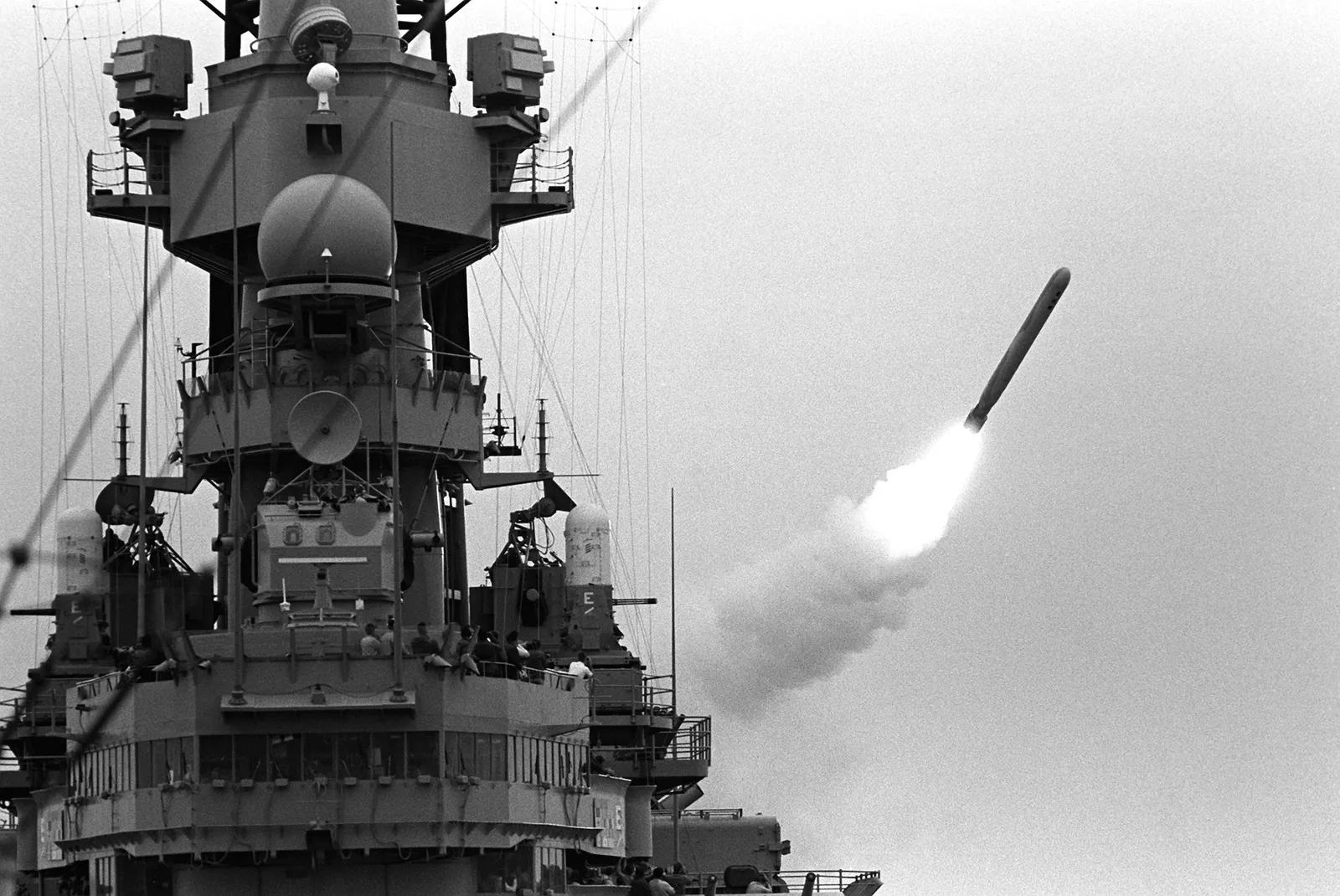
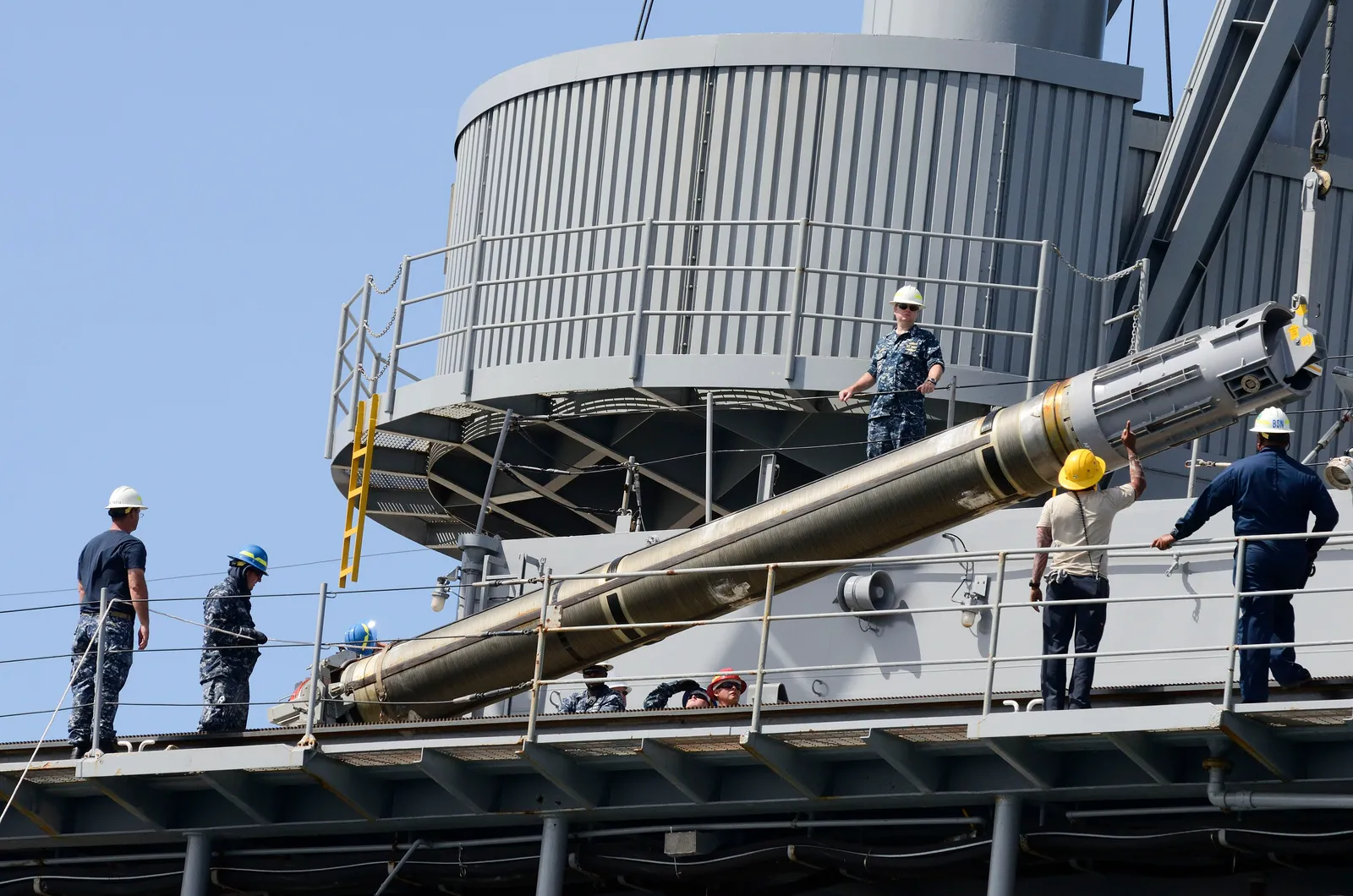
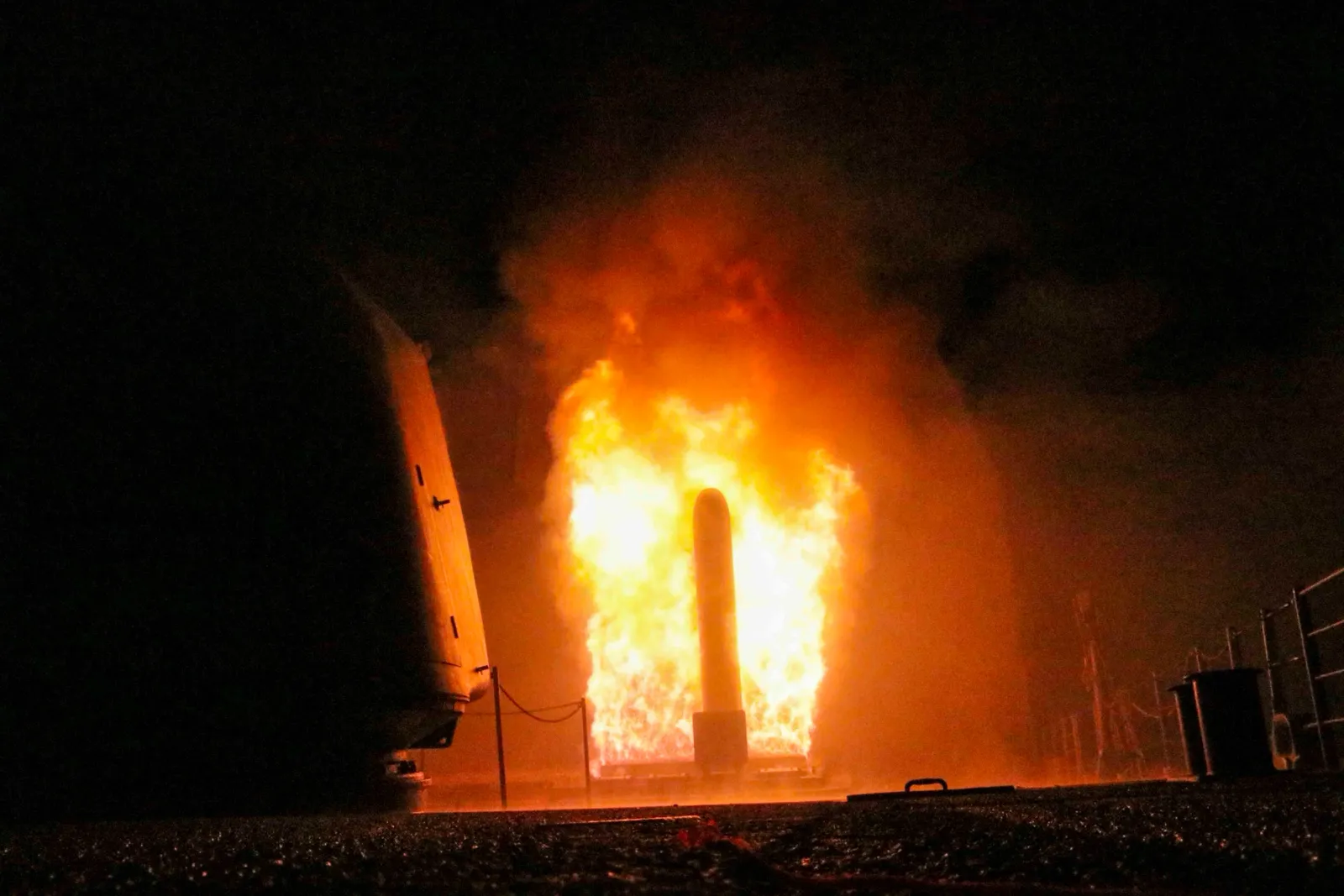
BGM-109 Tomahawk Land Attack Missile Images
Related Weapon Systems


Related News
Sources
U.S. Navy Tomahawk Cruise Missile Fact FilePublisher: U.S. Navy | Note: Supports Tomahawk role, manufacturer, launch platforms, variants, and specifications. | Accessed: 2026-07-02Destroyers (DDG 51)Publisher: United States Navy | Note: Supports the Arleigh Burke-class destroyer launch-platform context for Tomahawk and the DDG 51 class's Mk 41 VLS armament. | Accessed: 2026-07-02Raytheon Tomahawk Cruise MissilePublisher: Raytheon | Note: Supports manufacturer background, Block IV/Block V context, and range description. | Accessed: 2026-07-02NAVAIR Tomahawk Product PagePublisher: Naval Air Systems Command | Note: Supports Tomahawk Block IV and Block V variant descriptions, in-flight target update context, low-altitude subsonic flight, contractor, unit cost, dimensions, and mass. | Accessed: 2026-07-02Operation Takes Aim at Libyan Air DefensesPublisher: Defense Visual Information Distribution Service | Note: Supports 2011 First Libyan Civil War direct use: coalition members fired Tomahawk cruise missiles at Libya's integrated air and missile defense system during Operation Odyssey Dawn. | Accessed: 2026-07-02DOD Tomahawk Missile PhotoPublisher: U.S. Department of War | Note: Supports 2011 First Libyan Civil War direct use and image context: USS Stout launched a Tomahawk for Operation Odyssey Dawn, one of the cruise missiles fired from U.S. and British ships and submarines against Libyan radar and anti-aircraft sites. | Accessed: 2026-07-02A Promise KeptPublisher: U.S. Naval Institute Proceedings | Note: Supports 2011 First Libyan Civil War launch-platform context: USS Florida, an Ohio-class guided-missile submarine, launched Tomahawk missiles during Operation Odyssey Dawn. | Accessed: 2026-07-02AFCENT Commander Statement on Strikes against Houthi positions in YemenPublisher: U.S. Air Forces Central | Note: Supports 2023 Red Sea Crisis Tomahawk Land Attack Missiles fired by U.S. Navy surface and subsurface platforms against Houthi targets in Yemen. | Accessed: 2026-07-02U.S. Forces Strike Houthi Radar SitePublisher: U.S. Central Command | Note: Supports 2023 Red Sea Crisis Tomahawk Land Attack Missiles fired by USS Carney against a Houthi radar site. | Accessed: 2026-07-02CENTCOM Syria StrikesPublisher: U.S. Central Command | Note: Supports 2014 War Against the Islamic State direct conflict use under Operation Inherent Resolve: Supports 2014 Operation Inherent Resolve Tomahawk Land Attack Missiles fired by U.S. military and partner nation forces against ISIL targets in Syria on September 23, 2014. | Accessed: 2026-07-02Defense Agency Contributed Toward Operation Midnight Hammer SuccessPublisher: U.S. Department of War | Note: Supports Tomahawk missiles fired by a U.S. guided-missile submarine during Operation Midnight Hammer, supporting the 2020 United States-Iran Conflict row and the 2025 Israel-Iran Conflict row. | Accessed: 2026-07-06Statement from Pentagon Spokesman on US Strike in SyriaPublisher: U.S. Navy | Note: Supports 2011 Syrian Civil War Tomahawk Land Attack Missiles fired by USS Porter and USS Ross against Shayrat Airfield. | Accessed: 2026-07-02DoD Syria Strike BriefingPublisher: U.S. Central Command | Note: Supports April 2018 U.S., UK, and French strikes in the 2011 Syrian Civil War direct use: Tomahawk Land Attack Missiles were fired by U.S. Navy ships and USS John Warner against Syrian government chemical-weapons-related targets. | Accessed: 2026-07-02U.S. 5th Fleet: Ready to Support and RespondPublisher: U.S. Central Command | Note: Supports April 2018 U.S., UK, and French strikes in the 2011 Syrian Civil War direct use: USS Monterey, USS Laboon, and USS Higgins fired TLAMs during the April 2018 strikes into Syria. | Accessed: 2026-07-02USS Nitze Destroys 3 Houthi Controlled Radar Sites in Retaliatory StrikePublisher: USNI News | Note: Supports 2014 Yemen Civil War Tomahawk cruise missiles fired by USS Nitze against Houthi-controlled radar sites. | Accessed: 2026-07-02U.S. Navy Destroyer Launches Tomahawk Land Attack Missiles in Support of Operation Epic FuryPublisher: U.S. Central Command | Note: Supports 2020 United States-Iran Conflict Tomahawk Land Attack Missiles fired by a U.S. Navy destroyer at Iranian military targets during Operation Epic Fury. | Accessed: 2026-07-02AEGIS Weapon System Fact FilePublisher: U.S. Navy | Note: Supports the Aegis combat-system launch context for Tomahawk land-attack cruise missiles launched from Mk 41 VLS-equipped ships. | Accessed: 2026-07-02USS Monterey Tomahawk Launch ImagePublisher: Defense Visual Information Distribution Service | Note: Supports public-domain U.S. Navy image provenance for USS Monterey firing a Tomahawk land-attack missile during the April 2018 Syria strike operation. | Accessed: 2026-07-02Tomahawk Block IV Cruise Missile ImagePublisher: Wikimedia Commons | Note: Supports public-domain U.S. Navy image provenance for the Tomahawk missile image. | Accessed: 2026-07-02Missouri BGM-109 Tomahawk Launch ImagePublisher: Wikimedia Commons | Note: Supports public-domain U.S. Navy provenance for the gallery image of a Tomahawk launch. | Accessed: 2026-07-02USS Frank Cable Tomahawk ImagePublisher: Wikimedia Commons | Note: Supports public-domain U.S. Navy provenance for the gallery image of a Tomahawk missile aboard USS Frank Cable. | Accessed: 2026-07-02