- Side
- Argentina

Argentine Super Etendard aircraft fired Exocet anti-ship cruise missiles during the 1982 Falklands War, including strikes that mortally damaged HMS Sheffield and Atlantic Conveyor.
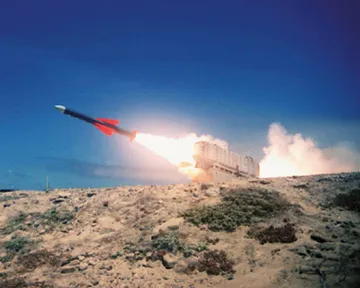
Anti-ship cruise missiles are guided standoff weapons built to attack warships and high-value surface vessels from aircraft, ships, submarines, and coastal launchers. The class is documented from Falklands War Exocet attacks and Tanker War maritime strikes to Ukrainian Neptune use in the Black Sea, Iraqi Silkworm launches in the 1990 Gulf War, Hezbollah's 2006 C-802 strike, and Houthi launches during the 2023 Red Sea Crisis.
Argentine Super Etendard aircraft fired Exocet anti-ship cruise missiles during the 1982 Falklands War, including strikes that mortally damaged HMS Sheffield and Atlantic Conveyor.
During the Tanker War phase of the 1980 Iran-Iraq War, Iraq used Exocet anti-ship missiles against shipping and U.S. naval forces, while Iran used Silkworm anti-ship cruise missiles in Gulf attacks.
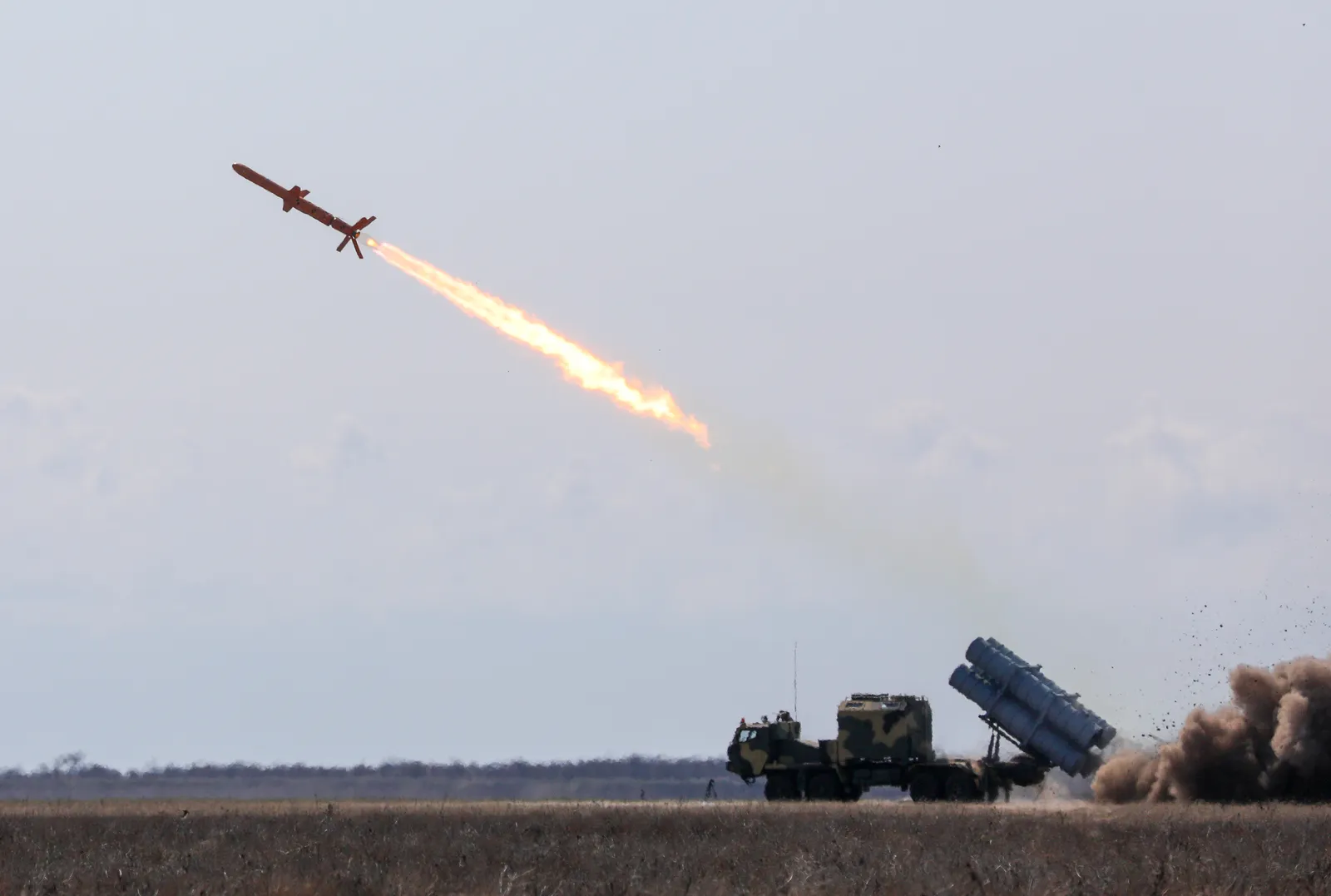
Ukrainian forces used Neptune anti-ship cruise missiles in the 2014 Russia-Ukraine War, including the April 2022 strike on the Russian cruiser Moskva in the Black Sea.
Role detailsIraqi forces fired Silkworm anti-ship missiles toward USS Missouri in the Arabian Gulf on February 25, 1991; HMS Gloucester destroyed one inbound missile and another fell into the Gulf.
Role detailsHezbollah fired C-802/Noor anti-ship cruise missiles at the Israeli corvette Hanit during the 2006 Lebanon War, hitting the ship and killing four Israeli sailors.
2023 Red Sea Crisis: Houthi militants fired anti-ship cruise missiles from Yemen toward USS Laboon and the Red Sea in January 2024.
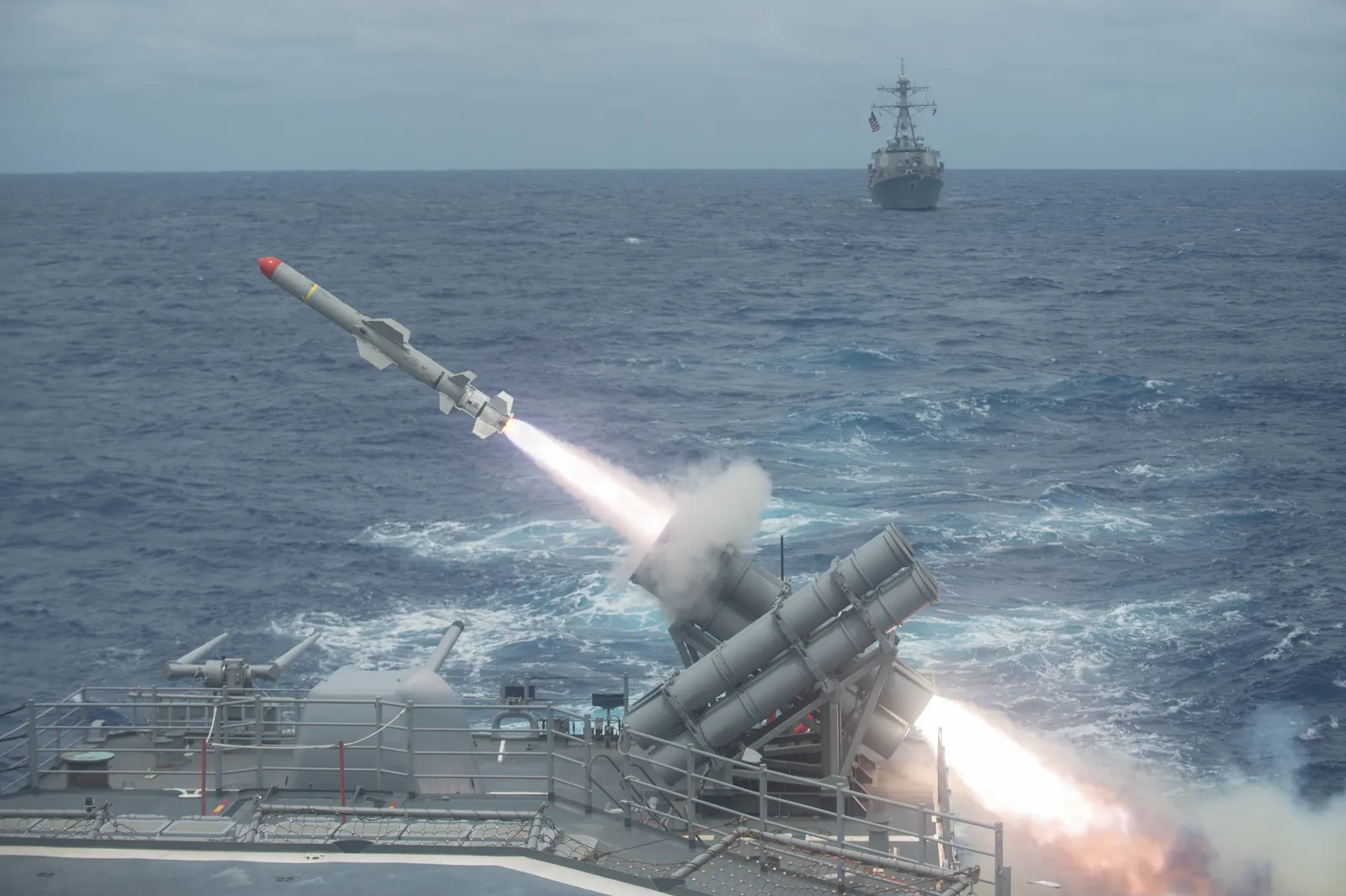
Role detailsAnti-ship cruise missiles are defined less by one airframe than by a repeated naval-strike pattern: a standoff launch, low-altitude cruise toward a surface target, terminal seeker acquisition, and a warhead sized to disable or sink ships. Public Harpoon, Exocet, and Neptune sources show the same class spanning aircraft carriage, surface-ship canisters, submarine capsules, and mobile coastal launchers.
Representative families can be fired from aircraft, ships, submarines, or mobile shore batteries, with boosters added where a surface or submerged launch needs them.
Low-level sea-skimming flight and active-radar terminal homing reduce ship reaction time and drive modern naval air-defense design.
The cataloged examples show the class used for fleet denial, maritime interdiction, and high-value ship attacks rather than battlefield close support.
Sources: NAVAIR Harpoon; Boeing Harpoon Block II product card; EXOCET AM39; 360MC Neptune Missile System.
This family page groups anti-ship cruise missiles by launch mode and representative cataloged examples rather than treating every national missile line as a variant of one design.
| Variant | Configuration | Designation notes |
|---|---|---|
 | Air-launched Exocet family member | MBDA identifies AM39 as the air-launched Exocet branch, and the catalog records its documented wartime use by aircraft. Sources: EXOCET AM39 |
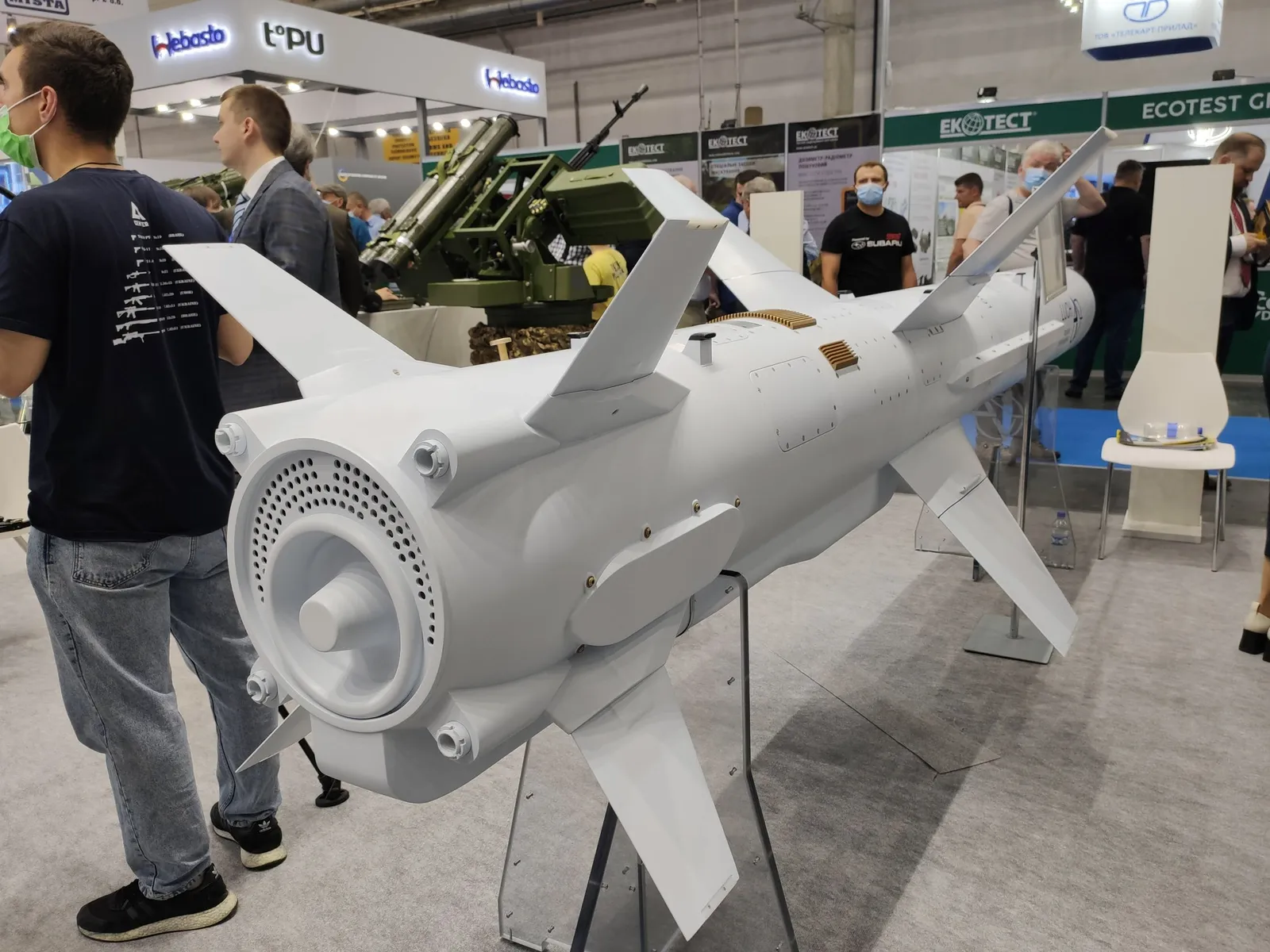 | Coastal-defense and land-attack Neptune family | Luch and Ukrainian official sources identify Neptune as a truck-launched coastal anti-ship system that later expanded into longer-range strike variants. Sources: 360MC Neptune Missile System, Successful Tests of the Neptune Cruise Missile System Were Held |
 | Multi-platform U.S. anti-ship missile family | NAVAIR describes Harpoon as an air-, ship-, submarine-, and coastal-defense battery-launched anti-ship cruise missile system. Sources: Harpoon Missile |
Boeing describes the P-8 Poseidon as a multimission maritime patrol aircraft that delivers Harpoon missiles in anti-surface warfare.
| Carrier | Carrier type | Carriage evidence |
|---|---|---|
 | Maritime patrol aircraft | Boeing says the P-8 Poseidon conducts anti-surface warfare and delivers Harpoon missiles, which is explicit evidence that it carries anti-ship cruise missiles. Sources: Boeing P-8 Poseidon |
 | Maritime patrol aircraft | NAVAIR lists the P-3C Orion's anti-surface warfare role and armament options including AGM-84 Harpoon missiles. Sources: NAVAIR P-3C Orion |
The Choe Hyon weapons trials give this class a documented ship-launch example.
| Launcher | Launcher type | Launch evidence |
|---|---|---|
 | Guided-missile destroyer | USNI reported that the Choe Hyon test-launched anti-ship missiles during its April 2026 weapons trials. Sources: USNI News: North Korea Test Launches Anti-ship, Cruise Missiles from First-in-class Destroyer |
NAVAIR records the A/R/UGM-84 Harpoon as first introduced in 1977 as a fleet-wide anti-ship missile.
Sources: NAVAIR Harpoon
Argentine aircraft used Exocet missiles against British naval forces during the Falklands War, including the attack that mortally damaged HMS Sheffield.
Sources: British Ships Sunk and Damaged - Falklands War 1982, Loss of HMS Sheffield - Board of Inquiry
U.S. reporting assessed that Ukrainian Neptune anti-ship missiles struck the Russian cruiser Moskva before the ship sank in the Black Sea.
Sources: Russian War Ship Moskva Sunk by Ukrainian Neptune Anti-Ship Missile, US Says, USNI News: Warship Moskva Analysis
CENTCOM reported an anti-ship cruise missile fired from Houthi-controlled Yemen toward USS Laboon in the southern Red Sea.
Sources: Houthis fire anti-ship cruise missile toward U.S. warship
USNI News reported North Korea's first-in-class Choe Hyon destroyer test-launched anti-ship missiles during weapons trials.
Sources: USNI News: North Korea Test Launches Anti-ship, Cruise Missiles from First-in-class Destroyer