Munitions

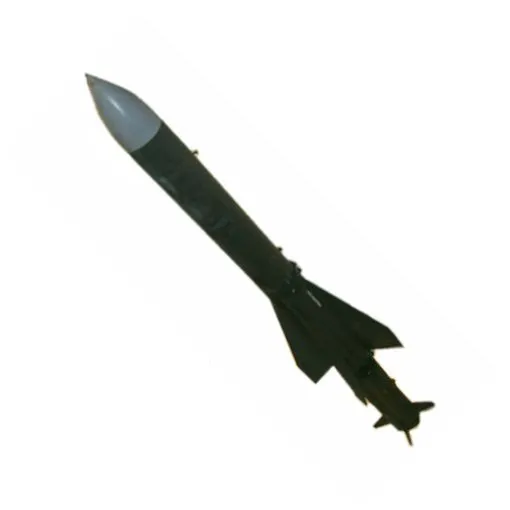
Exocet MM38 anti-ship cruise missile

Also known as
  • MM38 Exocet
  • Exocet MM38
  • MM38
  • Mer-Mer 38 km
  • Mer Mer 38
  • MM-38 Exocet
  • GWS50

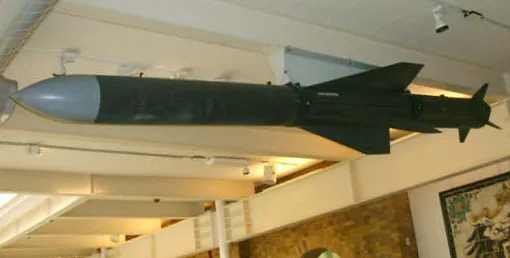
The Exocet MM38 is the original French surface-launched Exocet anti-ship cruise missile, developed by Nord Aviation and fielded from ships before later coastal adaptations. MBDA identifies MM38 as a fire-and-forget, sea-skimming design, while Falklands War sources document Argentine technicians adapting ship-launched MM38 missiles into an improvised shore battery that struck HMS Glamorgan on June 12, 1982.

Role in Conflicts

Argentine Navy personnel adapted ship-launched MM38 Exocet missiles into the shore-based ITB launcher near Port Stanley; after an earlier unsuccessful attempt, the system hit HMS Glamorgan on June 12, 1982, as the destroyer withdrew from naval gunfire support near Stanley.

Improvised Shore Launch at Port Stanley

During the final phase of the 1982 Falklands War, Argentine Navy personnel adapted ship-launched MM38 Exocet missiles into an improvised land-based firing system known as ITB. The missiles were taken from ARA Seguí, paired with a trailer-mounted launch arrangement and supporting electronics, and deployed near Puerto Argentino/Stanley with radar support.

Launcher origin

Argentina's Ministry of Defense says the MM38 missiles and launch equipment came from Argentine naval ship systems, including missiles removed from ARA Seguí.

Targeting context

The improvised battery was assembled to threaten British ships conducting naval gunfire support close to shore around Stanley.

Combat result

On June 12, 1982, the battery hit HMS Glamorgan near the hangar area after the destroyer maneuvered away from the incoming missile.

Sources: Malvinas 44 años: ingenio en el terreno, invento argentino; Royal Navy: Salute to the men of Glamorgan; USNI Proceedings: Top Three Naval Weapons.
Profile / Specs

Profile

Origin
France
Type
Ship- and ground-launched anti-ship cruise missile
Service note
1975-2001
Designer
Nord Aviation
Designed
1967-1971
Unit cost
About US$350,000 to $450,000
Produced
1975-2001
Number built
About 1,260 to 1,270 MM38 missiles

Specifications

Weight
735 kg launch weight
Length
5.21 m
Diameter
0.35 m
Range
38 to 42 km maximum
Speed
High subsonic; about Mach 0.9 in specialist references
Guidance
Inertial mid-course guidance with active radar homing in the terminal phase
Warhead
165 kg high-explosive fragmentation or blast-fragmentation warhead
Launch platforms
Surface warships and adapted coastal-defense systems
Variants

MM38 is the original surface-launched Exocet branch. Later Exocet designations separate the family by launch platform and modernization path, including AM39 for air launch, SM39 for submarine launch, MM40 for later sea- and ground-launched missiles, and BC38 for a coastal-defense adaptation of MM38.

VariantConfigurationDesignation notes
AM39 Exocet, Air-launched anti-ship missile, MunitionsAM39 ExocetAir-launched Exocet family member

CSIS identifies AM39 as the air-launched Exocet model, while MBDA describes AM39 as the air-to-sea member of the current Exocet family.

Sources: CSIS Exocet Missile Threat, EXOCET Family

MM40 ExocetImproved sea- and ground-launched successor

CSIS describes MM40 as an upgraded version of MM38 with added propellant for longer range and later Block 2 and Block 3 modernization steps.

Sources: CSIS Exocet Missile Threat

SM39 ExocetSubmarine-launched Exocet family member

MBDA describes SM39 as the submarine-to-sea Exocet member, and CSIS lists it as the submarine-launched variant.

Sources: EXOCET Family, CSIS Exocet Missile Threat

BC38Coastal-defense MM38 modification

CSIS says coastal-defense modifications of MM38 and MM40 resulted in BC38 and BC40.

Sources: CSIS Exocet Missile Threat

Launch Platforms

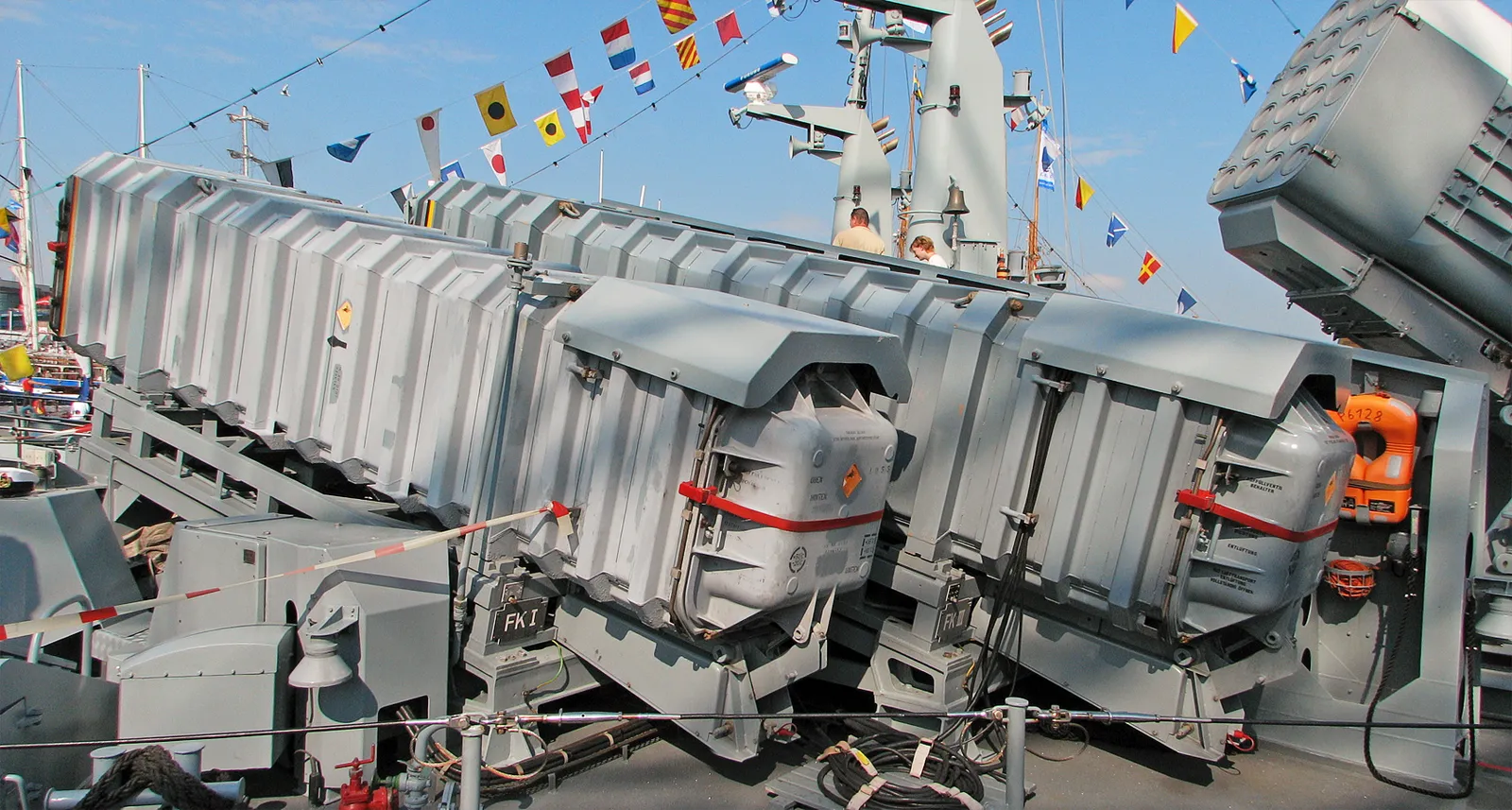
MM38 was designed as a surface-launched Exocet for warships and could also be adapted into coastal-defense launch arrangements.

LauncherLauncher typeLaunch evidence
D'Estienne d'Orves-class / A69 type aviso, Aviso / light corvette class, Naval SystemsD'Estienne d'Orves-class / A69 type avisoAviso / light corvette

Seaforces lists the D'Estienne d'Orves/A69 class with Exocet MM38 missiles in the original French armament fit.

Sources: Seaforces: D'Estienne d'Orves-class aviso

Floréal class frigate, Surveillance frigate class, Naval SystemsFloréal class frigateSurveillance frigate

Seaforces lists Floréal-class frigates with two Exocet MM38 surface-to-surface missiles and says the French ships removed them in 2014.

Sources: Seaforces: Floréal-class frigate

Timeline

Exocet MM38 anti-ship cruise missile Key Events

  1. First operational MM38 firing

    MBDA says Nord Aviation developed Exocet MM38 after Western navies identified the anti-ship missile gap, with the first operational firing occurring in 1971.

    Sources: MBDA history: Exocet MM38

  2. MM38 enters service

    CSIS lists the original ship-launched MM38 as entering service in 1975.

    Sources: CSIS Exocet Missile Threat

  3. Argentine ITB adaptation begins

    Argentina's Ministry of Defense says Argentine Navy personnel began adapting ship-launched MM38 missiles for land launch after British naval gunfire around Puerto Argentino/Stanley.

    Sources: Malvinas 44 años: ingenio en el terreno, invento argentino

  4. HMS Glamorgan hit

    Argentine sources, Royal Navy memorial accounts, and USNI reporting describe the improvised MM38 shore-launch system striking HMS Glamorgan near the end of the Falklands campaign.

    Sources: Malvinas 44 años: ingenio en el terreno, invento argentino, Royal Navy: Salute to the men of Glamorgan, USNI Proceedings: Top Three Naval Weapons

  5. MM38 production ends

    WeaponSystems.net gives 2001 as the end of MM38 production, while CSIS lists the variant as discontinued by 2002.

    Sources: Weaponsystems.net: MM38 Exocet, CSIS Exocet Missile Threat

Media

Exocet MM38 anti-ship cruise missile Images

Related Weapon Systems
Marte Mk.2 anti-ship missile, Anti-ship missile, MunitionsMunitionsMarte Mk.2 anti-ship missileAnti-ship missileThe Marte Mk.2 is an Italian lightweight anti-ship missile family developed from the Sea Killer/Marte line and now marketed by MBDA for helicopter, aircraft, ship, and coastal-defense applications. Current MBDA material centers the family on the shared 310 kg MARTE MK2 missile, with the MK2/S serving fixed- and rotary-wing launch roles and the MK2/N adapting the same missile to ship launchers. The family uses fire-and-forget, all-weather sea-skimming flight with inertial mid-course waypoint navigation, active radar terminal homing, a semi-piercing high-explosive warhead, and impact/proximity fuzing.
D'Estienne d'Orves-class aviso, Aviso / light corvette, Naval SystemsNaval SystemsD'Estienne d'Orves-class avisoAviso / light corvetteThe D'Estienne d'Orves-class aviso, also known as the Type A69, is a French-built light corvette and offshore-patrol family developed for coastal anti-submarine warfare, escort, and overseas-presence missions. Arsenal de Lorient built the French class around an 80-meter diesel hull with Exocet missiles, a 100 mm CADAM gun, torpedoes, and a 375 mm anti-submarine rocket launcher; later French service shifted surviving ships into high-seas patrol duties after heavy anti-submarine and anti-ship weapons were removed.
MdCN / SCALP Naval, Ship- and submarine-launched land-attack cruise missile, ArtilleryArtilleryMdCN / SCALP NavalShip- and submarine-launched land-attack cruise missileMdCN, also called SCALP Naval or NCM, is MBDA's French naval cruise missile for precision land attack from FREMM frigates and Barracuda/Suffren-class submarines. MBDA describes the weapon as a very-long-range, metric-accuracy deep-strike missile launched either from A70 SYLVER vertical cells or 21-inch submarine torpedo tubes, and French forces used it operationally during the April 2018 U.S., UK, and French strikes in the 2011 Syrian Civil War.

Sources