Munitions

SS.11 anti-tank missile

Also known as
  • Nord SS.11
  • SS-11
  • SS.11A1
  • SS.11B1
  • AS.11
  • AGM-22
  • XAGM-22A
  • XAGM-22B
  • AGM-22B
  • ATM-22B
  • XATM-22B
  • Nord 5210
  • Nord-5210
  • Model 5210
  • M22 armament subsystem
  • SS.11M
  • Harpon

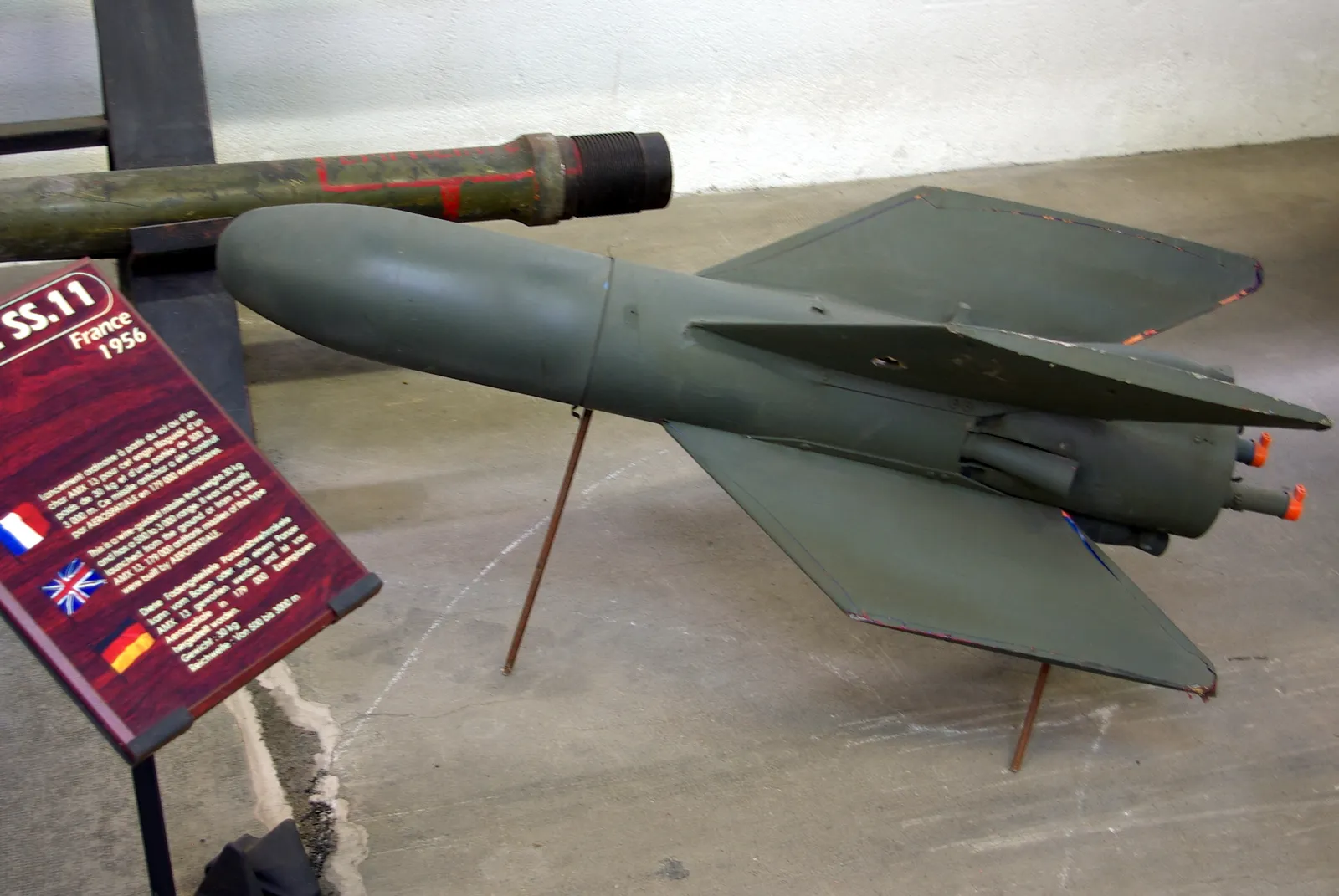
The SS.11 was a French wire-guided anti-tank missile developed by Nord Aviation as the heavier Model 5210 successor to the SS.10. First fielded by the French Army in 1956, it was sized for vehicle, ship, aircraft, and helicopter launch, and documented conflict use spans Algeria, Vietnam, the Six-Day War, and the Falklands.

Role in Conflicts

Side
French forces

French forces used AS.11/SS.11 missiles from MD.311 aircraft against fortified guerrilla cave positions during the Algerian War.

Side
United States and South Vietnam

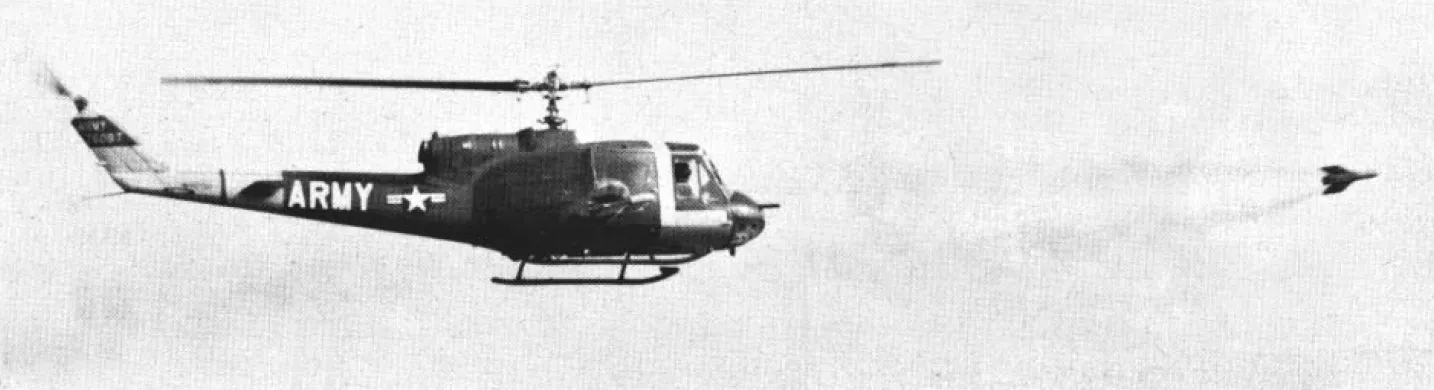
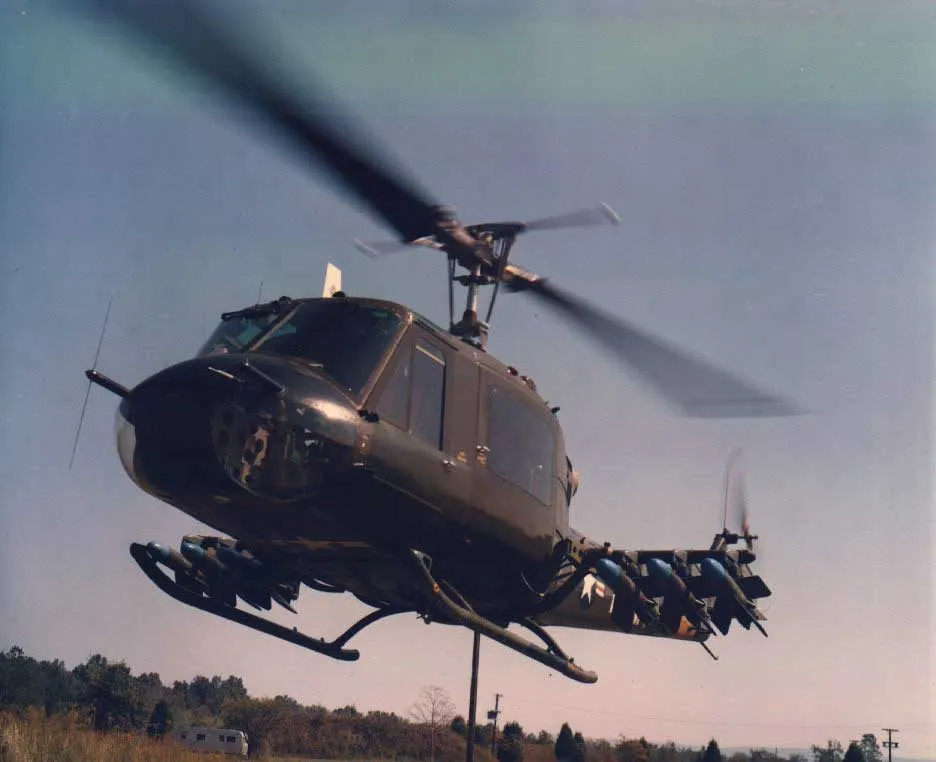
U.S. Army UH-1 helicopters used M22 SS.11B missiles in Vietnam, including an October 1966 bunker strike in Binh Dinh Province and later Southeast Asia deployments.

Side
Israel

Israeli forces fielded SS.10 and SS.11 French anti-tank guided missiles in the force structure described for the 1967 Abu-Ageila fighting.

Side
United Kingdom

British Westland Scout helicopters from the Army Air Corps and 3 Commando Brigade Air Squadron fired SS.11 missiles at Argentine positions near Stanley Racecourse on 14 June 1982.

Profile / Specs

Profile

Origin
France
Type
Wire-guided anti-tank missile
Service note
Cold War; 1956-early 1980s production
Designer
Nord Aviation
Designed
Development began in 1953 as Nord Model 5210
Produced
1956-early 1980s
Number built
More than 180,000 rounds reported by Designation-Systems.net
Developed from
SS.10 anti-tank missile
Developed into
SS.12 anti-tank missile family

Specifications

Class
Wire-guided anti-armour missile; French SS designation meant surface-to-surface, while AS.11 covered air-to-surface use
Guidance
Manual command to line of sight over an unspooling wire command link
Tracking cue
Operator tracked a tail flare and steered with a small control stick in U.S. AGM-22B/M22 service
Range
About 3,000 m for the AGM-22B/SS.11B1 data set
Length
119 cm
Wingspan
50 cm
Diameter
16.4 cm
Weight
About 30 kg
Speed
About 685 km/h in the AGM-22B data set
Propulsion
Two-stage boost/sustain solid-fuel rocket motor
Warhead
6.8 kg Type 140AC anti-armour warhead in AGM-22B data; French Type 140 family also included blast-fragmentation, anti-personnel, and anti-ship warheads
Launch platforms
Intended for vehicle, ship, and later helicopter launch; U.S. M22 helicopter installation carried six SS.11B/AGM-22 missiles on UH-1B Huey helicopters
U.S. designation
SS.11A1 became XAGM-22A; SS.11B1 became XAGM-22B/AGM-22B; the training round became XATM-22B/ATM-22B
Launch And Guidance Context

The SS.11 kept the first-generation wire-guided control concept but scaled it beyond the infantry-portable SS.10. Its heavier motor and warhead made it better suited to mounted launchers, while helicopter installations turned the same basic missile into a manually steered air-to-ground weapon.

Control method

The operator watched a flare on the missile, then sent steering commands through a wire link with a small control stick.

Mounted launch logic

Designation histories describe the Model 5210 as too heavy for the SS.10 infantry role, shifting the family toward vehicles, ships, and later helicopters.

U.S. helicopter fit

In U.S. Army nomenclature, six SS.11B missiles installed on a UH-1B Huey formed the M22 armament subsystem.

Swedish naval fit

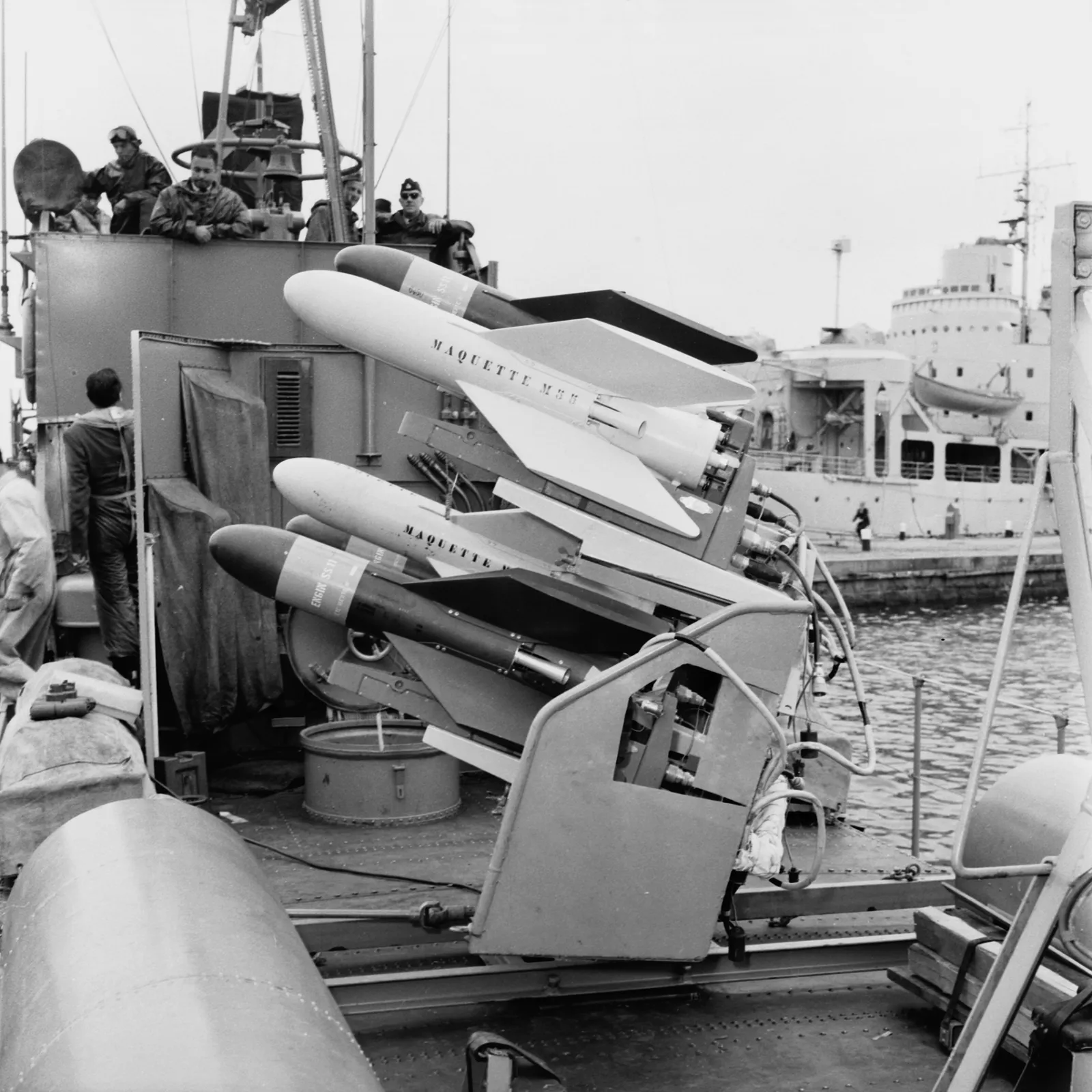
Swedish Naval Museum imagery documents Nord SS.11 missiles mounted on Swedish Navy torpedo boats as Robot 53 anti-ship weapons.

Variants

The SS.11 designation covers a French surface-launched missile family, the related AS.11 air-to-surface designation, U.S. AGM/ATM designations, and later specialized or guidance-improved branches.

VariantConfigurationDesignation notes
SS.11A1Early evaluation missile

U.S. evaluation missiles used the SS.11A1 designation before the 1963 AGM-22 redesignation.

Sources: Designation-Systems.net: Aérospatiale (Nord) SS.11/AGM-22

SS.11B1 / AGM-22BImproved U.S. helicopter missile

The U.S. Army bought the improved SS.11B1, with solid-state electronics, for UH-1B helicopter use; it became XAGM-22B and later AGM-22B.

Sources: Designation-Systems.net: Aérospatiale (Nord) SS.11/AGM-22, U.S. Army: Air-to-Ground Missiles in Vietnam

XATM-22B / ATM-22BTraining round

Designation-Systems.net maps the SS.11B1 training round to XATM-22B, later ATM-22B.

Sources: Designation-Systems.net: Aérospatiale (Nord) SS.11/AGM-22

AS.11Air-to-surface designation

French nomenclature used AS.11 for the air-launched version, while U.S. Army documents and designations continued through the SS.11/AGM-22 line.

Sources: Designation-Systems.net: Aérospatiale (Nord) SS.11/AGM-22

SS.11MMaritime branch

Open designation histories identify SS.11M as the maritime surface-to-surface anti-ship branch using the same missile family.

Sources: Designation-Systems.net: Aérospatiale (Nord) SS.11/AGM-22

HarponGuidance-improved branch

Open designation histories describe Harpon as the SS.11 branch associated with a semi-automatic command-to-line-of-sight guidance improvement.

Sources: Designation-Systems.net: Aérospatiale (Nord) SS.11/AGM-22

Timeline

SS.11 anti-tank missile Key Events

  1. Model 5210 development begins

    Nord began developing the heavier Model 5210 from the SS.10 line, trading infantry portability for greater range, motor size, and warhead effect.

    Sources: Designation-Systems.net: Aérospatiale (Nord) SS.11/AGM-22

  2. French Army fields SS.11

    The missile entered French Army service as the SS.11 and became part of Nord Aviation's early mass-produced anti-tank missile line.

    Sources: Designation-Systems.net: Aérospatiale (Nord) SS.11/AGM-22, MBDA history: Nord anti-tank missiles

  3. U.S. evaluation purchase approved

    After cancellation of the Dart anti-tank missile, the U.S. Army approved SS.11 purchases for air-launched anti-armour evaluation.

    Sources: Designation-Systems.net: Aérospatiale (Nord) SS.11/AGM-22

  4. UH-1B M22 helicopter fit

    The U.S. Army approved the improved SS.11B1 for UH-1B use; a six-missile helicopter installation was known as the M22 armament subsystem.

    Sources: Designation-Systems.net: Aérospatiale (Nord) SS.11/AGM-22, U.S. Army: Air-to-Ground Missiles in Vietnam

  5. AGM-22 redesignation

    U.S. SS.11 missiles were mapped into the AGM-22 designation series, including XAGM-22A, XAGM-22B/AGM-22B, and XATM-22B/ATM-22B.

    Sources: Designation-Systems.net: Aérospatiale (Nord) SS.11/AGM-22

  6. Production ends after large export run

    Aérospatiale production ended in the early 1980s after more than 180,000 rounds had reportedly been built.

    Sources: Designation-Systems.net: Aérospatiale (Nord) SS.11/AGM-22

  7. M22 leaves regular U.S. Army inventory

    The U.S. Army history states that the M22 subsystem was eventually replaced by airborne TOW and phased out of the regular inventory in May 1984.

    Sources: U.S. Army: Air-to-Ground Missiles in Vietnam

Media
Related Weapon Systems
Exocet MM38 anti-ship cruise missile, Ship- and ground-launched anti-ship cruise missile, MunitionsMunitionsExocet MM38 anti-ship cruise missileShip- and ground-launched anti-ship cruise missileThe Exocet MM38 is the original French surface-launched Exocet anti-ship cruise missile, developed by Nord Aviation and fielded from ships before later coastal adaptations. MBDA identifies MM38 as a fire-and-forget, sea-skimming design, while Falklands War sources document Argentine technicians adapting ship-launched MM38 missiles into an improvised shore battery that struck HMS Glamorgan on June 12, 1982.
9K115 Metis, Man-portable anti-tank guided missile system, Infantry WeaponsInfantry Weapons9K115 MetisMan-portable anti-tank guided missile systemThe 9K115 Metis is a Soviet/Russian man-portable, wire-guided anti-tank guided missile family developed for company-level infantry anti-armor fire. The original AT-7 Saxhorn used a lightweight launcher and 94 mm missile for short-range engagements, while the Metis-M and Metis-M1 upgrades moved to larger 130 mm missiles with tandem HEAT and thermobaric options. Its documented conflict use spans Russian and Ukrainian Metis-M fielding in Ukraine, Houthi use in Yemen, Syrian rebel use, and Hezbollah's anti-tank missile threat in the 2006 Lebanon War.
MILAN, Man-portable anti-tank guided missile, Infantry WeaponsInfantry WeaponsMILANMan-portable anti-tank guided missileMILAN is a Franco-German, wire-guided anti-tank guided missile built around a reusable launch post and disposable missile round. Designed for infantry anti-armor teams, the SACLOS system requires the operator to keep the sight on target while guidance commands travel through a wire link. Its long service record spans Cold War export use, truck-mounted Chadian firepower in 1987, German-supplied Peshmerga launchers in Iraq, Islamic State use documented at Kobane, and French deliveries to Ukraine after Russia's 2022 full-scale invasion.
BGM-71 TOW, Heavy anti-tank guided missile, Infantry WeaponsInfantry WeaponsBGM-71 TOWHeavy anti-tank guided missileThe BGM-71 TOW is a U.S. heavy anti-tank guided missile built around tube launch, optical tracking, and command guidance through a wire or later radio-frequency link. Developed by Hughes and now produced and upgraded by Raytheon, the family spans dismounted launchers, HMMWVs, Bradley and Stryker vehicles, light armored vehicles, and helicopters. Its record runs from helicopter launches in the Vietnam War through Gulf War, Iraq, Afghanistan, Syria, Yemen, and Ukrainian service or transfer evidence.
9K114 Shturm, Radio-command anti-tank guided missile system, Infantry WeaponsInfantry Weapons9K114 ShturmRadio-command anti-tank guided missile systemThe 9K114 Shturm is a Soviet radio-command anti-tank guided missile system built around the 9M114 Kokon missile and known to NATO as AT-6 Spiral. Designed by KBM Kolomna for attack helicopters and the MT-LB-based 9P149 Shturm-S carrier, it combines SACLOS guidance, a fast missile, and a 5 km baseline range, with later missile variants reaching 6-7 km. In the 2014 Russia-Ukraine War, Russian 9P149 vehicles have been lost or captured, while Ukrainian units have shown Shturm-S training and Shturm-SM modernization work using domestic sights and RK-2P missiles.

Sources