Infantry Weapons

BGM-71 TOW

Also known as
  • TOW
  • Tube-launched Optically tracked Wire-guided missile
  • Tube-launched, Optically tracked, Wire-guided
  • BGM-71A
  • BGM-71C
  • BGM-71D
  • BGM-71E
  • BGM-71F
  • BGM-71F TOW 2B
  • BGM-71F TOW-2B
  • TOW 2
  • TOW 2A
  • TOW 2B
  • TOW-2B
  • TOW 2B Aero
  • TOW-2B Aero
  • TOW BB

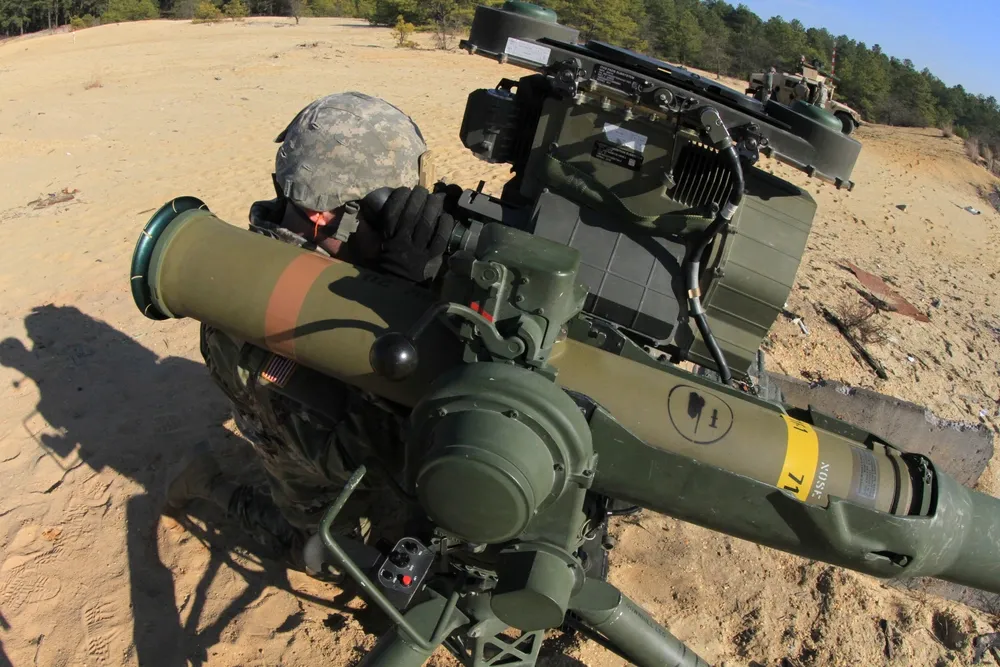
The BGM-71 TOW is a U.S. heavy anti-tank guided missile built around tube launch, optical tracking, and command guidance through a wire or later radio-frequency link. Developed by Hughes and now produced and upgraded by Raytheon, the family spans dismounted launchers, HMMWVs, Bradley and Stryker vehicles, light armored vehicles, and helicopters. Its record runs from helicopter launches in the Vietnam War through Gulf War, Iraq, Afghanistan, Syria, Yemen, and Ukrainian service or transfer evidence.

Role in Conflicts

Side
United States and South Vietnam
Role in conflict
Helicopter-launched anti-armor missiles

U.S. Army history records TOW missiles first fired in combat in May 1972 from UH-1B helicopters in South Vietnam, with helicopter crews later engaging North Vietnamese tanks and armored vehicles.

SIPRI identifies U.S. second-hand BGM-71F TOW-2B anti-tank missiles delivered to Ukraine beginning in 2022 as aid after Russia's full-scale invasion, including for M2 infantry fighting vehicles; DoD's August 2022 package publicly announced 1,500 TOW missiles for Ukraine's land-domain anti-armor needs against Russian armor.

Role details
Role in conflict
Supplied anti-armor missile support for Iraqi counteroffensives

During the 2013-2017 Iraq campaign against Islamic State, U.S. reporting described BGM-71 TOW missiles being supplied to Iraqi Security Forces for the ground fight in Iraq.

Profile / Specs

Profile

Origin
United States
Type
Heavy anti-tank guided missile
Service note
Introduced in 1970; upgraded TOW 2 family remains in service
Designer
Hughes Aircraft Company
Designed
1960s
Unit cost
Varies by missile variant and procurement lot
Produced
Late 1960s-present
Number built
More than 700,000 TOW weapon systems delivered

Specifications

Guidance
Tube-launched, optically tracked, wire-guided command guidance; later RF variants use a one-way radio link
Basic TOW range
3,000 m for the original BGM-71A
Common TOW 2 range
3,750 m for many later ground- and vehicle-fired variants
Diameter
6 in / 152 mm class missile body
Launch platforms
Ground tripod, HMMWV, Bradley, Stryker, light armored vehicle anti-tank platforms, and helicopters
Warhead role
Heavy anti-armor missile family, including tandem-warhead and top-attack TOW 2 variants
TOW 2B attack profile
Fly-over/shoot-down top attack; the missile flies above the gunner's line of sight before firing downward over the target
TOW 2B warhead
Two explosively formed penetrator warheads/projectiles for roof-attack engagements
TOW 2B sensing
Target-overflight detection by target shape/profile and magnetic field, with official export notices describing laser profilometer and magnetic sensing
Guidance And Variant Logic

The TOW family is best read as a command-guided missile line rather than a single fixed round. Launchers, sights, and missile variants changed over time while retaining the same basic operator-tracked anti-armor role.

FeatureSource-backed contextCatalog treatment
Guidance pathArmy and Raytheon sources describe optical tracking with command guidance through wire links or later one-way radio-frequency links.Specifications separate classic wire guidance from RF variants instead of treating every TOW round as wire-guided.
TOW 2B top attackArmy and Marine Corps manuals describe BGM-71F/TOW 2B as a fly-over/shoot-down missile that flies above the line of sight and fires downward EFP projectiles when it senses the target below.The BGM-71F row is treated as a TOW-family variant with distinct attack-profile specifications, not as a separate duplicate page.
Launch architectureSources place TOW on ground tripods, HMMWVs, Bradley and Stryker vehicles, light armored vehicles, and helicopters.Relationship sections link representative carrier and launcher records where the catalog has published entries.
Warhead branchesSpecialist and manufacturer sources distinguish baseline, improved, tandem-warhead, top-attack, bunker-buster, and RF branches.The variant table records those branches as designation context without creating separate pages for every missile mark.
Conflict evidenceOfficial and high-quality secondary sources document different TOW-family appearances across Vietnam, Gulf War, Iraq, Afghanistan, Ukraine, Syria, Yemen, and counter-ISIS fighting.Conflict-use rows use direct conflict-specific sources and do not infer a conflict row from general TOW service history alone.

Sources: TOW; TOW Weapon System; Raytheon (Hughes) BGM-71 TOW; FMFRP 6-90-1 Tow Weapon System; TOW System Upgrade Goes To Troops In Afghanistan.
Variants

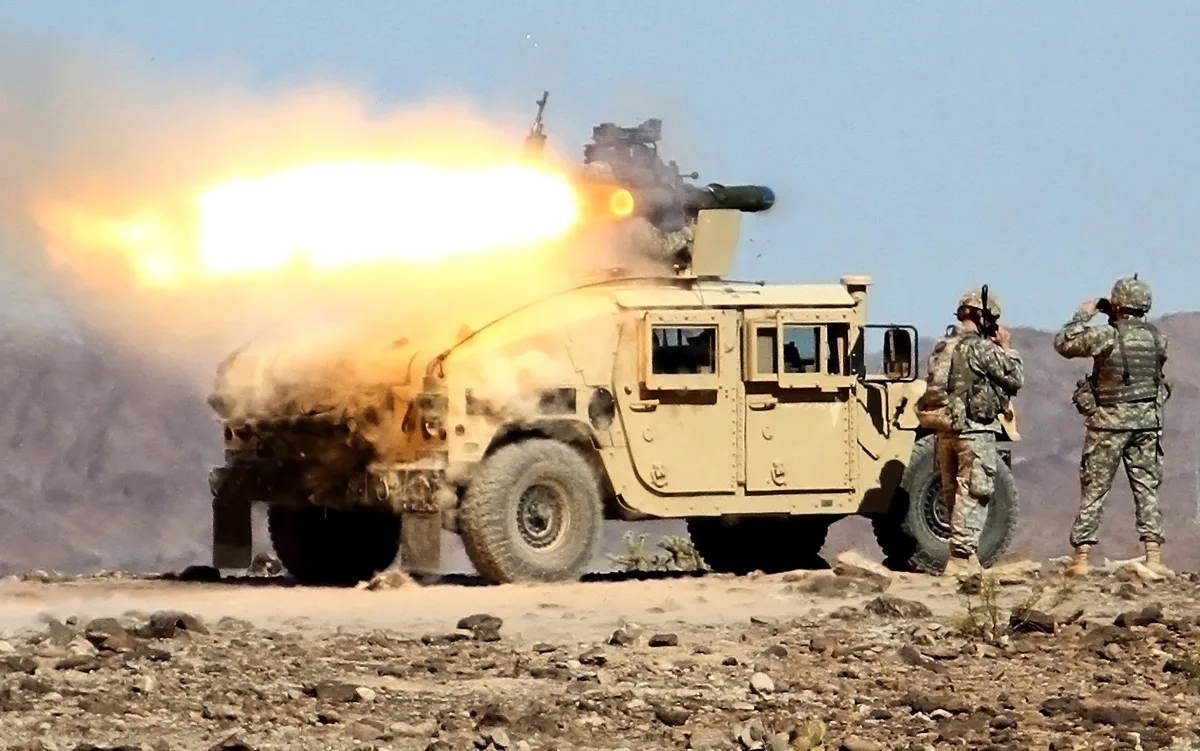
TOW designations track a long upgrade path: early wire-guided missiles gave way to Improved TOW and TOW 2 models, then tandem-warhead, top-attack, bunker-buster, and radio-frequency-control variants.

VariantConfigurationDesignation notes
BGM-71A Basic TOWOriginal wire-guided missile

The initial production TOW entered service around 1970 and is the baseline for the family designation.

Sources: TOW, Raytheon (Hughes) BGM-71 TOW

BGM-71C Improved TOWImproved armor-penetration missile

Improved TOW introduced a probe-equipped warhead configuration before the later TOW 2 family.

Sources: Raytheon (Hughes) BGM-71 TOW

BGM-71D TOW 2TOW 2 missile

TOW 2 increased missile and warhead capability while retaining command-guided TOW employment.

Sources: TOW Weapon System, Raytheon (Hughes) BGM-71 TOW

BGM-71E TOW 2ATandem-warhead TOW 2

TOW 2A is the tandem-warhead branch associated with defeating explosive reactive armor.

Sources: TOW Weapon System, Raytheon (Hughes) BGM-71 TOW

BGM-71F TOW 2BTop-attack TOW 2

TOW 2B is the BGM-71F fly-over/shoot-down top-attack branch: the gunner tracks center mass while the missile flies above the line of sight and fires downward EFP projectiles over the target.

Sources: TOW, TOW Weapon System, Raytheon (Hughes) BGM-71 TOW, FMFRP 6-90-1 Tow Weapon System, TOW 2A / 2B

TOW Bunker BusterBlast-fragmentation missile

Army reporting from Afghanistan and Iraq identifies TOW bunker-buster rounds as part of the ITAS-compatible missile set.

Sources: TOW System Upgrade Goes To Troops In Afghanistan

TOW 2 RFRadio-frequency command-link variant

Raytheon describes modern TOW 2 variants with a one-way radio-frequency link as an alternative to the classic wire command link.

Sources: TOW Weapon System

Carrier Helicopters
CarrierCarrier typeCarriage evidence
AW-109, Light twin-engine attack and utility helicopter, Aircraft & UAVsAW-109Armed helicopter

GlobalSecurity lists the A109 as an armament option carrying BGM-71 TOW antitank missiles.

Sources: GlobalSecurity A109 specifications

Carrier Vehicles

The TOW family appears on the Bv 206-based Pansarvärnsrobotbandvagn 2063 in the same Security & Defence European article that describes the vehicle's anti-tank fit.

CarrierCarrier typeCarriage evidence
Bandvagn 206, Articulated tracked all-terrain carrier, Armored VehiclesBandvagn 206Tracked missile carrier

Security & Defence European describes the Pansarvärnsrobotbandvagn 2063 as a Bv 206-based carrier for the TOW weapon system.

Sources: Mounted Missiles

Launch Platforms

The TOW family is mounted on vehicle platforms such as the LAV-AT and M901A1 Improved TOW Vehicle for protected anti-armor fire.

LauncherLauncher typeLaunch evidence
M220A4 TOW 2 Launcher, TOW 2 missile launcher, Infantry WeaponsM220A4 TOW 2 LauncherTOW 2 launcher

Army budget documentation names the M220A4 TOW 2 Launcher as a TOW carrier and launch platform.

Sources: Army Procurement: Missiles

LAV-AT, Light armored anti-tank vehicle, Armored VehiclesLAV-ATAnti-tank vehicle

Marine Corps reference data lists the LAV-AT with a twin TOW missile launcher and a 16-missile loadout.

Sources: LAV-AT: AFV Database, Light Armored Vehicle-Anti-Tank (LAV-AT)

M901A1 Improved TOW Vehicle, Tracked TOW missile carrier vehicle, Armored VehiclesM901A1 Improved TOW VehicleTracked missile carrier

Army budget documentation names the M901A1 Improved TOW Vehicle as a TOW carrier and launch platform.

Sources: Army Procurement: Missiles

M2 Bradley, Tracked infantry fighting vehicle, Armored VehiclesM2 BradleyTracked infantry fighting vehicle

Army budget documentation says TOW missiles are launched from all infantry and cavalry variants of Bradley Fighting Vehicles.

Sources: TOW Family of Missiles

HMMWV, Light tactical wheeled vehicle, Armored VehiclesHMMWVLight tactical vehicle

The Army article describes the M41 TOW Improved Target Acquisition System as a block upgrade to the M220 ground/HMMWV-mounted TOW 2 missile system.

Sources: TOW System Upgrade Goes To Troops In Afghanistan

Stryker, 8x8 armored fighting vehicle family, Armored VehiclesStrykerWheeled infantry carrier vehicle

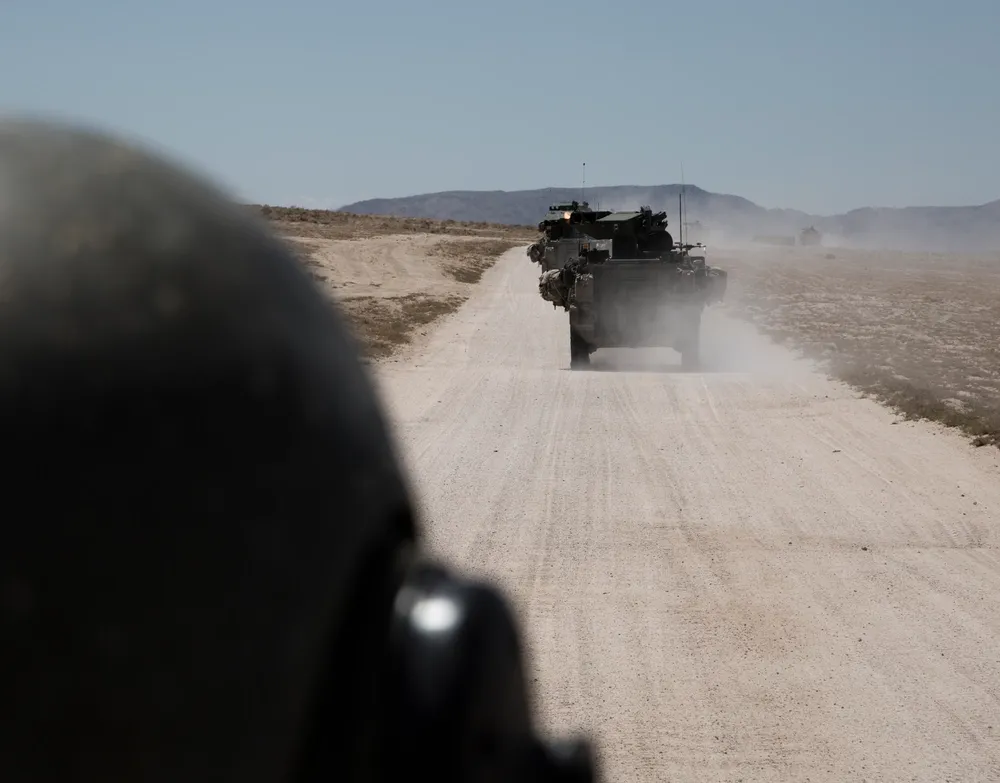
Army budget documentation lists the Stryker Anti-Tank Guided Missile vehicle as a TOW launch platform and says TOW missiles provide the Army's Stryker Brigade Combat Teams with heavy anti-armor capability.

Sources: TOW Family of Missiles

Timeline

BGM-71 TOW Key Events

  1. TOW enters U.S. service

    Army history places TOW service introduction in 1970 after the Hughes-developed weapon moved from development into fielding.

    Sources: TOW

  2. First combat launch in Vietnam

    U.S. Army history records the first combat TOW firing in May 1972 from a UH-1B helicopter in South Vietnam.

    Sources: TOW

  3. TOW 2A fielded in Operation Desert Storm

    Army history records TOW employment from Marine AH-1T helicopters and M901 Improved TOW Vehicles during Operation Desert Storm.

    Sources: TOW

  4. ITAS upgrade reaches Afghanistan units

    The Army reported improved TOW ITAS equipment going to forward operating bases in Afghanistan after extensive Iraq and Afghanistan combat use.

    Sources: TOW System Upgrade Goes To Troops In Afghanistan

  5. U.S. commits TOW missiles to Ukraine

    A U.S. Defense Department drawdown package committed 1,500 TOW missiles to Ukraine as part of an anti-armor assistance package.

    Sources: $775 Million in Additional Security Assistance for Ukraine

Media
Related Weapon Systems
Toophan anti-tank guided missile, Tube-launched anti-tank guided missile family, Infantry WeaponsInfantry WeaponsToophan anti-tank guided missileTube-launched anti-tank guided missile familyThe Toophan is an Iranian anti-tank guided missile family derived from the BGM-71 TOW, with wire-guided baseline models and later top-attack, thermobaric, and laser-guided branches. Public reporting connects Toophan systems to Syrian-government-aligned militias, Iraqi Popular Mobilization Unit forces, Houthi-aligned forces in Yemen, and Hezbollah forces in Lebanon through fielded-system, interdiction, battlefield-recovery, and direct-use evidence.
Bofors BILL anti-tank guided missile, Overfly top-attack anti-tank guided missile, MunitionsMunitionsBofors BILL anti-tank guided missileOverfly top-attack anti-tank guided missileBofors BILL is a Swedish wire-guided anti-tank guided missile family built around an overfly top-attack flight path, allowing the warhead to strike armor from above rather than through frontal armor. Bofors developed the original RBS 56 BILL after a 1979 order, Saab describes BILL 2 as the later dual-warhead upgrade, and open-source transfer tracking documents Swedish RBS-56 BILL missiles delivered or pledged to Ukraine before March 2023.
M901A1 Improved TOW Vehicle, Tracked TOW missile carrier vehicle, Armored VehiclesArmored VehiclesM901A1 Improved TOW VehicleTracked TOW missile carrier vehicleThe M901A1 Improved TOW Vehicle is a U.S. tracked anti-armor carrier built around an M113-family chassis, an M27 cupola, and a raised twin TOW launcher. United Defense, LP built the vehicle for Army service beginning in the late 1970s, and the M901A1 configuration added TOW 2 compatibility while retaining internal missile stowage and armored reload protection. U.S. Army Redstone history documents M901 ITVs in Operation Desert Storm, where they were credited with confirmed kills during the 1991 ground campaign.
Stryker, 8x8 armored fighting vehicle family, Armored VehiclesArmored VehiclesStryker8x8 armored fighting vehicle familyThe Stryker is a U.S.-designed eight-wheeled armored fighting vehicle family built around a common chassis, modular mission kits, and rapid road movement. Army reporting says the first production vehicle rolled off the line in April 2002, and the family later logged combat rotations in Iraq and Afghanistan before Double-V Hull upgrades improved blast protection. Modern branches include 30 mm Dragoon infantry carriers, SGT STOUT air-defense vehicles, and U.S.-supplied APCs for Ukraine.
BGM-109 Tomahawk Land Attack Missile, Ship- and submarine-launched land-attack cruise missile, MunitionsMunitionsBGM-109 Tomahawk Land Attack MissileShip- and submarine-launched land-attack cruise missileThe BGM-109 Tomahawk Land Attack Missile, often abbreviated TLAM, is a U.S. long-range subsonic cruise missile used for deep precision strikes from naval surface ships and submarines, with newer variants also adding maritime-strike and warhead modernization paths. Documented combat use spans the 1991 Gulf War through Libya, Syria, Yemen, the Red Sea Crisis, Operation Inherent Resolve, and U.S. strikes on Iranian targets during the 2020 United States-Iran Conflict and 2025 Israel-Iran Conflict.

Sources