Armored Vehicles

LAV-AT

Also known as
  • Light Armored Vehicle-Anti-Tank
  • Light Armored Vehicle, Antitank
  • LAV-ATM
  • LAV Anti-Tank Modernization
  • LAV-ATWS
  • Anti-Tank Weapon System
  • ATWS

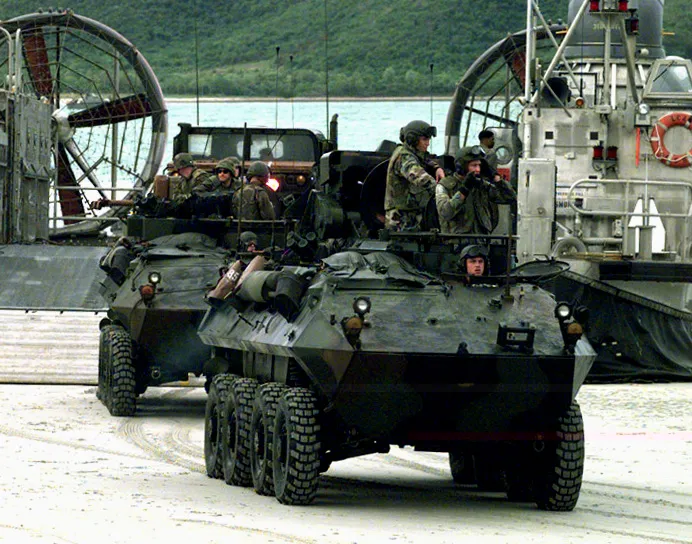
The LAV-AT is a Canadian-built 8x8 light armored anti-tank vehicle for the U.S. Marine Corps, pairing the LAV family chassis with a TOW missile launcher for protected long-range anti-armor fire. Marine Corps history documents LAV-ATs at the Battle of al-Khafji in the 1990 Gulf War, while later modernization replaced the legacy turret with the Anti-Tank Weapon System.

Role in Conflicts

Profile / Specs

Profile

Origin
Canada
Type
Light armored anti-tank vehicle
Service note
1987-present
Unit cost
$1,252,000
Produced
1987-2003
Number built
115 accepted by 2003

Specifications

Crew
4
Armament
Twin TOW missile launcher; M60 or M240E1 7.62 mm machine gun; smoke grenade launchers
Weight
27,650 lb (12,540 kg) combat weight
Mobility
275 hp Detroit Diesel 6V53T; 62 mph road speed; 410 mi range; air transportable by C-130, C-141, C-5, and CH-53E
Protection
Rolled hard homogeneous steel hull; fully amphibious within about 3 minutes
Anti-Armor Role

The LAV-AT gives light armored reconnaissance units a protected missile carrier that can move with LAV companies while covering them with long-range anti-armor fire.

LAR firepower

Marine Corps doctrine states that the LAR battalion's organic tank-defeating capability rests with the LAV-AT.

Legacy sight and missile

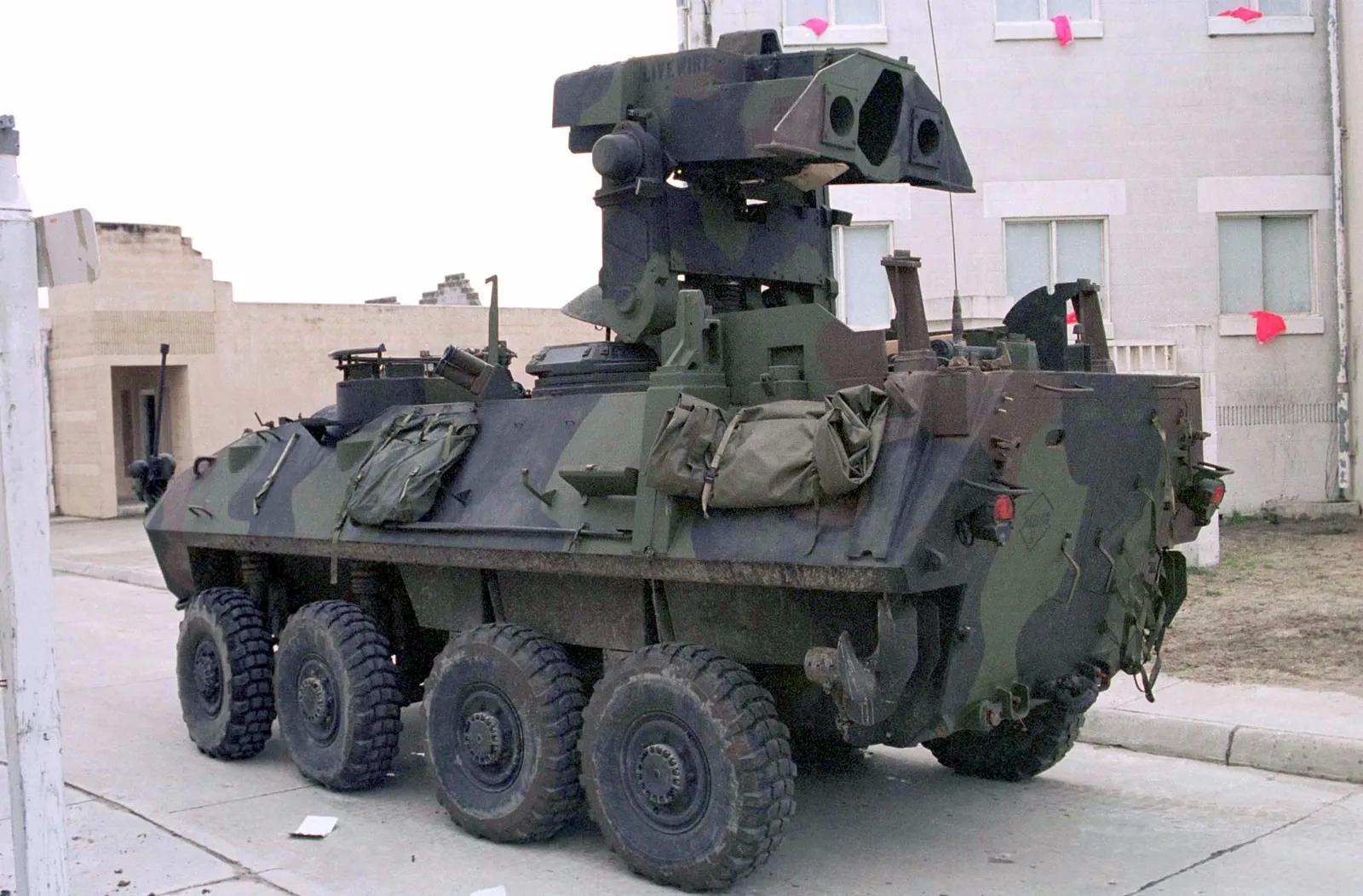
The legacy vehicle combined the AN/TAS-4 thermal sight with TOW missiles for reduced-visibility tank engagements out to the TOW's 3,750 m range.

Modernized ATWS

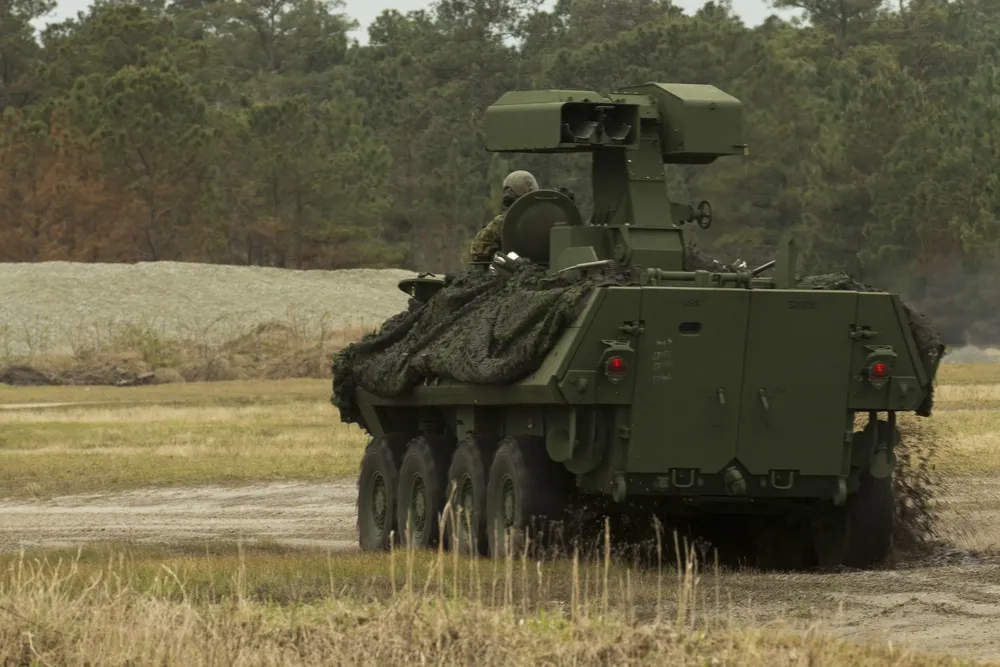
The LAV-ATM upgrade introduced an unmanned turret, improved thermal sighting, far-target location, commander/gunner video displays, and electric elevation and azimuth drives.
Variants

The page covers the legacy LAV-AT and its modernized LAV-ATM/ATWS configuration, both built around a TOW missile role on the LAV family chassis.

VariantConfigurationDesignation notes
LAV-ATM / ATWSModernized anti-tank weapon system

The modernization program replaced the legacy turret with an unmanned ATWS able to fire wire-guided and radio-frequency TOW missiles, adding improved thermal sighting, far-target location, video displays, and electric drive.

Sources: Program Office Begins Fielding Upgraded LAV Anti-Tank Weapon System, LAV-ATM FY2015 DOT&E Annual Report

Launched Missiles

The LAV-AT mounts the Marine Corps Anti-Tank Weapon System for protected TOW missile fire.

Launched itemItem typeLaunch evidence
BGM-71 TOW, Heavy anti-tank guided missile, Infantry WeaponsBGM-71 TOWAnti-tank guided missile

Marine Corps Systems Command describes the LAV-AT Anti-Tank Weapon System as firing TOW missiles for long-range stand-off anti-armor fire support to Light Armored Reconnaissance units.

Sources: LAV Anti-Tank Weapon System to Reach FOC by End of 2019

Timeline

LAV-AT Key Events

  1. Battle of al-Khafji employment

    Marine Corps history places seven LAV-ATs with Company D at Observation Post 4 and describes a LAV-AT firing a TOW missile during the night fight.

  2. Operational assessment begins

    DOT&E reported that MCOTEA began a LAV-ATM operational assessment with two pre-Milestone C prototypes and operational Marines from 1st Marine Division.

  3. Initial fielding reported

    Marine Corps Systems Command reported that the LAV-AT Modernization program had completed its first fielding of four upgraded ATWS vehicles to 1st Light Armored Reconnaissance Battalion Marines.

  4. Full operational capability update

    A Marine Corps update said full operational capability was expected by the end of fiscal year 2019, with 58 upgraded systems in active-fleet service and 91 of 106 contracted kits delivered.

Media
Related Weapon Systems
LAV 6.0, 8x8 infantry fighting vehicle, Armored VehiclesArmored VehiclesLAV 6.08x8 infantry fighting vehicleThe LAV 6.0 is Canada's upgraded 8x8 Light Armoured Vehicle family, built by General Dynamics Land Systems-Canada from the LAV III upgrade program. The infantry section carrier keeps a 25 mm M242 turret but adds a 450 hp powerpack, stronger mobility package, add-on armour, and improved protection. Canada describes it as the Canadian Army's primary infantry fighting vehicle, while 2026 government reporting tied 66 former LRSS reconnaissance LAV 6.0 vehicles to planned military aid for Ukraine during the 2014 Russia-Ukraine War.
LAV 6.0 ACSV, 8x8 armoured combat support vehicle, Armored VehiclesArmored VehiclesLAV 6.0 ACSV8x8 armoured combat support vehicleThe LAV 6.0 ACSV is Canada's turretless 8x8 Armoured Combat Support Vehicle family, built by General Dynamics Land Systems-Canada on the LAV 6.0 chassis to replace older Bison and M113 support vehicles. Canadian procurement records describe eight variants across Type 2, Type 2+, and Type 3 groups: troop/cargo, ambulance, command post, electronic warfare, engineer, fitter/cargo, maintenance and recovery, and mobile repair team vehicles. Canada has transferred ACSV vehicles to Ukraine, where the type is documented as a Canadian-built protected mobility and support platform for Ukrainian forces.
AH-1W Super Cobra attack helicopter, Marine attack helicopter, Aircraft & UAVsAircraft & UAVsAH-1W Super Cobra attack helicopterMarine attack helicopterThe Bell AH-1W Super Cobra was the U.S. Marine Corps' twin-engine attack helicopter between the mid-1980s and 2020, bridging the AH-1T SeaCobra and the AH-1Z Viper. NAVAIR lists Bell as contractor and describes the type as an HMLA aircraft with T700 engines, a night targeting system, and a 14,750 lb maximum gross weight, while official Marine and Navy sources document AH-1W combat use from Desert Storm and Iraq to Afghanistan and Operation Odyssey Lightning in Libya.
AAV Survivability Upgrade, Assault Amphibious Vehicle modernization package, Armored VehiclesArmored VehiclesAAV Survivability UpgradeAssault Amphibious Vehicle modernization packageThe AAV Survivability Upgrade was a U.S. Marine Corps program to keep legacy Assault Amphibious Vehicles relevant by adding buoyant armor, blast protection, automotive improvements, and mobility changes to existing hulls. SAIC was the major contractor for the upgrade effort, which moved from prototype work into low-rate production before testing and acquisition concerns were overtaken by the Corps' decision to focus resources on the Amphibious Combat Vehicle.
M901A1 Improved TOW Vehicle, Tracked TOW missile carrier vehicle, Armored VehiclesArmored VehiclesM901A1 Improved TOW VehicleTracked TOW missile carrier vehicleThe M901A1 Improved TOW Vehicle is a U.S. tracked anti-armor carrier built around an M113-family chassis, an M27 cupola, and a raised twin TOW launcher. United Defense, LP built the vehicle for Army service beginning in the late 1970s, and the M901A1 configuration added TOW 2 compatibility while retaining internal missile stowage and armored reload protection. U.S. Army Redstone history documents M901 ITVs in Operation Desert Storm, where they were credited with confirmed kills during the 1991 ground campaign.

Sources