Armored Vehicles

AAV Survivability Upgrade

Also known as
  • AAV-SU
  • AAV SU
  • Assault Amphibious Vehicle Survivability Upgrade
  • Amphibious Assault Vehicle Survivability Upgrade

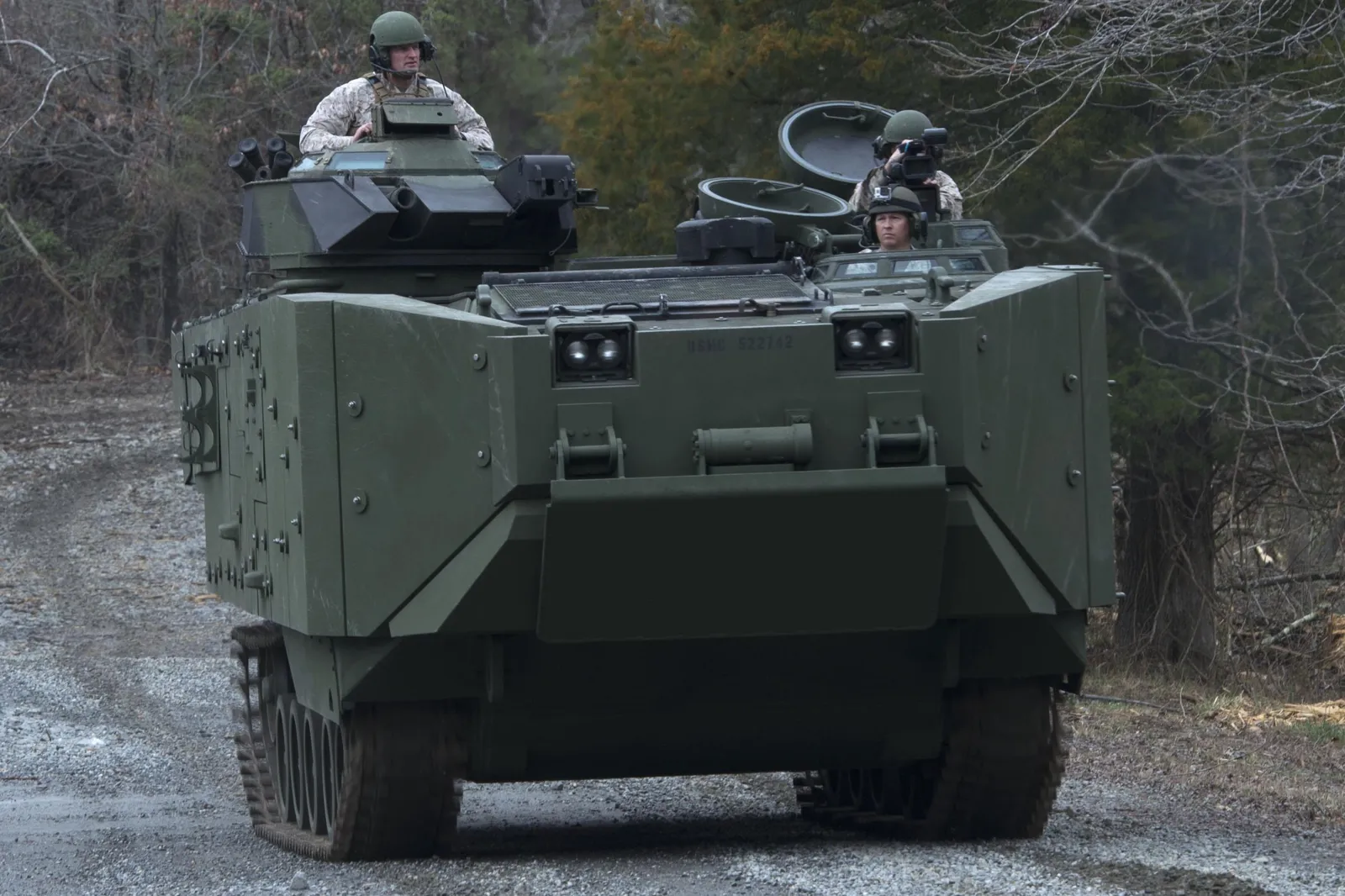
The AAV Survivability Upgrade was a U.S. Marine Corps program to keep legacy Assault Amphibious Vehicles relevant by adding buoyant armor, blast protection, automotive improvements, and mobility changes to existing hulls. SAIC was the major contractor for the upgrade effort, which moved from prototype work into low-rate production before testing and acquisition concerns were overtaken by the Corps' decision to focus resources on the Amphibious Combat Vehicle.

Profile / Specs

Profile

Origin
United States
Built by
SAIC
Type
Assault Amphibious Vehicle modernization package
Service note
2015-2018 development and limited production activity
Designer
SAIC upgrade integration for U.S. Marine Corps PEO Land Systems
Designed
2010s
Produced
Prototype and low-rate production activity from 2015 to 2018
Number built
Ten prototype upgrades were contracted in 2015; 2017 LRIP funding covered 21 vehicles, and USNI reported four production-control models accepted or nearing acceptance when the program was canceled in 2018.

Specifications

Base platform
Legacy U.S. Marine Corps Assault Amphibious Vehicle hulls
Planned fleet scope
Marine Corps sources described a 392-vehicle objective in 2016; the DoD Inspector General later cited a 405-vehicle plan by fiscal 2023 with an estimated $835 million procurement cost
Protection upgrades
New external armor, added spall liner, underbelly protection, lower sidewall protection, integrated blast-mitigating seats, and improved or protected fuel tanks
Mobility upgrades
Powertrain, suspension, water-jet, and control-system improvements intended to preserve or improve land and water mobility despite added protection weight
Production decision
The program entered low-rate initial production in August 2017, with SAIC funded for 21 vehicles
Testing findings
DoD oversight found force-protection gains but unresolved cost-control, tactical-egress, and reliability concerns before additional production
Contractor role
DOT&E listed SAIC in McLean, Virginia, as the major contractor for the AAV-SU program
Program outcome
The Marine Corps canceled the AAV-SU effort in 2018 and shifted emphasis to the Amphibious Combat Vehicle
Variants

Public sources describe AAV-SU as a modernization of existing Marine Corps AAV hulls rather than a new clean-sheet vehicle.

VariantConfigurationDesignation notes
AAV-SU prototype and production-control vehiclesSurvivability and mobility upgrade package for legacy AAV hulls

SAIC's 2015 contract option covered initial upgrades to 10 prototypes, while the 2017 production decision funded 21 low-rate vehicles and 2018 reporting said four production-control models were accepted or nearing acceptance after cancellation.

Sources: SAIC AAV-SU contract option, USNI AAV-SU production contract, USNI AAV-SU cancellation report

Timeline

AAV Survivability Upgrade Key Events

  1. SAIC moves into prototype upgrade work

    SAIC announced Marine Corps contract options covering engineering, manufacturing, and development work and the first 10 AAV-SU prototype upgrades.

  2. Marine Corps demonstrates the upgraded AAV

    The Marine Corps displayed the AAV-SU at Quantico and described the package as buoyant armor, blast-mitigating seats, spall liners, fuel-tank protection, and automotive and suspension improvements for existing hulls.

  3. AAV-SU enters low-rate initial production

    PEO Land Systems signed the Milestone C decision, and the Marine Corps funded SAIC for 21 low-rate production vehicles.

  4. DoD IG flags production-entry risks

    The DoD Inspector General reported that AAV-SU had improved force protection but had not met all cost-control, tactical-egress, and reliability requirements before initial production began.

  5. Stop-work order precedes cancellation

    The Marine Corps issued a stop-work order to SAIC in late August 2018 before canceling the upgrade effort and shifting investment toward the Amphibious Combat Vehicle.

Upgrade Scope And Cancellation

The AAV-SU package was intended to bridge the gap between Cold War-era tracked AAVs and the incoming Amphibious Combat Vehicle. Marine Corps and oversight sources describe the upgrade as a survivability and mobility package for existing hulls rather than a new vehicle family.

Intended role

Improve force protection and keep amphibious assault lift available until ACV fielding.

Main additions

Buoyant armor, spall liners, blast-mitigating seats, fuel-tank protection, and automotive and suspension updates.

Program limit

The Marine Corps stopped the upgrade after LRIP activity and redirected modernization emphasis to ACV procurement.

Sources: Marine Corps demonstrates upgraded AAV; DODIG AAV-SU report; USNI AAV-SU cancellation report.
Media
Related Weapon Systems
Stryker, 8x8 armored fighting vehicle family, Armored VehiclesArmored VehiclesStryker8x8 armored fighting vehicle familyThe Stryker is a U.S.-designed eight-wheeled armored fighting vehicle family built around a common chassis, modular mission kits, and rapid road movement. Army reporting says the first production vehicle rolled off the line in April 2002, and the family later logged combat rotations in Iraq and Afghanistan before Double-V Hull upgrades improved blast protection. Modern branches include 30 mm Dragoon infantry carriers, SGT STOUT air-defense vehicles, and U.S.-supplied APCs for Ukraine.
LAV 6.0, 8x8 infantry fighting vehicle, Armored VehiclesArmored VehiclesLAV 6.08x8 infantry fighting vehicleThe LAV 6.0 is Canada's upgraded 8x8 Light Armoured Vehicle family, built by General Dynamics Land Systems-Canada from the LAV III upgrade program. The infantry section carrier keeps a 25 mm M242 turret but adds a 450 hp powerpack, stronger mobility package, add-on armour, and improved protection. Canada describes it as the Canadian Army's primary infantry fighting vehicle, while 2026 government reporting tied 66 former LRSS reconnaissance LAV 6.0 vehicles to planned military aid for Ukraine during the 2014 Russia-Ukraine War.
Oshkosh M-ATV, 4x4 mine-resistant ambush protected vehicle, Armored VehiclesArmored VehiclesOshkosh M-ATV4x4 mine-resistant ambush protected vehicleThe Oshkosh M-ATV is a U.S.-built 4x4 MRAP developed to give troops mine and ambush protection with better off-road mobility than heavier first-generation MRAPs. Oshkosh paired a V-hull protected capsule, blast-attenuating seats, and TAK-4 independent suspension with mission modules ranging from command and utility bodies to armed assault configurations. The vehicle's documented conflict record spans early U.S. fielding in Afghanistan, coalition use in Iraq and Syria under Operation Inherent Resolve, Ukrainian wartime service, and Saudi-led coalition employment in Yemen.

Sources