Aircraft & UAVs

AH-1W Super Cobra attack helicopter

Also known as
  • AH-1W
  • AH-1W Super Cobra
  • AH-1W SuperCobra
  • Bell AH-1W SuperCobra
  • Super Cobra
  • Whiskey Cobra
  • Whisky Cobra
  • AH-1T+
  • AH-1T+/T700

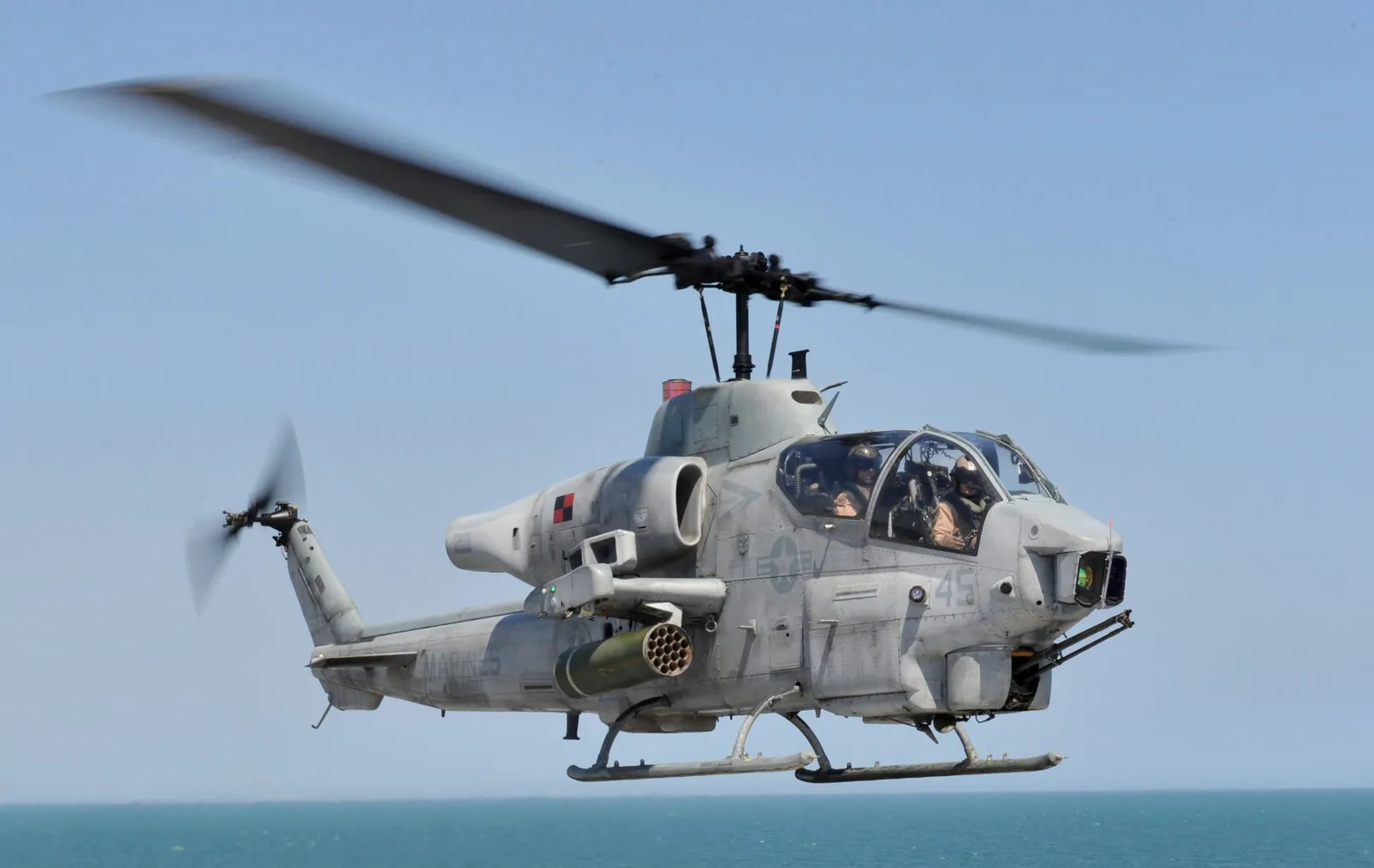
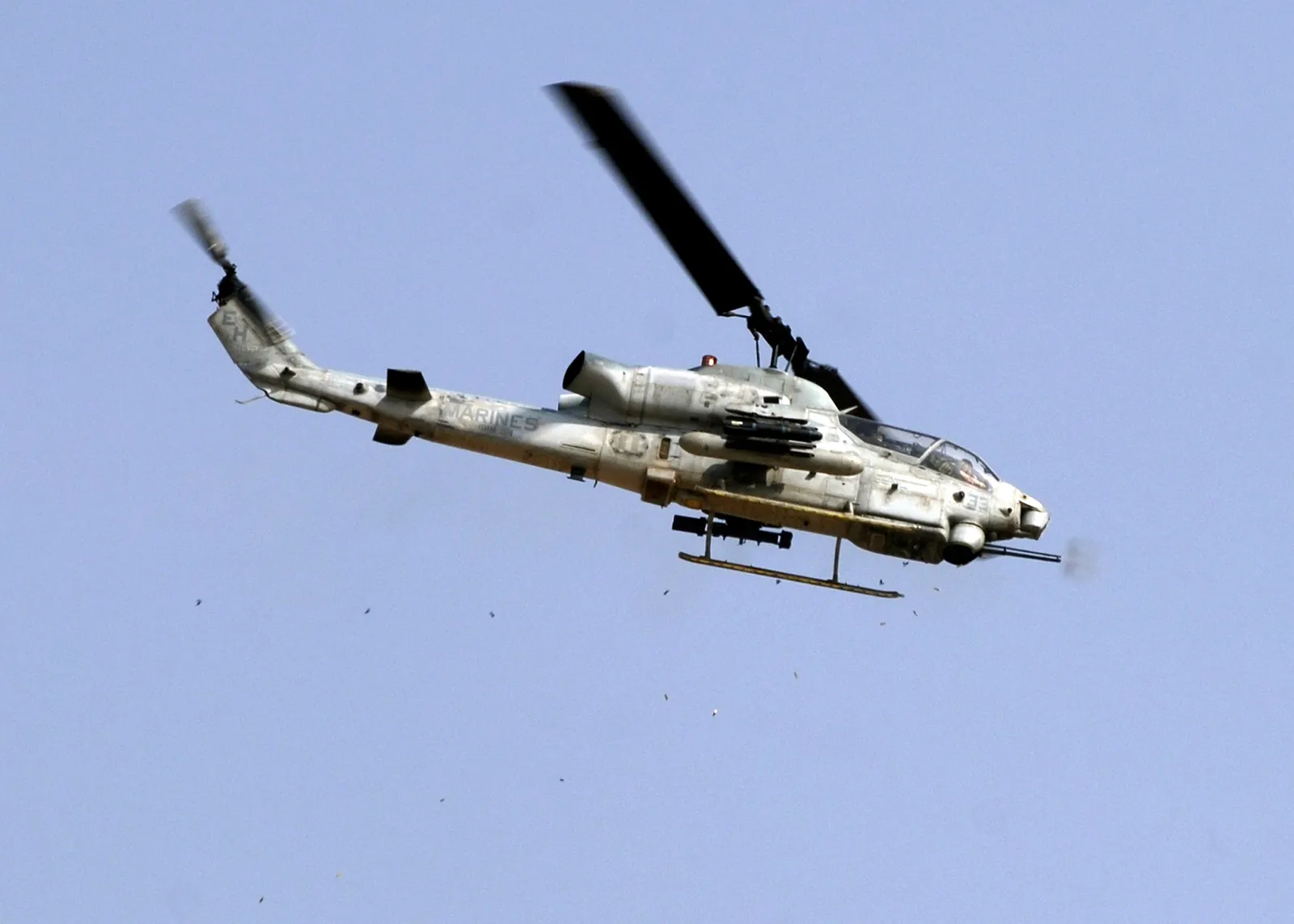
The Bell AH-1W Super Cobra was the U.S. Marine Corps' twin-engine attack helicopter between the mid-1980s and 2020, bridging the AH-1T SeaCobra and the AH-1Z Viper. NAVAIR lists Bell as contractor and describes the type as an HMLA aircraft with T700 engines, a night targeting system, and a 14,750 lb maximum gross weight, while official Marine and Navy sources document AH-1W combat use from Desert Storm and Iraq to Afghanistan and Operation Odyssey Lightning in Libya.

Role in Conflicts

Marine AH-1W/SuperCobra units flew Desert Storm close-air-support and anti-armor missions; Marine Corps University describes HMLA-369 AH-1s firing Hellfire, TOW, rockets, and 20 mm cannon around al-Khafji, and the National Naval Aviation Museum credits AH-1W squadrons with destroying Iraqi tanks and armored vehicles during the campaign.

Role details
Side
United States and Libyan Government of National Accord

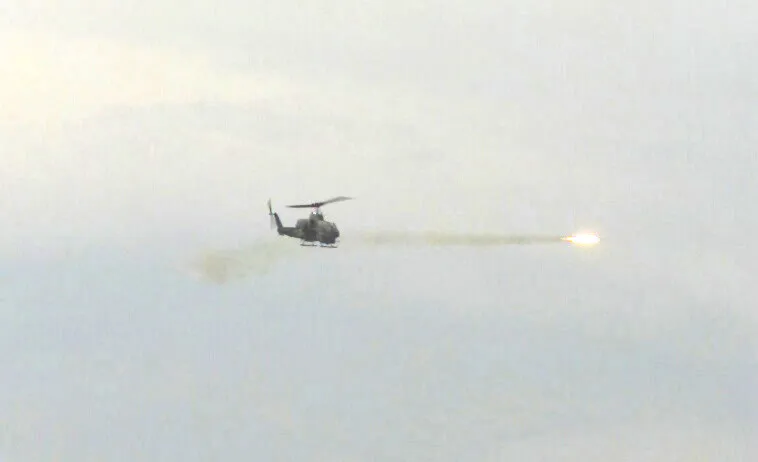
During Operation Odyssey Lightning, Marine AH-1W Super Cobras conducted precision strikes from amphibious ships in support of GNA-aligned forces fighting ISIS in Sirte; HMLA-269's history says its detachment delivered 164 AGM-114 Hellfire missiles in the operation.

Profile / Specs

Profile

Origin
United States
Built by
Bell
Type
Marine attack helicopter
Service note
1980s-2020
Produced
1986-1998
Number built
179 new-build U.S. aircraft plus 43 AH-1T upgrades reported by Pima; NAVAIR separately reported 195 production AH-1Ws.
Developed from
AH-1T Cobra
Developed into
AH-1Z Viper

Specifications

Crew
2
Engines
Two General Electric T700 turboshafts, 1,680 hp each
Maximum speed
218 mph
Range
317 miles
Loaded weight
14,750 lb
Rotor diameter
48 ft
Armament
Hellfire, Sidearm, Sidewinder, 2.75-inch rockets, and a 20-mm M197 cannon
Variants

The AH-1W sits in the Marine twin-engine Cobra line after the AH-1J Sea Cobra and AH-1T Improved Sea Cobra. It began as the AH-1T+/T700 re-engining effort and was succeeded in Marine service by the four-bladed AH-1Z Viper.

VariantConfigurationDesignation notes
AH-1J Sea CobraEarly Marine twin-engine Cobra

Pima describes the AH-1J as the Marine Corps' two-engine Cobra ordered in 1968 and entering service in the early 1970s.

Sources: Bell AH-1W - Pima Air & Space

AH-1T Improved Sea CobraLengthened AH-1J development

Pima describes the AH-1T as a lengthened Sea Cobra with improved transmission and more powerful engines; NAVAIR's AH-1W anniversary article says the AH-1W grew from installing T700 engines in an AH-1T.

Sources: Bell AH-1W - Pima Air & Space, Marines' AH-1W Super Cobra turns 20 | NAVAIR

AH-1Z Viper attack helicopter, Attack helicopter, Aircraft & UAVsAH-1Z Viper attack helicopterFour-bladed successor

NAVAIR says the Marine Corps replaced the AH-1W with the AH-1Z Viper, and Bell says remanufactured AH-1Ws continued the platform line as AH-1Zs.

Sources: AH-1W Super Cobra | NAVAIR, United States Marines Retire Bell AH-1W After 34 Years of Service

Carried Munitions

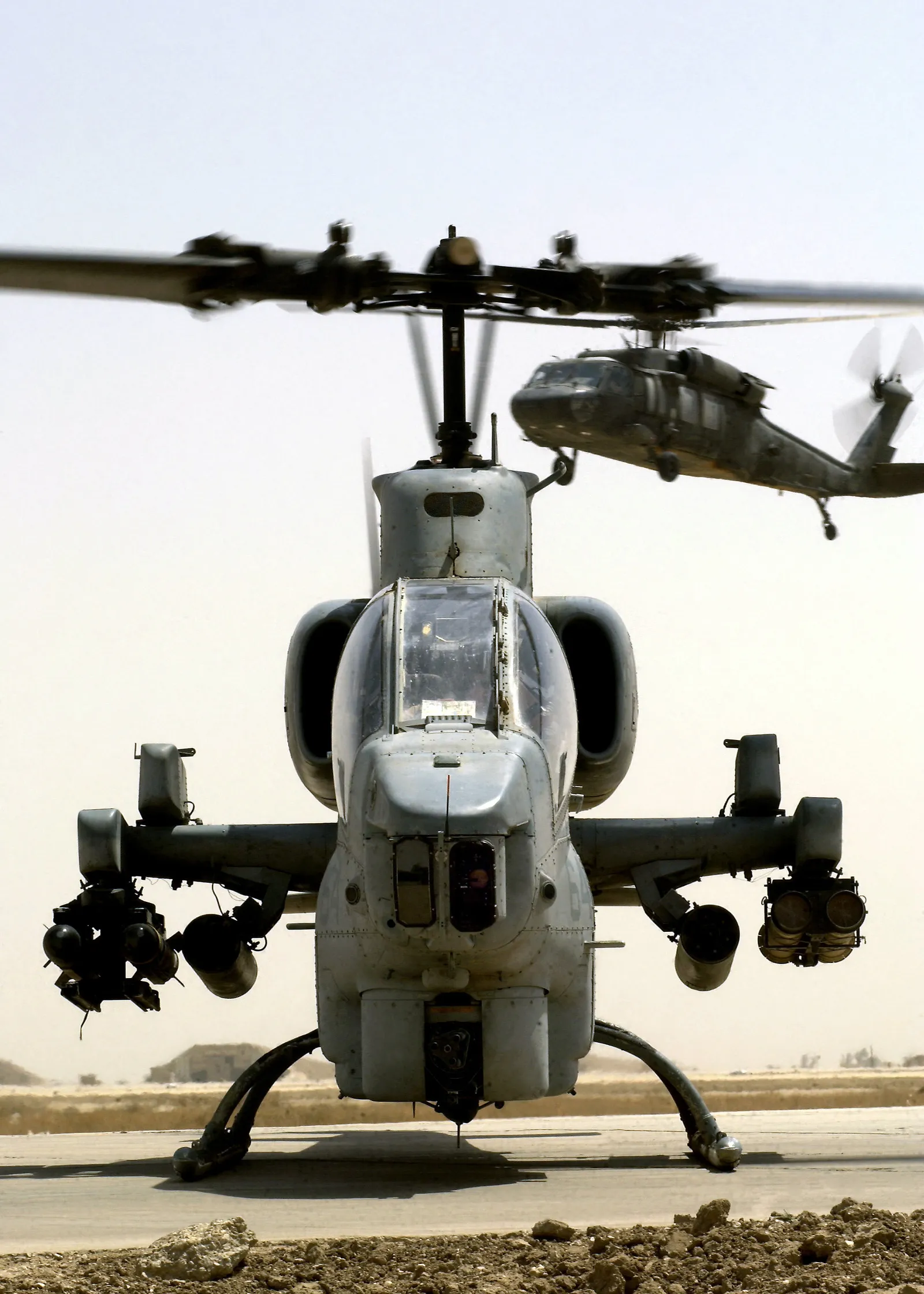
NAVAIR describes the AH-1W Super Cobra weapons fit as including TOW, Hellfire, Sidearm, Sidewinder, 2.75-inch rockets, a 20-mm gun, and other precision-guided munitions.

Carried itemItem typeCarriage evidence
AGM-114 Hellfire missile family, Air-to-surface missile family, MunitionsAGM-114 Hellfire missile familyAir-to-surface missile family

NAVAIR listed Hellfire in the AH-1W weapons fit, and Redstone Arsenal history lists the Navy AH-1W as a HELLFIRE launch platform.

Sources: Marines' AH-1W Super Cobra turns 20 | NAVAIR, HELLFIRE History | Redstone Arsenal

Hydra-70 rocket system, 2.75-inch air-launched rocket family, MunitionsHydra-70 rocket system2.75-inch rocket system

NAVAIR listed 2.75-inch rockets in the AH-1W weapons fit, and General Dynamics describes Hydra-70 as a 2.75-inch rocket family mountable on Cobra aircraft.

Sources: Marines' AH-1W Super Cobra turns 20 | NAVAIR, HYDRA-70 Rocket | General Dynamics Ordnance and Tactical Systems

APKWS / WGU-59 guided rockets, Guided rocket munition family, MunitionsAPKWS / WGU-59 guided rocketsLaser-guided 2.75-inch rocket

NAVAIR describes APKWS II as a guided conversion of the Hydra 2.75-inch rocket and says initial operational capability was declared on AH-1W and UH-1Y helicopters in 2012.

Sources: APKWS | NAVAIR

AIM-9 Sidewinder missile, Short-range air-to-air missile family, MunitionsAIM-9 Sidewinder missileShort-range air-to-air missile

NAVAIR listed Sidewinder in the AH-1W weapons fit, and its AIM-9M page identifies Sidewinder employment on Navy and Marine AH-1 aircraft.

Sources: Marines' AH-1W Super Cobra turns 20 | NAVAIR, AIM-9M Sidewinder | NAVAIR

BGM-71 TOW, Heavy anti-tank guided missile, Infantry WeaponsBGM-71 TOWAnti-tank guided missile

NAVAIR listed TOW among the AH-1W's weapons after the re-engined AH-1T development effort.

Sources: Marines' AH-1W Super Cobra turns 20 | NAVAIR

Timeline

AH-1W Super Cobra attack helicopter Key Events

  1. Re-engined AH-1T first flight

    Bell says the AH-1T+ prototype that became the AH-1W first flew at Bell's Arlington, Texas, flight research center.

    Sources: United States Marines Retire Bell AH-1W After 34 Years of Service

  2. First AH-1W delivery

    Bell says it delivered the first AH-1Ws to the Marine Corps on March 27, 1986.

    Sources: United States Marines Retire Bell AH-1W After 34 Years of Service

  3. SuperCobras enter Desert Storm combat

    Marine AH-1 SuperCobra helicopters from HMLA-369 launched on the first day of Desert Storm and engaged Iraqi observation posts and later armored or support targets near al-Khafji.

    Sources: The Desert War | Marine Corps University

  4. Last AH-1W delivered

    NAVAIR states that Bell followed the prototype with production AH-1Ws and delivered the last aircraft in July 1998.

    Sources: Marines' AH-1W Super Cobra turns 20 | NAVAIR

  5. AH-1Z replacement starts

    NAVAIR says AH-1W replacement by the AH-1Z began in 2006 as part of a remanufacture program.

    Sources: AH-1W Super Cobra | NAVAIR

  6. Operation Odyssey Lightning Hellfire loading

    DVIDS documented Marines loading AGM-114 Hellfire missiles onto an AH-1W Super Cobra aboard USS San Antonio during Operation Odyssey Lightning.

    Sources: Operation Odyssey Lightning AH-1W Hellfire loading

  7. Final Marine AH-1W flight

    Marines.mil says the AH-1W Whiskey Super Cobra flew its last flight over New Orleans after 933,614 flight hours, passing the mission to the AH-1Z Viper.
    Sources: AH-1W Whiskey Sundown | Marines.mil

Media
Related Weapon Systems
AH-1W Super Cobra, Marine attack helicopter, Aircraft & UAVsAircraft & UAVsAH-1W Super CobraMarine attack helicopterThe Bell AH-1W Super Cobra was the U.S. Marine Corps' twin-engine attack helicopter between the mid-1980s and 2020, bridging the AH-1T SeaCobra and the AH-1Z Viper. NAVAIR identifies Bell as contractor and describes the type as an HMLA aircraft with T700 engines, a night targeting system, and a 14,750 lb maximum gross weight, while official Marine and Navy sources document AH-1W combat use from Desert Storm and Iraq to Afghanistan and Operation Odyssey Lightning in Libya.
AH-1Z Viper attack helicopter, Attack helicopter, Aircraft & UAVsAircraft & UAVsAH-1Z Viper attack helicopterAttack helicopterThe Bell AH-1Z Viper is a two-seat U.S. Marine Corps attack helicopter developed from the AH-1W Super Cobra for the H-1 upgrade program. NAVAIR describes it as the AH-1W replacement, with a four-bladed composite rotor, integrated fire-control system, six wing stores stations, and 85 percent parts commonality with the UH-1Y; official Marine Corps and Navy sources place AH-1Z-equipped elements in the 2016 Operation Inherent Resolve deployment.
AH-64 Apache attack helicopter, Twin-engine attack helicopter, Aircraft & UAVsAircraft & UAVsAH-64 Apache attack helicopterTwin-engine attack helicopterThe AH-64 Apache is a U.S. twin-engine attack helicopter family designed by Hughes Helicopters and continued through McDonnell Douglas and Boeing production. Built around a two-person crew, nose-mounted sensors, a 30 mm chain gun, rockets, and guided missiles, it has direct source-backed combat use from Desert Storm and Iraq to Afghanistan, Sinai, Yemen, Gaza, Lebanon, anti-ISIS operations, and recent U.S. operations against Iran.
20mm M197 rotary cannon, 20 mm three-barrel externally powered Gatling aircraft cannon, Aircraft & UAVsAircraft & UAVs20mm M197 rotary cannon20 mm three-barrel externally powered Gatling aircraft cannonThe 20mm M197 is a lightweight three-barrel Gatling aircraft cannon derived from the M61A1 Vulcan family for helicopter, light-aircraft, naval, turret, pod, and pintle installations. General Dynamics Ordnance and Tactical Systems markets the current M-197 and lists it on Marine Corps AH-1J, AH-1T, AH-1W, and AH-1Z aircraft, while FAS, DVIDS, Defense Media Network, and official Navy history sources document M197-equipped AH-1W and MH-60S context across Gulf War, Afghanistan, Iraq, and Operation Inherent Resolve service.
AH-64E Apache attack helicopter, Twin-engine attack helicopter, Aircraft & UAVsAircraft & UAVsAH-64E Apache attack helicopterTwin-engine attack helicopterThe AH-64E Apache is Boeing's Echo-model Apache variant, developed from the AH-64D Block III remanufacture program and built around improved engines, sensors, networking, and a two-person attack-helicopter weapons station. Direct source-backed conflict records place AH-64E aircraft with U.S. Army units in Operation Inherent Resolve, the 2001 War in Afghanistan's Operation Freedom's Sentinel phase, and Operation Epic Fury during the 2020 United States-Iran Conflict.
F/A-18 Hornet (Tactical), Carrier-capable multirole strike fighter, Aircraft & UAVsAircraft & UAVsF/A-18 Hornet (Tactical)Carrier-capable multirole strike fighterThe F/A-18 Hornet (Tactical) is the National Naval Aviation Museum's label for the original McDonnell Douglas F/A-18 A-D Hornet family, a twin-engine carrier-capable strike fighter that entered Marine Corps service in 1983 and U.S. Navy service in 1984. NAVAIR describes the Hornet as the nation's first all-weather fighter and attack aircraft; its documented combat record spans Libya, Desert Storm, Kosovo, Afghanistan, Iraq, and later coalition campaigns.
MH-60S Sea Hawk helicopter, Multi-mission maritime helicopter, Aircraft & UAVsAircraft & UAVsMH-60S Sea Hawk helicopterMulti-mission maritime helicopterThe MH-60S Sea Hawk is a U.S. Navy multi-mission helicopter derived from the Black Hawk/Seahawk family for shipboard logistics, search and rescue, special warfare support, mine-countermeasures, and armed maritime missions. NAVAIR describes the aircraft as sharing the MH-60R common cockpit while replacing legacy H-46D, H-3, and HH-1N roles; during Operation Epic Fury in the 2020 United States-Iran Conflict, MH-60S aircraft were documented aboard USS Abraham Lincoln handling flight-deck movements, cargo transport, and at-sea support.

Sources