- Side
- United States

NAVAIR identifies a VMFA-323 F/A-18A from USS Coral Sea as one of the first Hornets in combat, firing two AGM-88 HARM missiles at Libyan air-defense radar sites during the April 15, 1986 Libya strike.
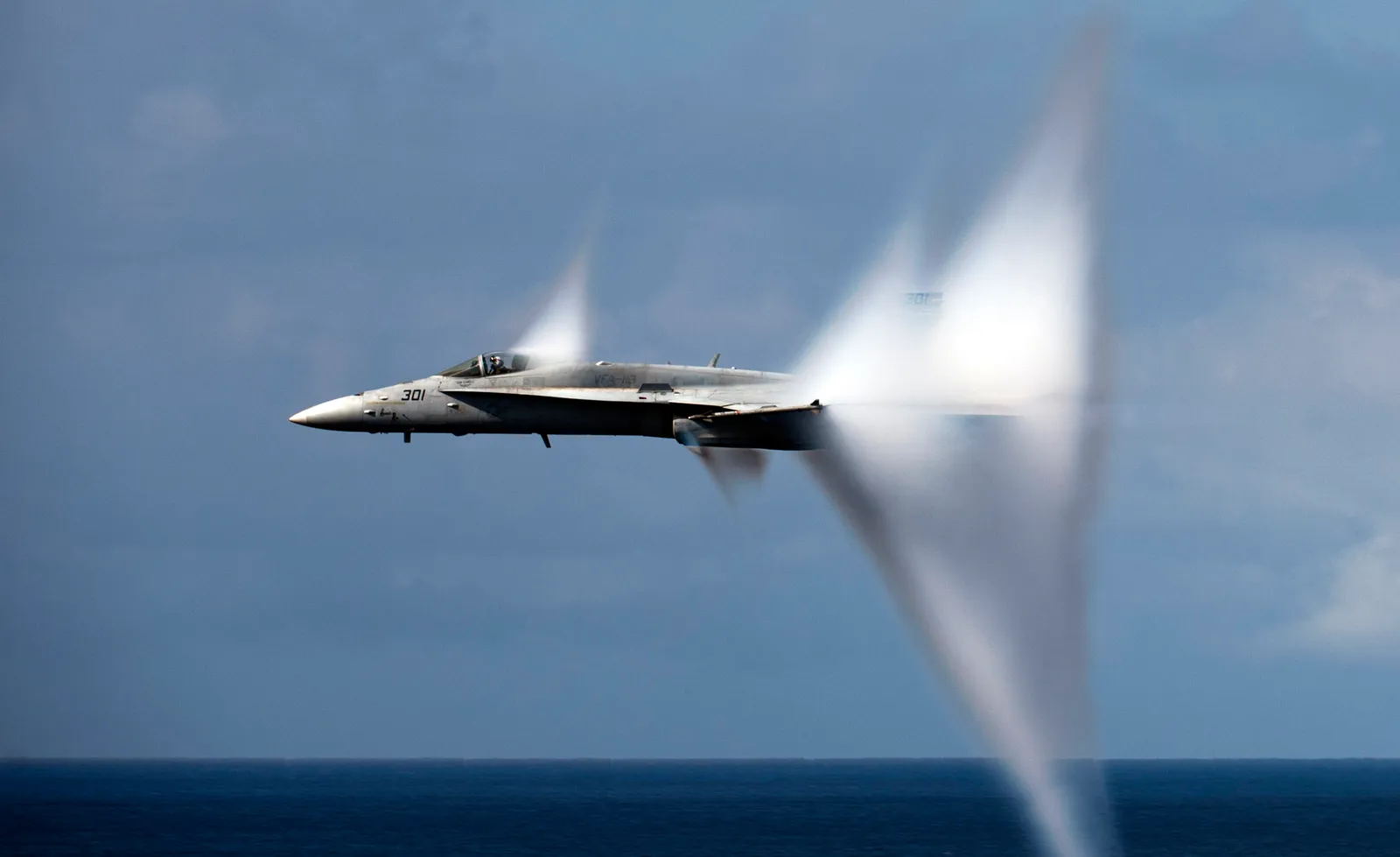
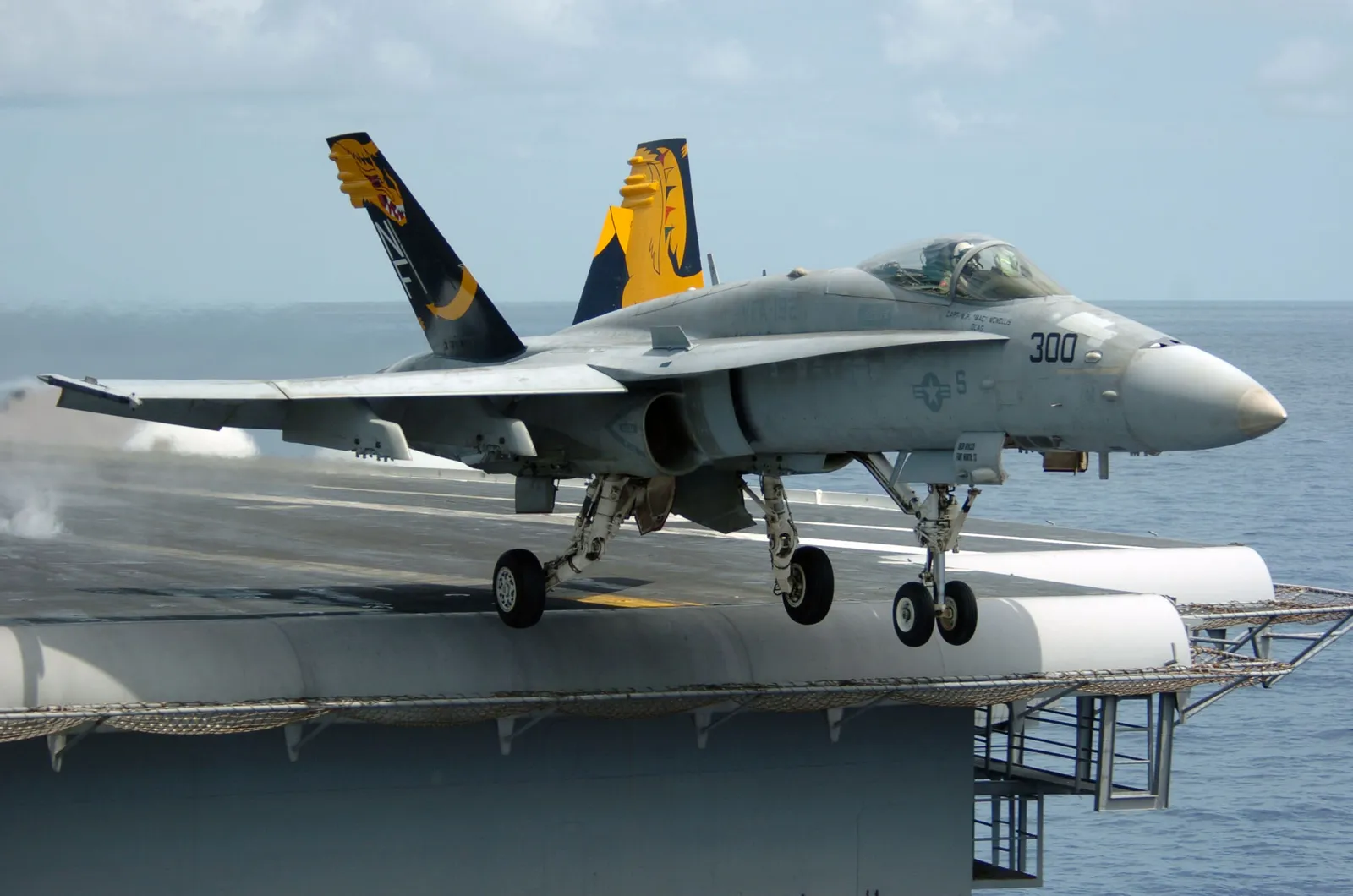
The F/A-18 Hornet (Tactical) is the National Naval Aviation Museum's label for the original McDonnell Douglas F/A-18 A-D Hornet family, a twin-engine carrier-capable strike fighter that entered Marine Corps service in 1983 and U.S. Navy service in 1984. NAVAIR describes the Hornet as the nation's first all-weather fighter and attack aircraft; its documented combat record spans Libya, Desert Storm, Kosovo, Afghanistan, Iraq, and later coalition campaigns.
NAVAIR identifies a VMFA-323 F/A-18A from USS Coral Sea as one of the first Hornets in combat, firing two AGM-88 HARM missiles at Libyan air-defense radar sites during the April 15, 1986 Libya strike.
NAVAIR reports that more than 210 U.S. Navy, Marine Corps, and Canadian F/A-18 Hornets were engaged in Operation Desert Storm, hitting more than 6,000 targets across fleet air-defense, reconnaissance, and ground-force suppression missions.
Role detailsU.S. Navy VFA-87 states that its F/A-18Cs flew 595 combat missions and dropped 430,000 pounds of ordnance during Operation Allied Force over Kosovo.
DVIDS documents an F/A-18C on USS Carl Vinson for an October 7, 2001 strike against al-Qaeda and Taliban targets in Afghanistan; NAVAIR credits the F/A-18 with a significant role and more than 56,000 flight hours during Operation Enduring Freedom.
Role detailsNAVAIR's 45th-anniversary account says Legacy Hornet squadrons supported Operation Iraqi Freedom with close air support and pre-strike missions; DVIDS separately describes F/A-18C/CVW-3 close-air-support and ISR missions over Iraq in 2005.
Role detailsCanada's official CF-18 fleet history says seven CF-18s formed Task Force Libeccio during Operation MOBILE over Libya; Canadian mission metrics list 946 CF-188 Hornet sorties, 10 percent of NATO strike sorties, and guided-bomb employment.
The 3rd Marine Aircraft Wing reported that VMFA-323 returned from a six-month carrier-based combat deployment with 10 F/A-18 Hornets in support of Operation Inherent Resolve, using USS Nimitz ordnance for more than 200 airstrikes against ISIS forces.
The A-D rows cover the original Legacy Hornet family. A and C models are single-seat aircraft, while B and D models are two-seat aircraft; the larger F/A-18E/F Super Hornet is treated as a separate successor family.
| Variant | Configuration | Designation notes |
|---|---|---|
| F/A-18A Hornet | Single-seat A/B-generation Hornet | NAVAIR identifies the F/A-18A as a single-seat aircraft and lists A/B models as operational from October 1983. Sources: F/A-18 A-D Hornet |
| F/A-18B Hornet | Two-seat trainer | NAVAIR identifies the F/A-18B as a two-seat model primarily used for training and lists A/B models as operational from October 1983. Sources: F/A-18 A-D Hornet |
| F/A-18C Hornet | Single-seat C/D-generation Hornet | NAVAIR identifies the F/A-18C as single-seat and groups A+ and C/D aircraft in attack, tactical air control, forward air control, and reconnaissance missions. Sources: F/A-18 A-D Hornet |
| F/A-18D Hornet | Two-seat C/D-generation Hornet | NAVAIR identifies the F/A-18D as two-seat, lists C/D models as operational from September 1987, and says C/D production ended in 2000 with the final F/A-18D delivered to the Marine Corps that summer. Sources: F/A-18 A-D Hornet |
NAVAIR lists air-to-air missiles, anti-ship and anti-radiation missiles, guided standoff weapons, Maverick missiles, and conventional strike stores among the Hornet's armament.
| Carried item | Item type | Carriage evidence |
|---|---|---|
 | Short-range air-to-air missile | NAVAIR lists AIM-9 Sidewinder missiles in the F/A-18 A-D Hornet armament set. Sources: F/A-18 A-D Hornet |
 | Air-to-air missile | NAVAIR lists AIM-7 Sparrow missiles among the F/A-18 A-D Hornet's air-to-air armament. Sources: F/A-18 A-D Hornet |
 | Beyond-visual-range air-to-air missile | NAVAIR lists AIM-120 AMRAAM missiles among the F/A-18 A-D Hornet's air-to-air armament. Sources: F/A-18 A-D Hornet |
 | Air-to-surface guided missile | NAVAIR lists Maverick missiles among the Hornet's armament, confirming that the F/A-18 A-D Hornet can carry the AGM-65 family. Sources: F/A-18 A-D Hornet |
 | Anti-ship cruise missile | NAVAIR lists Harpoon among the Hornet's armament. Sources: F/A-18 A-D Hornet |
 | Anti-radiation missile | NAVAIR lists HARM among the F/A-18 A-D Hornet's armament; a separate NAVAIR account documents a VMFA-323 F/A-18A firing AGM-88 HARM missiles during the 1986 Libya strike. Sources: F/A-18 A-D Hornet, First combat Hornet returned to service |
 | Standoff glide weapon | NAVAIR lists the Joint Stand-Off Weapon among the F/A-18 A-D Hornet's armament. Sources: F/A-18 A-D Hornet |
 | 2,000-pound JDAM | The Air Force historical study identifies the Navy's F/A-18 Hornet among aircraft that used the GBU-31 JDAM family. Sources: Three New Weapons |
The Hornet also carries an internal 20 mm gun installation as part of its fixed armament.
| Compatible item | Item type | Compatibility evidence |
|---|---|---|
 | Internal 20 mm aircraft cannon | NAVAIR lists one M61A1/A2 Vulcan 20 mm cannon as F/A-18 A-D Hornet armament. Sources: F/A-18 A-D Hornet |
DCMA marks November 18, 1978 as the 40th anniversary date of the F/A-18 Hornet's first flight.
Sources: F/A-18 Hornet targets 40 years of flight
NAVAIR lists October 1983 as the operational date for the A/B models.
Sources: F/A-18 A-D Hornet
NAVAIR says the Hornet went to battle for the first time in 1986 from USS Coral Sea during Libya operations.
Sources: F/A-18 Program Surpasses 5,000,000 flight hours
NAVAIR lists September 1987 as the operational date for the C/D models.
Sources: F/A-18 A-D Hornet
NAVAIR says more than 210 U.S. Navy, Marine Corps, and Canadian F/A-18 Hornets were engaged in Operation Desert Storm.
Sources: F/A-18 Program Surpasses 5,000,000 flight hours
DCMA says 1,503 F/A-18A/B/C/D Legacy Hornets were built and that the last F/A-18C and F/A-18D deliveries occurred in August 2000.
Sources: F/A-18 Hornet targets 40 years of flight
NAVAIR says the U.S. Navy announced retirement of the F/A-18C from combat roles in April 2018.
Sources: F/A-18 A-D Hornet
NAVAIR says the Hornet is planned to serve as the Marine Corps' bridge to the F-35 until its 2030 sundown.
Sources: F/A-18 A-D Hornet