- Side
- Israel

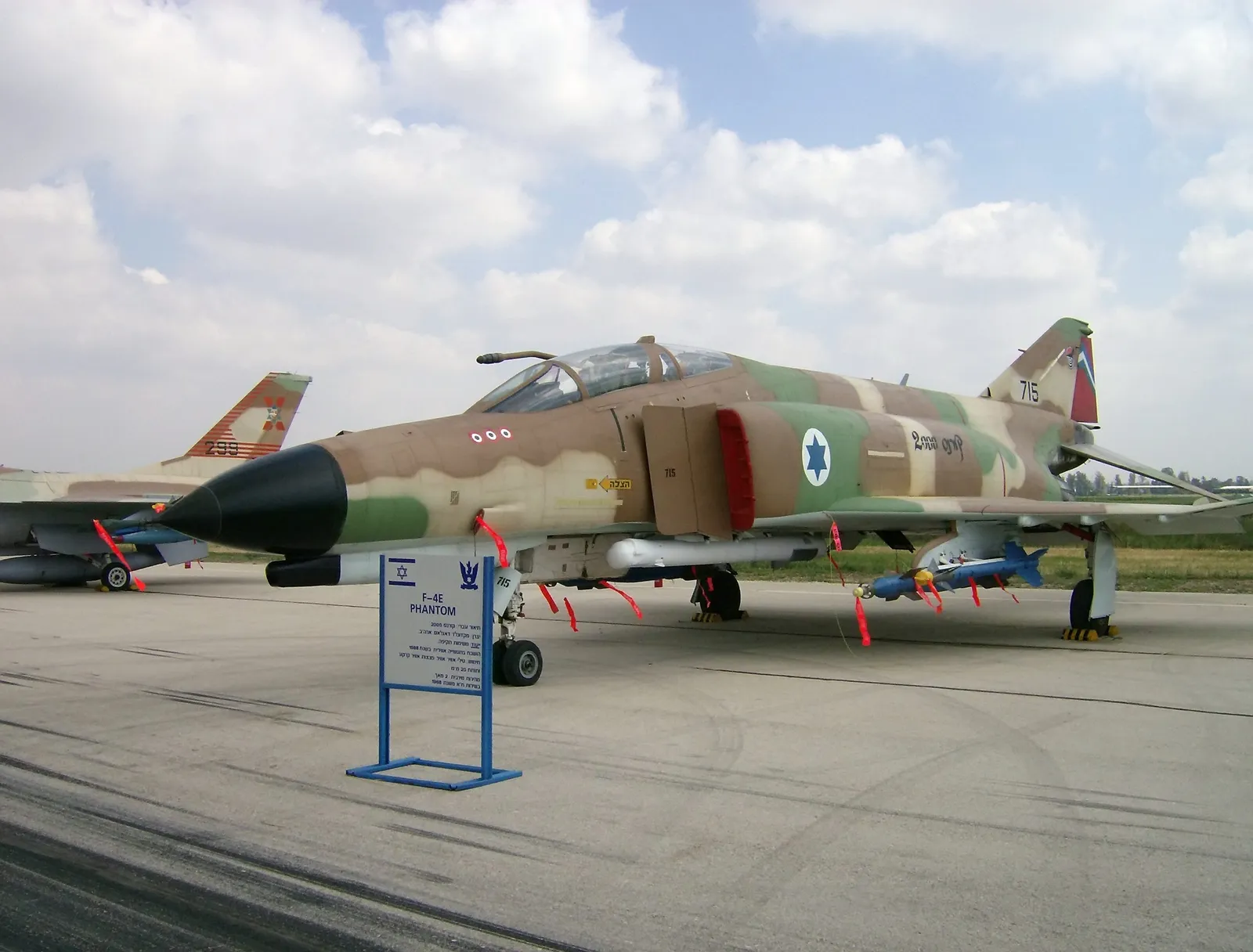
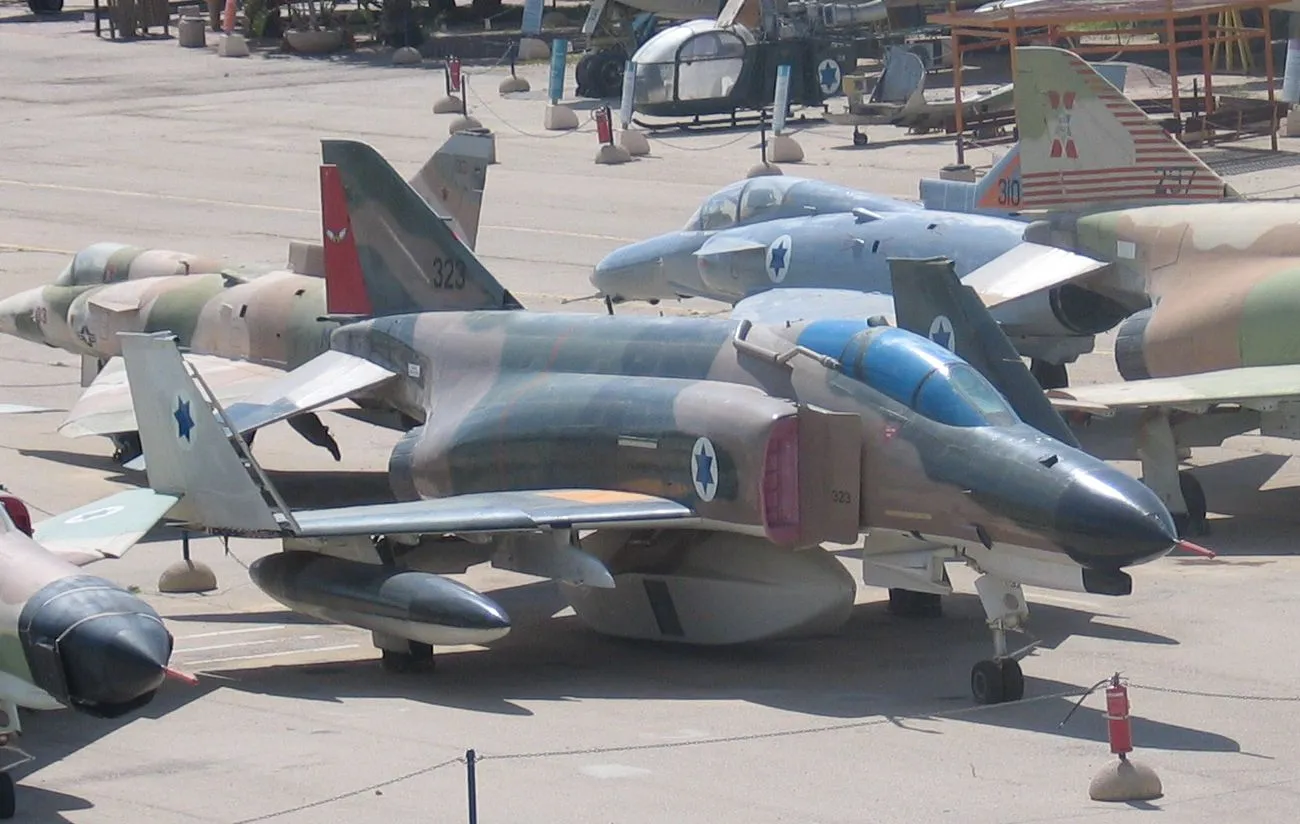
Israeli F-4 Phantom II aircraft arrived during the War of Attrition and took part in Operation Priha deep-strike missions against Egyptian targets.
The F-4 Phantom II is an American twin-engine, two-seat supersonic fighter-bomber developed by McDonnell for U.S. Navy fleet defense and later adopted by U.S. and allied air arms for interception, strike, reconnaissance, and electronic-warfare roles. More than 5,000 were built, with source-backed catalog use spanning Israeli War of Attrition strikes, U.S. F-4G Wild Weasel missions in the Gulf War, Turkish F-4E 2020 strikes against PKK targets, Turkey's RF-4E loss over the Syria crisis, and attributed Iranian anti-ISIS strikes in Iraq.
Israeli F-4 Phantom II aircraft arrived during the War of Attrition and took part in Operation Priha deep-strike missions against Egyptian targets.
The F-4G Wild Weasel, an F-4E-derived Phantom II conversion, flew U.S. suppression-of-enemy-air-defenses missions during Operation Desert Storm.
Role detailsTurkish F-4E 2020 aircraft participated with F-16s and unmanned drones in November 2015 airstrikes against PKK targets in northern Iraq's Qandil Mountains.
A Turkish RF-4E Phantom II reconnaissance aircraft was shot down by Syria in June 2012, making the Phantom directly documented in the Syrian Civil War's Turkey-Syria air-defense incidents.
Role detailsU.S. officials and defense reporting attributed F-4 Phantom II airstrikes in Iraq's Diyala province to Iran in late 2014, while Iranian officials denied carrying out the anti-ISIS strikes.
Role detailsPhantom II designations cover service-specific fighter, fighter-bomber, reconnaissance, and electronic-warfare configurations; later national upgrade names such as Kurnas 2000 and Terminator 2020 identify operator modernization programs rather than new airframes.
| Variant | Configuration | Designation notes |
|---|---|---|
| F-4C | USAF fighter-bomber | The F-4C was the U.S. Air Force's first Phantom II version, first flying in May 1963 with production deliveries beginning six months later. Sources: McDonnell Douglas F-4C Phantom II | National Museum of the United States Air Force |
| F-4D | USAF fighter-bomber | Tinker Air Force Base's Phantom II history identifies the F-4D as an Air Force version after the initial F-4C. |
| F-4E | Fighter-bomber with internal gun | The National Museum F-4E photo caption identifies an F-4E with AIM-7 Sparrow, AIM-4D Falcon, and M61A1 Vulcan armament. Sources: McDonnell Douglas F-4E | National Museum of the United States Air Force |
| RF-4E | Reconnaissance Phantom | CFR and NATO coverage of the 2012 shootdown identifies Turkey's lost aircraft as a reconnaissance Phantom tied to the Syria crisis. Sources: CFR - Turkey: Phantom Shoot-Down?, NATO - NAC Statement on Turkish Aircraft Shootdown |
 | Electronic-warfare and SEAD conversion | The F-4G was a Wild Weasel conversion of the F-4E airframe used for locating and suppressing radar-guided air defenses. Sources: McDonnell Douglas F-4G Wild Weasel | National Museum of the United States Air Force |
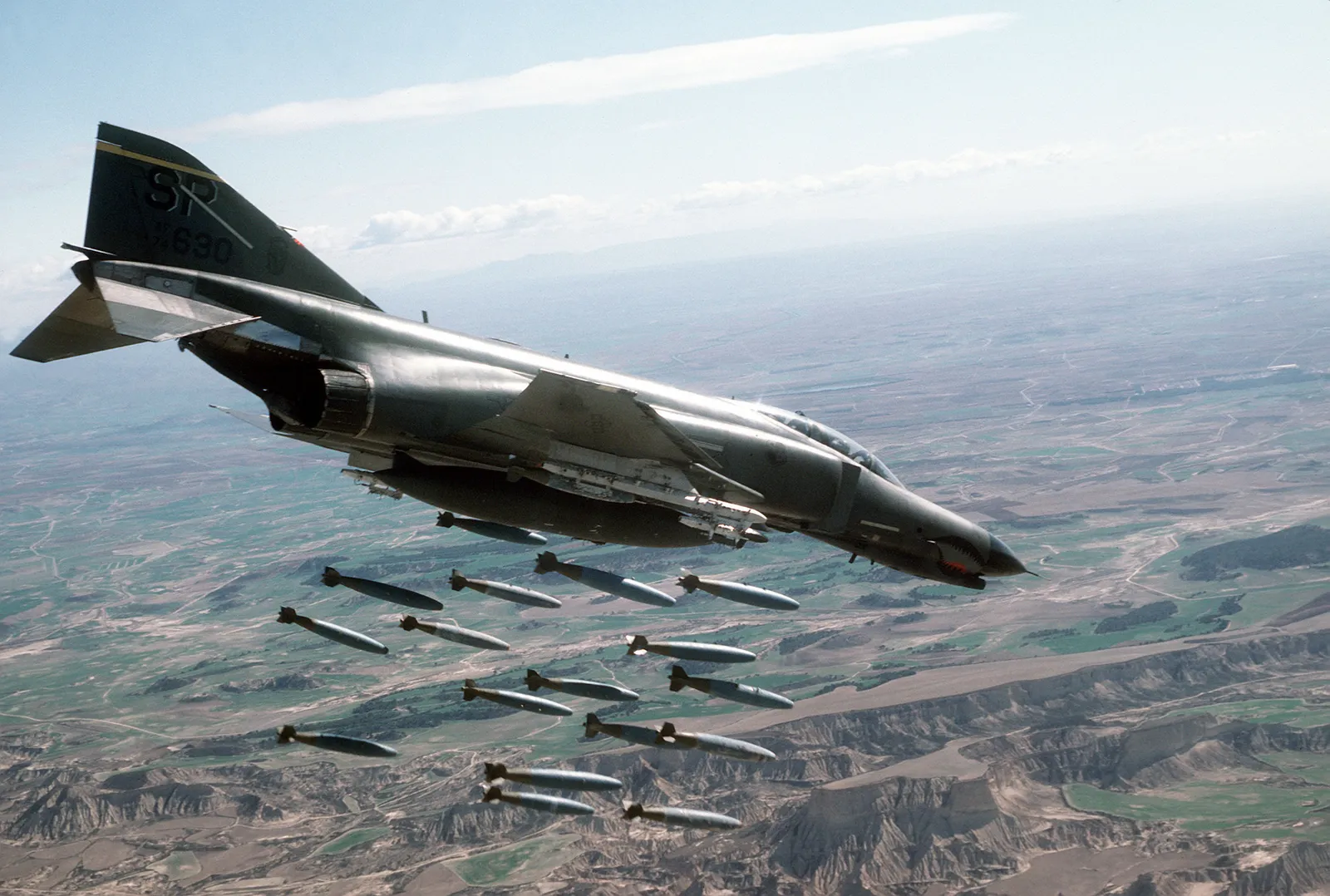
The Phantom II family is documented with short-range air-to-air missiles, iron bombs, and later Wild Weasel armament options across its F-4C, F-4E, and F-4G variants.
| Carried item | Item type | Carriage evidence |
|---|---|---|
 | Anti-ship cruise missile | Iran Press says the Qader anti-ship cruise missile can be installed on aircraft such as the F-4 Phantom fighter. Sources: Qader anti-ship missile capable against coastal targets, boats |
 | Short-range air-to-air missile | The F-4C fact sheet lists four AIM-9B Sidewinder missiles in a typical 1967 loadout. Sources: McDonnell Douglas F-4C Phantom II | National Museum of the United States Air Force, AIM-9 Sidewinder |
 | Medium-range air-to-air missile | NAVAIR identifies U.S. Air Force and Navy F-4 Phantoms as heavy AIM-7 Sparrow users during the missile's first combat use in Vietnam. Sources: AIM-7 Sparrow - NAVAIR |
 | Infrared air-to-air missile | The National Museum photo caption identifies an F-4E Phantom II carrying four AIM-4D Falcon missiles. Sources: McDonnell Douglas F-4E | National Museum of the United States Air Force |
 | 750-pound general-purpose bomb | The F-4C fact sheet lists eight 750-pound Mk 117 bombs in a typical 1967 loadout. Sources: McDonnell Douglas F-4C Phantom II | National Museum of the United States Air Force, M117 General Purpose Bomb |
 | Tactical air-to-surface missile | The F-4G Wild Weasel fact sheet lists AGM-65 Maverick missiles among its armament options. Sources: McDonnell Douglas F-4G Wild Weasel | National Museum of the United States Air Force, AGM-65 Maverick Fact Sheet |
 | Anti-radiation missile | The F-4G Wild Weasel fact sheet lists AGM-45 Shrike among the Phantom-derived Wild Weasel armament options. Sources: McDonnell Douglas F-4G Wild Weasel | National Museum of the United States Air Force |
 | High-speed anti-radiation missile | The F-4G Wild Weasel fact sheet lists AGM-88 HARM missiles among its armament options. Sources: McDonnell Douglas F-4G Wild Weasel | National Museum of the United States Air Force, AGM-88 HARM |
 | Television-guided glide bomb | The National Museum Walleye I fact sheet says USAF F-4s used the television-guided Walleye glide bomb starting in 1967. Sources: Martin Marietta AGM-62 Walleye I - National Museum of the USAF |
Museum loadout evidence documents the F-4C with podded electronic-countermeasures equipment in addition to weapons.
| Carried item | Item type | Carriage evidence |
|---|---|---|
 | Electronic countermeasures pod | The National Museum of the U.S. Air Force lists one ALQ-87 pod on the right inboard pylon in a typical 1967 F-4C loadout. Sources: McDonnell Douglas F-4C Phantom II | National Museum of the United States Air Force |
| Ammunition | Ammunition type | Firing evidence |
|---|---|---|
 | 20 mm aircraft cannon | The National Museum F-4E photo caption identifies the aircraft with an M61A1 Vulcan 20 mm cannon, and the M61A1 fact sheet says the Vulcan was carried internally on the F-4E Phantom II. Sources: McDonnell Douglas F-4E | National Museum of the United States Air Force, M61A1 Vulcan Cannon | National Museum of the United States Air Force |
The Phantom II first flew in May 1958 after being developed for U.S. Navy fleet defense.
Sources: McDonnell Douglas F-4C Phantom II | National Museum of the United States Air Force
The USAF's first F-4C version made its first flight in May 1963, and production deliveries began six months later.
Sources: McDonnell Douglas F-4C Phantom II | National Museum of the United States Air Force
The Israeli Air Force says the Phantom arrived during the 1969 War of Attrition and took part in Operation Priha strike activity against Egyptian targets.
Sources: Operation “Priha” - The Israeli Air Force
F-4G Wild Weasel crews used the Phantom II airframe for U.S. air-defense-suppression missions during Operation Desert Storm.
Sources: McDonnell Douglas F-4G Wild Weasel | National Museum of the United States Air Force
NATO condemned Syria's shootdown of a Turkish aircraft, while CFR identified the incident as the loss of an unarmed Turkish reconnaissance F-4.
Sources: CFR - Turkey: Phantom Shoot-Down?, NATO - NAC Statement on Turkish Aircraft Shootdown
RFE/RL and USNI reported U.S. official attribution of F-4 Phantom II strikes against Islamic State targets in Iraq, alongside Iranian denials.
Sources: RFE/RL - Iran Denies F-4 Air Strikes on Islamic State, USNI - Iran Denies ISIS Airstrikes, Pentagon Says Different
Hurriyet Daily News reported Turkish F-4E 2020 aircraft, F-16s, and drones in a cross-border campaign against PKK targets in northern Iraq's Qandil Mountains.
Sources: Hurriyet Daily News - Turkish Military Hit 44 PKK Targets