- Side
- United States and South Vietnam


F-14s made a brief appearance over Vietnam, flying protective patrols for helicopters during the final evacuation of American personnel and other foreign nationals.
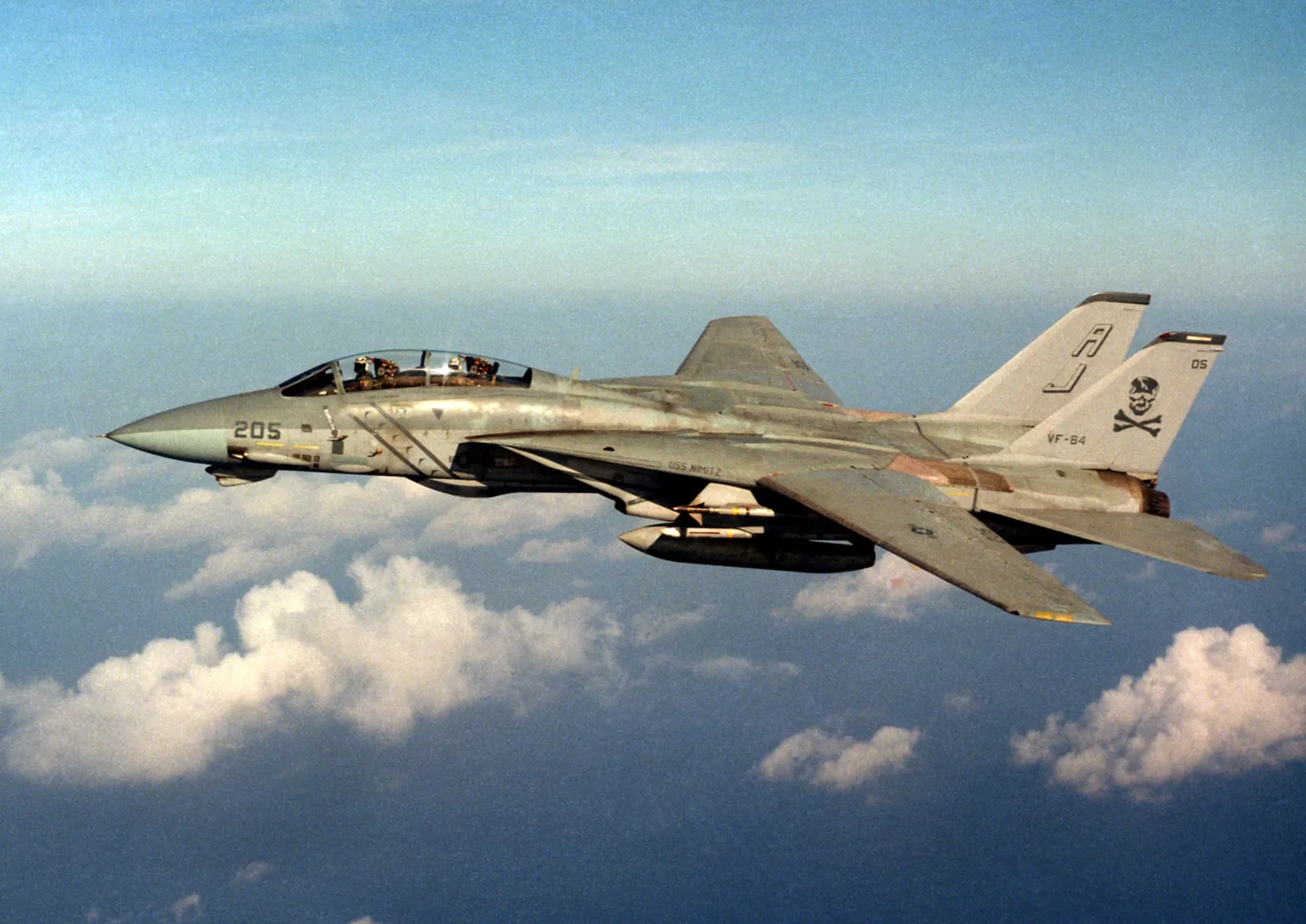
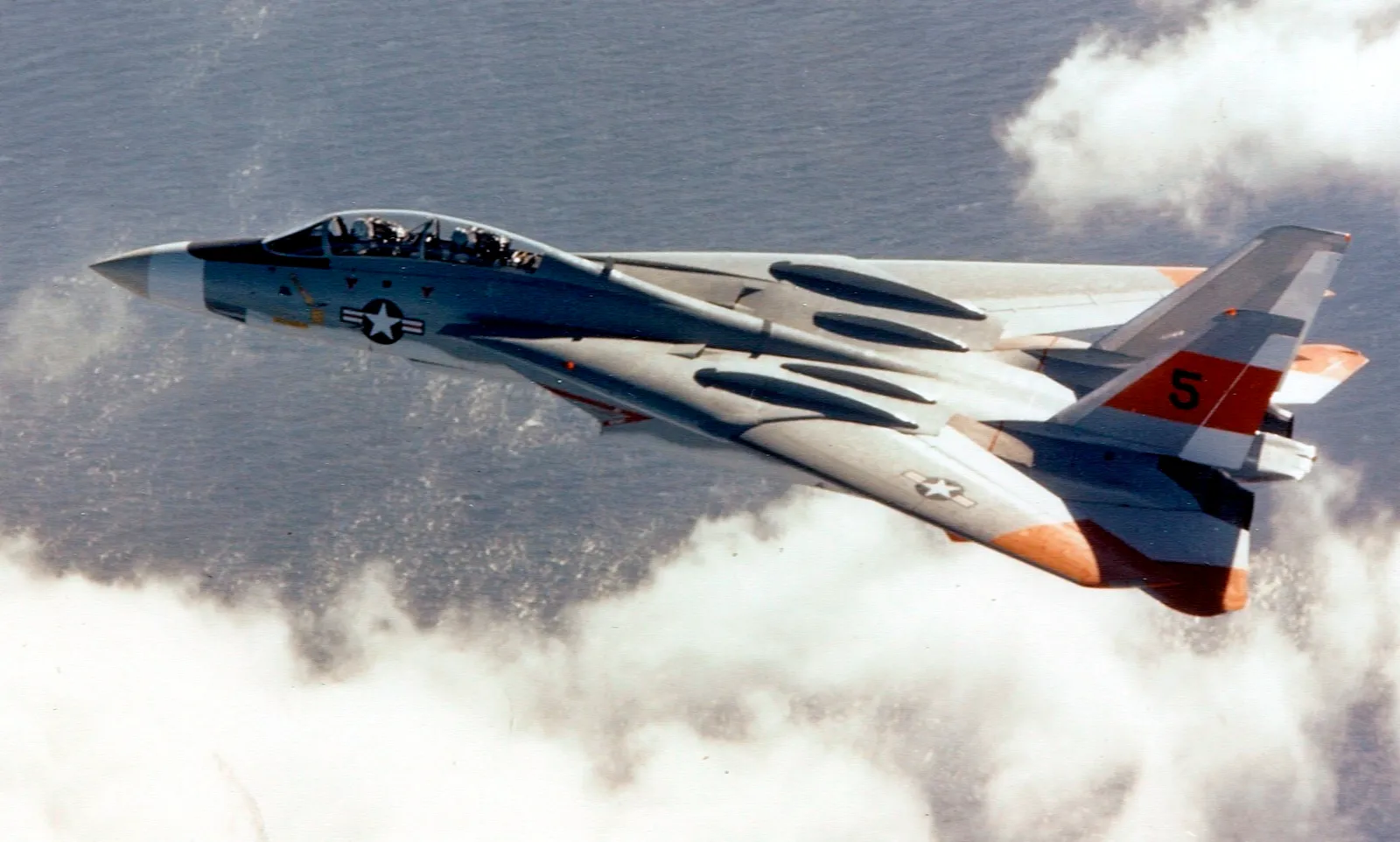
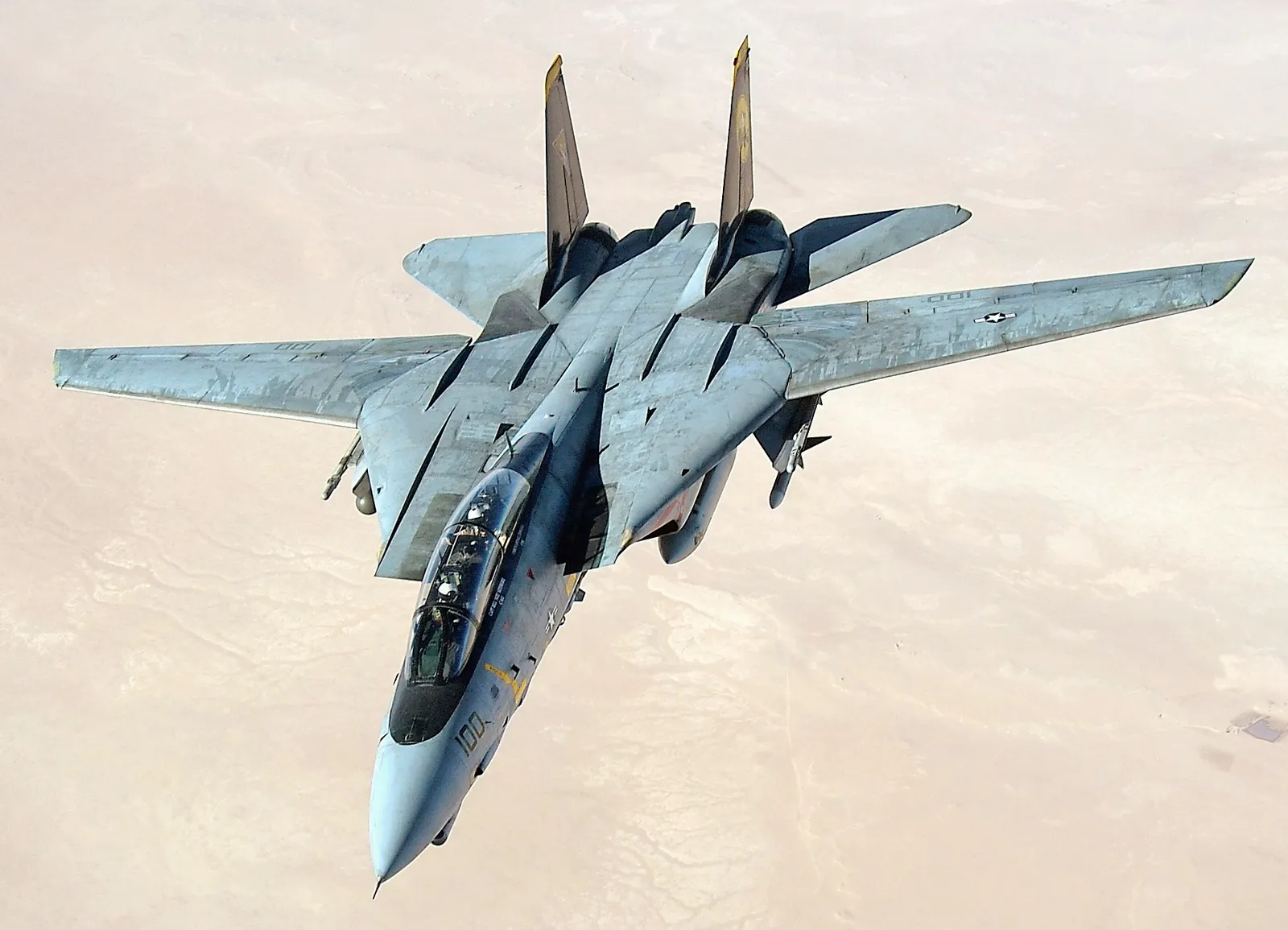
The Grumman F-14 Tomcat was a carrier-based, two-seat, variable-sweep-wing fighter built for U.S. Navy fleet defense and later adapted for strike, reconnaissance, and targeting missions. Its long-range radar-and-missile concept shaped Cold War carrier air defense, while later F-14B and F-14D upgrades kept the type in combat from the Gulf of Sidra through Iraq, Afghanistan, and Iran's surviving fleet in the 2026 Iran War.
F-14s made a brief appearance over Vietnam, flying protective patrols for helicopters during the final evacuation of American personnel and other foreign nationals.
F-14 reconnaissance flights over Beirut were fired upon during the Lebanon crisis connected to the 1982 Lebanon War.
Tomcats scored the type's first combat victory when U.S. Navy F-14s shot down two Libyan Su-22 fighters over the Gulf of Sidra in 1981.
Iranian F-14s flew air patrols during the 1980 Iran-Iraq War, including the Tanker War phase over the Persian Gulf.
F-14 Tomcats flew Desert Storm combat missions over Kuwait and Iraq, including combat air patrol, escort, and TARPS reconnaissance tasking.
Role detailsTomcats were dispatched for Operation Southern Watch sorties after Iraqi jets violated the no-fly zone over Iraq.
F-14A Tomcats launched from USS Theodore Roosevelt for strike missions in support of Operation Deny Flight over Bosnia-Herzegovina in 1995.
F-14 Tomcats launched from Theodore Roosevelt to conduct strike missions in support of Operation Allied Force over Kosovo.
F-14s flew combat missions over Afghanistan from 2001 until retirement, including the opening strikes of Operation Enduring Freedom.
Role detailsTomcats flew combat missions in Iraq during the 2003-2011 war and supported the 2004 fighting around Fallujah with guided-bomb attacks.
Role detailsIranian F-14s were reported destroyed in Israeli strikes at Isfahan during the 2026 Iran War, with the aircraft treated as part of Iran's remaining fighter and air-defense threat.
The Tomcat family progressed from the F-14A baseline into the F110-powered F-14B and the digitally modernized F-14D, with rebuilt F-14A airframes designated F-14D(R).
| Variant | Configuration | Designation notes |
|---|---|---|
| F-14A | Initial production fighter | Baseline two-seat Tomcat delivered for fleet air defense with TF30 engines, AWG-9 radar, and Phoenix/Sparrow/Sidewinder armament. |
| F-14A+ / F-14B | Re-engined upgrade | NAVAIR identifies the November 1987 General Electric F110 engine upgrade as the modification later designated F-14B. Sources: Tomcat Program End - NAVAIR |
| F-14D | Digital avionics and radar variant | The F-14D added digital avionics, an advanced digital air-to-air radar system, and passive infrared search-and-track capability. Sources: Tomcat Program End - NAVAIR, Grumman F-14D(R) Tomcat - Smithsonian |
| F-14D(R) | Remanufactured F-14A airframe | The Smithsonian airframe was built as an F-14A-85-GR and later modified to F-14D(R) configuration in the early 1990s. |
NHHC documents the F-14A Tomcat armament with AIM-54 Phoenix, AIM-7 Sparrow, and AIM-9 Sidewinder missiles.
| Carried item | Item type | Carriage evidence |
|---|---|---|
 | Air-to-air missile | NHHC lists the F-14A Tomcat armament as six AIM-54 Phoenix missiles. Sources: F-14A Tomcat - NHHC |
 | Air-to-air missile | NHHC lists AIM-7 Sparrow missiles among the F-14A Tomcat's armament. Sources: F-14A Tomcat - NHHC |
 | Air-to-air missile | NHHC lists the F-14A Tomcat armament as four AIM-9 Sidewinder missiles. Sources: F-14A Tomcat - NHHC |
The Tomcat retained a built-in close-range gun alongside its long-range missile armament.
| Ammunition | Ammunition type | Firing evidence |
|---|---|---|
 | 20 mm rotary cannon | NHHC lists a 20 mm M61 Vulcan cannon as part of the F-14A Tomcat's armament. Sources: F-14A Tomcat - NHHC |
The Tomcat's late-service value came from mission-system upgrades as much as from the basic airframe. NAVAIR describes the type's transition from a single-mission air-to-air fighter into a precision strike and digital reconnaissance aircraft, while the Smithsonian records F-14D(R) equipment that tied targeting, imagery, and reconnaissance roles together.
Added autonomous day/night laser designation and targeting for laser-guided bombs; VF-103 made the first Tomcat LANTIRN deployment in 1996.
The F-14D(R) could carry TARPS and use Fast Tactical Imagery to move reconnaissance and targeting imagery in flight.
The F-14D combined digital avionics, advanced air-to-air radar, and passive infrared search-and-track with the Tomcat's original fleet-defense mission.
NAVAIR traces the Tomcat program to a January 1968 decision to develop a new Navy air-to-air fighter.
Sources: Tomcat Program End - NAVAIR
The F-14 made its first flight in December 1970, moving quickly from development toward fleet introduction.
Sources: Tomcat Program End - NAVAIR, F-14 Tomcat Inventory - NHHC
NAVAIR records delivery of the first production F-14A in May 1972, followed by two Tomcat squadrons gearing up in October.
Sources: Tomcat Program End - NAVAIR
U.S. Navy F-14s shot down two Libyan Su-22 fighters over the Gulf of Sidra, giving the Tomcat its first combat victories.
Sources: F-14A Tomcat - NHHC
The General Electric F110 engine upgrade produced the aircraft that NAVAIR identifies as the F-14B.
Sources: Tomcat Program End - NAVAIR
F-14A Tomcats launched from USS Theodore Roosevelt for strike missions in support of Operation Deny Flight over Bosnia-Herzegovina.
Sources: Bosnia - NHHC
VF-103 became the first Tomcat squadron to deploy with LANTIRN, giving the aircraft autonomous laser-guided-bomb targeting capability.
Sources: Tomcat Program End - NAVAIR
F-14 Tomcats launched from Theodore Roosevelt to conduct strike missions during Operation Allied Force over Kosovo.
Sources: Kosovo - NHHC
F-14s began combat missions over Afghanistan during Operation Enduring Freedom.
Sources: Operation Enduring Freedom 2001-2002
The last deployed F-14 combat cruise ended as the type completed its final combat mission and moved toward U.S. retirement.
Sources: F-14D Tomcat - NHHC
Reporting citing the IDF said Iranian F-14s were destroyed in airstrikes at Isfahan during the 2026 Iran War.
Sources: Iranian F-14 Fleet Attacked at Isfahan - The Aviationist