- Side
- Iran

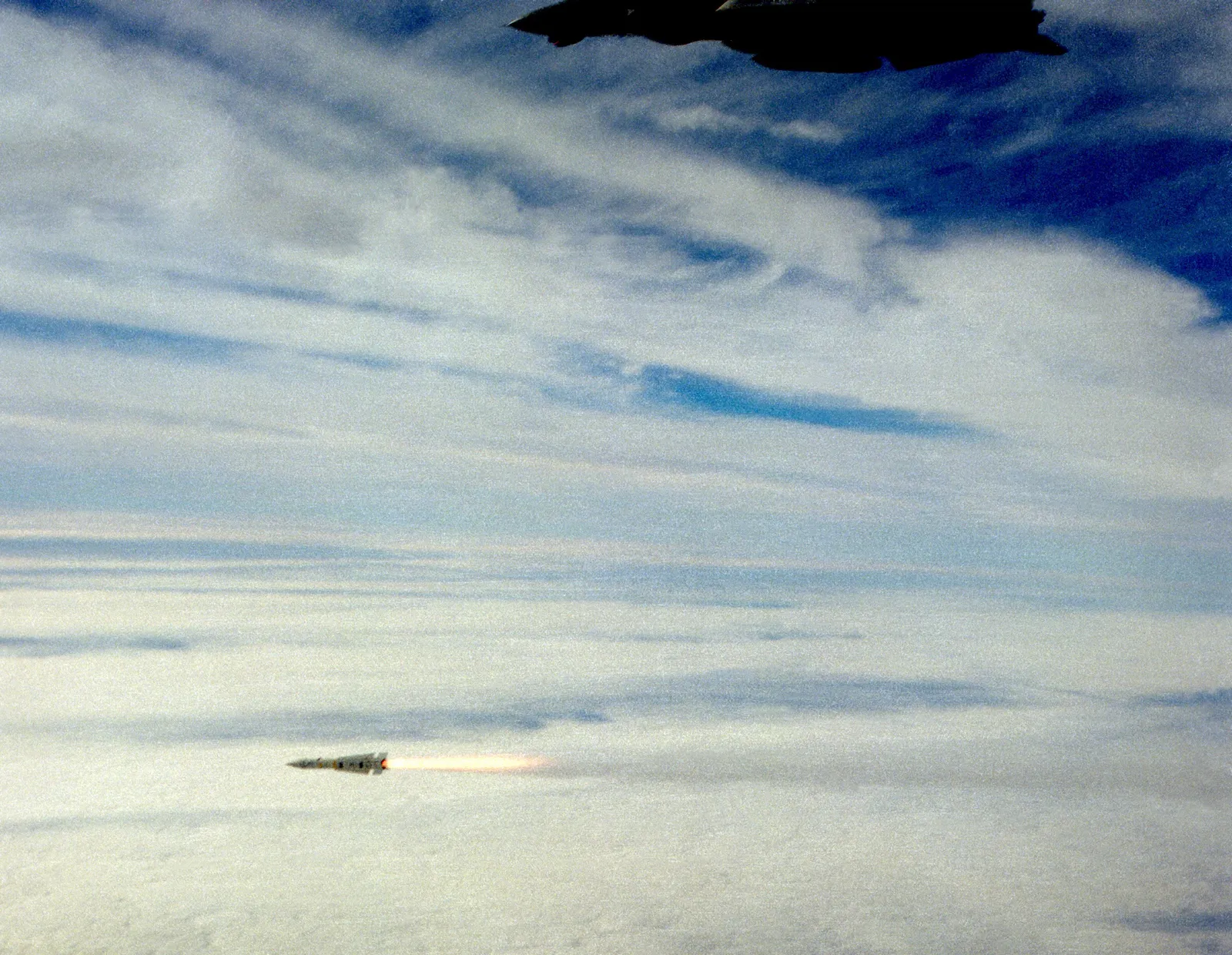
Iranian F-14 crews deployed and fired AIM-54 Phoenix missiles during the Iran-Iraq War, including documented in-war shots against Iraqi aircraft.
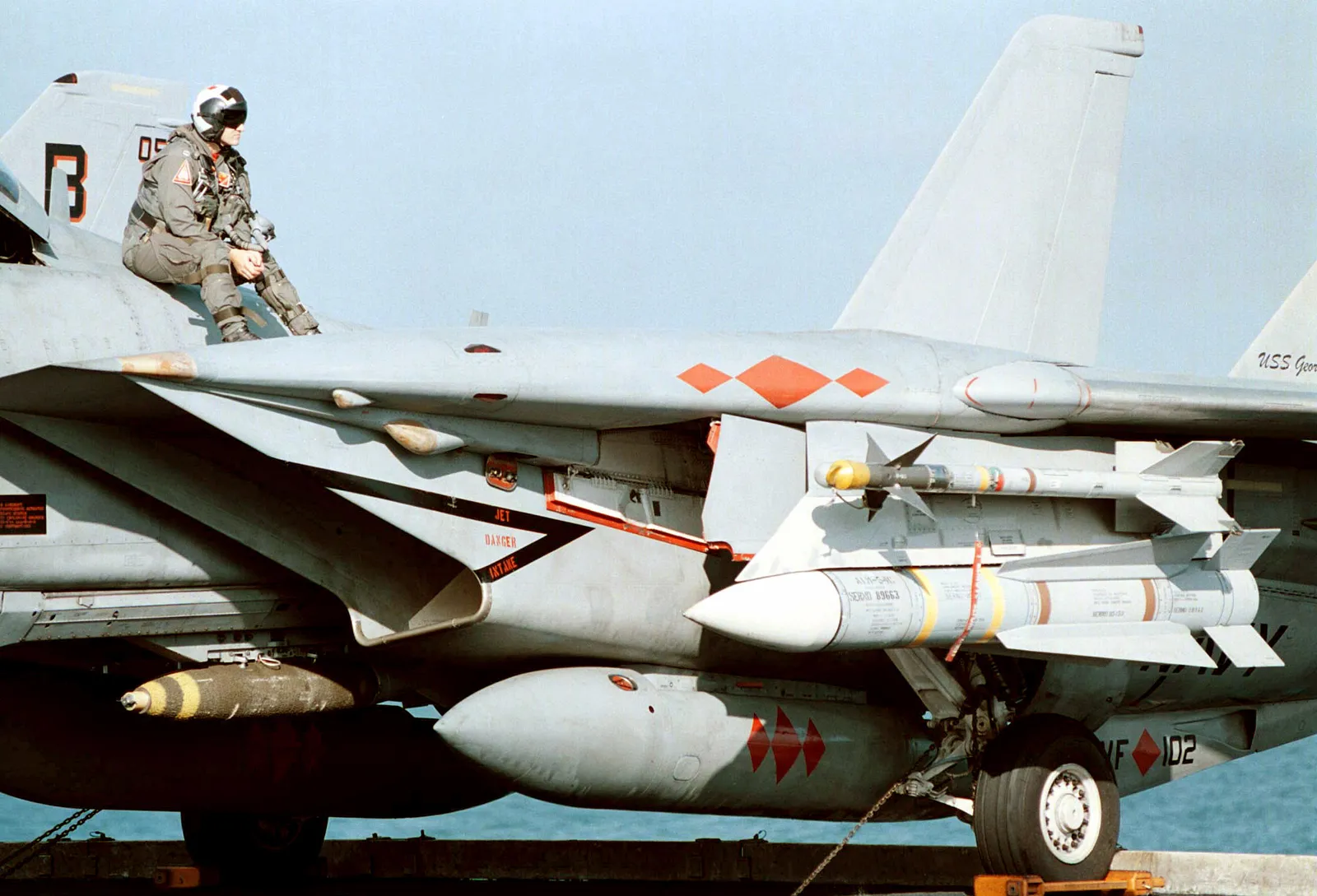
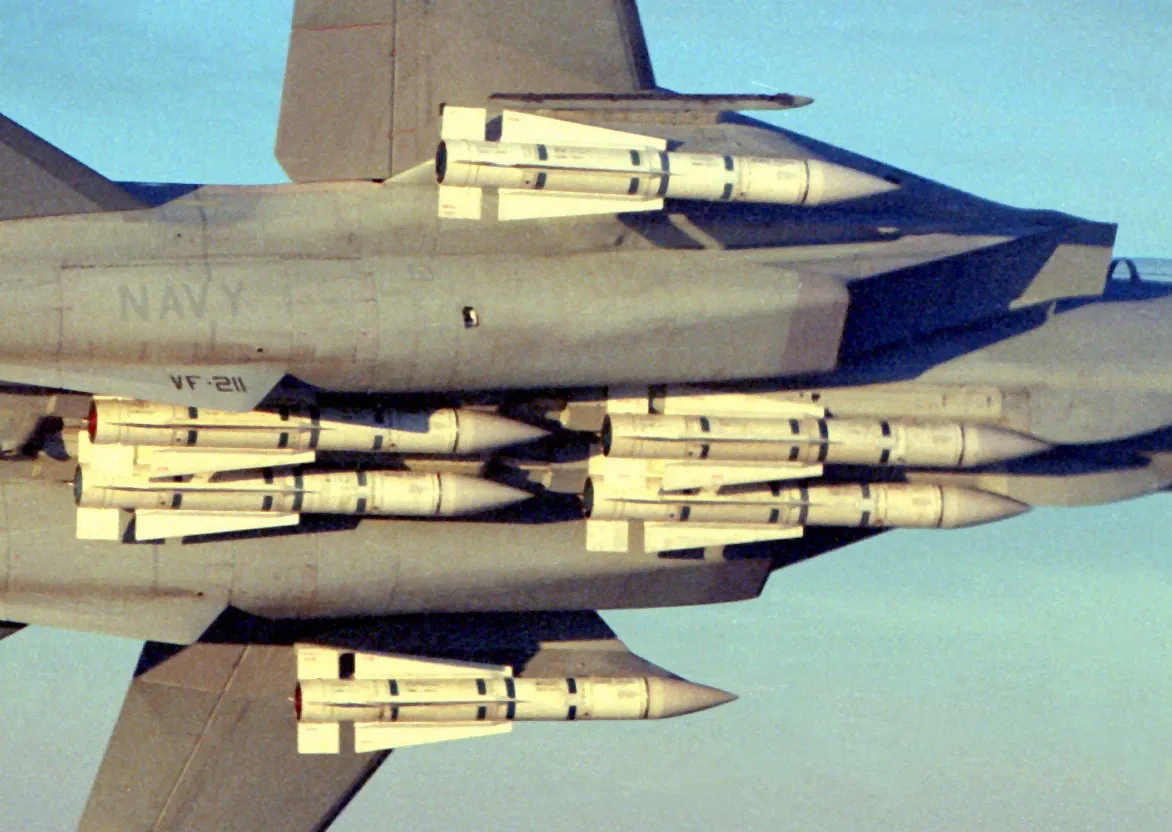
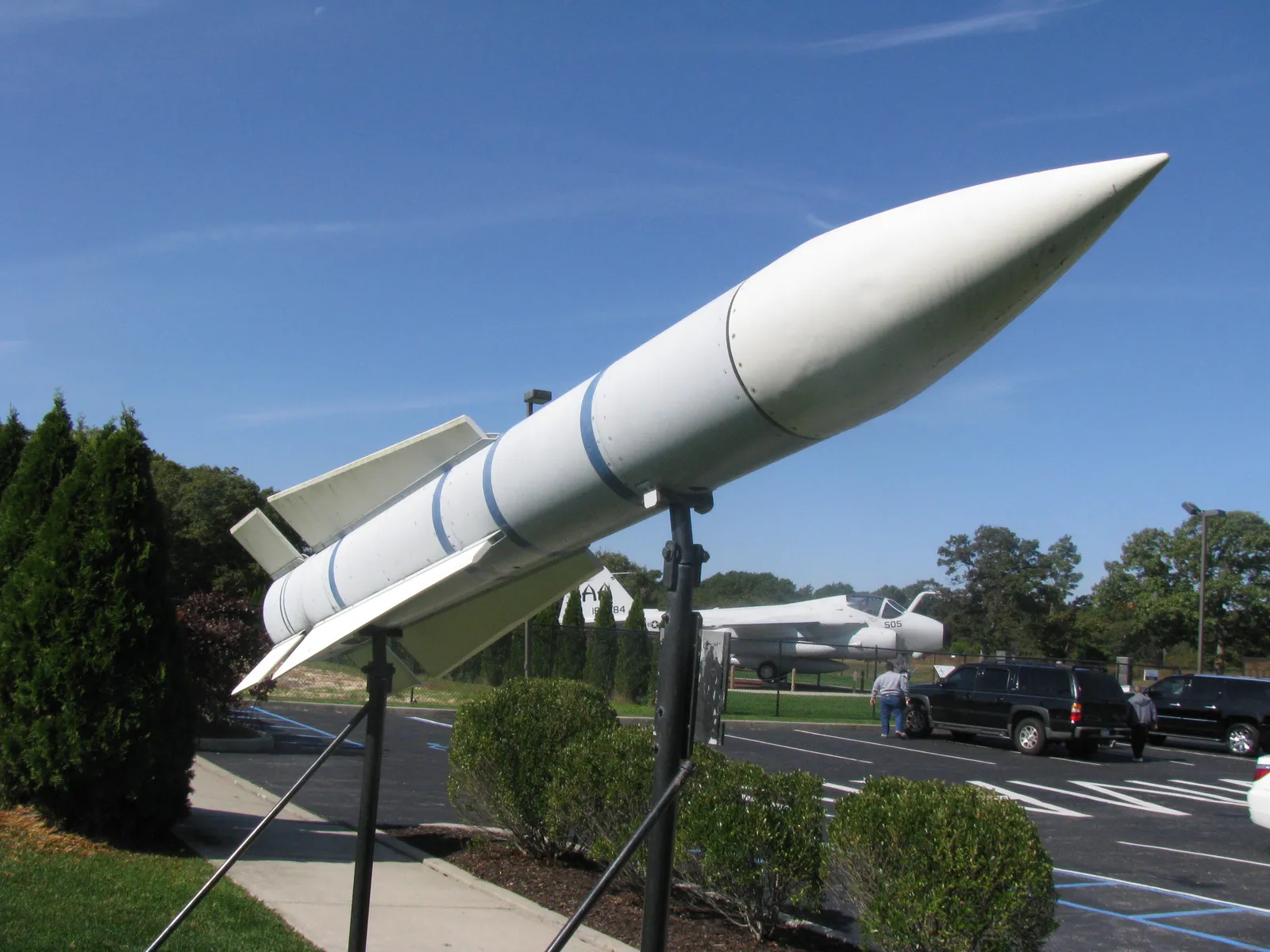
The Hughes AIM-54 Phoenix was a long-range radar-guided air-to-air missile built around the F-14 Tomcat's fleet-defense mission and AWG-9 fire-control system. U.S. Navy sources describe the Phoenix as an all-weather, multiple-target weapon carried operationally only by the F-14, while conflict records tie its combat use to Iranian Tomcats in the Iran-Iraq War and U.S. Tomcats enforcing Iraqi no-fly zones.
Iranian F-14 crews deployed and fired AIM-54 Phoenix missiles during the Iran-Iraq War, including documented in-war shots against Iraqi aircraft.
U.S. Navy F-14Ds fired AIM-54C Phoenix missiles at Iraqi aircraft during no-fly-zone enforcement in 1999; the documented shots did not score confirmed kills.
NAVAIR traces the Phoenix family from the original AAM-N-11 designation through AIM-54A production and later AIM-54C digital/ECCM upgrades.
| Variant | Configuration | Designation notes |
|---|---|---|
| AAM-N-11 | Original Navy designation | Early designation for the missile program derived from long-range Falcon-family technology before the AIM-54A redesignation. Sources: AIM-54 Phoenix Missile - NAVAIR |
| AIM-54A | First production model | The F-14A production model used analog electronics, liquid cooling and a continuous-rod high-explosive warhead. Sources: AIM-54 Phoenix Missile - NAVAIR |
| AIM-54B | Unproduced interim model | NAVAIR lists the AIM-54B as a simpler non-liquid-cooled interim model that was not produced. Sources: AIM-54 Phoenix Missile - NAVAIR |
| AIM-54C | Digital improved Phoenix | The AIM-54C replaced analog electronics with a reprogrammable-memory digital processor and added improvements for discrimination, reliability and ECM resistance. Sources: AIM-54 Phoenix Missile - NAVAIR |
| AIM-54C ECCM/Sealed | ECCM sealed-service variant | The ECCM/Sealed missile entered service in 1988 and is identified by NAVAIR as the improved ECCM version of the AIM-54C. Sources: AIM-54 Phoenix Missile - NAVAIR |
| AIM-54C+ High Power Phoenix | High-power upgrade | The high-power upgrade added internal heaters, a traveling-wave-tube transmitter adapted from AMRAAM technology and faster reprogrammable-memory computers. Sources: AIM-54 Phoenix Missile - NAVAIR |
The Phoenix was designed as part of the Tomcat fleet-defense weapon system, with NAVAIR identifying the F-14 as its only operational carrier.
| Carrier | Carrier type | Carriage evidence |
|---|---|---|
 | Carrier-based fighter | The F-14 carried and controlled Phoenix launches through the Tomcat weapon system; U.S. Navy retirement material describes the F-14 as the only operational aircraft to carry the missile. Sources: AIM-54 Phoenix Missile - NAVAIR, Navy Retires AIM-54 Phoenix Missile - NAVAIR |
The Phoenix was a missile-and-aircraft weapon system rather than a stand-alone round. NAVAIR describes the weapon as a multiple-target airborne system, and the retirement release ties that capability to the F-14 Tomcat and its Hughes AWG-9 fire-control system.
Long-range air interception against aircraft or cruise-missile threats, including heavy-jamming and all-weather conditions.
The F-14/AWG-9 combination was advertised around tracking many contacts and launching up to six Phoenix missiles against separate targets.
The F-14 Tomcat was the only operational aircraft documented by NAVAIR as carrying the Phoenix missile.
Hughes was selected to develop, fabricate, and test the Phoenix missile system for the F-111B program.
Sources: AIM-54 Phoenix Missile - NAVAIR
Grumman received the contract for the F-14A fighter and the Phoenix missile carriage system.
Sources: AIM-54 Phoenix Missile - NAVAIR
The production contract for the AIM-54A was awarded to Hughes.
Sources: AIM-54 Phoenix Missile - NAVAIR
The AIM-54A made its first launch from an F-14A.
Sources: AIM-54 Phoenix Missile - NAVAIR
The AIM-54A entered U.S. Navy service and the missile became operational with the F-14 fleet.
Sources: AIM-54 Phoenix Missile - NAVAIR
The AIM-54C ECCM/Sealed version entered service.
Sources: AIM-54 Phoenix Missile - NAVAIR
The Phoenix missile was fully divested from U.S. Navy inventory.
Sources: AIM-54 Phoenix Missile - NAVAIR