- Side
- Israel

Israeli F-4 Phantom crews fired AIM-7 Sparrow missiles during Operation Rimon 20, including a low-altitude Sparrow shot that destroyed a Soviet-flown MiG-21 during the War of Attrition.
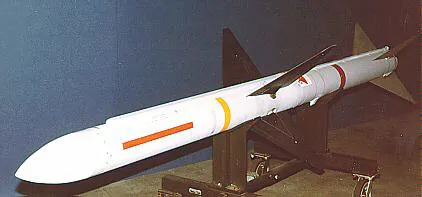
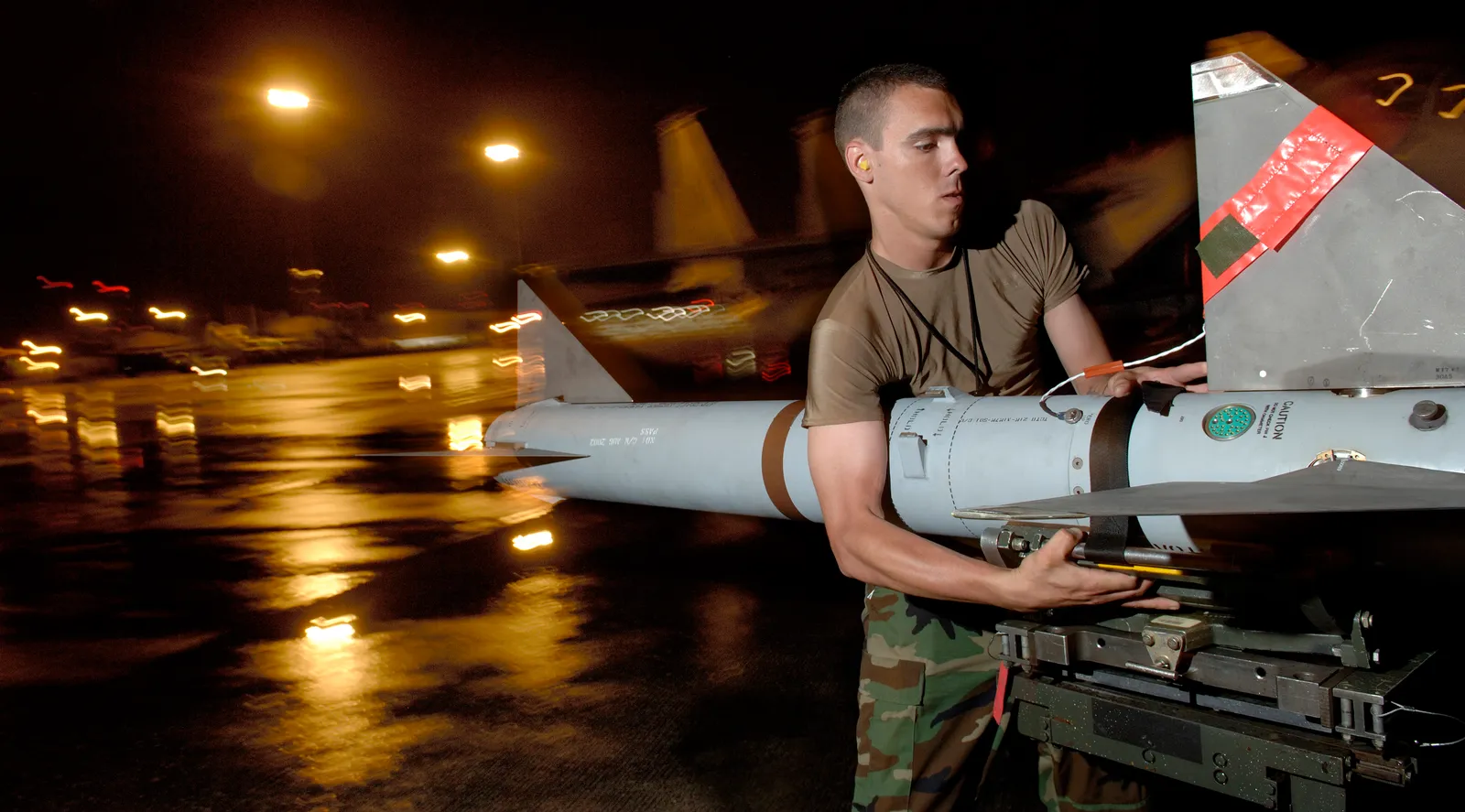
The AIM-7 Sparrow missile is a U.S.-developed, medium-range radar-guided air-to-air missile built by Raytheon and General Dynamics. The AIM-7E production branch made the Sparrow a Vietnam-era Phantom weapon, later AIM-7M/P rounds improved low-altitude and electronic-countermeasures performance, and SIPRI records AIM-7M transfers to Ukraine for air-defense aid.
Israeli F-4 Phantom crews fired AIM-7 Sparrow missiles during Operation Rimon 20, including a low-altitude Sparrow shot that destroyed a Soviet-flown MiG-21 during the War of Attrition.
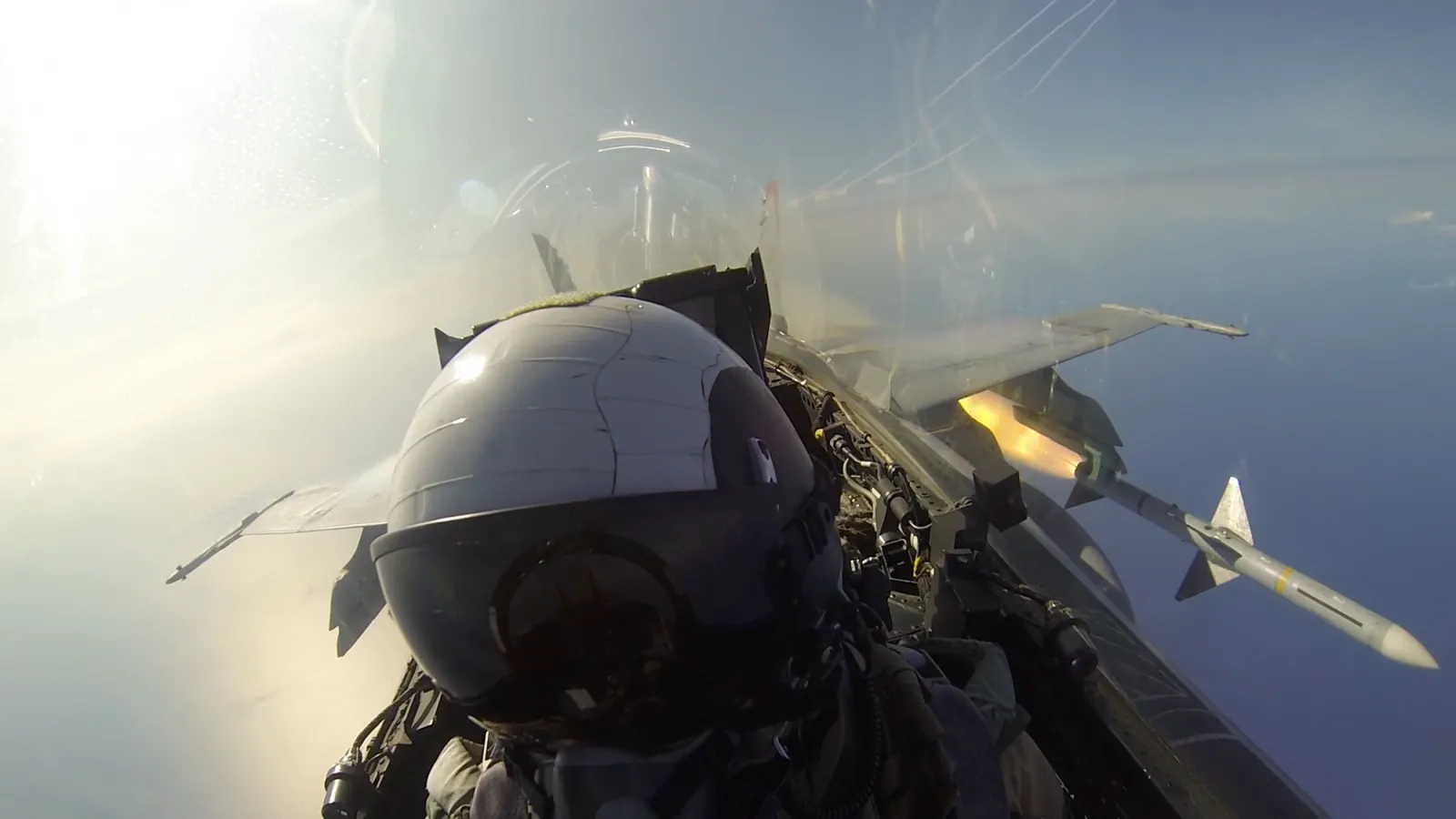
U.S. Air Force and Navy F-4 Phantom crews heavily used AIM-7 Sparrows in Vietnam, where NAVAIR identifies the conflict as the missile's first combat use.
Forecast International records an Israeli F-15 destroying a MiG-25 with an AIM-7F Sparrow during the 1982 Lebanon War.
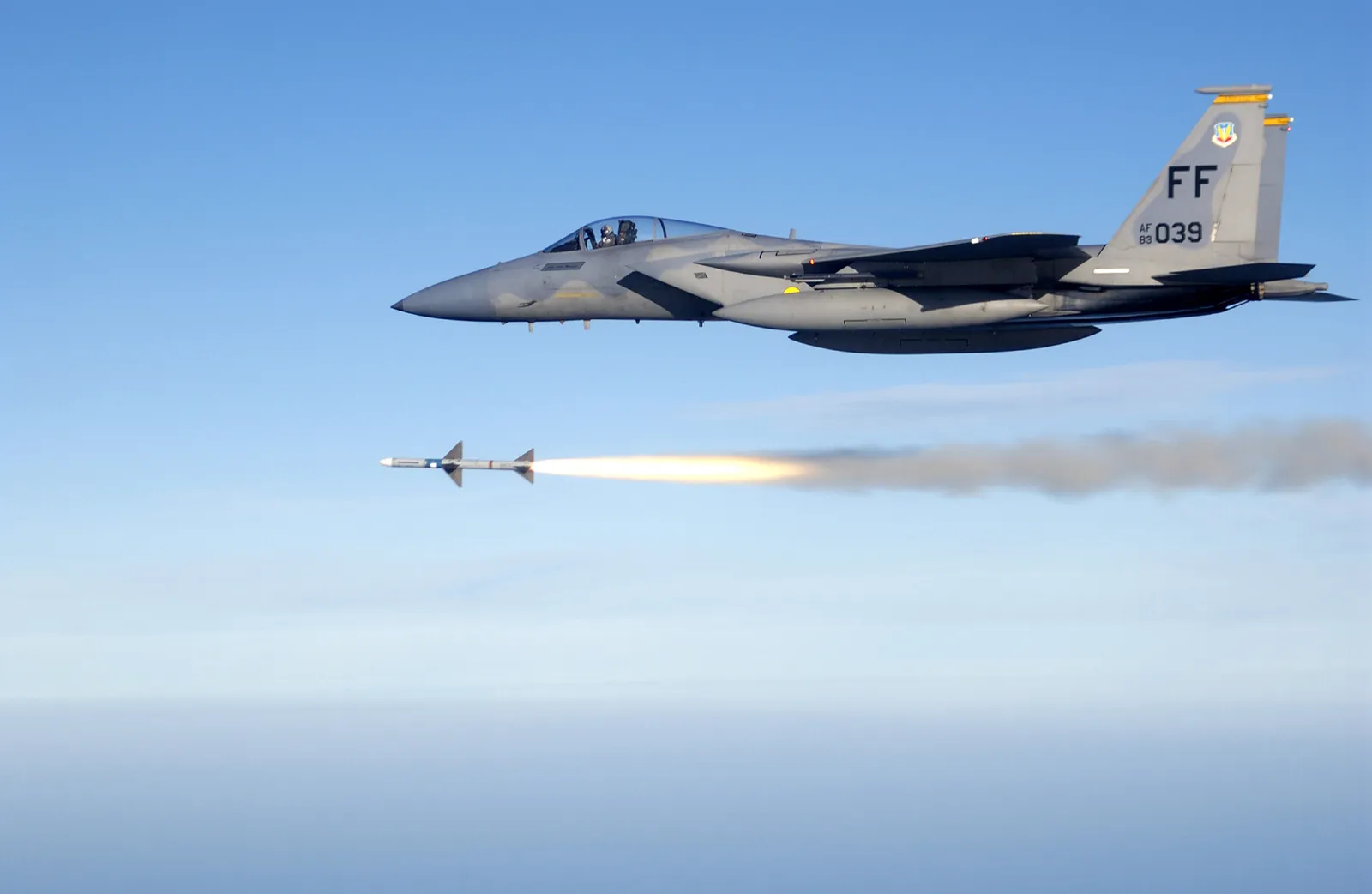
U.S. Air Force fighter pilots used AIM-7 Sparrows in the Gulf War, with the Air Force fact sheet crediting the missile with downing Iraqi fixed-wing aircraft and helicopters.
Role detailsU.S., Canadian, and SIPRI sources document AIM-7-family missiles supplied to Ukraine for air-defense use, including SIPRI-recorded AIM-7M transfers from NATO states and a small German AIM-7E/RIM-7-linked transfer.
Role detailsUkraine-related public records describe AIM-7-family missiles as transferred for air defense rather than as a normal fighter-carried Sparrow loadout. SIPRI transfer-register data reviewed for Ukraine identifies AIM-7M aid transfers and a small AIM-7E/RIM-7-linked German transfer, the U.S. package announcement groups AIM-7 missiles with air-defense aid, and Canada's donation table states that its delivered AIM-7 missiles were to be repurposed in the United States for Ukrainian air-defense systems.
The transfer-register lane identifies AIM-7M transfers to Ukraine from NATO states and an AIM-7E/RIM-7-linked German transfer financed by Belgian aid.
May 2023 drawdown included AIM-7 missiles for air defense alongside Patriot, Avenger, and Stinger support.
More than 250 AIM-7 missiles from Canadian Armed Forces inventory are listed as delivered for repurposing into Ukrainian air-defense systems.
The Sparrow family changed guidance concepts across its early branches before the mature AIM-7 line settled around semi-active radar homing.
Beam-riding missile begun under the Navy Hotshot project, with Douglas developing the enlarged eight-inch airframe.
Active-radar branch explored by Douglas and Canadair before cancellation.
Raytheon's semi-active radar-homing branch became the operational AIM-7C/D/E/F/M/P line.
The AIM-7E is the key Vietnam-era Sparrow branch inside the broader AIM-7 family. Designation records map the earlier AAM-N-6b Sparrow III to AIM-7E, then describe a 1963 production switch to AIM-7E rounds with Rocketdyne Mk 38 or Mk 52 propulsion.
Main Vietnam-era production Sparrow, heavily used by U.S. Navy and Air Force F-4 Phantom crews.
Shorter-range dogfight branch introduced after early combat showed minimum-range, maneuvering-target, and reliability problems.
Later E-branch refinements addressed fuzing and compatibility with high-power fighter radars such as the F-14's AN/AWG-9.
The AIM-7M is the mature Sparrow version most relevant to late Cold War and post-Cold War service. The Air Force identifies the AIM-7M as entering service in 1982 with reliability, low-altitude, electronic-countermeasures, and warhead improvements over earlier versions.
Operational semi-active radar-homing Sparrow branch carried by F-15 and F-16 fighters, with H-Build software improvements produced from 1987.
AIM-7M-derived configuration identified in the Navy training plan as part of the later air-launched Sparrow inventory.
Later AIM-7P configuration with upgraded missile electronics, a new fuze, and a rear receiver for mid-course guidance updates.
AIM-7 Sparrow designations span the beam-riding Sparrow I, the cancelled active-radar Sparrow II, and the semi-active radar-homing Sparrow III line. Later AIM-7F, AIM-7M, and AIM-7P rounds formed the mature air-launched branch, while RIM-7 Sea Sparrow became the ship-launched derivative.
| Variant | Configuration | Designation notes |
|---|---|---|
| AIM-7A Sparrow I | Beam-riding early Sparrow | The original AAM-N-2 Sparrow I became AIM-7A in the 1963 tri-service redesignation sequence. Sources: Raytheon AIM/RIM-7 Sparrow |
| AIM-7B Sparrow II | Cancelled active-radar branch | The active-radar Sparrow II had already been cancelled when AIM-7B became a paper designation in 1963. Sources: Raytheon AIM/RIM-7 Sparrow |
| AIM-7C Sparrow III | Early semi-active radar-homing Sparrow III | Raytheon's AAM-N-6 Sparrow III became AIM-7C under the 1963 redesignation system. Sources: Raytheon AIM/RIM-7 Sparrow |
| AIM-7E Sparrow | Vietnam-era production variant | AAM-N-6b became AIM-7E in the 1963 redesignation sequence. Production switched to the AIM-7E in 1963 with Rocketdyne Mk 38/Mk 52 propulsion, and the AIM-7E/E-2 branch was heavily used by U.S. Navy and Air Force F-4 crews in Vietnam. Sources: Raytheon AIM/RIM-7 Sparrow, AIM-7 Sparrow - NAVAIR, They Don't Call Them Hittles - AFMC History Office |
| AIM-7E-2 Sparrow | Dogfight Sparrow modification | The AIM-7E-2 was introduced in 1969 with a shorter minimum range, clipped wings, and autopilot and fuzing changes for closer air combat, but Vietnam-era reliability and combat effectiveness remained limited. Sources: Raytheon AIM/RIM-7 Sparrow, They Don't Call Them Hittles - AFMC History Office |
| AIM-7F Sparrow | Air Force medium-range missile generation | AIM-7F added a dual-thrust motor and solid-state guidance, and the Air Force identifies it as entering inventory in 1976 as the F-15 Eagle's primary medium-range air-to-air missile. Sources: Raytheon AIM/RIM-7 Sparrow, AIM-7 Sparrow - Air Force |
| AIM-7M Sparrow | Improved operational Sparrow version | The Air Force identifies AIM-7M as entering service in 1982 with improved reliability, low-altitude performance, electronic-countermeasures performance, warhead lethality, and later H-Build guidance improvements. Sources: AIM-7 Sparrow - Air Force |
| AIM-7P Sparrow | Improved AIM-7M branch | The Navy training plan describes AIM-7P as an AIM/RIM-7M retrofit branch with upgraded electronics, a new fuze, and later Block II receiver changes. Sources: Raytheon AIM/RIM-7 Sparrow, AIM-7M/P Sparrow Missile System NTSP |
| AIM-7P Block I / Block II | AIM-7M-derived upgrade branch | The 1998 Navy training plan identifies AIM-7P Block I and Block II as air-launched configurations; Block I upgraded the missile-borne computer and fuze, while Block II added a modified computer, new fuze, and rear receiver. Sources: AIM-7M/P Sparrow Missile System NTSP |
 | Ship-launched Sparrow branch | NAVAIR describes RIM-7 Sea Sparrow as the ship-based intercept version of AIM-7 Sparrow. Sources: AIM-7 Sparrow - NAVAIR |
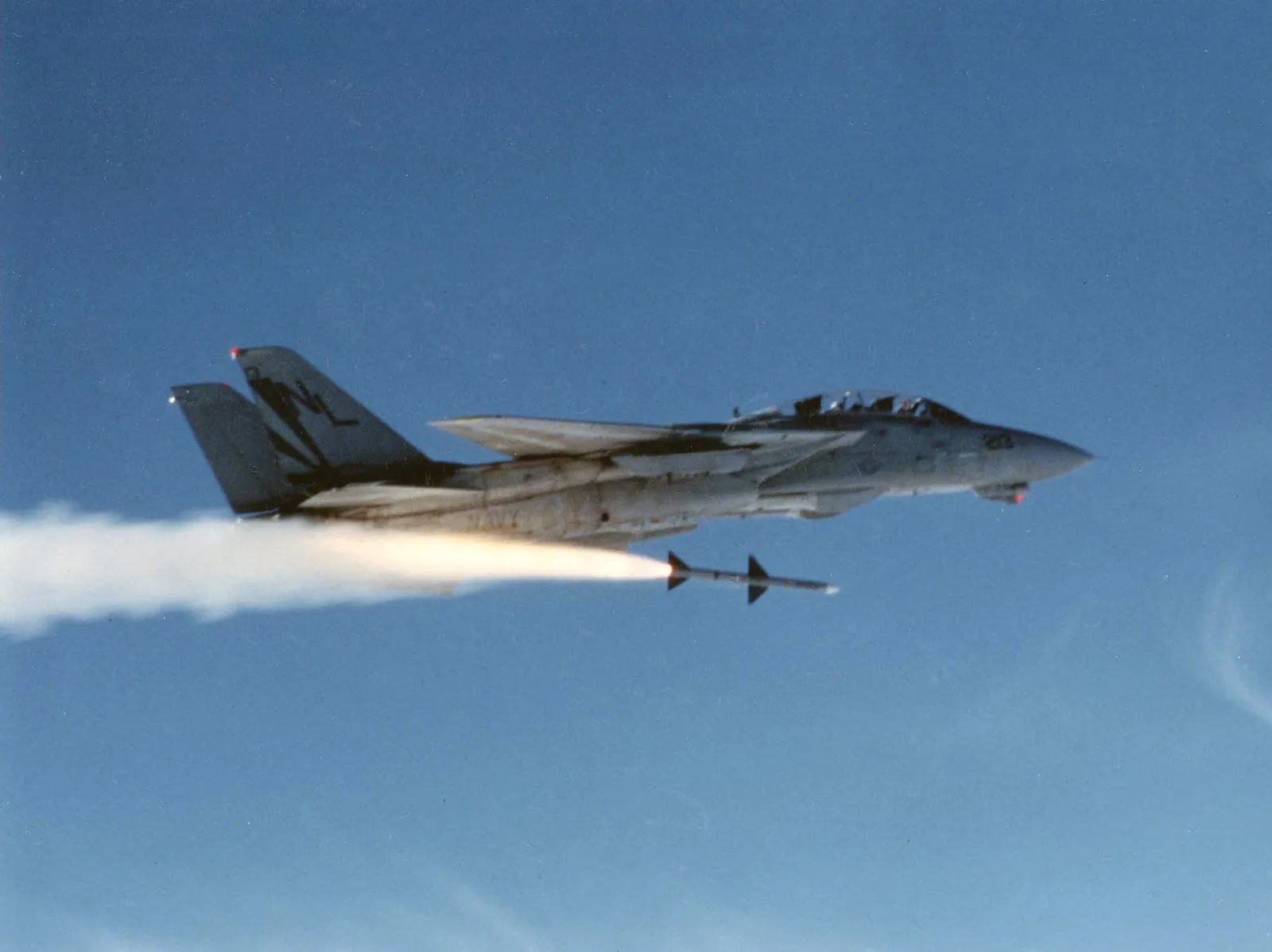
Official Navy and Air Force sources document Sparrow carriage and combat use across U.S. Phantom, Tomcat, and Eagle fighters.
| Carrier | Carrier type | Carriage evidence |
|---|---|---|
 | Twin-engine fighter-bomber | NAVAIR identifies U.S. Air Force and Navy F-4 Phantoms as the aircraft that heavily used AIM-7 Sparrow missiles during the missile's first combat use in Vietnam. Sources: AIM-7 Sparrow - NAVAIR |
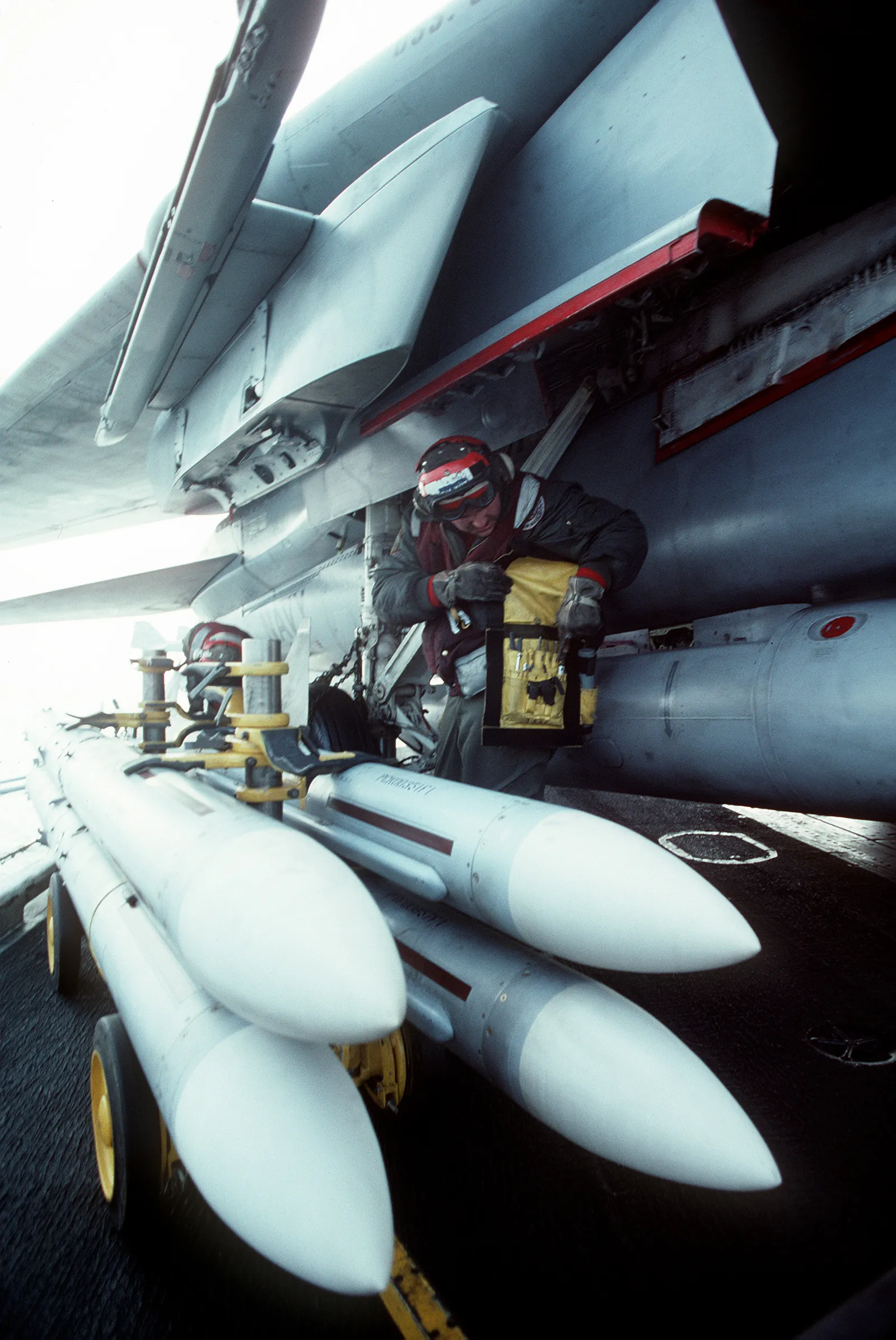
 | Carrier-based fighter | The NHHC F-14A Tomcat page lists four AIM-7 Sparrow missiles in the aircraft's armament, and an NHHC VF-11 command-history record documents F-14A crews firing AIM-7E rounds during 1982 missile exercises. Sources: F-14A Tomcat - NHHC, VF-11 1982 Command History - NHHC |
 | Air-superiority fighter family | The Air Force fact sheet identifies AIM-7F as the F-15 Eagle's primary medium-range air-to-air missile and states that F-15 fighters carried AIM-7M Sparrow. Sources: AIM-7 Sparrow - Air Force |
 | Multirole fighter | The Air Force fact sheet states that F-16 Fighting Falcon fighters carried the AIM-7M Sparrow, and the 142nd Wing history narrows the F-16 ADF configuration to AIM-7F/M carriage on stations 3 and 7. Sources: AIM-7 Sparrow - Air Force, Oregon's Viper Years - 142nd Wing |
 | Carrier-suitable fighter/attack aircraft | The U.S. Navy F/A-18 fact file lists AIM 7 Sparrow in the F/A-18 Hornet A-D armament. |
 | Carrier-suitable strike fighter | The U.S. Navy F/A-18 fact file lists AIM 7 Sparrow in the F/A-18E/F Super Hornet armament. |
NAVAIR traces Sparrow development to the Navy's 1946 Hotshot project for a medium-range missile able to intercept enemy targets.
Sources: AIM-7 Sparrow - NAVAIR
NAVAIR records the first AIM-7 Sparrow firing in December 1952.
Sources: AIM-7 Sparrow - NAVAIR
The missile entered service with F3H-2M Demon and F7U-3M Cutlass fighters.
Sources: AIM-7 Sparrow - NAVAIR
The 1963 redesignation mapped the earlier AAM-N Sparrow missiles into the AIM-7A through AIM-7E sequence.
Sources: Raytheon AIM/RIM-7 Sparrow
NAVAIR identifies Vietnam as the AIM-7 Sparrow's first combat use, while variant histories identify the AIM-7E/E-2 branch as the Sparrow production line most associated with U.S. F-4 combat use there.
Sources: AIM-7 Sparrow - NAVAIR, Raytheon AIM/RIM-7 Sparrow
The AIM-7E-2 added short-range dogfight changes including clipped wings, improved fuzing, and improved autopilot behavior after early Sparrow use in Vietnam showed minimum-range and maneuvering-target limits.
Sources: Raytheon AIM/RIM-7 Sparrow, They Don't Call Them Hittles - AFMC History Office
The Air Force identifies AIM-7F as its 1976 medium-range Sparrow generation for the F-15 Eagle.
Sources: AIM-7 Sparrow - Air Force
The AIM-7M entered service with reliability, low-altitude, electronic-countermeasures, and lethality improvements over earlier Sparrow versions.
Sources: AIM-7 Sparrow - Air Force
AIM-7P missiles were built from 1987 through new production and conversion of existing AIM-7M rounds.
Sources: Raytheon AIM/RIM-7 Sparrow
The Air Force credits AIM-7 Sparrow missiles with downing Iraqi fixed-wing aircraft and helicopters during the Persian Gulf War.
Sources: AIM-7 Sparrow - Air Force
A U.S. security-assistance package included AIM-7 missiles for Ukraine's air defense needs.
Sources: DOD Ukraine Security Assistance - AIM-7
Canada lists more than 250 AIM-7 missiles as delivered from Canadian Armed Forces inventory to be repurposed in the United States for Ukrainian air-defense systems.
Sources: Canada Military Support to Ukraine - AIM-7
SIPRI transfer-register data reviewed for Ukraine records AIM-7M aid transfers from Canada and other NATO states during the Russia-Ukraine War.
Sources: SIPRI Arms Transfers Database