Munitions

NATO Sea Sparrow Missile

Also known as
  • Seasparrow Missile (RIM-7)
  • RIM-7 Sea Sparrow
  • RIM-7 SeaSparrow Missile
  • NSSM
  • NSSMS
  • Sea Sparrow Missile

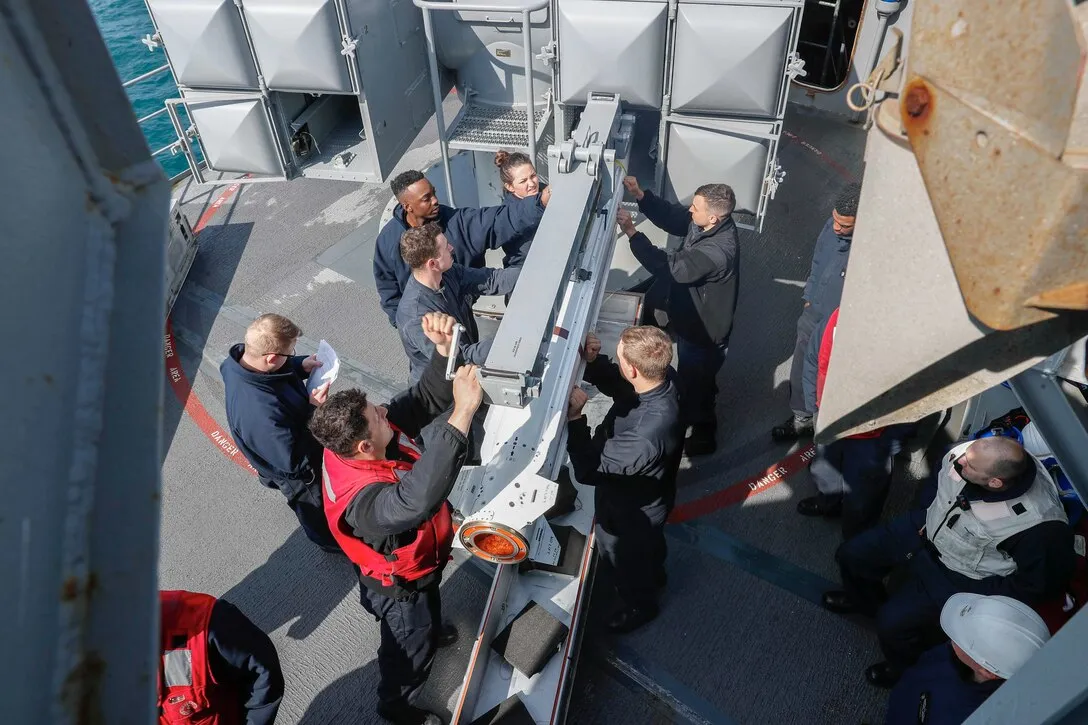
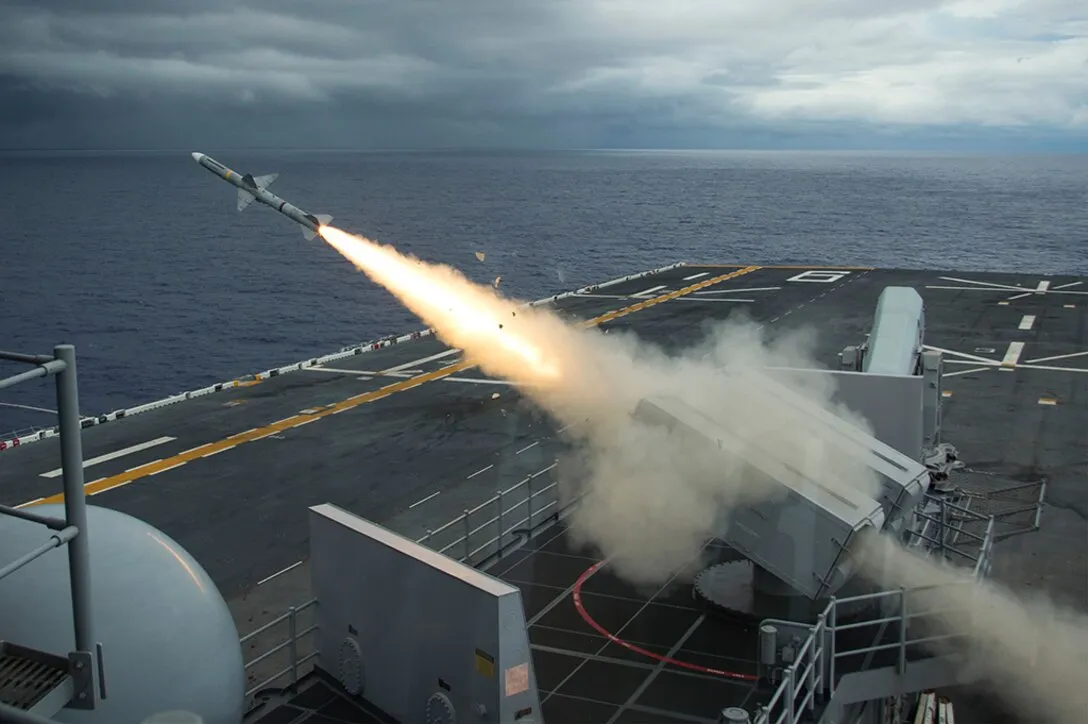
The NATO Sea Sparrow Missile is a U.S.-origin radar-guided surface-to-air missile based on the AIM-7 Sparrow, fielded for ship self-defense through MK 57 NSSMS, MK 29, and vertical-launch installations. It later gained a ground-launch conflict role when RIM-7 missiles were committed to Ukraine for air defense and integrated into Buk-based FrankenSAM systems.

Role in Conflicts

Profile / Specs

Profile

Origin
United States
Type
Ship self-defense missile
Service note
1970s-present
Designer
Sperry / U.S. Navy
Designed
Early 1970s
Unit cost
$165,400
Produced
RIM-7H production from 1973; U.S. Navy deployment listed in 1976
Developed from
AIM-7 Sparrow missile
Developed into
Evolved Sea Sparrow Missile

Specifications

Primary function
Shipborne radar-guided surface-to-air missile for self-defense
Guidance
Semi-active homing via radar uplinks
Threat set
Aircraft, helicopters, UAVs, selected surface threats, and high-speed low-altitude anti-ship cruise missiles
Length
12 feet (3.64 meters)
Diameter
8 inches (20.3 cm)
Wingspan
3 feet 4 inches (1 meter)
Weight
About 500 pounds (225 kg)
Propulsion
Alliant Techsystems / Hercules Mk 58 solid-propellant rocket motor
Warhead
90-pound annular blast-fragmentation warhead
Launchers
MK 57 NSSMS, MK 29 GMLS, MK 48 GMVLS; later RIM-7M/P also documented with Mk 41 and Mk 48 VLS compatibility
Speed
Classified
Range
Classified
Designation Structure

The Sea Sparrow page sits between the air-launched Sparrow parent missile and the later ESSM successor. The same Sparrow design number appears across multiple launch environments, so the prefix and suffix matter when reading source material.

AIM-7

Air-launched Sparrow parent missile family.

RIM-7

Ship-launched Sea Sparrow branch adapted for naval point defense.

NSSMS

NATO Sea Sparrow Surface Missile System: the shipboard launcher, fire-control, and missile-system context, not a single missile variant.

RIM-162

Evolved Sea Sparrow Missile successor family that replaced the original RIM-7M/P branch.

Sources: Seasparrow Missile (RIM-7); Raytheon AIM/RIM-7 Sparrow; The NATO SEASPARROW Surface Missile System.
Variants

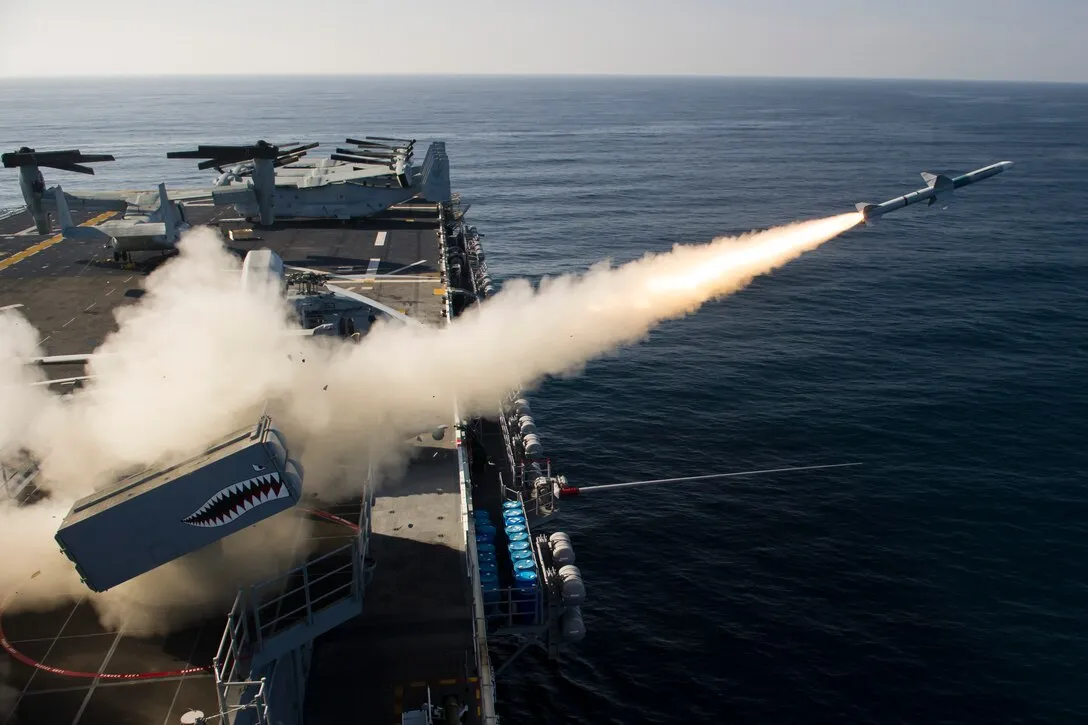
RIM-7 Sea Sparrow designations track the ship-launched branch of the Sparrow family. Early Sea Sparrow variants adapted AIM-7 bodies for naval launchers, while the later RIM-7M/P branch led into the separate RIM-162 Evolved Sea Sparrow Missile family.

VariantConfigurationDesignation notes
RIM-7E Sea SparrowInitial ship-launched Sparrow derivative

Designation-Systems describes RIM-7E as the early Sea Sparrow derivative of AIM-7E, fired from modified Mk 25 ASROC launchers.

Sources: Raytheon AIM/RIM-7 Sparrow

RIM-7H Sea SparrowNSSMS Block I folding-fin missile

The RIM-7H added folding fins for compact Mk 29 launcher carriage and is identified as the NSSMS Block I missile.

Sources: Raytheon AIM/RIM-7 Sparrow

RIM-7M Sea SparrowMonopulse ship-launched variant

The RIM-7M is described as the ship-launched equivalent of AIM-7M and compatible with Mk 29, Mk 41, and Mk 48 launchers.

Sources: Raytheon AIM/RIM-7 Sparrow

RIM-7P Sea SparrowImproved late Sparrow branch

The RIM-7P is described as the ship-launched equivalent of AIM-7P, with the broader AIM-7P branch adding improved electronics and mid-course update capability.

Sources: Raytheon AIM/RIM-7 Sparrow

Evolved Sea Sparrow Missile, Ship self-defense missile, MunitionsEvolved Sea Sparrow MissileSuccessor family

Designation-Systems identifies ESSM / RIM-162 as the replacement for the RIM-7M/P Sea Sparrow branch.

Sources: Raytheon AIM/RIM-7 Sparrow

Launch Platforms

U.S. Navy and Bundeswehr sources identify Sea Sparrow launch contexts across U.S. carrier and German F123 frigate platforms.

LauncherLauncher typeLaunch evidence
Nimitz-class aircraft carrier, Nuclear-powered aircraft carrier, Naval SystemsNimitz-class aircraft carrierNuclear-powered aircraft carrier

The U.S. Navy RIM-7 fact file lists CVN classes among Sea Sparrow platforms, while the Navy's Nimitz-class characteristics page lists multiple NATO Sea Sparrow mounts in the class armament.

Sources: Seasparrow Missile (RIM-7), Navy Nimitz Class Characteristics

Brandenburg class / F123 frigate, Anti-submarine frigate class, Naval SystemsBrandenburg class / F123 frigateAnti-submarine frigate

Bundeswehr lists the Brandenburg class's Mk41 VLS as able to fire NSSM and ESSM.

Sources: Fregatten der Brandenburg-Klasse

Timeline

NATO Sea Sparrow Missile Key Events

  1. NATO SEASPARROW project established

    The NATO SEASPARROW Project history says four founding members signed the memorandum of understanding for the NATO SEASPARROW Surface Missile System on 10 June 1968.

    Sources: NATO SEASPARROW Project

  2. RIM-7H production begins

    Designation-Systems identifies RIM-7H as the NSSMS Block I missile and places production from 1973.

    Sources: Raytheon AIM/RIM-7 Sparrow

  3. U.S. Navy deployment date

    The U.S. Navy fact file lists 1976 as the Sea Sparrow missile's deployment date in Navy service.

    Sources: Seasparrow Missile (RIM-7)

  4. RIM-7 missiles committed to Ukraine

    The U.S. Department of Defense announced RIM-7 missiles for Ukraine's air defense as part of the January 2023 security-assistance drawdown.

    Sources: More Than $3 Billion in Additional Security Assistance for Ukraine

Media
Related Weapon Systems
Evolved Sea Sparrow Missile, Ship self-defense missile, MunitionsMunitionsEvolved Sea Sparrow MissileShip self-defense missileThe Evolved Sea Sparrow Missile is a NATO-cooperative ship self-defense missile family built by Raytheon for surface combatants and carrier self-defense. U.S. Navy, RTX, and NATO Seasparrow sources describe it as a medium-range guided weapon for anti-ship cruise missiles, aircraft, drones, and maneuvering surface threats; documented combat use includes USS Mason's 2016 Yemen self-defense engagement and Red Sea crisis firings against Houthi threats.
RIM-116 Rolling Airframe Missile, Ship-launched surface-to-air missile, MunitionsMunitionsRIM-116 Rolling Airframe MissileShip-launched surface-to-air missileThe RIM-116 Rolling Airframe Missile is a U.S.-German ship self-defense missile used with the MK 31 RAM guided missile weapon system and SeaRAM launchers. U.S. Navy and Raytheon sources describe it as a lightweight, quick-reaction, fire-and-forget weapon for close defense against anti-ship missiles and other air or surface threats, while Red Sea reporting documents a German frigate firing a RIM-116 against Houthi drones in 2024.
Standard Missile-2 (SM-2), Shipboard surface-to-air missile family, MunitionsMunitionsStandard Missile-2 (SM-2)Shipboard surface-to-air missile familyThe Standard Missile-2 (SM-2) is a Raytheon-built shipboard surface-to-air missile family used by U.S. and allied navies for fleet area air defense and ship self-defense. Aegis ships launch SM-2 from vertical launch systems, guide it by inertial navigation and mid-course commands, and use semi-active radar or infrared terminal homing in later medium-range blocks. U.S. Navy reporting documents USS Carney firing an SM-2 in October 2023 during Red Sea defense operations against Houthi missiles and drones.
Blue Sparrow, Air-launched ballistic target missile / air-to-surface ballistic munition, MunitionsMunitionsBlue SparrowAir-launched ballistic target missile / air-to-surface ballistic munitionBlue Sparrow is a Rafael-built Israeli air-launched ballistic target missile in the Sparrow family, originally used to simulate medium- and long-range ballistic threats for missile-defense testing. Open Source Munitions Portal records and reporting on debris in Iraq show Blue Sparrow-family components in later Israeli long-range air-to-surface strike activity, while public sources still treat exact derivative designations and warhead configurations cautiously.

Sources