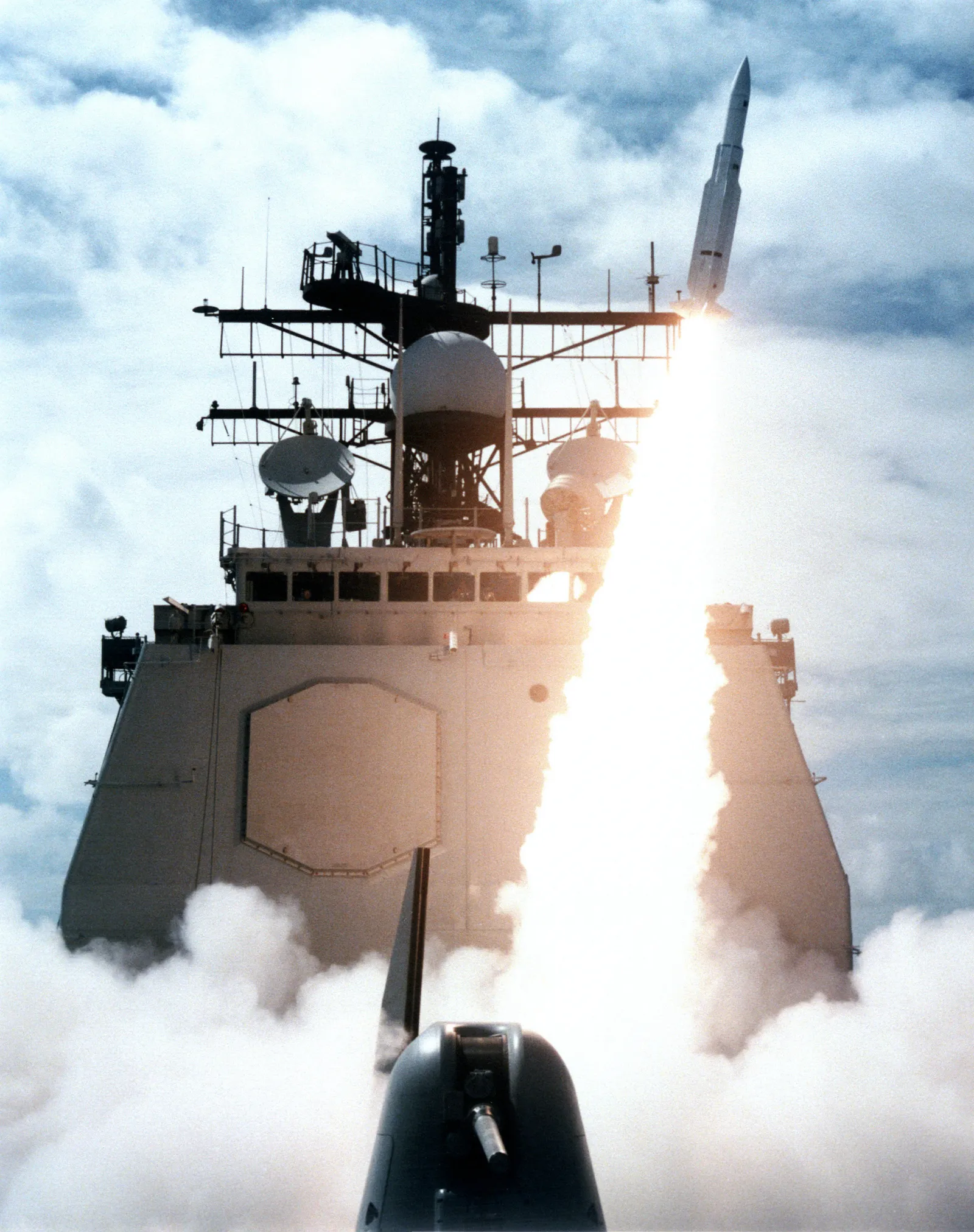

USS Carney fired an SM-2 on October 19, 2023, to defeat Houthi missiles and unmanned aerial vehicles in the Red Sea, and Raytheon says the Navy also fired SM-2s there in early 2024.
Role detailsMunitions
Standard Missile-2 (SM-2)
Also known as
- SM-2
- SM-2MR
- RIM-66M
- RIM-156A
- Standard Missile 2
- Standard Missile-2 Medium Range
- Standard Missile-2 Extended Range
- SM-2ER
- SM-2 Block IV
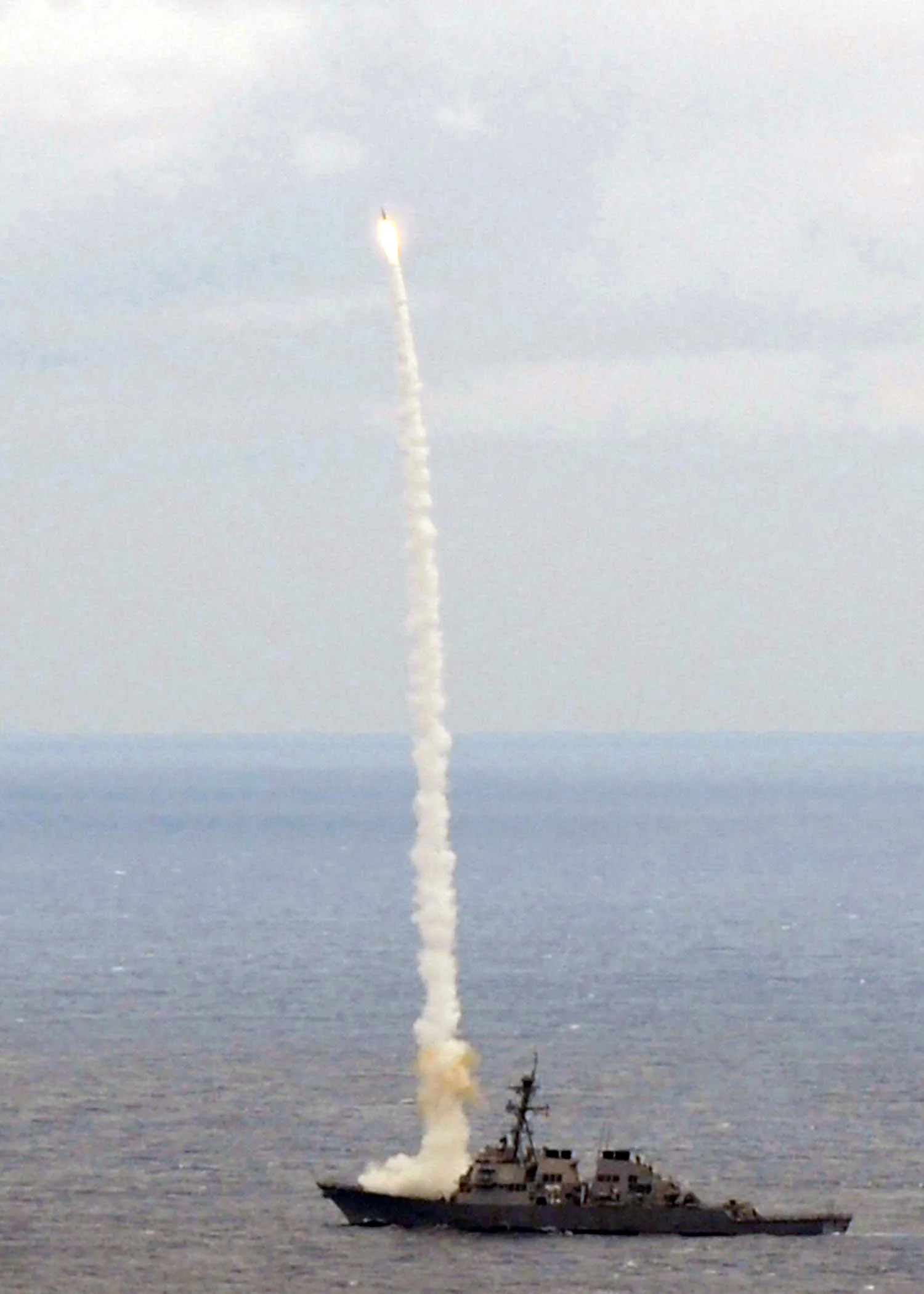
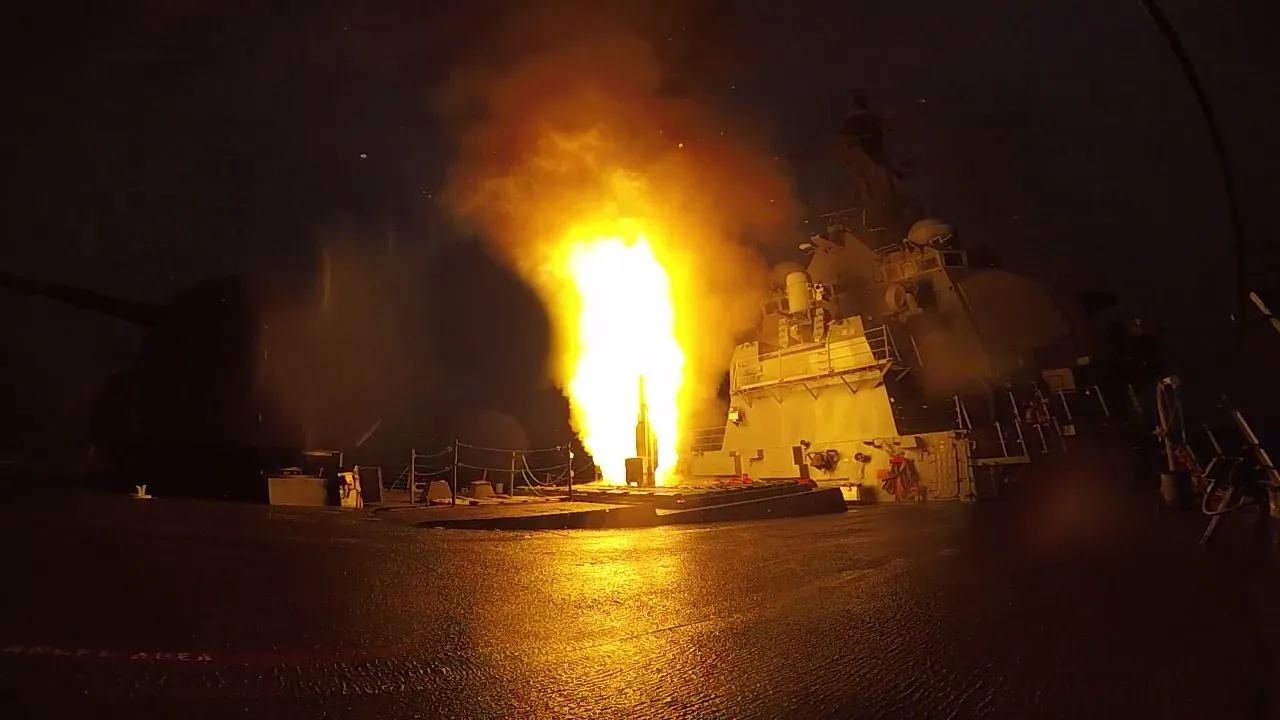
The Standard Missile-2 (SM-2) is a Raytheon-built shipboard surface-to-air missile family used by U.S. and allied navies for fleet area air defense and ship self-defense. Aegis ships launch SM-2 from vertical launch systems, guide it by inertial navigation and mid-course commands, and use semi-active radar or infrared terminal homing in later medium-range blocks. U.S. Navy reporting documents USS Carney firing an SM-2 in October 2023 during Red Sea defense operations against Houthi missiles and drones.
Role in Conflicts
Profile / Specs
Profile
- Origin
- United States
- Built by
- Raytheon
- Type
- Shipboard surface-to-air missile family
- Service note
- 1970s-present
Specifications
- Role
- Fleet area air defense and ship self-defense
- Medium-range blocks
- SM-2 Block III, IIIA and IIIB
- Extended-range block
- SM-2 Block IV
- Medium-range reach
- Up to 90 nautical miles
- Block IV reach
- 100-200 nautical miles
- Engagement altitude
- Up to 65,000 feet
- Launchers
- Mk 41 Vertical Launcher System; Mk 57 Advanced VLS
- Guidance
- Inertial navigation with mid-course command updates and semi-active radar or infrared terminal homing
- Propulsion
- Solid-fuel rocket motor with tail controls; Block IV adds a booster stage
- Warhead
- Blast-fragmentation warhead with radar and contact fuzing
- Dimensions
- SM-2MR: 15 ft 6 in long, 13.5 in diameter, 3 ft 6 in wingspan; Block IV: 21 ft 6 in long with booster
Variants
The Navy fact file separates medium-range SM-2 Block III/IIIA/IIIB missiles from the longer, boosted Block IV extended-range missile; Raytheon's current product page describes the family as using radar-seeker modes, tail controls, solid-rocket propulsion, and updated warhead or targeting features across variants.
| Variant | Configuration | Designation notes |
|---|---|---|
| Block III | Medium-range Aegis variant | Listed by the Navy among SM-2 medium-range blocks in U.S. Navy service. Sources: Standard Missile |
| Block IIIA | Medium-range Aegis variant | Grouped by the Navy with Block III and IIIB in the medium-range SM-2 characteristics table. Sources: Standard Missile |
| Block IIIB | Medium-range variant with infrared terminal option | The Navy identifies infrared terminal homing in Block IIIB and lists semi-active radar homing as the baseline guidance mode. Sources: Standard Missile |
| Block IV | Extended-range variant | The Navy lists Block IV as a two-stage extended-range SM-2 variant deployed in 1998 with a longer booster section. Sources: Standard Missile |
Carrier Platforms
The Navy fact file places SM-2 aboard AEGIS cruisers and Arleigh Burke-class destroyers and says it launches from the Mark 41 VLS.
| Carrier | Carrier type | Carriage evidence |
|---|---|---|
 | Guided-missile destroyer | The Navy fact file identifies SM-2 as an AEGIS weapon aboard Arleigh Burke-class destroyers and says it is launched from the Mark 41 VLS. Sources: Standard Missile |
Combat System Integration
SM-2 is an Aegis weapon guided by the ship combat system and launched from vertical-launch cells on compatible surface combatants.
| Compatible item | Item type | Compatibility evidence |
|---|---|---|
 | Shipboard integrated combat system | The Navy fact file says SM-2 is an integral part of the Aegis Weapon System aboard Ticonderoga-class cruisers and Arleigh Burke-class destroyers, with Aegis providing mid-course command guidance before terminal homing. Sources: Standard Missile |
Timeline
Standard Missile-2 (SM-2) Key Events
SM-2MR enters service
The U.S. Navy fact file lists 1981 as the deployment date for the SM-2 medium-range missile.
Sources: Standard Missile
Block IV extended-range variant deployed
The Navy lists SM-2 Block IV as an extended-range fleet and area-air-defense variant with two-stage solid-fuel propulsion.
Sources: Standard Missile
Production line restart announced
Raytheon announced an SM-2 production restart for allied demand, with new Block IIIA and IIIB deliveries planned to begin in 2020.
Sources: Global demand sparks Standard Missile-2 production restart
First restarted-production missile tested
Raytheon and the U.S. Navy flight-tested the first SM-2 from the restarted production line.
Sources: Raytheon US Navy test first SM-2 from restarted production line
USS Carney fires SM-2 in the Red Sea
The Navy says USS Carney fired an SM-2 to defeat a combination of Houthi missiles and unmanned aerial vehicles in the Red Sea.
Sources: USS Carney a Destroyer at War
Media
Standard Missile-2 (SM-2) Videos
Standard Missile-2 (SM-2) Images
Related Weapon Systems


Sources
Standard MissilePublisher: U.S. Navy | Note: Supports SM-2 background, Aegis shipboard launch context, service history, variants, guidance, and technical specifications. | Accessed: 2026-07-03SM-2 MissilePublisher: Raytheon | Note: Supports manufacturer context, U.S. Navy role, launchers, range, altitude, allied customer context, restarted-production track record, and direct SM-2 use in the 2023 Red Sea Crisis. | Accessed: 2026-07-03USS Carney a Destroyer at WarPublisher: U.S. Navy | Note: Supports direct SM-2 use by USS Carney against Houthi missiles and unmanned aerial vehicles in the 2023 Red Sea Crisis. | Accessed: 2026-07-03Global demand sparks Standard Missile-2 production restartPublisher: Raytheon | Note: Supports the 2017 production restart, planned 2020 Block IIIA and IIIB deliveries, and international customer context. | Accessed: 2026-07-03Raytheon US Navy test first SM-2 from restarted production linePublisher: Raytheon | Note: Supports the 2020 restarted-production flight test and live-fire track-record context. | Accessed: 2026-07-03USS Vincennes launching SM-2MR in 1987Publisher: Wikimedia Commons | Note: Supports image provenance and public-domain licensing for the SM-2MR launch image. | Accessed: 2026-07-03USS Fitzgerald launches SM-2 near OkinawaPublisher: Wikimedia Commons | Note: Supports image provenance and public-domain licensing for the SM-2 launch image. | Accessed: 2026-07-03USS The Sullivans fires SM-2 during Aegis live-fire testPublisher: Wikimedia Commons | Note: Supports image provenance and public-domain licensing for the SM-2 live-fire image. | Accessed: 2026-07-03