
USS Carney used its Aegis-equipped air-defense combat system during Red Sea operations against Houthi missiles and UAVs, including the October 19, 2023 engagement.
Naval Systems
Aegis Combat System
Also known as
- AWS
- Aegis Weapon System
- Aegis BMD
- Aegis Ballistic Missile Defense
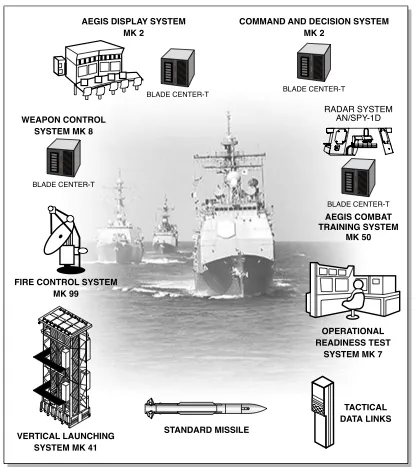
The Aegis Combat System is Lockheed Martin's shipboard combat system for U.S. Navy and allied surface combatants. It integrates radar, command-and-decision software, weapon control, displays, launchers, and network links into a detection-to-kill architecture used for fleet air defense, ballistic-missile defense, surface warfare, undersea warfare support, and documented Red Sea and eastern Mediterranean missile-defense engagements.
Role in Conflicts
- Side
- United States
U.S. Navy destroyers USS Arleigh Burke and USS Carney, using Aegis combat-system variants modified for ballistic-missile defense, fired SM-3 interceptors from the eastern Mediterranean during Iran's April 2024 attack on Israel.
- Side
- United States
U.S. Sixth Fleet said five Arleigh Burke-class destroyers equipped with the Aegis Weapon System for ballistic-missile defense intercepted multiple Iranian ballistic missiles from the eastern Mediterranean while providing defensive support to Israel in June 2025.
Profile / Specs
Profile
- Origin
- United States
- Built by
- Lockheed Martin
- Type
- Shipboard integrated combat system
- Service note
- 1973-present
- Designer
- U.S. Navy / Lockheed Martin
- Designed
- 1970s
- Produced
- 1973-present
Specifications
- System type
- Shipboard integrated combat system
- Core elements
- AN/SPY-family radar and sensors, command-and-decision software, weapon-control functions, displays, Mk 41 VLS, and shipboard C2 links
- Primary missions
- Simultaneous anti-air, anti-surface, anti-submarine, and missile-defense operations
- BMD role
- Sea-based ballistic-missile-defense architecture using Aegis sensors, interceptors, and command-and-control functions
- Launcher integration
- Mk 41 VLS on Aegis cruisers and destroyers supports Standard Missile, Tomahawk, ESSM, SM-3, and related modernized loads
- Platform fit
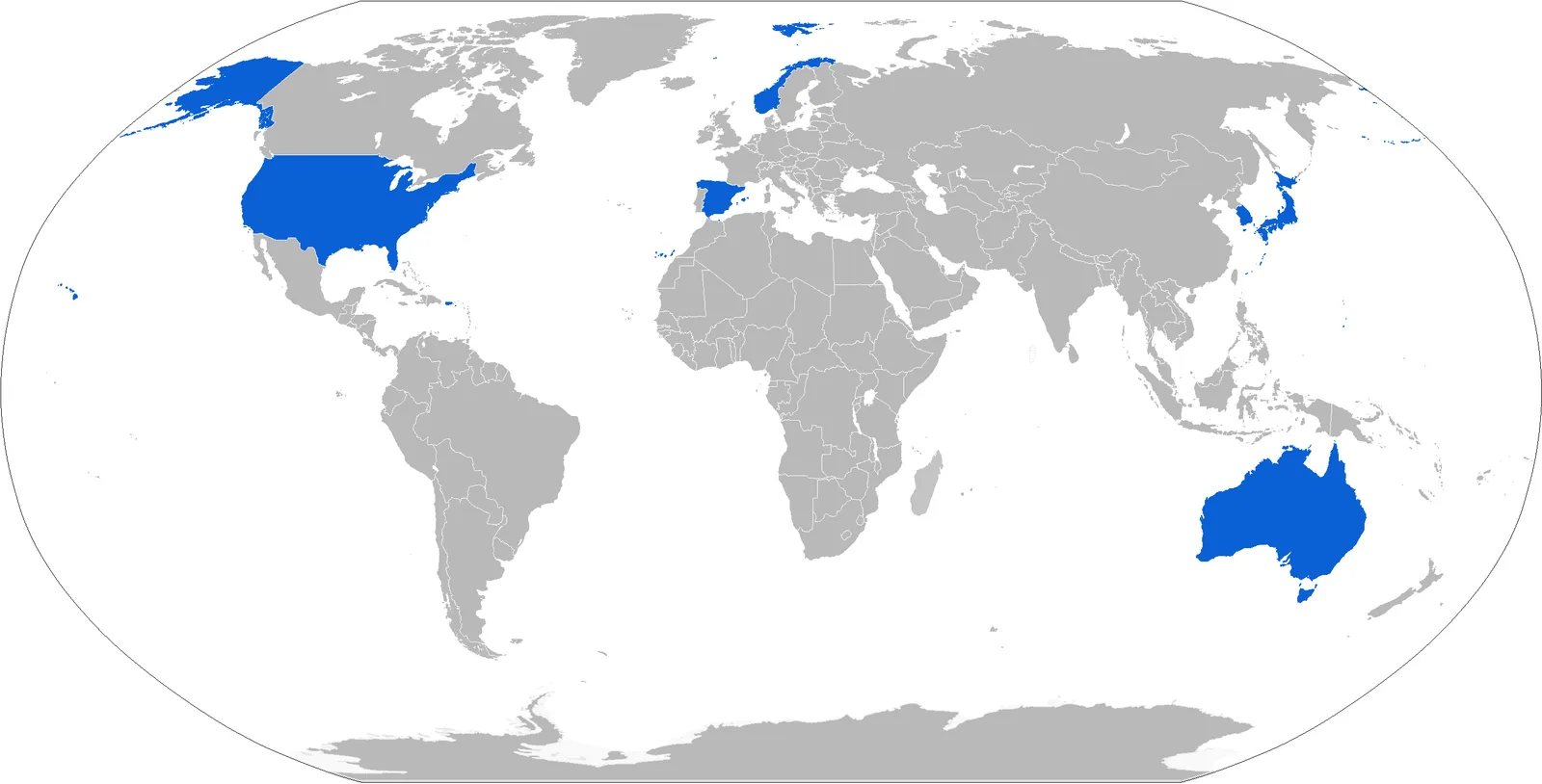
- U.S. Ticonderoga-class cruisers and Arleigh Burke-class destroyers, plus allied Aegis combatants including Hobart and River-class programs
- First ship
- USS Ticonderoga (CG-47) was the first Aegis ship; its engineering-development predecessor was installed on USS Norton Sound in 1973
- Current modernization
- Baseline 10 integrates SPY-6 for DDG 51 Flight III ships; ICS-enabled baselines extend Aegis modernization through common software and infrastructure
Architecture
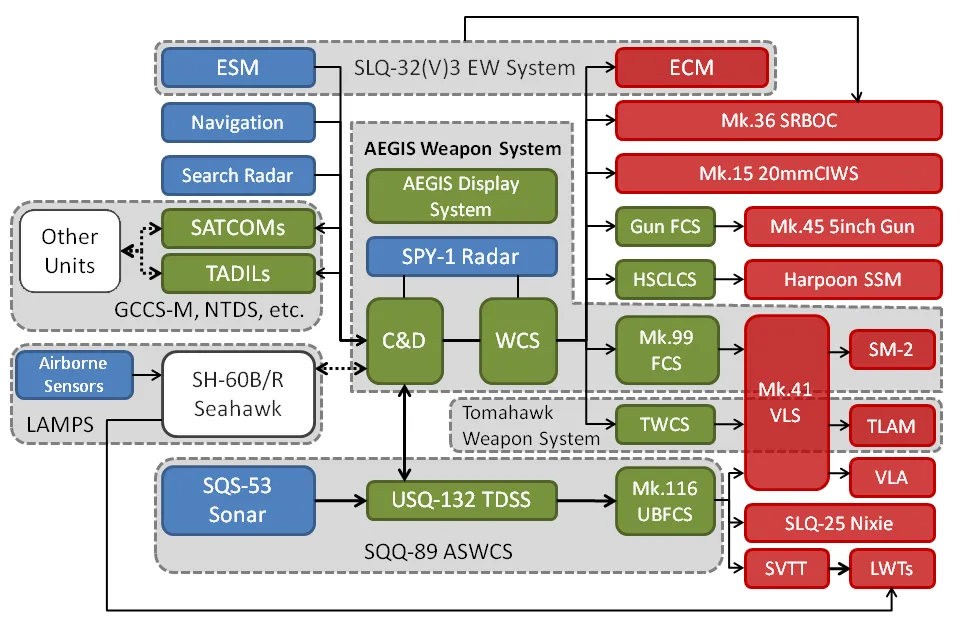
Aegis is best read as a ship combat architecture rather than a single radar or missile. Public Navy and Lockheed Martin sources describe a layered system that moves from detection to engagement while sharing data with wider missile-defense networks.
Radar and sensors
The Navy places AN/SPY-family radar at the center of Aegis detection, tracking, and missile-guidance functions, with later baselines integrating newer radars such as SPY-6 and SPY-7 programs.
Sources: AEGIS Weapon System Fact File; River-Class Destroyer Fact Sheet.
Command and decision
Aegis uses computer-based command-and-decision and weapon-control functions to connect the ship's sensors, operators, displays, and weapons during multi-mission engagements.
Sources: Aegis Combat System; AEGIS Weapon System Fact File.
Launchers and effectors
Mk 41 VLS gives Aegis ships a shared launch interface for Standard Missile variants, Tomahawk, ESSM, and VL-ASROC loads documented in Navy fact files.
Sources: AEGIS Weapon System Fact File; Standard Missile; Destroyers (DDG 51).
Networked missile defense
Aegis BMD combines sensors, interceptors, and command and control, and C2BMC links the sea-based layer into broader ballistic-missile-defense situational awareness.
Sources: Aegis Combat System; C2BMC product page.
Variants
Aegis public designations usually describe either the core shipboard weapon-system function, the ballistic-missile-defense subset, or modernization baselines tied to ship classes and radar upgrades.
| Variant | Configuration | Designation notes |
|---|---|---|
| Aegis Weapon System | Core shipboard C2 and weapon-control system | Lockheed Martin and the Navy describe AWS as the centralized command-and-control and weapons-control heart of Aegis, designed to connect detection, tracking, and engagement functions. |
| Aegis Ballistic Missile Defense | Sea-based BMD configuration | Lockheed Martin describes Aegis BMD as combining sensors, interceptors, and command and control as the sea-based component of ballistic missile defense. Sources: Aegis Combat System |
| Baseline 7.1 | Export destroyer fit | The Royal Australian Navy identifies Hobart-class destroyers as fitted with Aegis Baseline 7.1 and AN/SPY-1D(V). Sources: HMAS Hobart |
| Baseline 10 | SPY-6 integration baseline | The Navy fact file says Baseline 10 was developed to integrate SPY-6 and improve warfighting capability across mission areas. Sources: AEGIS Weapon System Fact File |
Launched Munitions
Aegis integrates ship sensors, command-and-control, and the Mk 41 Vertical Launching System, which the Navy fact file ties to several Standard Missile and cruise-missile loads.
| Launched item | Item type | Launch evidence |
|---|---|---|
 | Surface-to-air missile | The AEGIS Weapon System fact file says Aegis cruisers and destroyers use the Mk 41 VLS to launch Standard Missile weapons, including SM-2. Sources: AEGIS Weapon System Fact File |
 | Ballistic missile interceptor | The AEGIS Weapon System fact file says the Mk 41 VLS was upgraded to support SM-3, and Navy combat reporting shows SM-3 interceptors being launched from Aegis-equipped destroyers. Sources: AEGIS Weapon System Fact File, SM-3 combat intercept report |
 | Extended-range air-defense missile | The Navy's Standard Missile fact file says SM-6 expands the Aegis weapon system battlespace and is launched from shipboard vertical launch systems on Aegis ships. |
 | Short-range surface-to-air missile | The AEGIS Weapon System fact file lists Evolved Sea Sparrow Missile among cruiser modernization improvements, and Navy reporting shows it being test-fired from an Aegis cruiser. Sources: AEGIS Weapon System Fact File, USS Mobile Bay Tests New AEGIS Weapon System |
 | Land-attack cruise missile | The AEGIS Weapon System fact file says the Mk 41 VLS on Aegis cruisers and destroyers employs Tomahawk land-attack cruise missiles. Sources: AEGIS Weapon System Fact File |
 | Anti-submarine missile | Navy fact files place VL-ASROC on Aegis-equipped cruisers and destroyers with Mk 41 VLS, matching Aegis's anti-submarine warfare support role. |
Host Ship Classes
Aegis is installed as a ship combat system rather than a standalone launcher, so its public record is tied to specific surface-combatant classes and national integrations.
| Compatible item | Item type | Compatibility evidence |
|---|---|---|
 | Guided-missile destroyer | The Navy fact file says Arleigh Burke-class destroyers center their combat system on Aegis, SPY-1, and Mk 41 VLS, with Flight III adding SPY-6 and Baseline 10. |
 | Air-warfare destroyer | The Royal Australian Navy identifies Hobart as an Aegis Baseline 7.1 destroyer with AN/SPY-1D(V), Mk 41 VLS, SM-2, and ESSM. Sources: HMAS Hobart |
 | Guided-missile destroyer | Canada's River-class fact sheet lists Aegis Combat System with Canadian Tactical Interface, SPY-7, Cooperative Engagement Capability, Mk 41 VLS, SM-2, ESSM, and Tomahawk. Sources: River-Class Destroyer Fact Sheet |
Combat-System Architecture
Aegis links ship sensors, combat-system software, launchers, and wider missile-defense networks into a single engagement architecture.
| Compatible item | Item type | Compatibility evidence |
|---|---|---|
 | Solid-state AESA radar | Lockheed Martin and Canadian sources place SPY-7 in Aegis ship programs, including River-class destroyers and Japanese Aegis System Equipped Vessel work. Sources: River-Class Destroyer Fact Sheet, Aegis Combat System |
 | Battle management and communications network | Lockheed Martin describes C2BMC as integrating Aegis ballistic missile defense into the broader BMDS network for shared situational awareness. Sources: C2BMC product page, C2BMC system profile |
 | Aegis modernization path | Lockheed Martin says its first ICS-enabled BL9.C3.0 baseline gives the U.S. Navy a common infrastructure and software path that builds on Aegis modernization. Sources: ICS-enabled baseline delivery |
Timeline
Aegis Combat System Key Events
Engineering-development model installed on USS Norton Sound
NAVSEA says the first engineering-development model of Aegis was installed on USS Norton Sound, giving the program its sea-based testbed.
Sources: Aegis Combat System NAVSEA
USS Ticonderoga commissions with Aegis
The Navy fact file says USS Ticonderoga was the first Aegis ship, commissioning in 1983 and deploying six months later.
Sources: AEGIS Weapon System Fact File
USS Carney defeats Houthi missiles and UAVs
U.S. Navy reporting says USS Carney shot down 15 drones and four land-attack cruise missiles fired by Houthi rebels in Yemen during a 10-hour Red Sea engagement.
Sources: USS Carney: a Destroyer at War
Aegis BMD destroyers intercept Iranian ballistic missiles
USNI News reported that USS Arleigh Burke and USS Carney, both fitted with Aegis combat system variants modified for ballistic-missile defense, fired SM-3 interceptors in the Eastern Mediterranean during the Iranian attack on Israel.
Sources: SM-3 combat intercept report
Aegis demonstrates against a hypersonic target
Lockheed Martin reported that USS Pinckney used Aegis to detect, track, and engage a live advanced hypersonic medium-range ballistic missile target during Flight Test Other 40.
Sources: Aegis hypersonic test
Sixth Fleet credits Aegis destroyers with Iran-war intercepts
U.S. Sixth Fleet said five Arleigh Burke-class destroyers in the Eastern Mediterranean were equipped with Aegis for ballistic-missile defense and had intercepted multiple Iranian ballistic missiles since June 14.
Sources: Sixth Fleet Aegis destroyer intercepts
Media
Aegis Combat System Videos
Aegis Combat System Images
Related Weapon Systems


Sources
Aegis Combat SystemPublisher: Lockheed Martin | Note: Supports Aegis product background, manufacturer context, integrated combat-system description, Aegis BMD role, and high-level system architecture. | Accessed: 2026-07-04AEGIS Weapon System Fact FilePublisher: U.S. Navy | Note: Supports the command-and-decision core, multi-mission anti-air, anti-surface, and anti-submarine role, the first ship and VLS deployment history, and the Mk 41 VLS launch context for Standard Missile and Tomahawk loads. | Accessed: 2026-07-04Aegis Combat System NAVSEAPublisher: Naval Sea Systems Command | Note: Supports the system's description as the Navy's most modern surface combat system and its fully integrated architecture. | Accessed: 2026-07-04SM-3 combat intercept reportPublisher: USNI News | Note: Supports 2024 Iran-Israel Exchange direct use: Aegis BMD destroyers fired SM-3 interceptors from the Eastern Mediterranean during Iran's April 2024 attack on Israel. | Accessed: 2026-07-04U.S. Warships in Eastern Mediterranean Down Iranian Ballistic MissilesPublisher: USNI News | Note: Supports 2024 Iran-Israel Exchange direct use: USS Carney and USS Arleigh Burke shot down Iranian ballistic missiles during the April 2024 attack on Israel and were equipped for ballistic-missile defense. | Accessed: 2026-07-04USS Carney: a Destroyer at WarPublisher: U.S. Navy | Note: Supports 2023 Red Sea Crisis direct use: USS Carney shot down Houthi drones and land-attack cruise missiles during Red Sea combat operations. | Accessed: 2026-07-04USS Carney's Success Showed Value of Aegis, SM-2, VLS, Alert CrewPublisher: Seapower Magazine | Note: Supports 2023 Red Sea Crisis direct use: USS Carney was equipped with Aegis and used its air-defense architecture in the Red Sea intercepts. | Accessed: 2026-07-04Sixth Fleet Aegis destroyer interceptsPublisher: U.S. Naval Forces Europe-Africa / U.S. Sixth Fleet | Note: Supports 2025 Israel-Iran Conflict direct use: U.S. Aegis-equipped destroyers in the Eastern Mediterranean intercepted multiple Iranian ballistic missiles while providing defensive support to Israel. | Accessed: 2026-07-04Aegis hypersonic testPublisher: Lockheed Martin | Note: Supports the 2025 Flight Test Other 40 demonstration in which Aegis detected, tracked, and engaged a live hypersonic ballistic-missile target. | Accessed: 2026-07-04Aegis AWS imagePublisher: Wikimedia Commons | Note: Supports image provenance and public-domain licensing for the Aegis Weapon System diagram. | Accessed: 2026-07-04Aegis Combat System diagramPublisher: Wikimedia Commons | Note: Supports image provenance and CC BY-SA licensing for the Aegis Combat System configuration diagram. | Accessed: 2026-07-04Aegis operators graphicPublisher: Wikimedia Commons | Note: Supports image provenance and CC BY-SA licensing for the Aegis operators graphic. | Accessed: 2026-07-04Standard MissilePublisher: U.S. Navy | Note: Supports the Standard Missile family launch context on Aegis ships, including SM-6 being launched from shipboard vertical launch systems. | Accessed: 2026-07-04Destroyers (DDG 51)Publisher: U.S. Navy | Note: Supports Arleigh Burke-class Aegis and Mk 41 VLS architecture, Flight III/SPY-6 context, carried armament, and destroyer-platform relationship. | Accessed: 2026-07-04HMAS HobartPublisher: Royal Australian Navy | Note: Supports Hobart-class Aegis Baseline 7.1, AN/SPY-1D(V), Mk 41 VLS, and SM-2/ESSM combat-system relationship. | Accessed: 2026-07-04River-Class Destroyer Fact SheetPublisher: Royal Canadian Navy / Government of Canada | Note: Supports River-class Aegis Combat System with Canadian Tactical Interface, SPY-7, Cooperative Engagement Capability, Mk 41 VLS, and missile fit. | Accessed: 2026-07-04ICS-enabled baseline deliveryPublisher: Lockheed Martin | Note: Supports the Aegis modernization path through an Integrated Combat System-enabled BL9.C3.0 baseline and common software/infrastructure delivery. | Accessed: 2026-07-04USS Mobile Bay Tests New AEGIS Weapon SystemPublisher: U.S. Navy | Note: Supports the Aegis cruiser test firing an Evolved Sea Sparrow Missile from the ship's forward launcher. | Accessed: 2026-07-04C2BMC product pagePublisher: Lockheed Martin | Note: Supports Aegis ballistic missile defense being integrated by C2BMC. | Accessed: 2026-07-04C2BMC system profilePublisher: Missile Defense Advocacy Alliance | Note: Supports Aegis ballistic missile defense being integrated by C2BMC. | Accessed: 2026-07-04