- Side
- Unconfirmed conflict context

Saudi Arabia's MMSC ships are documented as a modern naval combatant procurement and construction program, with the first ship launched in December 2025; public sources do not identify operational combat employment.
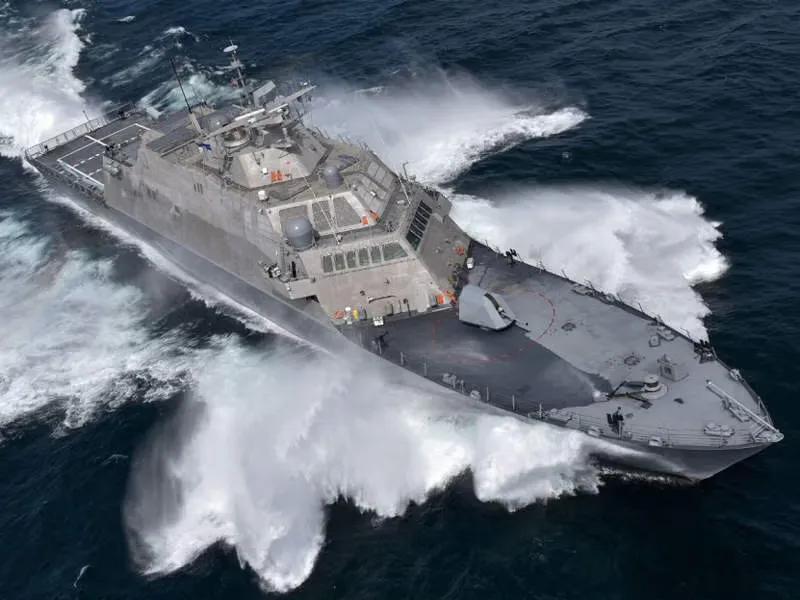
The Multi-Mission Surface Combatant (MMSC) is Lockheed Martin's Saudi export derivative of the Freedom-class Littoral Combat Ship, built for the Royal Saudi Naval Forces with a permanent Mk 41 vertical launch system, COMBATSS-21 combat system, 5,000 nautical-mile range, and speeds above 30 knots.
Saudi Arabia's MMSC ships are documented as a modern naval combatant procurement and construction program, with the first ship launched in December 2025; public sources do not identify operational combat employment.
The Saudi MMSC is a fixed multi-mission export configuration of the Freedom-variant LCS rather than the U.S. Navy mission-package model.
| Variant | Configuration | Designation notes |
|---|---|---|
| Royal Saudi Naval Forces configuration | Saudi export configuration | Uses the Freedom-variant hull with a fixed combat-system fit that includes COMBATSS-21, CAMM in Mk 41 VLS, Harpoon anti-ship missiles, 57 mm and 20 mm guns, SeaRAM, and MH-60R aviation facilities. Sources: Multi-Mission Surface Combatant (MMSC) | Lockheed Martin, First Saudi MMSC launched by Fincantieri in Wisconsin, MBDA Wins Contract To Supply CAMM to Royal Saudi Navy's MMSC |
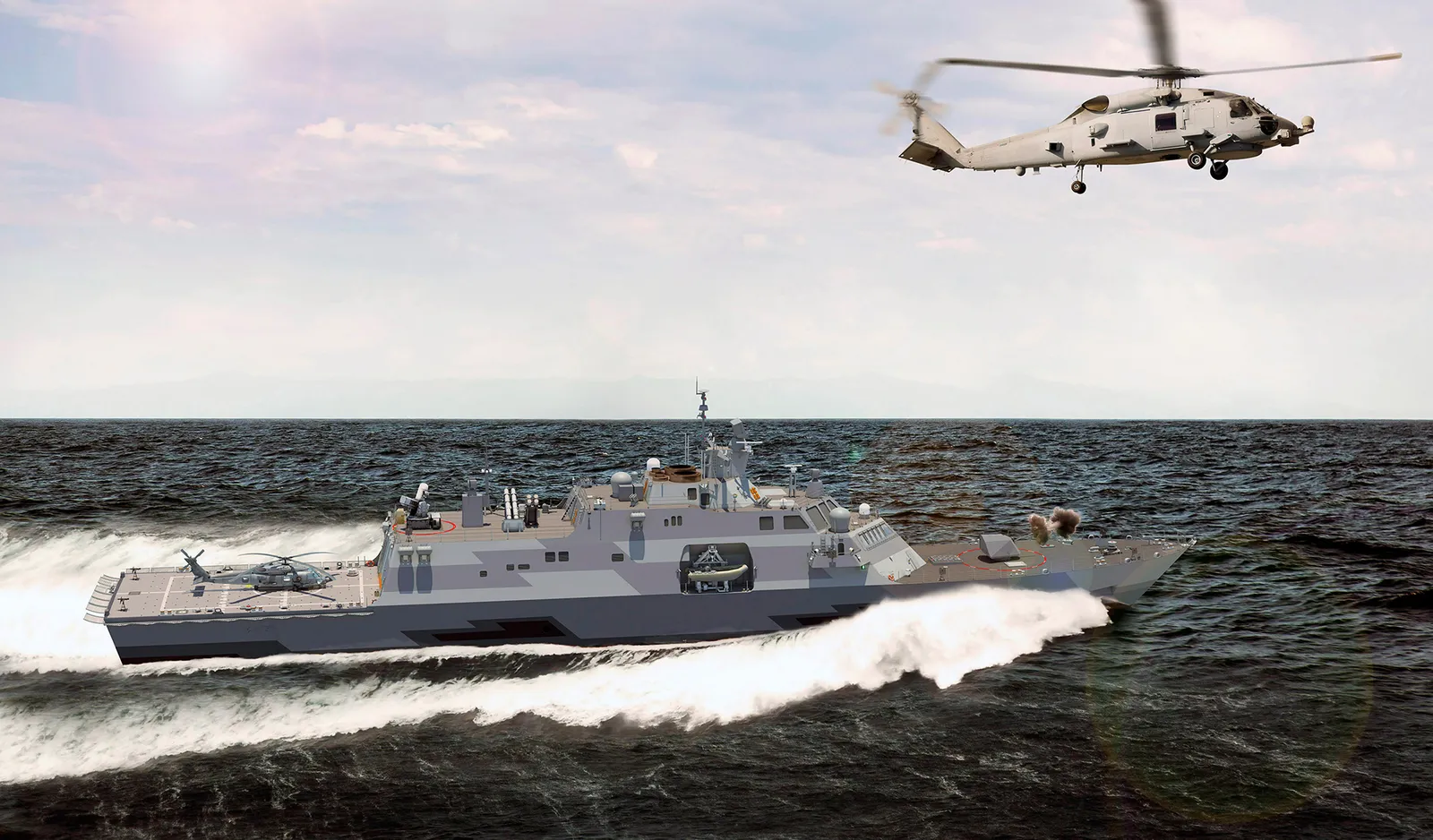
The Saudi configuration replaces the U.S. LCS mission-package approach with a fixed multi-mission combat fit for air-defense, anti-surface, and close-in ship protection tasks.
| Carried item | Item type | Carriage evidence |
|---|---|---|
 | Shipboard air-defense missile | The Saudi MMSC fit uses CAMM / Sea Ceptor missiles in an eight-cell Mk 41 vertical launcher. Sources: MBDA Wins Contract To Supply CAMM to Royal Saudi Navy's MMSC, First Saudi MMSC launched by Fincantieri in Wisconsin |
 | Anti-ship missile | Reporting on the Saudi fit identifies two quad launchers for Harpoon anti-ship missiles. Sources: First Saudi MMSC launched by Fincantieri in Wisconsin |
 | Deck gun | The MMSC retains the 57 mm Mk 110 deck gun from the LCS-derived combat-system integration. Sources: Multi-Mission Surface Combatant (MMSC) | Lockheed Martin, First Saudi MMSC launched by Fincantieri in Wisconsin |
 | Remote weapon station | The Saudi configuration is reported with two Nexter Narwhal 20 mm remote weapon stations for secondary armament. Sources: First Saudi MMSC launched by Fincantieri in Wisconsin |
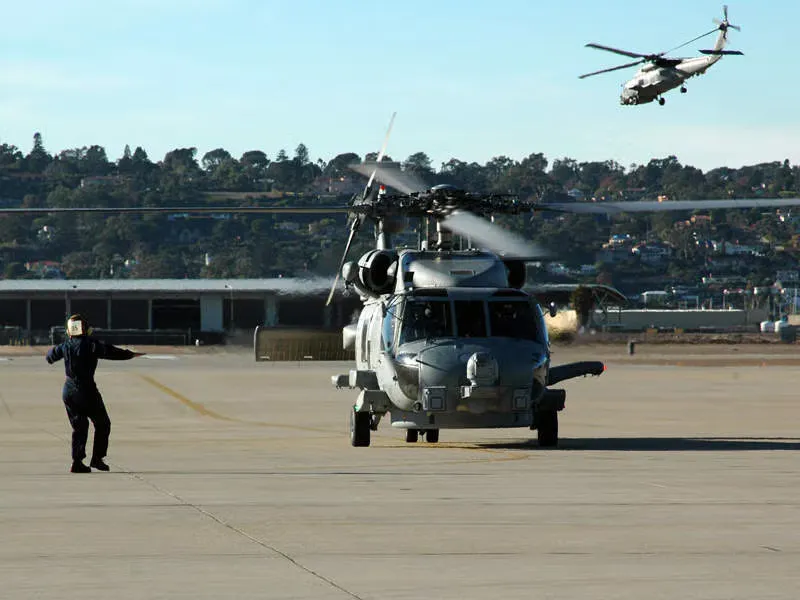
The design includes aviation facilities for an MH-60R helicopter detachment, tying the surface combatant to Saudi maritime helicopter procurement.
| Carried item | Item type | Carriage evidence |
|---|---|---|
 | Embarked maritime helicopter | Lockheed Martin describes the MMSC as paired with MH-60R Seahawk helicopters for anti-submarine capability, and later reporting notes Saudi MMSC aviation facilities for MH-60R operations. Sources: Multi-Mission Surface Combatant (MMSC) | Lockheed Martin, First Saudi MMSC launched by Fincantieri in Wisconsin |
The Saudi MMSC is useful to read as a Freedom-variant LCS hull rebuilt around a fixed export combat system, not as a direct copy of the U.S. Navy modular LCS configuration.
| Area | Saudi MMSC fit | Why it matters |
|---|---|---|
| Hull and machinery | Freedom-variant LCS hull with combined diesel-and-gas propulsion | Preserves the high-speed LCS lineage while extending endurance for Saudi fleet requirements. |
| Air defense | CAMM / Sea Ceptor missiles in an eight-cell Mk 41 vertical launcher | Gives the ships a local-area missile-defense layer instead of the originally reported ESSM plan. |
| Surface warfare | Harpoon anti-ship missiles, 57 mm Mk 110 gun, SeaRAM, and 20 mm remote guns | Creates a standing anti-surface and close-defense fit rather than a swappable mission package. |
| Program status | Four ships ordered; first-of-class HMS Saud launched in December 2025 | Shows the program remained a construction and delivery effort, with no public combat-use record identified. |
The U.S. State Department approved a possible $11.25 billion foreign military sale of four MMSC ships and associated equipment to Saudi Arabia.
Sources: Multi-Mission Surface Combatant (MMSC) - Naval Technology
Lockheed Martin announced a $450 million contract to begin detailed design and planning for four MMSC ships built at Fincantieri Marinette Marine in Wisconsin.
Sources: U.S. Government Awards Lockheed Martin Contract to Begin Production of Multi-Mission Surface Combatant for Kingdom of Saudi Arabia
The U.S. Navy awarded a $1.96 billion modification for detail design and construction of four MMSC ships for the Kingdom of Saudi Arabia.
Sources: Contracts For Dec. 20, 2019 - Department of War
A U.S. Navy contract started production of CAMM missiles for the Royal Saudi Naval Forces' MMSC ships, confirming the Saudi air-defense missile fit.
Sources: MBDA Wins Contract To Supply CAMM to Royal Saudi Navy's MMSC
The first Saudi MMSC, HMS Saud, entered the water at Fincantieri Marinette Marine after an earlier December launch ceremony for Project Tuwaiq.
Sources: First Saudi MMSC launched by Fincantieri in Wisconsin