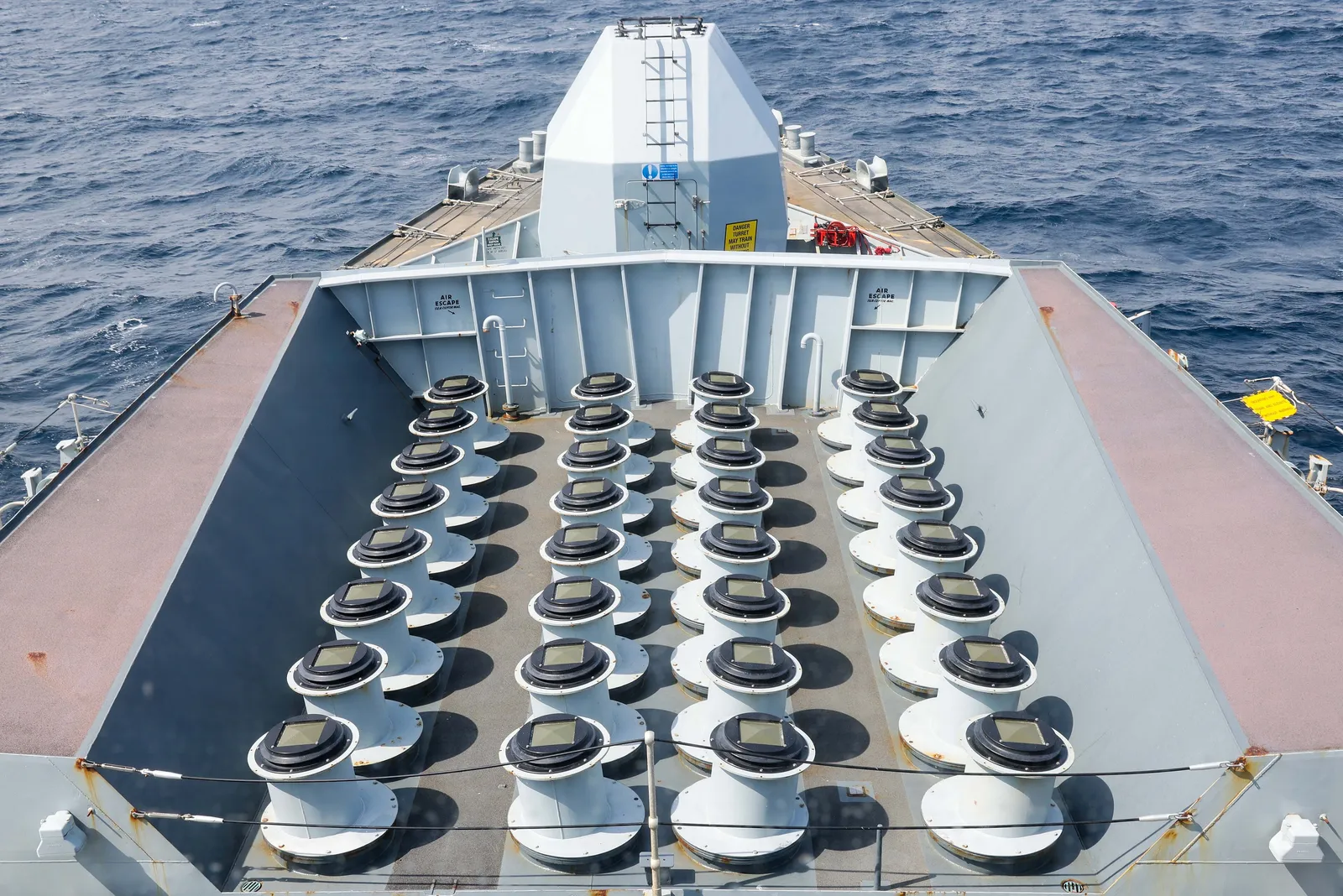

In the 2023 Red Sea Crisis, HMS Richmond used Sea Ceptor missiles to shoot down two Houthi attack drones while protecting merchant shipping during its southern Red Sea deployment.
Role detailsAir Defense
CAMM / Sea Ceptor air-defense missile
Also known as
- Common Anti-air Modular Missile
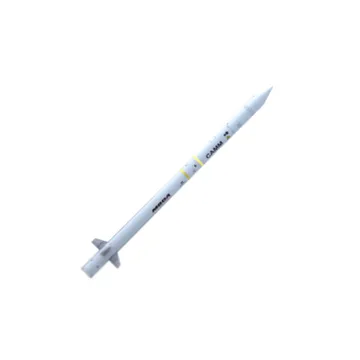
CAMM, marketed at sea as Sea Ceptor, is MBDA's naval air-defense missile family for protecting ships and escorted shipping. The Royal Navy entered it into service in 2018 on Type 23 frigates, and HMS Richmond later used it to shoot down two Houthi drones in the 2023 Red Sea Crisis.
Role in Conflicts
What Makes Sea Ceptor Distinct
MBDA presents Sea Ceptor as a modular ship-defense missile built around the same CAMM family used on land. The value is not just reach, but easier integration across new and existing ships.
| Feature | Source-backed detail |
|---|---|
| Common missile family | Sea Ceptor uses the Common Anti-air Modular Missile (CAMM), so naval and ground air-defense users share the same missile family. |
| Fully active architecture | MBDA says the system does not need complex platform sensor integration or dedicated fire-control and tracking radars. |
| Range envelope | MBDA describes 25 km protection for the host platform and escorted vessels, with layered use extending beyond 40 km. |
| Launcher flexibility | The missile is described as compatible with new or existing ships, including the Mk41 family vertical launcher system. |
Sources: SEA CEPTOR - MBDA Systems; SEA CEPTOR product sheet; CAMM family brochure 10-2021 - MBDA.
Profile / Specs
Profile
- Origin
- United Kingdom
- Built by
- MBDA
- Type
- Naval air-defense missile
- Service note
- In Royal Navy service from 2018; combat use reported in 2024
- Designer
- MBDA
- Designed
- 2010s
- Unit cost
- Not publicly stated
- Produced
- 2010s-present
- Number built
- Not publicly stated
Specifications
- Role
- Naval air-defense missile
- Range
- 25 km against escorted shipping; MBDA says layered use can extend beyond 40 km
- Guidance
- Fully active RF seeker with no dedicated fire-control radar needed
- Launch
- Soft-launch vertical launch system compatible with Mk41-family VLS
Variants
- CAMM
- Sea Ceptor
Launch Platform
Sea Ceptor entered Royal Navy service on Type 23 frigates and later saw combat use aboard HMS Richmond.
| Launcher | Launcher type | Launch evidence |
|---|---|---|
 | Frigate launcher fit | Royal Navy reporting says Sea Ceptor was carried by Type 23 frigates, and HMS Richmond used it against Houthi drones during the Red Sea deployment. Sources: £850m Sea Ceptor missile system enters service with the Royal Navy, Richmond completes Red Sea mission as Diamond resumes patrols |
Timeline
CAMM / Sea Ceptor air-defense missile Key Events
Sea Ceptor enters Royal Navy service
The Royal Navy announced Sea Ceptor's in-service entry, with the missile intended to protect new aircraft carriers and Type 23 frigates.
Sources: £850m Sea Ceptor missile system enters service with the Royal Navy
First UK combat firing is reported
The UK government said HMS Richmond shot down two Houthi attack drones with Sea Ceptor in the southern Red Sea, the first UK combat use of the missile.
Sources: Richmond completes Red Sea mission as Diamond resumes patrols
Media
CAMM / Sea Ceptor air-defense missile Videos
CAMM / Sea Ceptor air-defense missile Images
Related Weapon Systems


Sources
SEA CEPTOR - MBDA SystemsPublisher: MBDA | Note: Official product page for Sea Ceptor naval air defense role and protected-shipping mission. | Accessed: 2026-06-22CAMM family brochure 10-2021 - MBDAPublisher: MBDA | Note: Official CAMM family brochure with Sea Ceptor range, launcher flexibility, and integration notes. | Accessed: 2026-06-27SEA CEPTOR product sheetPublisher: MBDA | Note: Official MBDA brochure with Sea Ceptor performance and launch details. | Accessed: 2026-06-22£850m Sea Ceptor missile system enters service with the Royal NavyPublisher: Royal Navy | Note: Supports the 24 May 2018 Royal Navy service entry and Sea Ceptor carriage on Type 23 frigates. | Accessed: 2026-06-27Royal Navy warship shoots down Houthi missilePublisher: UK Government | Note: Supports 2023 Red Sea Crisis direct use: HMS Richmond used Sea Ceptor missiles against Houthi drones in the southern Red Sea. | Accessed: 2026-06-22Richmond completes Red Sea mission as Diamond resumes patrolsPublisher: Royal Navy | Note: Supports 2023 Red Sea Crisis direct use: HMS Richmond used Sea Ceptor in the Red Sea and the system was blooded in combat. | Accessed: 2026-06-22HMS Richmond Sea Ceptor silo image pagePublisher: Wikimedia Commons | Note: Open-license image page for HMS Richmond's Sea Ceptor launcher in the Red Sea. | Accessed: 2026-06-22CAMM missile image pagePublisher: Wikimedia Commons | Note: Open-license image page for the CAMM missile family image. | Accessed: 2026-06-22CAMM cropped image pagePublisher: Wikimedia Commons | Note: Open-license image page for the cropped CAMM missile family image. | Accessed: 2026-06-22