Profile
- Origin
- United States
- Built by
- Lockheed Martin
- Type
- Vertical-launch anti-submarine missile
- Service note
- 1993-present
- Designer
- Goodyear Aerospace
- Designed
- 1983
- Produced
- 1993-present
- Number built
- More than 450 by 2007
- Developed from
- RUR-5 ASROC
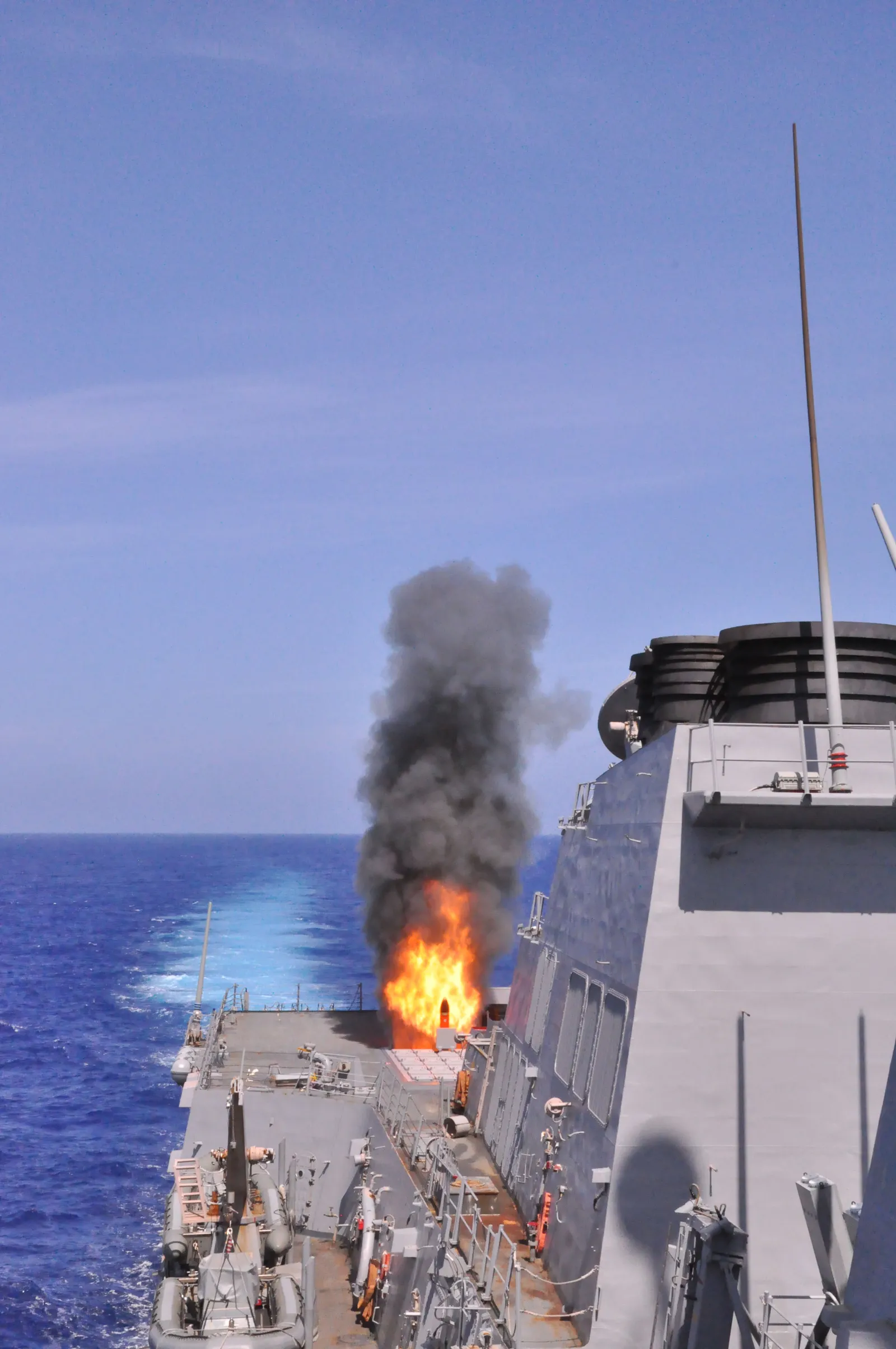
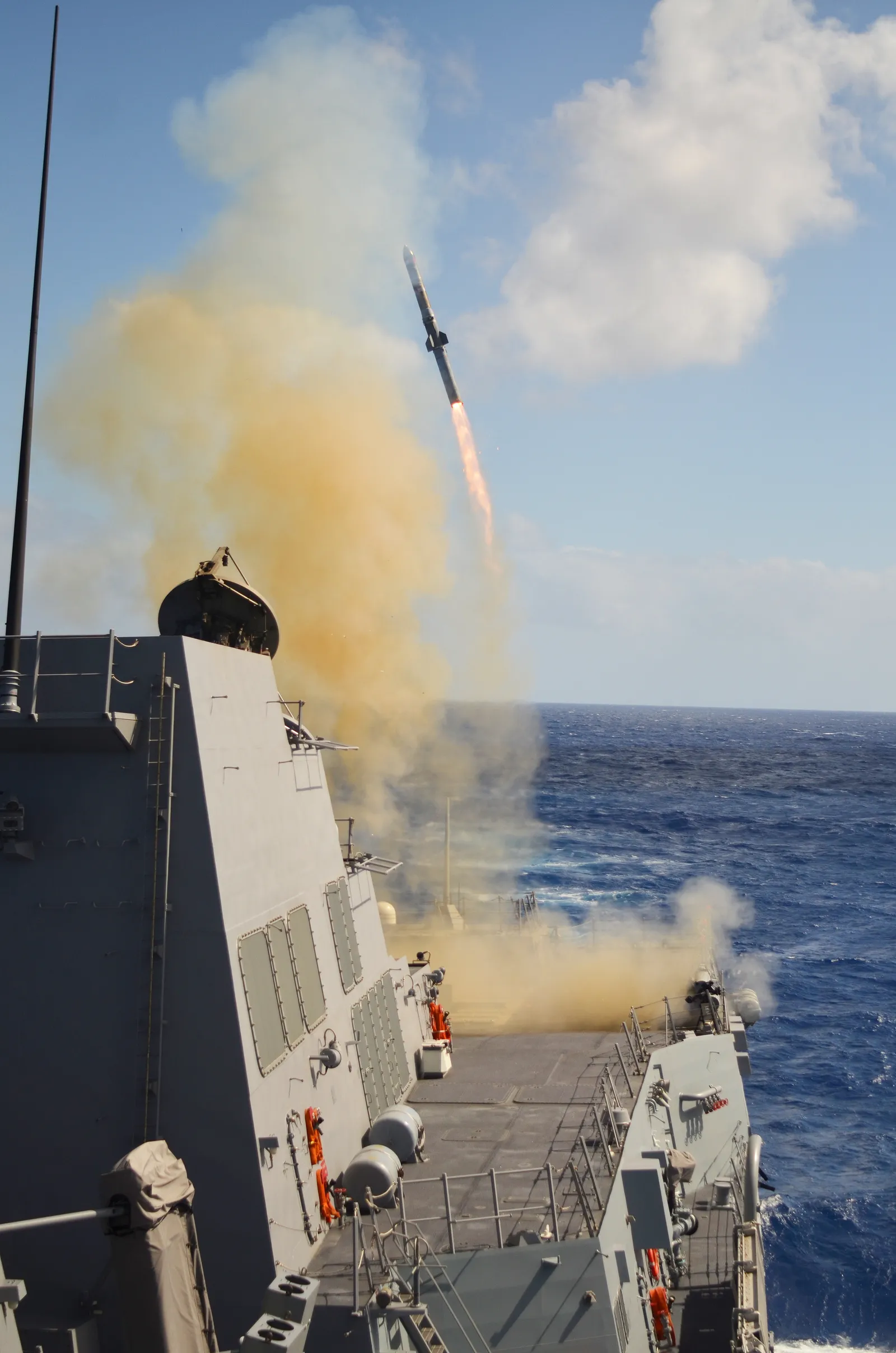
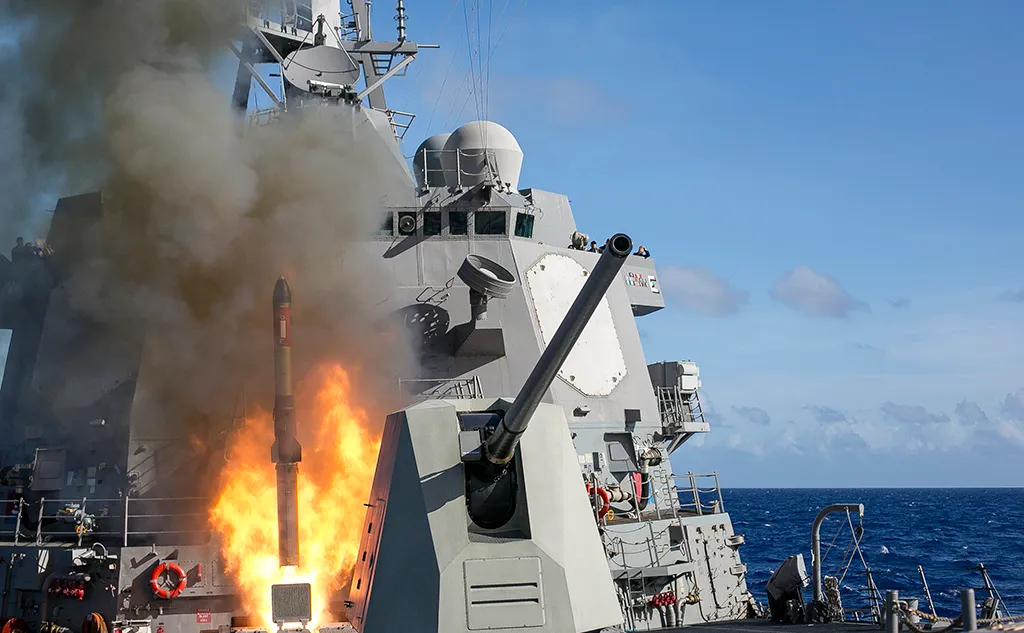
The RUM-139 VL-ASROC is a U.S. Navy surface-ship launched anti-submarine missile that carries a lightweight torpedo from a Mk 41 vertical launch cell to a water-entry point near a submarine target. Official Navy, NAVSEA, Lockheed Martin, and specialist reference sources frame it as the vertical-launch ASROC successor for Aegis-equipped ships, with payload evolution from MK 46 variants toward MK 54.
Public sources use the RUM-139A/B/C sequence mainly to distinguish payload-torpedo and integration changes rather than separate launch-platform families.
| Variant | Configuration | Designation notes |
|---|---|---|
| RUM-139A | Initial VL-ASROC missile | Designation-Systems describes RUM-139A as a RUR-5-derived missile with a new booster section for MK 41 VLS launch and a MK 46 MOD 5A payload. |
| RUM-139B | Shallow-water torpedo payload standard | The same reference says RUM-139B used the MK 46 MOD 5A(SW) torpedo after the fleet moved from the earlier RUM-139A payload configuration. |
| RUM-139C | MK 54 payload configuration | Designation-Systems identifies RUM-139C as the VL-ASROC variant carrying the MK 54 MOD 0 torpedo, while Navy fact files say the MK 54 VLA system reached IOC in 2010. Sources: Lockheed Martin (Loral) RUM-139 VL-Asroc, MK 54 - Lightweight Torpedo |
| RTM-139 | Training missile family | Designation-Systems describes RTM-139 training variants with inert exercise torpedoes for RUM-139A/B/C configurations. |
Navy fact files describe VLA as a surface-ship launched anti-submarine missile carried by Aegis-equipped cruisers and destroyers with the MK 41 Vertical Launching System.
| Launcher | Launcher type | Launch evidence |
|---|---|---|
 | Guided-missile destroyer | The VLA fact file says the missile is carried by Aegis-equipped destroyers with MK 41 VLS, and the DDG 51 fact file lists ASROC in the Arleigh Burke-class armament summary. Sources: Vertical Launch Anti-Submarine Rocket ASROC (VLA) Missile, Destroyers (DDG 51) |
VL-ASROC extends the reach of a lightweight torpedo by carrying it from the ship's vertical launcher to a water-entry point near the submarine target.
| Carried item | Item type | Carriage evidence |
|---|---|---|
 | Lightweight anti-submarine torpedo | The Navy VLA fact file identifies MK 46 Mod 5A(SW) as a VLA payload, and the MK 46 fact file separately identifies MK 46 MOD 5A(SW) as a payload for Vertical Launch ASROC. Sources: Vertical Launch Anti-Submarine Rocket ASROC (VLA) Missile, MK 46 - Lightweight Torpedo |
 | Lightweight anti-submarine torpedo | The Navy VLA and MK 54 fact files identify MK 54 as a VL-ASROC payload path, with the MK 54 VLA system reaching IOC in 2010. Sources: Vertical Launch Anti-Submarine Rocket ASROC (VLA) Missile, MK 54 - Lightweight Torpedo |
The missile is not an Aegis component by itself, but Navy sources place VLA aboard Aegis-equipped ships with MK 41 VLS and SQQ-89 ASW combat-system context.
| Compatible item | Item type | Compatibility evidence |
|---|---|---|
 | Shipboard combat system | The Navy VLA fact file identifies Aegis-equipped cruisers and destroyers as the ship context for the missile, and the Aegis fact file describes Aegis as integrating sensors, command-and-control, weapons, and the MK 41 VLS on cruisers and destroyers. Sources: Vertical Launch Anti-Submarine Rocket ASROC (VLA) Missile, AEGIS Weapon System Fact File |
VL-ASROC is a shipboard delivery weapon: the missile leaves a vertical launch cell, pitches over under booster and autopilot control, then releases a lightweight torpedo near the ocean-surface aim point. That architecture separates the shipboard launch problem from the torpedo's underwater search and attack phase.
NAVSEA describes the MK 41 VLS as a fixed vertical multi-missile storage and firing system that supports Vertical Launch ASROC among other Navy missiles.
The Navy VLA fact file places the weapon on Aegis-equipped cruisers and destroyers with MK 41 VLS and the SQQ-89 ASW Combat System.
Navy and specialist sources describe a solid booster, thrust-vector control, and digital autopilot that turn the missile from vertical launch into the ballistic delivery trajectory.
The U.S. Navy says VLA moved from MK 46 payloads toward the MK 54 after the MK 54 Mod 0 IOC, while Designation-Systems maps that payload change onto RUM-139B and RUM-139C designations.
Sources: Vertical Launch Anti-Submarine Rocket ASROC (VLA) Missile; Launchers; Lockheed Martin (Loral) RUM-139 VL-Asroc; MK 54 - Lightweight Torpedo.
Designation-Systems reports that Goodyear received the full-scale development contract for the RUM-139A VL-ASROC in 1983.
Sources: Lockheed Martin (Loral) RUM-139 VL-Asroc
The same specialist reference says RUM-139A became operational with U.S. Navy ships in 1993.
Sources: Lockheed Martin (Loral) RUM-139 VL-Asroc
Designation-Systems links the RUM-139C payload configuration to the MK 54 MOD 0 torpedo, and the Navy says MK 54 MOD 0 reached IOC in 2004.
Sources: Lockheed Martin (Loral) RUM-139 VL-Asroc, MK 54 - Lightweight Torpedo
The Navy MK 54 fact file lists the MK 54 Vertical Launched Anti-Submarine Rocket system as reaching Initial Operational Capability in 2010.
Sources: MK 54 - Lightweight Torpedo
DVIDS identifies a public-domain video of USS Pinckney launching a VLA MK 46 exercise torpedo during a live-fire exercise in the Pacific.
Sources: Live Fire Exercise