- Side
- United Kingdom

During the South Georgia action on April 25, 1982, a Lynx helicopter from HMS Brilliant launched one MK 46 torpedo at the Argentine submarine ARA Santa Fe; the source records the launch and notes that the torpedo did not hit.
The MK-46 is a U.S. Navy lightweight anti-submarine torpedo introduced in 1965 for surface-ship and aircraft launch. A Falklands War account records a Royal Navy Lynx launching one MK 46 at ARA Santa Fe near South Georgia, while Navy fact files document the later MOD 5A(S) and MOD 5A(SW) standards.
During the South Georgia action on April 25, 1982, a Lynx helicopter from HMS Brilliant launched one MK 46 torpedo at the Argentine submarine ARA Santa Fe; the source records the launch and notes that the torpedo did not hit.
The MK-46 family is a 12.75-inch lightweight anti-submarine torpedo line whose modification numbers mark propulsion, guidance, payload-integration, shallow-water, and life-extension changes rather than separate catalog weapon families.
The Navy torpedo-development history credits Naval Ordnance Test Station Pasadena and Aerojet General with development, then records early production at Aerojet General, Forest Park, and Minneapolis Honeywell.
USNI described Mod 5 NEARTIP as an upgrade adding improved acoustic guidance and countermeasure resistance, with FY 1979 operational scheduling.
The Navy says MOD 5A(SW) also serves as a Vertical Launch ASROC payload, while the MK 54 later integrated MK 46 and MK 50 program hardware and software with newer digital processing.
Source labels used here: A Brief History of U.S. Navy Torpedo Development - Part 2; Ships and Aircraft of the U.S. Fleet: Torpedoes; MK 46 - Lightweight Torpedo; MK 54 - Lightweight Torpedo.
The MK-46 family moved from early Mod 0 and Mod 1 propulsion differences to later shallow-water and service-life-extension standards.
| Variant | Configuration | Designation notes |
|---|---|---|
| MK 46 Mod 0 | Early production model | The historical torpedo-development summary describes Mod 0 as using a solid-propellant grain with a piston engine. Sources: A Brief History of U.S. Navy Torpedo Development - Part 2 |
| MK 46 Mod 1 | Liquid-fuel follow-on | The same history identifies Mod 1 as an Otto-fuel piston-engine version with improved speed and range performance over Mod 0. Sources: A Brief History of U.S. Navy Torpedo Development - Part 2 |
| MK 46 Mod 2 | Surface-ship, ASROC, and aircraft variant | A 1978 U.S. Naval Institute torpedo survey grouped Mod 1/2 as liquid-monopropellant active/passive acoustic torpedoes for Mk 32 tube, ASROC, and aircraft launch. |
| MK 46 Mod 5 NEARTIP | Near-Term Improvement Program upgrade | The same USNI survey described Mod 5 NEARTIP as a planned FY 1979 operational upgrade with improved acoustic guidance and countermeasure resistance. |
| MK 46 MOD 5A(S) | Current dual-speed version | The Navy fact file identifies MOD 5A(S) as the current dual-speed active or active/passive version. Sources: MK 46 - Lightweight Torpedo |
| MK 46 MOD 5A(SW) | Service Life Extension Program standard | The Navy says the MOD 5A(SW) SLEP was introduced in September 1996 with improved counter-countermeasure performance, target acquisition, bottom avoidance, maintainability, and reliability. Sources: MK 46 - Lightweight Torpedo |
The Navy fact file identifies the MK 46 MOD 5A(SW) as a payload for the Vertical Launch Anti-Submarine Rocket ASROC.
| Launcher | Launcher type | Launch evidence |
|---|---|---|
 | Vertical-launch anti-submarine rocket | The MK 46 MOD 5A(SW) is documented by the Navy as a payload for the RUM-139 VLA, which carries the torpedo to a water-entry point before the torpedo begins its own underwater search. Sources: MK 46 - Lightweight Torpedo, A Brief History of U.S. Navy Torpedo Development - Part 2 |
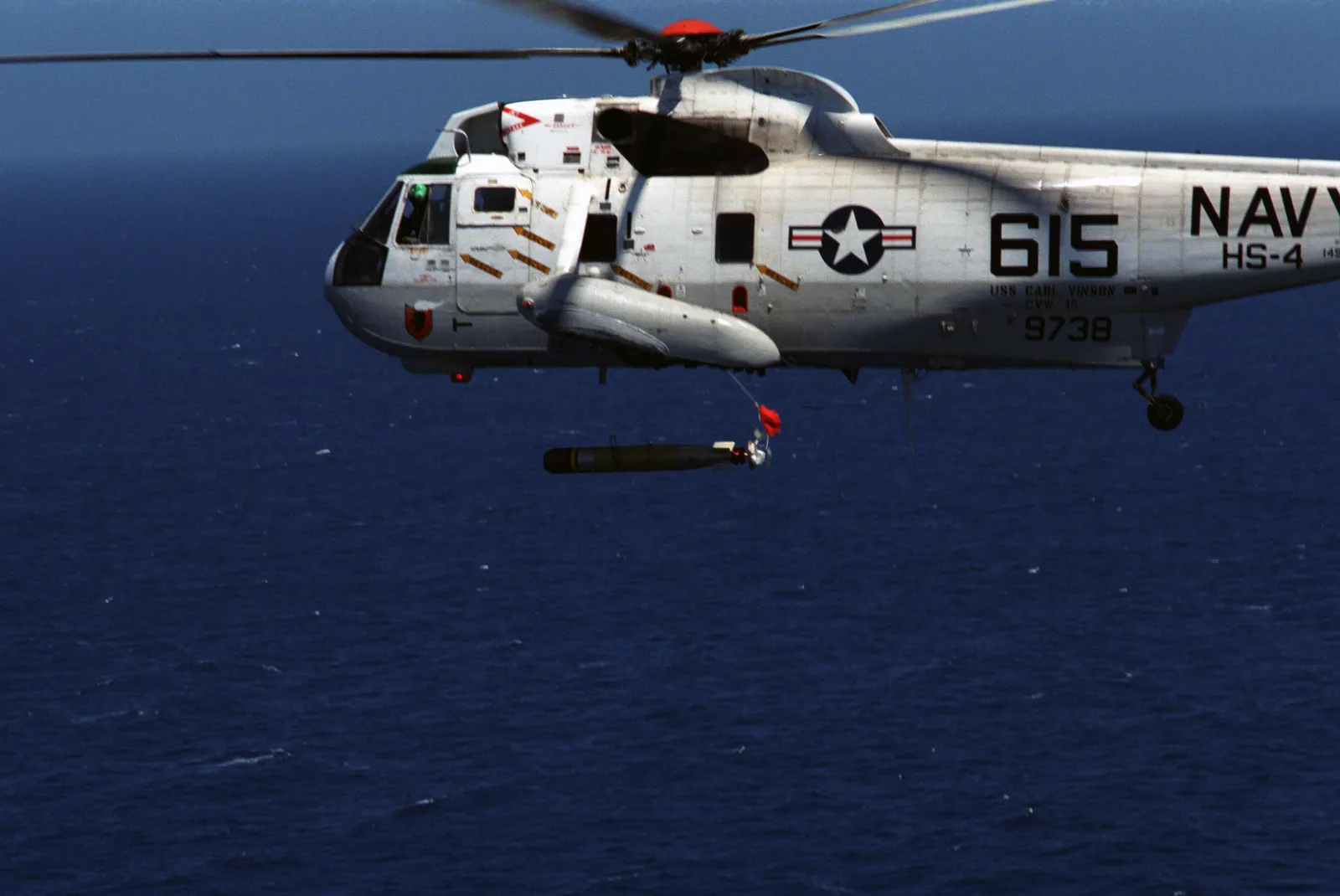
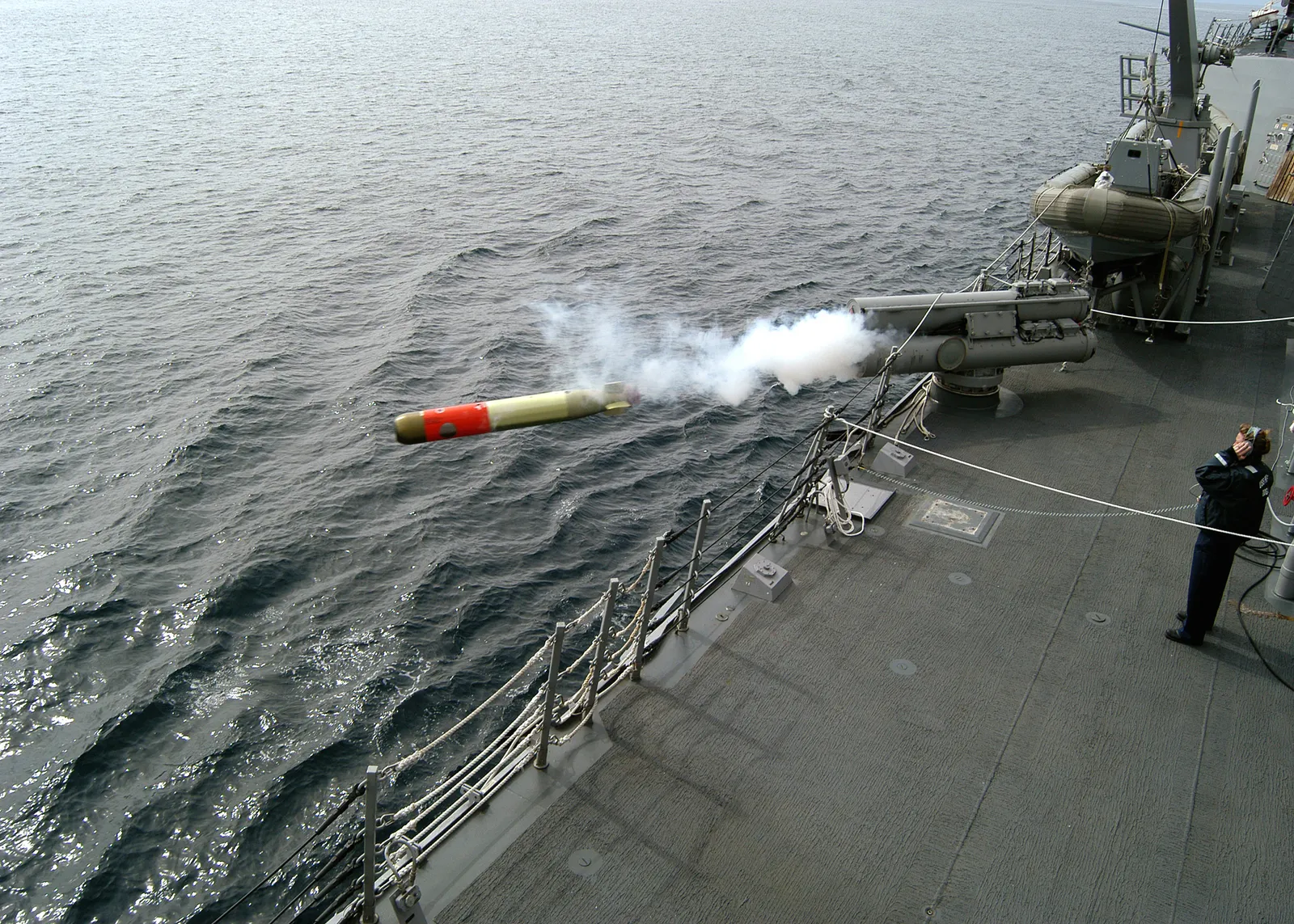
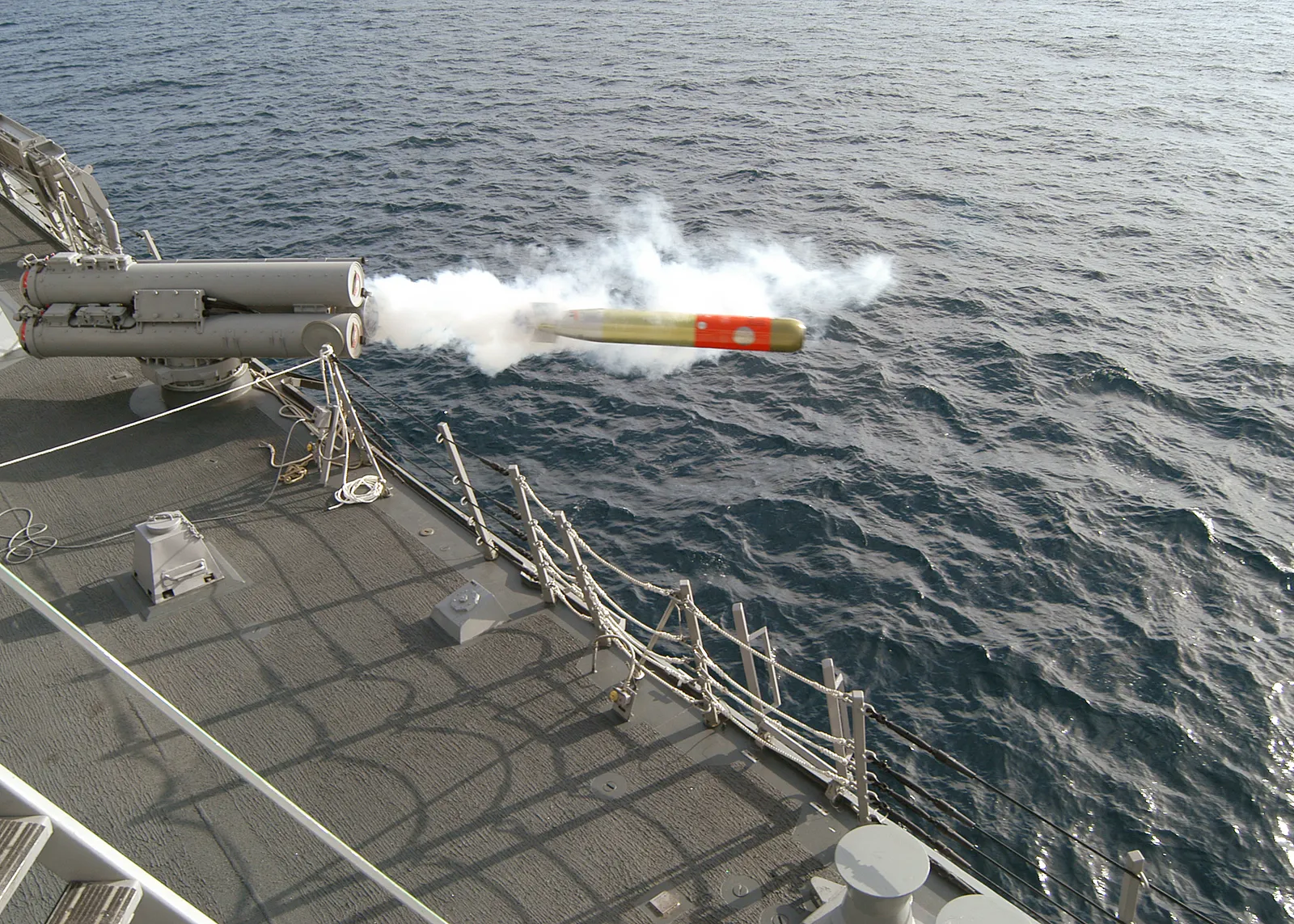
Official Navy, NAVAIR, and Bundeswehr sources identify the MK-46 on surface combatants and maritime aircraft, with shipboard tube launch and aircraft carriage both represented.
| Carrier | Carrier type | Carriage evidence |
|---|---|---|
 | LAMPS Mk III naval helicopter | NHHC identifies the SH-60B Seahawk as carrying Mk 46, Mk 50, or Mk 54 torpedoes among its armament. Sources: SH-60B Seahawk | NHHC |
 | Maritime patrol aircraft | NAVAIR lists Mk46/50/54 torpedoes in the P-3C Orion armament set for the aircraft's anti-submarine and anti-surface mission role. Sources: P-3C Orion | NAVAIR |
 | Anti-submarine and surface-warfare helicopter | A U.S. Navy HSM-37 release describes MH-60R anti-submarine prosecution using MK-46/54 torpedoes, placing the older MK-46 in the Seahawk mission lineage as the MK 54 superseded it. Sources: Helicopter Maritime Strike Squadron 37 Changes Command |
 | Anti-submarine frigate | Bundeswehr lists two torpedo tube sets for Mk46 lightweight torpedoes on the Brandenburg class. Sources: Fregatten der Brandenburg-Klasse |
 | Guided-missile destroyer | The DDG 51 fact file lists six MK-46 torpedoes from two triple tube mounts in the class armament summary. Sources: Destroyers (DDG 51) |
The Navy torpedo-development history lists 1960 as the MK-46 development date and credits Naval Ordnance Test Station Pasadena and Aerojet General with development.
Sources: A Brief History of U.S. Navy Torpedo Development - Part 2
The same history says MK-46 production began at Aerojet General in 1963, followed within two years by production at the Naval Ordnance Plant, Forest Park, and Minneapolis Honeywell.
Sources: A Brief History of U.S. Navy Torpedo Development - Part 2
The U.S. Navy fact file says the MK-46 was introduced in 1965 as a surface ship- and aircraft-launched anti-submarine torpedo.
Sources: MK 46 - Lightweight Torpedo
A 1978 U.S. Naval Institute survey said the MK-46 Mod 5 NEARTIP torpedo was scheduled to become operational during FY 1979.
Sources: Ships and Aircraft of the U.S. Fleet: Torpedoes
Escuela de Guerra Naval records a Royal Navy Lynx from HMS Brilliant launching one MK 46 torpedo at ARA Santa Fe during the South Georgia action; the torpedo did not hit.
Sources: Revista Naval No. 67 - Actuacion del Submarino ARA Santa Fe
The U.S. Navy says the MK 46 MOD 5A(SW) Service Life Extension Program torpedo was introduced in September 1996.
Sources: MK 46 - Lightweight Torpedo
The U.S. Navy says MK 54 MOD 0 reached Initial Operational Capability in 2004 after integrating MK 46 and MK 50 torpedo-program hardware and software with digital signal-processing technology.
Sources: MK 54 - Lightweight Torpedo