Munitions

MK 50 Honeywell torpedo

Also known as
  • MK-50 torpedo
  • Mark 50 torpedo
  • Mark 50 Advanced Lightweight Torpedo
  • MK-50 Advanced Lightweight Torpedo
  • ALWT
  • Ex-50
  • Barracuda torpedo
  • MK 50 Barracuda

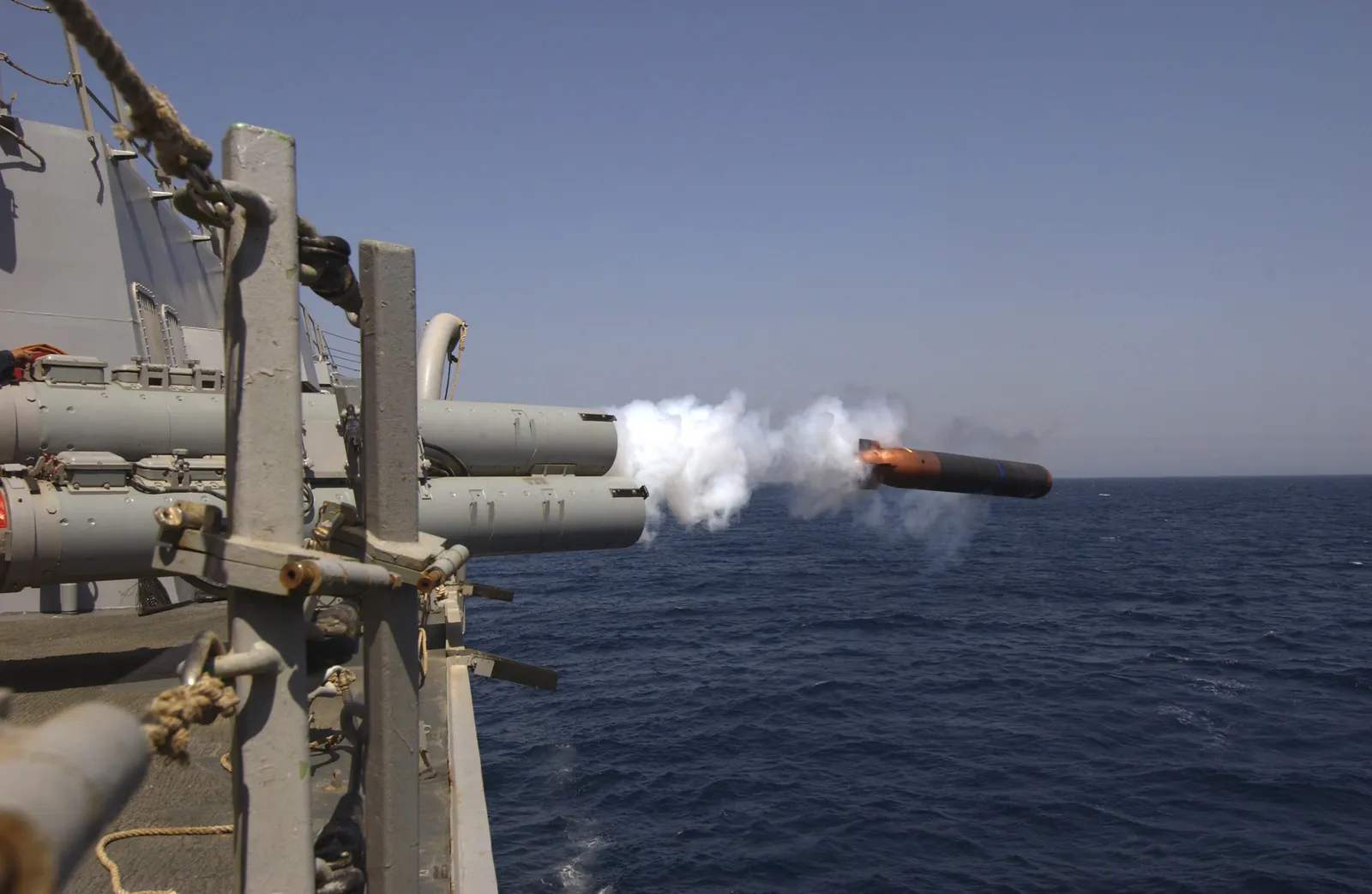
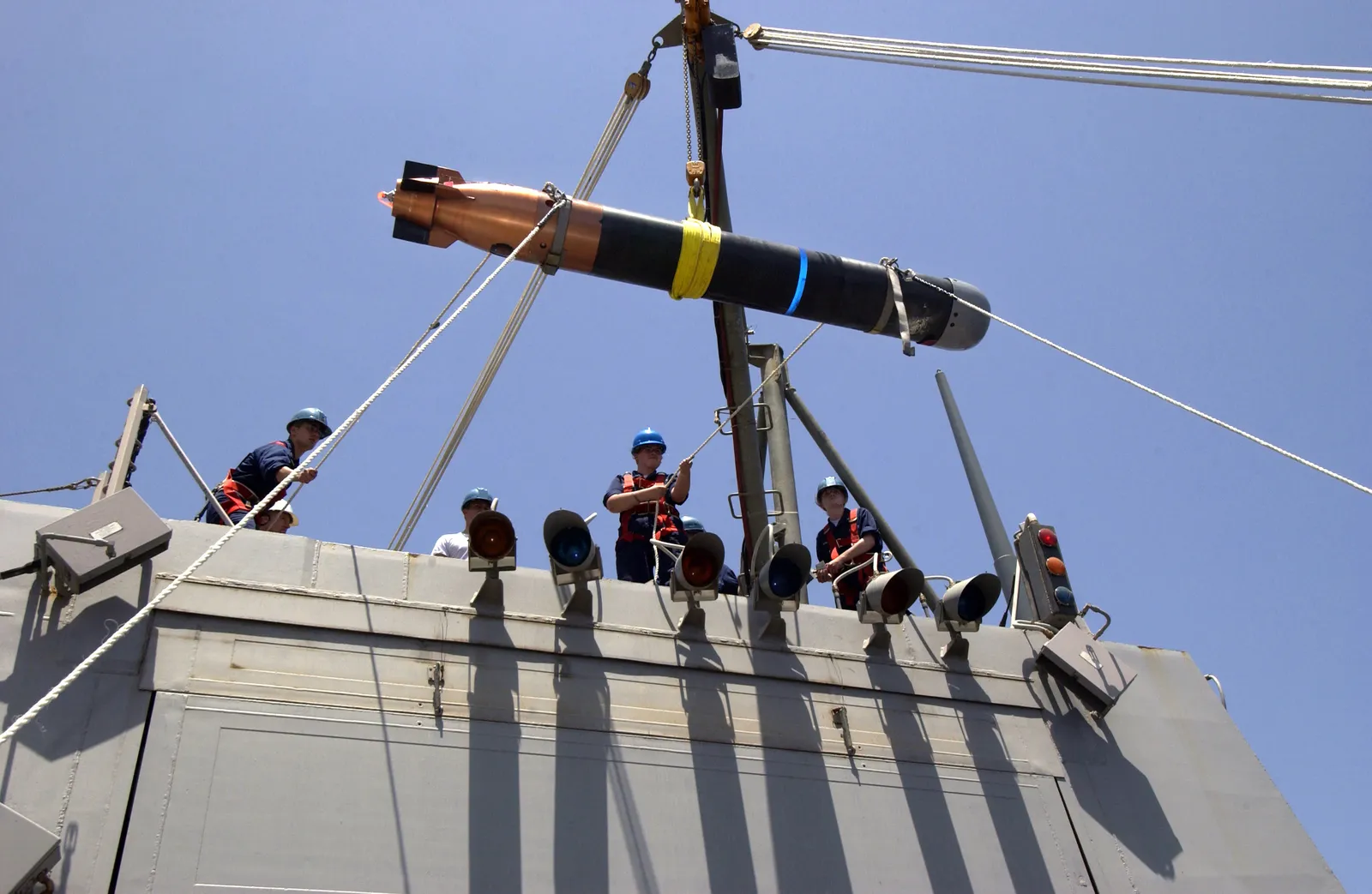
The MK 50 Honeywell torpedo is a U.S. Navy lightweight anti-submarine torpedo built around acoustic homing and stored chemical energy propulsion for attacks on fast, deep-diving submarines from aircraft and surface combatants.

Profile / Specs

Profile

Origin
United States
Built by
Honeywell
Type
Lightweight anti-submarine torpedo
Service note
1974-1996
Designer
Honeywell-Garrett
Designed
1974
Unit cost
$2.9 million average unit cost (TY$)
Produced
Limited production approved in 1989; U.S. production ended in 1996
Number built
1,073 torpedoes procured in low-rate initial production after quantity reductions
Developed from
MK 46 torpedo

Specifications

Length
112 inches
Diameter
12.75 inches
Weight
750 pounds
Speed
40+ knots
Depth
1,900+ ft
Guidance system
AKY-14 programmable digital computer with active sonar and passive acoustical homing
Warhead
Approximately 100 pounds high explosive shaped charge
Propulsion
Closed-cycle Stored Chemical Energy Propulsion System with pump jet
Major sections
Command and control, sonar, stored chemical energy propulsion, and warhead or exercise section
Launch platforms
ASW aircraft, surface combatant torpedo tubes, and rocket-delivered ASW payload concepts
Follow-on lineage
MK 54 integrates MK 46 and MK 50 program hardware and software lineage
Development And Acquisition

GAO reporting traces the MK 50 from a 1974 operational requirement through advanced development, full-scale development, and limited production. Honeywell led full-scale development, while the Navy planned competitive production using a leader/follower approach with Westinghouse.

The program was restructured after early operational testing identified performance problems, and later GAO acquisition reporting noted that all 1,073 torpedoes were procured in low-rate initial production after the total buy was reduced.

Sources: GAO Defense Acquisition Programs MK-50 Status; GAO MK-50 Propulsion System Procurement; GAO Weapons Acquisition MK-50 LRIP.
Propulsion And Guidance Architecture

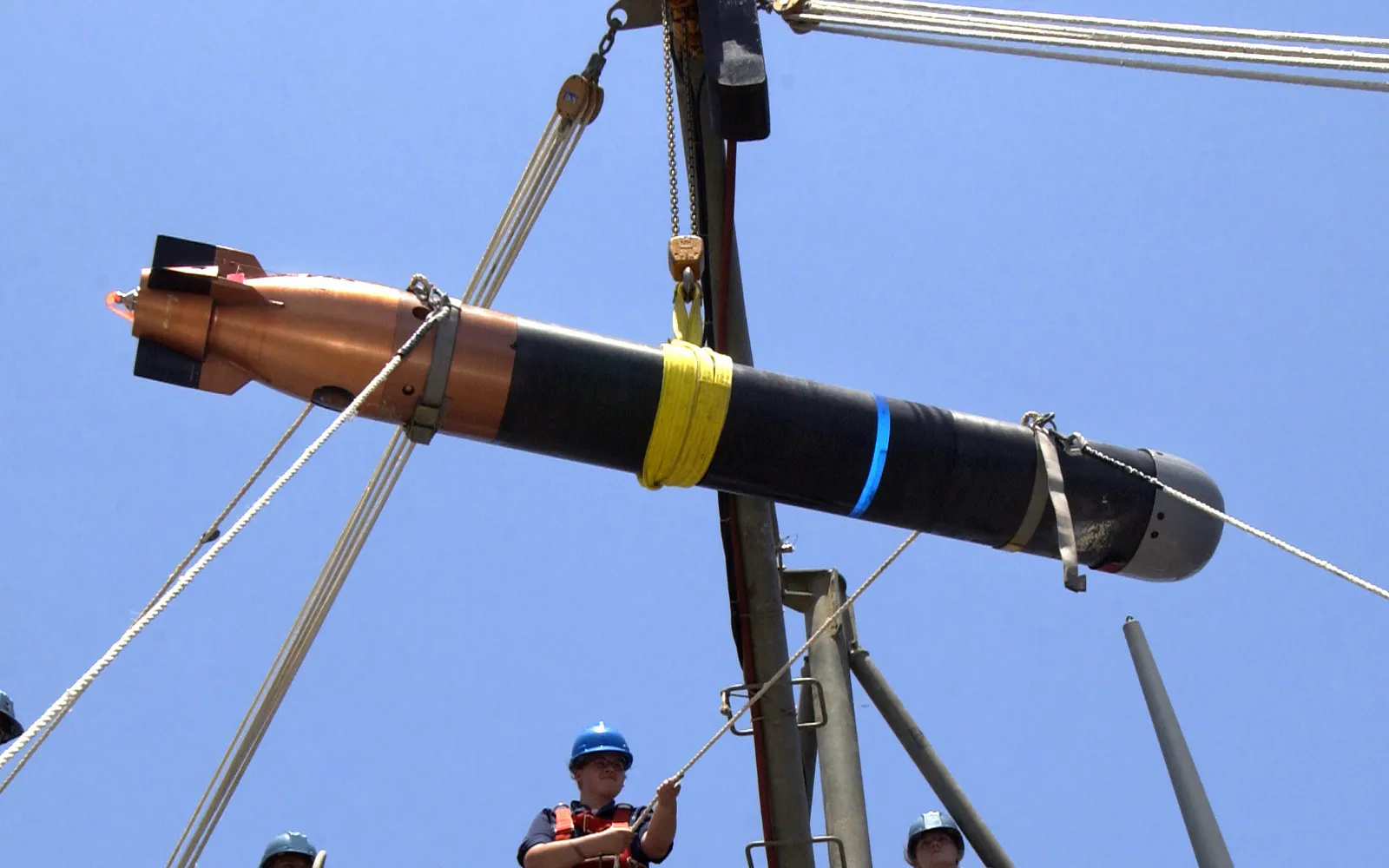
The MK 50 combined acoustic homing with a closed-cycle stored chemical energy propulsion system. GAO described major torpedo sections for command and control, sonar search and acquisition, propulsion, and either a warhead or recoverable exercise section.

Deep-water power path

Stored chemical energy propulsion drove the torpedo through a pump jet and avoided the same depth penalty associated with open-cycle exhaust.

Exercise recovery

The exercise section included recording instrumentation and buoyancy equipment for recovery after in-water training shots.

Sources: GAO Defense Acquisition Programs MK-50 Status; DARPA Torpedo Propulsion; MK-50 Advanced Lightweight Torpedo [ALWT].

Variants

Public sources treat Block Upgrade I as the main MK 50 software upgrade retained on the torpedo before later Block Upgrade II work fed the Lightweight Hybrid Torpedo / MK 54 path.

VariantConfigurationDesignation notes
Block Upgrade ISoftware upgrade

A 1992 software effort addressed OPEVAL deficiencies; FAS describes Block Upgrade I as the MK 50 upgrade while later Block Upgrade II algorithms were intended for the Lightweight Hybrid Torpedo.

Sources: MK-50 Advanced Lightweight Torpedo [ALWT]

Launch Aircraft

Public Navy platform pages identify MK 50 compatibility on maritime patrol and helicopter ASW aircraft.

CarrierCarrier typeCarriage evidence
P-3C Orion patrol aircraft, Maritime patrol aircraft, Aircraft & UAVsP-3C Orion patrol aircraftMaritime patrol aircraft

NAVAIR and the U.S. Navy fact file list Mk46/50/54 torpedoes among the P-3C Orion's carried anti-submarine weapons.

Sources: P-3C Orion - NAVAIR, U.S. Navy P-3C Orion Fact File

SH-60B Seahawk helicopter, LAMPS Mk III naval helicopter, Aircraft & UAVsSH-60B Seahawk helicopterLAMPS Mk III naval helicopter

Naval History and Heritage Command identifies Mk 50 torpedoes as one of the lightweight torpedo options carried by the SH-60B Seahawk.

Sources: SH-60B Seahawk - NHHC

Surface Launch Platforms

The MK 50 was designed as an air- and surface-launched lightweight anti-submarine torpedo.

LauncherLauncher typeLaunch evidence
Arleigh Burke-class guided-missile destroyer, Guided-missile destroyer, Naval SystemsArleigh Burke-class guided-missile destroyerGuided-missile destroyer

A U.S. Navy image record documents an MK-50 training torpedo launched from USS Bulkeley (DDG 84), and U.S. Sixth Fleet identifies Bulkeley as an Arleigh Burke-class guided-missile destroyer.

Sources: MK-50 torpedo launch from USS Bulkeley, USS Bulkeley returns to Rota

Freedom-class Littoral Combat Ship, Freedom-variant littoral combat ship, Naval SystemsFreedom-class Littoral Combat ShipFreedom-variant littoral combat ship

NAVSEA's USS Sioux City historical evaluation lists MK 50 Honeywell torpedoes in the Freedom-class ship's armament snapshot.

Sources: USS Sioux City Naval Historical Evaluation

Follow-On Lightweight Torpedo Lineage

The MK 50 was developed as the next-generation lightweight torpedo after the MK 46 torpedo, but later lightweight-torpedo modernization moved toward the MK 54 rather than a large MK 50 production run. U.S. Navy and DOT&E sources describe MK 54 as integrating hardware, software, sonar, and algorithm lineage from the MK 46, MK 50, and MK 48 programs with commercial digital processing.

Sources: MK-50 Advanced Lightweight Torpedo [ALWT]; U.S. Navy MK 54 Lightweight Torpedo Fact File; DOT&E FY2016 MK 54 Lightweight Torpedo.

Timeline

MK 50 Honeywell torpedo Key Events

  1. Operational requirement established

    The Navy established an operational requirement for an advanced lightweight acoustic-homing torpedo to counter the post-1985 Soviet submarine threat.

    Sources: GAO Defense Acquisition Programs MK-50 Status

  2. Advanced development approved

    DOD approved advanced development after the MK 50 concept-development phase.

    Sources: GAO Defense Acquisition Programs MK-50 Status

  3. Full-scale development approved

    DOD approved full-scale development, with Honeywell under a cost-plus-incentive-fee full-scale development contract.

    Sources: GAO Defense Acquisition Programs MK-50 Status

  4. Limited production approved

    Limited production was approved in March 1989 after a restructured test program and initial production decision.

    Sources: GAO Defense Acquisition Programs MK-50 Status

  5. Software upgrade path begins

    A software program began to address OPEVAL deficiencies, producing Block Upgrade I for MK 50 and pushing later algorithm work toward the Lightweight Hybrid Torpedo.

    Sources: MK-50 Advanced Lightweight Torpedo [ALWT]

  6. U.S. production ends

    Naval Submarine League history places the end of U.S. Navy MK 50 production in 1996 after a much smaller buy than early objectives.

    Sources: U.S. Navy Torpedoes - NSL Archive

Media
Related Weapon Systems
MK 54 lightweight torpedo, Lightweight anti-submarine torpedo, MunitionsMunitionsMK 54 lightweight torpedoLightweight anti-submarine torpedoThe MK 54 lightweight torpedo is a U.S. Navy anti-submarine torpedo carried by surface ships, MH-60R helicopters, P-8A maritime patrol aircraft, and VL-ASROC delivery rockets. Official Navy, RTX, NAVAIR, Boeing, and DOT&E sources describe a hybrid MK 46/MK 50 lineage, Mod 1 sonar and processing upgrades, the P-8A HAAWC air-launch accessory path, and a Mod 2 Advanced Lightweight Torpedo modernization still tracked publicly as a development program rather than a conflict-use record.
Upholder/Victoria-class submarine, Diesel-electric patrol submarine, Naval SystemsNaval SystemsUpholder/Victoria-class submarineDiesel-electric patrol submarineThe Upholder/Victoria class is a four-boat Type 2400 diesel-electric submarine line designed in the United Kingdom as the Royal Navy's late-Cold-War successor to the Oberon class. The Vickers Shipbuilding and Engineering design was ordered for HMS Upholder in 1983, followed by three Cammell Laird-built boats, but the Royal Navy withdrew the class in 1994 as it moved to an all-nuclear submarine force. Canada acquired the reserve boats in 1998, renamed them as the Victoria class, and rebuilt them around Canadian fire-control, communications, and Mk 48 heavyweight-torpedo requirements. Current Royal Canadian Navy and National Defence material frames the class as Canada's covert underwater-surveillance and deterrence force while Victoria Class Modernization keeps the boats in service into the mid-to-late 2030s.

Sources