Profile
- Origin
- Soviet Union
- Type
- 533 mm submarine torpedo
- Service note
- Cold War
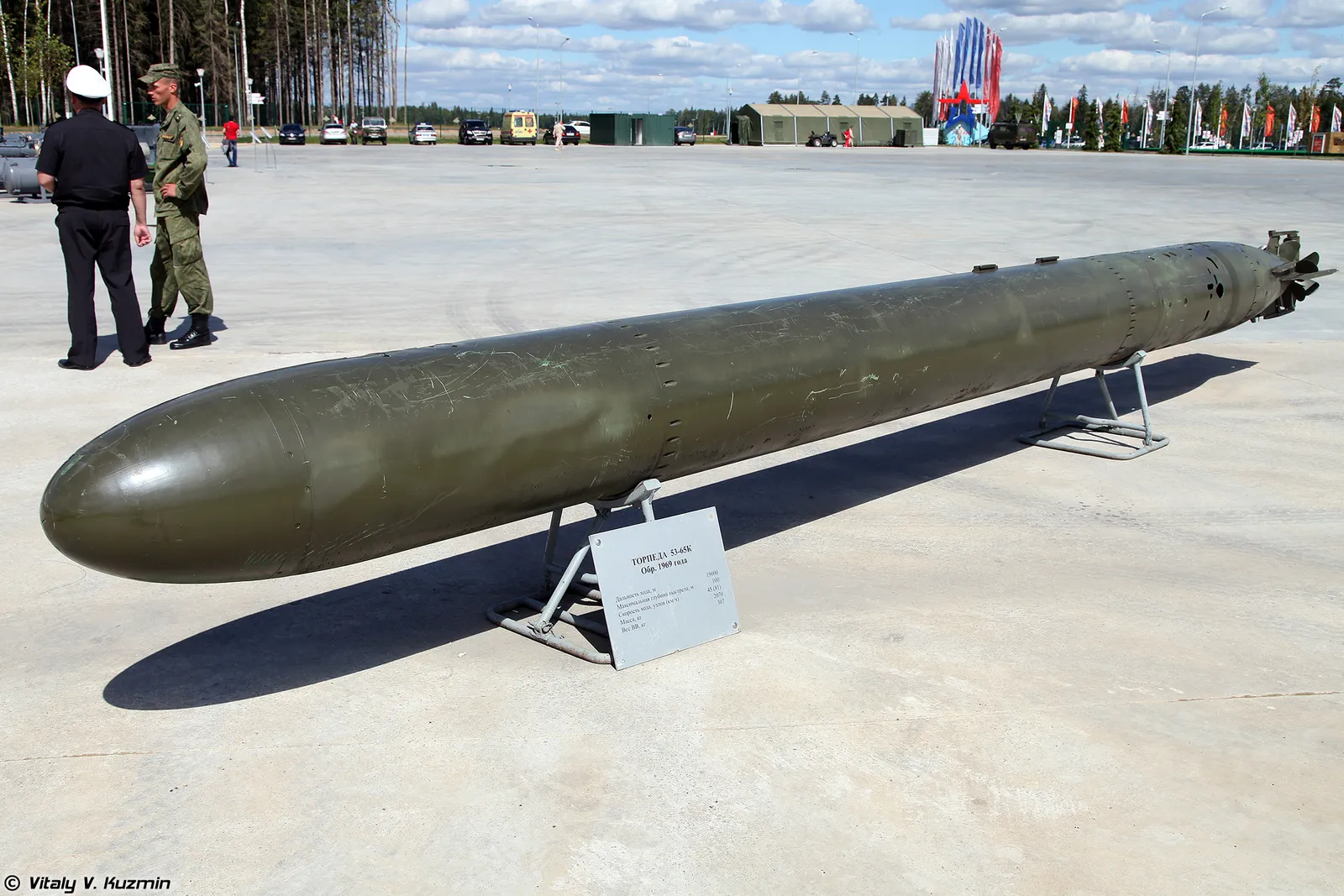
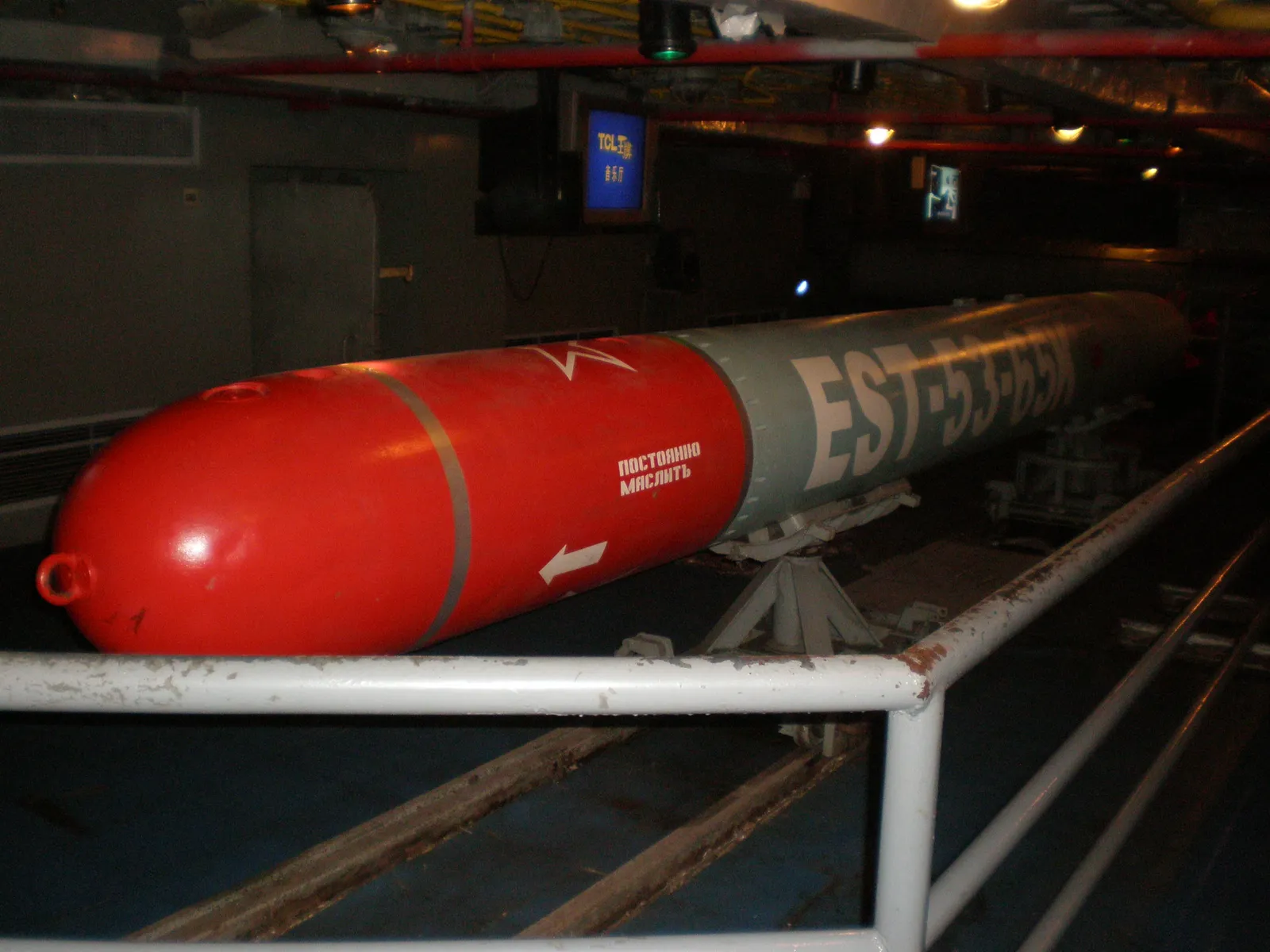
The 53-65M torpedo is a Soviet 533 mm heavyweight anti-ship torpedo in the Type 53-65 wake-homing family. Developed by NII-400 Morteplotekhnika as an improved hydrogen-peroxide-powered model, it paired active acoustic wake homing with a 307 kg high-explosive warhead and documented low-speed range of 22-24 km.
The 53-65M sits inside the Type 53-65 heavyweight wake-homing torpedo family, with fuel-system and target-input differences separating the main designations.
| Variant | Configuration | Designation notes |
|---|---|---|
| Type 53-65A | Project 705 target-input variant | Weaponsystems.net identifies the 53-65A, also known as SST-2 or Izdeliye 234, as a 53-65M derivative with automated target input for Project 705 Lira submarines. Sources: Type 53-65 - Weaponsystems.net |
 | Oxygen-fueled production variant | The 53-65K replaced the hydrogen-peroxide fuel system with kerosene-oxygen propulsion and became the more common production model. Sources: Type 53-65 - Weaponsystems.net |
The 53-65M appears in submarine torpedo fits; this section links cataloged platforms where the source identifies the torpedo by variant.
| Firing weapon | Weapon type | Firing evidence |
|---|---|---|
 | Ballistic missile submarine | The class source lists the 53-65M among the torpedoes carried in its four 533 mm tubes. |
The 53-65M was built around anti-surface wake homing rather than wire guidance. Once fired, the torpedo searched for the target's wake and ran independently, which made the launch submarine less dependent on maintaining a guidance link.
| Feature | Documented detail |
|---|---|
| Guidance | Active acoustic wake homing for surface-vessel targets. |
| Propulsion | Kerosene-hydrogen peroxide turbine, a high-performance but more difficult fuel system than the oxygen-fueled 53-65K. |
| Warhead | 307 kg high-explosive warhead with magnetic proximity fuzing. |
| Launch profile | Shallow running depths and launch depth up to 100 m for the 53-65M. |
The first Type 53-65 model entered service in 1965, before the M and K variants followed.
Sources: Type 53-65 - Weaponsystems.net, Post-World War II Torpedoes of Russia/USSR - NavWeaps
Weaponsystems.net and NavWeaps both list the 53-65M as entering service in 1969.
Sources: Type 53-65 - Weaponsystems.net, Post-World War II Torpedoes of Russia/USSR - NavWeaps