Artillery

100 mm KSM-65 coastal defense gun

Also known as
  • KSM-65
  • 100mm KSM-65
  • 100 mm KSM-65
  • КСМ-65

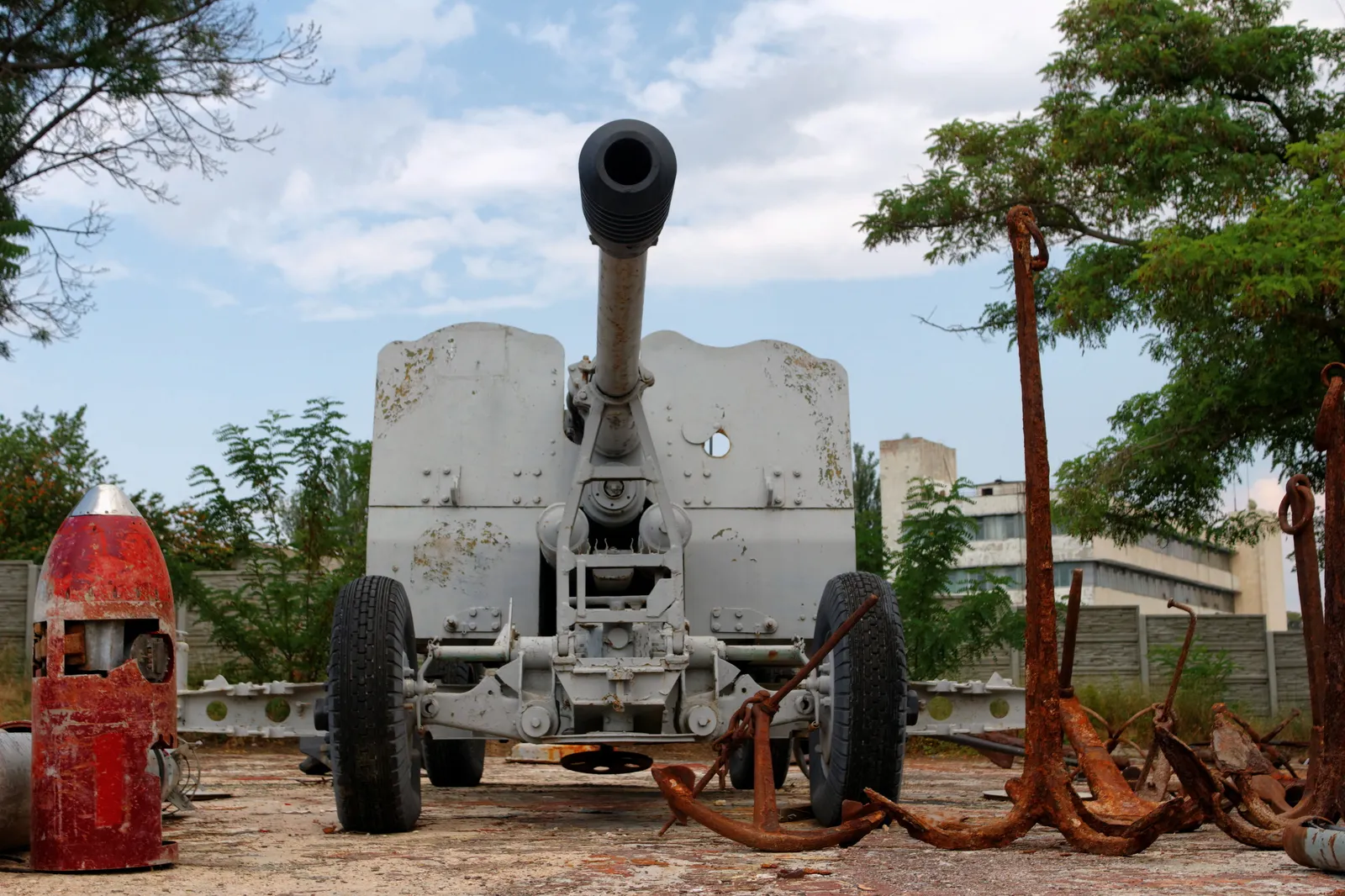
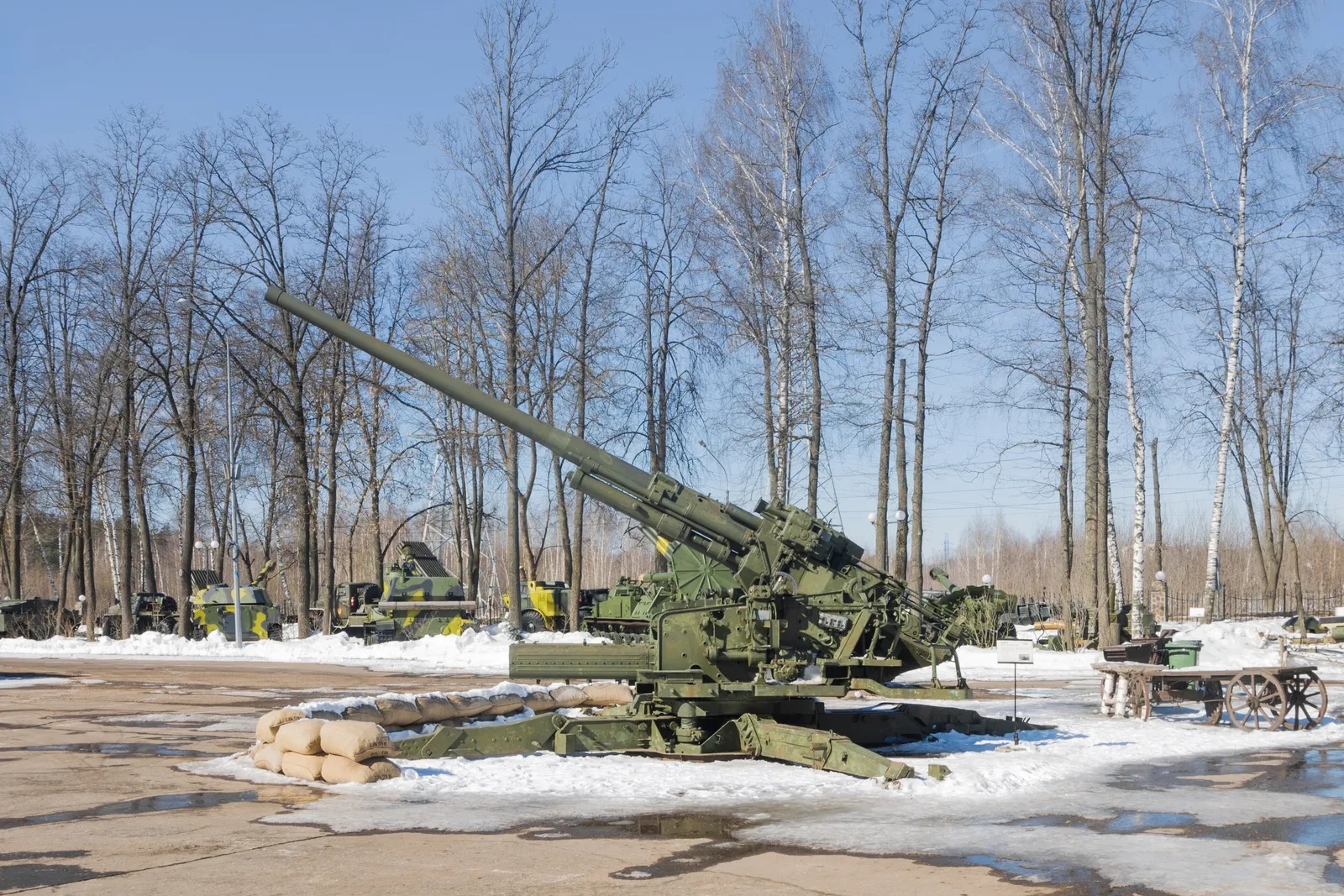
The KSM-65 was a Soviet 100 mm coastal-defense gun that adapted the KS-19 anti-aircraft gun family to a KMU-65 coastal platform, off-mount battery fire control, and high-rate fire against surface targets. Developed at Plant No. 8 under L. V. Lyulyev after the Soviet Navy moved away from the earlier S-65 project, it remained a small 116-gun Cold War system with documented Soviet inventory into the 1980s but no direct conflict-use sourcing strong enough for a normal conflict entry.

Profile / Specs

Profile

Origin
Soviet Union
Type
Towed 100 mm coastal-defense gun
Service note
Early Cold War Soviet coastal-artillery system developed in 1951 and accepted for Soviet naval service in July 1953
Designer
OKB-8 / Plant No. 8 under L. V. Lyulyev
Designed
1951 KSM-65 development from the KS-19 after the earlier S-65 coastal-gun project
Unit cost
300,000 rubles in 1950s pricing, as reported by WeaponSystems.net
Produced
1951-1956 serial production at Plant No. 8 in Sverdlovsk
Number built
116 guns
Developed from
ks-19-100mm-anti-aircraft-gun

Specifications

Caliber
100 mm
Crew
8 personnel
Combat weight
About 9.2-9.25 t
Gun
100 mm, 60.7-caliber ordnance with a multi-slotted muzzle brake; KCHF lists 56.1 calibers for barrel length
Elevation / traverse
-3 to +45 degrees elevation; 360 degrees traverse
Rate of fire
20 rounds per minute
Maximum surface range
About 22 km to 22.25 km with high-explosive ammunition
Anti-aircraft range
About 9.5 km; retained as a secondary capability with reduced elevation and no anti-aircraft radar integration
Muzzle velocity
250 to 900 m/s depending on ammunition type; high-explosive rounds around 895 m/s
Platform
KMU-65 four-wheel coastal-artillery platform with independent torsion suspension, eight spades/outriggers, and screw jacks for leveling
Fire control
External Moskva-2 fire-direction equipment and Zalp-B1 radar, with MVSh-M-1 direct-fire and 23M/PMA panoramic sighting on the gun
Battery control
WeaponSystems.net describes up to four guns under one fire-direction center
Emplacement time
10 to 15 minutes
Towing vehicle
ZiS-151 or comparable 6x6 truck / artillery tractor
Production total
116 guns
KS-19-Based Coastal Conversion

The KSM-65 relationship to the 100 mm KS-19 anti-aircraft gun is a parentage link rather than a carriage, launch, or firing relationship. Soviet planners first pursued a separate S-65 coastal gun, then moved to a KS-19-based design in 1951 so industry would not have to produce two unrelated 100 mm artillery systems.

Parent gun

The KSM-65 reused the KS-19 family as the basis for its 100 mm ordnance and ammunition.

Dedicated mount

The coastal version used the KMU-65 platform, which is part of this system rather than a separate cataloged weapon variant.

Coastal Fire-Control Layout

The KSM-65 was intended to work as a battery weapon rather than only as a stand-alone towed gun. The gun kept local direct and indirect sighting equipment, while the battery-level Moskva-2 direction center and Zalp-B1 radar supplied off-mount target and fall-of-shot data for coastal engagements.

Battery control

WeaponSystems.net describes one fire-direction center controlling up to four KSM-65 guns.

Coastal platform

The KMU-65 platform used spades/outriggers and screw jacks to stabilize and level the gun in firing position.

Role limit

The gun retained a secondary anti-aircraft capability, but the lower elevation arc and lack of anti-aircraft radar integration made the coastal anti-ship role its primary purpose.
Timeline

100 mm KSM-65 coastal defense gun Key Events

  1. S-65 coastal-gun work begins

    KCHF traces the original 100 mm S-65 coastal-gun effort to V. G. Grabin design work begun in 1944 before the Navy later chose a KS-19-based solution.

    Sources: KCHF KSM-65 Coastal Artillery

  2. KS-19-based KSM-65 ordered

    KCHF says Plant No. 8 began work on the 100 mm KSM-65 coastal gun from the KS-19 after a Main Artillery Directorate letter dated April 16, 1951.

    Sources: KCHF KSM-65 Coastal Artillery

  3. Prototype factory trials begin

    Plant No. 8 completed a four-gun experimental KSM-65 batch in September 1951; KCHF records one gun passing factory trials at Sverdlovsk from September 20 to 25.

    Sources: KCHF KSM-65 Coastal Artillery

  4. Accepted into Soviet naval service

    KCHF records the KSM-65 as accepted by Soviet Council of Ministers decree No. 1743-675 on July 11, 1953, followed by a Navy order on July 20.

    Sources: KCHF KSM-65 Coastal Artillery

  5. 116-gun production run completed

    KCHF and WeaponSystems.net both report a 116-gun production total, with KCHF placing serial production at Plant No. 8 in Sverdlovsk through 1956.

    Sources: KCHF KSM-65 Coastal Artillery, WeaponSystems.net KSM-65

  6. Reduced Soviet Navy inventory

    KCHF reports 49 KSM-65 installations in the Soviet Navy inventory at the start of 1984, including 21 in batteries and 28 in storage.

    Sources: KCHF KSM-65 Coastal Artillery

  7. Black Sea Fleet remnant

    KCHF states that one KSM-65 remained with the Black Sea Fleet by August 1997 and passed to the Russian side under the fleet division arrangements.

    Sources: KCHF KSM-65 Coastal Artillery

Media

100 mm KSM-65 coastal defense gun Images

Related Weapon Systems
100 mm KS-19 anti-aircraft gun, Towed 100 mm anti-aircraft gun, Air DefenseAir Defense100 mm KS-19 anti-aircraft gunTowed 100 mm anti-aircraft gunThe KS-19 is a Soviet 100 mm towed anti-aircraft gun designed for high-altitude, radar-directed air defense with fixed ammunition, a powered carriage, and PUAZO/SON-9 fire-control support. U.S. studies tied the gun to North Vietnam's heavy AAA network and Iraqi inventories retained it into the 1990 Gulf War, while later conflict records show legacy KS-19s displayed in Houthi air-defense equipment and repurposed as long-range ground-fire weapons in Nagorno-Karabakh and Ukraine.
130 mm SM-2-1, 130 mm/58 twin dual-purpose naval gun mount, Naval SystemsNaval Systems130 mm SM-2-1130 mm/58 twin dual-purpose naval gun mountThe 130 mm SM-2-1 was a Soviet twin 130 mm/58 naval gun mount developed by TsKB-34 for postwar destroyers and treated in open references as a stabilized dual-purpose weapon for surface and air targets. Serial production centered on Bolshevik Plant No. 232, with additional Starokramatorsk-built mounts, and the system armed Project 41 Neustrashimy and Project 56 Kotlin destroyers before informing China's Type 76 twin 130 mm mount. Checked open sources support service, platform, and production context but not a direct combat-use claim for a specific conflict.
Kh-69, Air-launched land-attack cruise missile, MunitionsMunitionsKh-69Air-launched land-attack cruise missileThe Kh-69 is a Russian subsonic air-launched land-attack cruise missile developed by Raduga within Tactical Missiles Corporation for precision strikes against fixed targets. Its compact square-section body and folding surfaces are tied to tactical-aircraft carriage, including Su-34, Su-35, and Su-57 launch contexts, while its guidance stack combines inertial, satellite, terrain-height, and electro-optical terminal inputs. The missile has been documented in Russian strikes during the 2014 Russia-Ukraine War, including the April 2024 destruction of the Trypilska thermal power plant.
100 mm Type 79 naval gun, Twin 100 mm shipboard dual-purpose gun mount, Naval SystemsNaval Systems100 mm Type 79 naval gunTwin 100 mm shipboard dual-purpose gun mountThe 100 mm Type 79 is a Chinese twin 100 mm dual-purpose naval gun mount used on late Cold War People's Liberation Army Navy surface combatants and export frigates. Open naval references describe 713th Research Institute development, Soviet B-34 ammunition lineage, radar-directed shipboard fire-control integration, and later Type 79A / H/PJ33A and H/PJ33B variants with more automated loading arrangements on Chinese frigate and destroyer classes.

Sources