Air Defense

61-K 37 mm anti-aircraft gun

Also known as
  • M1939
  • 61-K
  • 37 mm AA gun M1939
  • AZP-39
  • 52-P-167

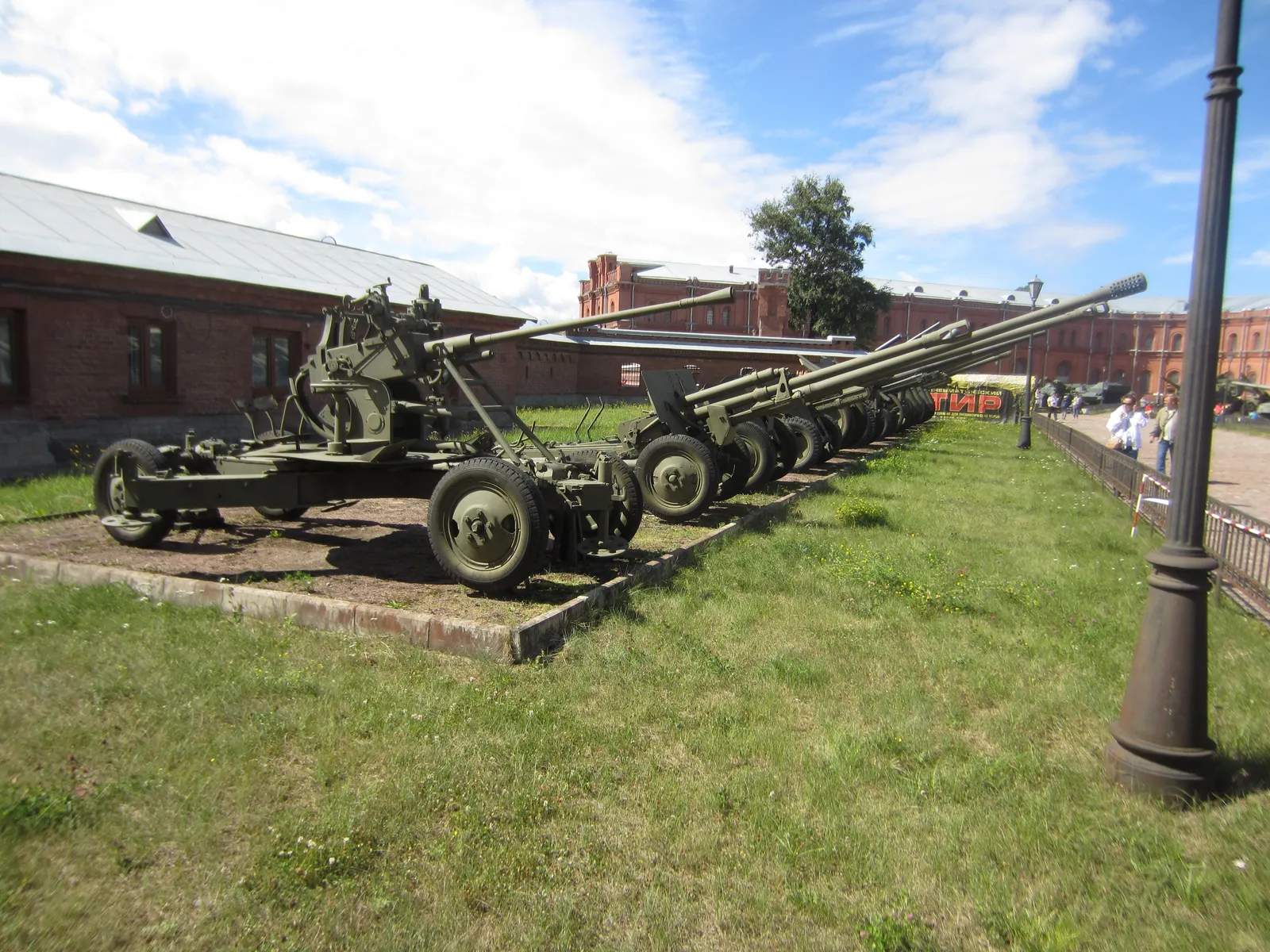
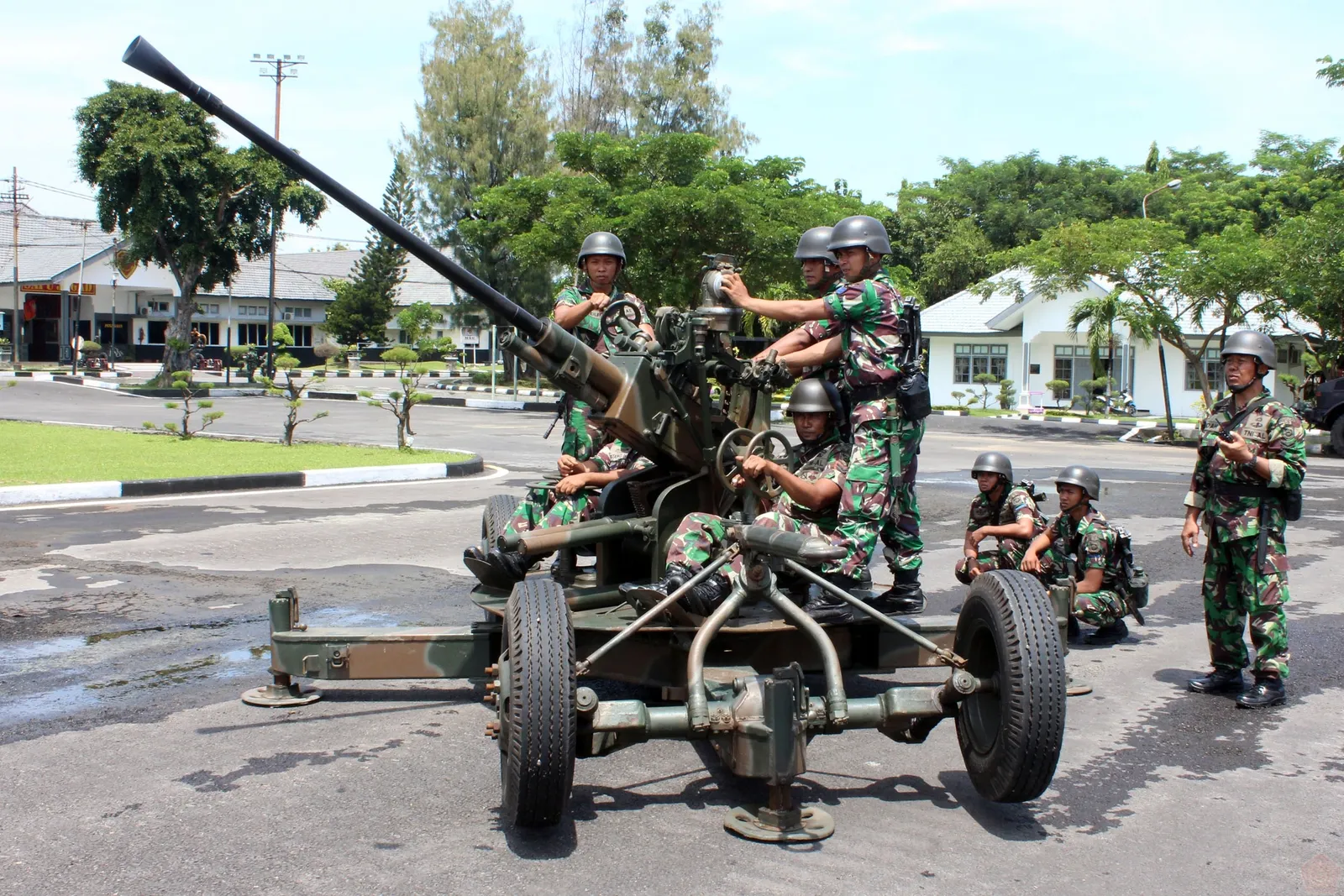
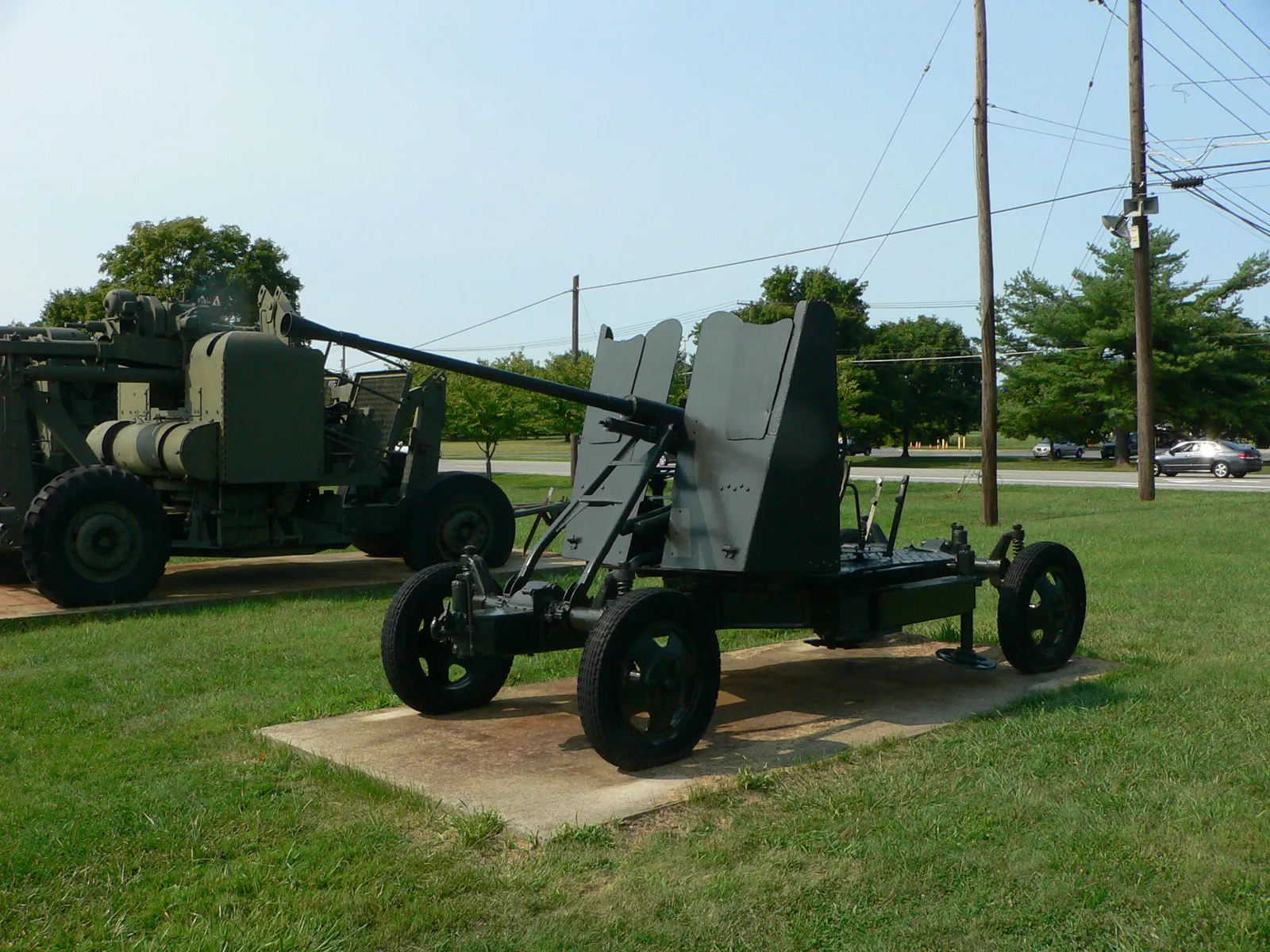
The 61-K is the Soviet 37 mm automatic anti-aircraft gun developed from the late-1930s 49-K lineage and fielded as a mobile, clip-fed short-range air-defense weapon. It became one of the Red Army's standard light anti-aircraft guns, saw documented Soviet use around Moscow in 1941, was widely copied abroad, and remained visible in legacy arsenals such as Yemen's inherited air-defense inventory.

Role in Conflicts

Side
Soviet forces

A Russian specialist restoration history of the AZP-39/61-K states that 37 mm 61-K guns were assigned to anti-tank regiments from July 1941 and that anti-aircraft guns used in direct fire played a major anti-tank-defense role during the Battle of Moscow.

Yemen's pre-2015 anti-aircraft artillery inventory included 37 mm 61-K guns alongside 57 mm S-60/AZP-57 pieces; reporting on Houthi-controlled air-defense forces describes small-caliber anti-aircraft guns being fired mainly against personnel and equipment, while still posing a short-range threat to aircraft and drones.

Role details
Profile / Specs

Profile

Origin
Soviet Union
Built by
Plant No. 8
Type
Towed 37 mm automatic anti-aircraft gun
Service note
Designed in the late 1930s; legacy stocks remained in service in Yemen by 2015
Designer
Mikhail Loginov, I. A. Lyamin, and L. V. Lyulyev at Plant No. 8
Designed
1938-1939
Unit cost
Not publicly available
Produced
1939-1945 in Soviet wartime production, with postwar foreign copies in China, Poland, and North Korea
Number built
About 20,000 Soviet-produced guns, with additional foreign production

Specifications

Caliber
37x252 mmSR
Crew
8
Weight
About 2,100 kg in firing position
Rate of fire
About 160-170 rounds per minute cyclic; practical rate lower
Muzzle velocity
About 880 m/s
Effective ceiling
About 3,000-4,000 m against aircraft, depending on source and engagement conditions
Traverse
360 degrees
Elevation
-5 to +85 degrees
Feed
Manually fed five-round metal clips
Variants

61-K is the Soviet factory/index designation for the 37 mm automatic anti-aircraft gun accepted as the 1939 model; later rows distinguish the land gun from close copies, naval mounts, and self-propelled installations using the same gun lineage.

VariantConfigurationDesignation notes
37 mm automatic anti-aircraft gun M1939 (61-K)Single-barrel towed land gun

Plant No. 8 developed the 37 mm weapon from the 49-K lineage in 1938, and it was adopted in 1939 as the 37 mm automatic anti-aircraft gun 61-K model 1939.

Sources: M1939 / Type 55 37mm Automatic Antiaircraft Gun

Type 55Chinese single-barrel copy

ODIN identifies the Type 55 as the Chinese version of the Russian M1939 (61-K) 37 mm towed anti-aircraft gun.

Sources: Type 55 Chinese 37mm Towed Anti-Aircraft Gun - ODIN

70-KNavalized single 37 mm mount

NavWeaps describes the 70-K as a navalized 61-K accepted into Soviet Navy service in 1940 and produced through 1955.

Sources: Russia / USSR 37 mm/67 (1.5") 70-K - NavWeaps

ZSU-37Tracked self-propelled installation

The ZSU-37 mounted a single 37 mm 61-K gun in an open-roof turret on an SU-76M-derived tracked chassis.

Sources: ZSU-37 - WeaponSystems.net

Ammunition Fired

The 61-K family is documented as firing 37x252SR shells, including the OR-167N projectile family identified by CAT-UXO.

AmmunitionAmmunition typeFiring evidence
37 mm OR-167N (M1939) projectile, 37 mm fragmentation projectile with tracer and self-destruct, Munitions37 mm OR-167N (M1939) projectile37x252mm HEI-T projectile

The 61-K source says the cannon fires 37x252SR shells, and CAT-UXO identifies the OR-167N as a 37x252 mmSR projectile in the M1939 family.

Sources: 37 mm Automatic Air Defense Gun M1939 (61-K), 37mm or 167n m1939 projectile - CAT-UXO

37mm OR-167 (M1939) projectile, 37x252mmSR FRAG-T projectile, Munitions37mm OR-167 (M1939) projectile37x252mm HEI-T projectile

The 61-K source says the cannon fires 37x252SR shells, and CAT-UXO identifies the OR-167 as a 37x252mm projectile in the M1939 family.

Sources: 37 mm Automatic Air Defense Gun M1939 (61-K), 37mm or 167 m1939 projectile - CAT-UXO

37mm BR-167 (M1939) projectile, 37x252mmSR AP-T solid-shot projectile, Munitions37mm BR-167 (M1939) projectile37x252mm AP-T projectile

The 61-K ammunition table lists BR-167 alongside OR-167 and OR-167N, while CAT-UXO identifies BR-167 as a 37 mm M1939 projectile and JMU ordnance-guide material ties the UBR-167 cartridge to the M1939 gun.

Sources: 37 mm Automatic Air Defense Gun M1939 (61-K), 37mm BR-167 (M1939) projectile - CAT-UXO, Projectile Identification Guide

Timeline

61-K 37 mm anti-aircraft gun Key Events

  1. Bofors evaluation

    Soviet evaluation of Bofors 25 mm guns helped lead to the 49-K development path.

    Sources: M1939 / Type 55 37mm Automatic Antiaircraft Gun, Russia / USSR 37 mm/67 (1.5") 70-K - NavWeaps

  2. 37 mm development order

    Factory No. 8 was ordered to develop a 37 mm weapon based on the 49-K design lineage.

    Sources: M1939 / Type 55 37mm Automatic Antiaircraft Gun, Russia / USSR 37 mm/67 (1.5") 70-K - NavWeaps

  3. Firing trials

    Firing trials of the new 61-K were conducted.

    Sources: M1939 / Type 55 37mm Automatic Antiaircraft Gun

  4. Service entry

    The 61-K entered service and Soviet production began.

    Sources: M1939 / Type 55 37mm Automatic Antiaircraft Gun, 37 mm Automatic Air Defense Gun M1939 (61-K)

  5. 70-K naval service

    The navalized 70-K version was accepted into Soviet Navy service, later becoming a major Soviet automatic naval anti-aircraft mount during World War II.

    Sources: Russia / USSR 37 mm/67 (1.5") 70-K - NavWeaps

  6. Tracked ZSU-37 installation

    The SU-76M-based ZSU-37 carried a single 37 mm 61-K gun, but entered service after World War II combat use had effectively passed.

    Sources: ZSU-37 - WeaponSystems.net

Designation And Derivative Lineage

The 61-K designation anchors a wider 37 mm family: a towed Red Army gun, foreign copies, naval mounts, and a tracked self-propelled installation. The relationships below are lineage and installation context, not separate catalog links.

DesignationRelationshipService context
61-K / M1939Baseline land gunDeveloped from the 49-K path at Plant No. 8 and adopted in 1939 as the Red Army's 37 mm automatic anti-aircraft gun.
Type 55Chinese copyODIN identifies the Type 55 as the Chinese version of the Russian M1939/61-K towed 37 mm anti-aircraft gun.
70-KNavalized mountNavWeaps describes the 70-K as a navalized 61-K accepted in 1940, with production continuing until 1955.
ZSU-37Self-propelled installationThe ZSU-37 used a single 61-K gun in an open-roof turret on an SU-76M-derived tracked chassis, giving the weapon family a late-war mobile anti-aircraft branch.
Media
Related Weapon Systems
100 mm KS-19 anti-aircraft gun, Towed 100 mm anti-aircraft gun, Air DefenseAir Defense100 mm KS-19 anti-aircraft gunTowed 100 mm anti-aircraft gunThe KS-19 is a Soviet 100 mm towed anti-aircraft gun designed for high-altitude, radar-directed air defense with fixed ammunition, a powered carriage, and PUAZO/SON-9 fire-control support. U.S. studies tied the gun to North Vietnam's heavy AAA network and Iraqi inventories retained it into the 1990 Gulf War, while later conflict records show legacy KS-19s displayed in Houthi air-defense equipment and repurposed as long-range ground-fire weapons in Nagorno-Karabakh and Ukraine.
FN Minimi light machine gun, 5.56x45mm NATO light machine gun, Infantry WeaponsInfantry WeaponsFN Minimi light machine gun5.56x45mm NATO light machine gunThe FN Minimi is a Belgian belt-fed light machine gun developed by Fabrique Nationale for squad automatic fire, with 5.56 mm NATO models widely fielded as national variants such as the U.S. M249, Canadian C9, and Australian F89. In the 2014 Yemen Civil War, Amnesty International reported Belgian Minimis deployed by The Giants Brigades, tying the weapon to UAE-backed coalition-aligned ground forces around the Hodeidah offensive.
9K31 Strela-1, Vehicle-mounted short-range surface-to-air missile system, Air DefenseAir Defense9K31 Strela-1Vehicle-mounted short-range surface-to-air missile systemThe 9K31 Strela-1, NATO reporting name SA-9 Gaskin, is a Soviet BRDM-2-based short-range surface-to-air missile system armed with four ready-to-fire 9M31 or 9M31M missiles. Developed as a regimental low-altitude air-defense vehicle for motor-rifle and tank units, it combined an amphibious armored chassis with optical/infrared missile engagement at short ranges. Open sources document it in several conflict inventories, including Polisario systems supplied by Libya, Iraqi Gulf War air defenses, Chechen inherited stocks, and Houthi-aligned holdings in Yemen; those rows indicate fielding or possession, not necessarily a sourced launch or shootdown.

Sources