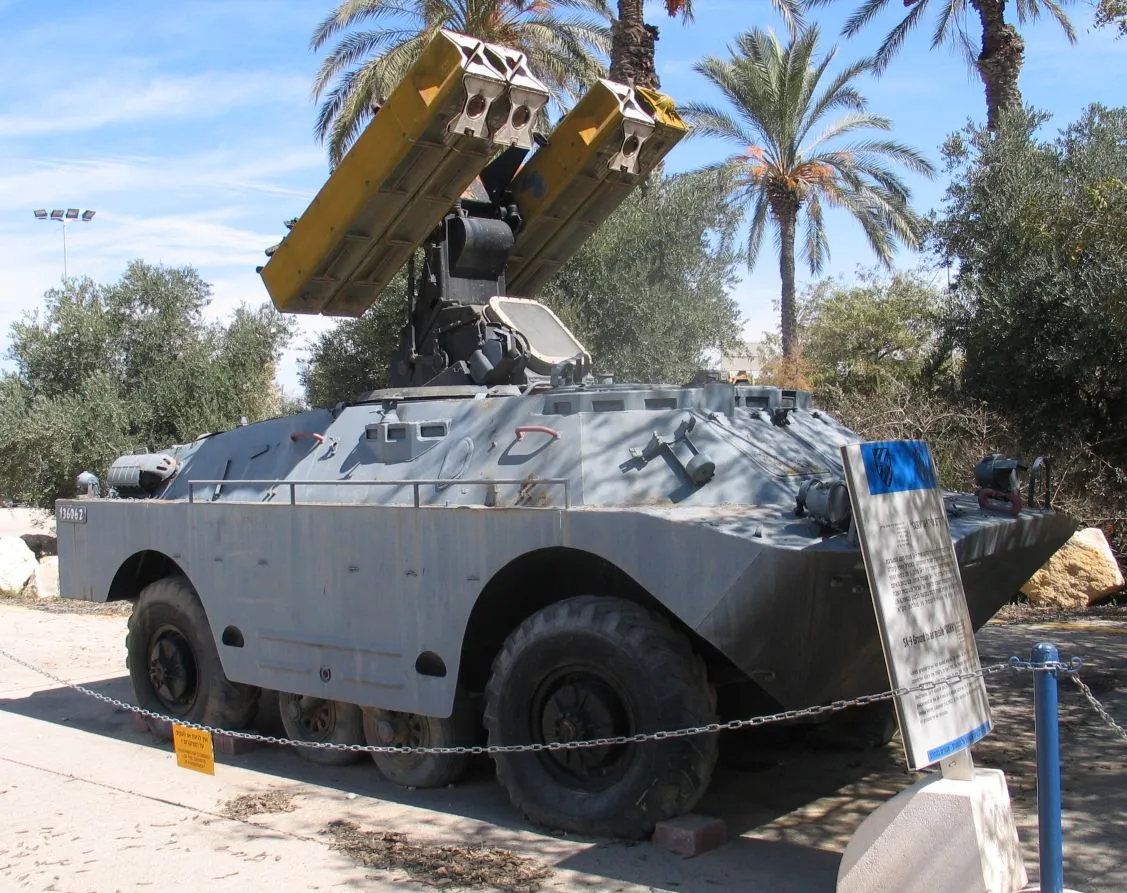
A documented Polisario/SPLA air-defense inventory lists roughly three 9K31 Strela-1 / SA-9 systems received from Libya in the early 1980s, supporting a supplied-and-held conflict-use row without claiming a specific launch or shootdown.
Air Defense
9K31 Strela-1
Also known as
- SA-9 Gaskin
- 9P31 Strela-1
- Strela-1
- Strela-1M
- 9K31M Strela-1M
The 9K31 Strela-1, NATO reporting name SA-9 Gaskin, is a Soviet BRDM-2-based short-range surface-to-air missile system armed with four ready-to-fire 9M31 or 9M31M missiles. Developed as a regimental low-altitude air-defense vehicle for motor-rifle and tank units, it combined an amphibious armored chassis with optical/infrared missile engagement at short ranges. Open sources document it in several conflict inventories, including Polisario systems supplied by Libya, Iraqi Gulf War air defenses, Chechen inherited stocks, and Houthi-aligned holdings in Yemen; those rows indicate fielding or possession, not necessarily a sourced launch or shootdown.
Role in Conflicts
- Side
- Iraq

CSIS reporting on Iraqi air defenses cites U.S. Department of Defense post-war estimates crediting Iraq with SA-9 systems and missiles at the outset of the Gulf War, supporting Iraqi fielding as part of the land-based air-defense network.
Role detailsOryx's First Chechen War equipment reconstruction says Chechen forces initially relied on conventional forces equipped with 9K31 Strela-1 systems inherited from Soviet troops stationed in Chechnya, supporting possession and fielding context rather than a documented firing.

Documented in a Houthi missile and air-defense inventory as Strela-1 systems inherited from pre-war Yemeni Army stocks, giving Houthi-aligned forces a short-range vehicle-mounted SAM capability during the 2014 Yemen Civil War.
Role detailsProfile / Specs
Profile
- Origin
- Soviet Union
- Type
- Vehicle-mounted short-range surface-to-air missile system
- Service note
- Cold War design; limited continued service in modern conflicts
- Designer
- Nudelman OKB-16 design bureau
- Designed
- 1960-1968
- Produced
- 1968 onward
Specifications
- Crew
- 3
- Armament
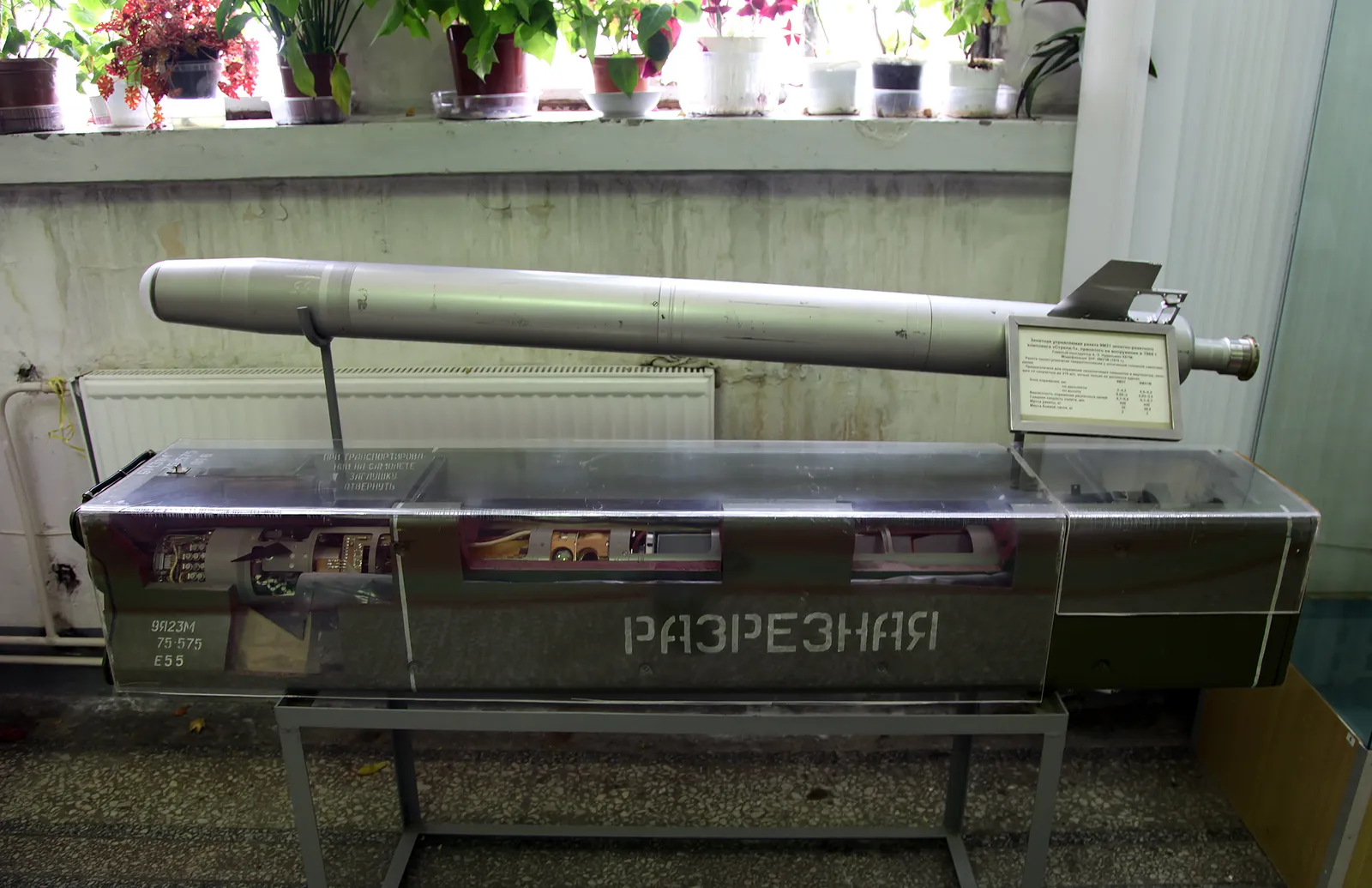
- Four ready-to-fire 9M31 or 9M31M infrared-guided surface-to-air missiles
- Chassis
- BRDM-2 4x4 amphibious armored vehicle
- Engagement range
- About 4.2 km effective range for 9M31 according to common reference data
- Engagement altitude
- Up to about 3 km
- Weight
- About 7.0 metric tons combat loaded
- Mobility
- Up to 100 km/h on road and amphibious water operation
- Protection
- Light steel armor against small-arms fire and shell splinters
Design And Employment Notes
The Strela-1 began as part of a lightweight air-defense requirement but matured into a BRDM-2-based regimental system. That shift matters because the vehicle could carry four ready missiles, move with motorized rifle and tank units, and accept a heavier missile than a shoulder-fired design.
Launcher identity
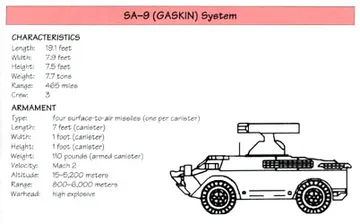
9P31 combat vehicle in the 9K31 Strela-1 system, known to NATO as SA-9 Gaskin.
Tactical role
Short-range, low-altitude cover for maneuver units rather than area air defense.
Ready load
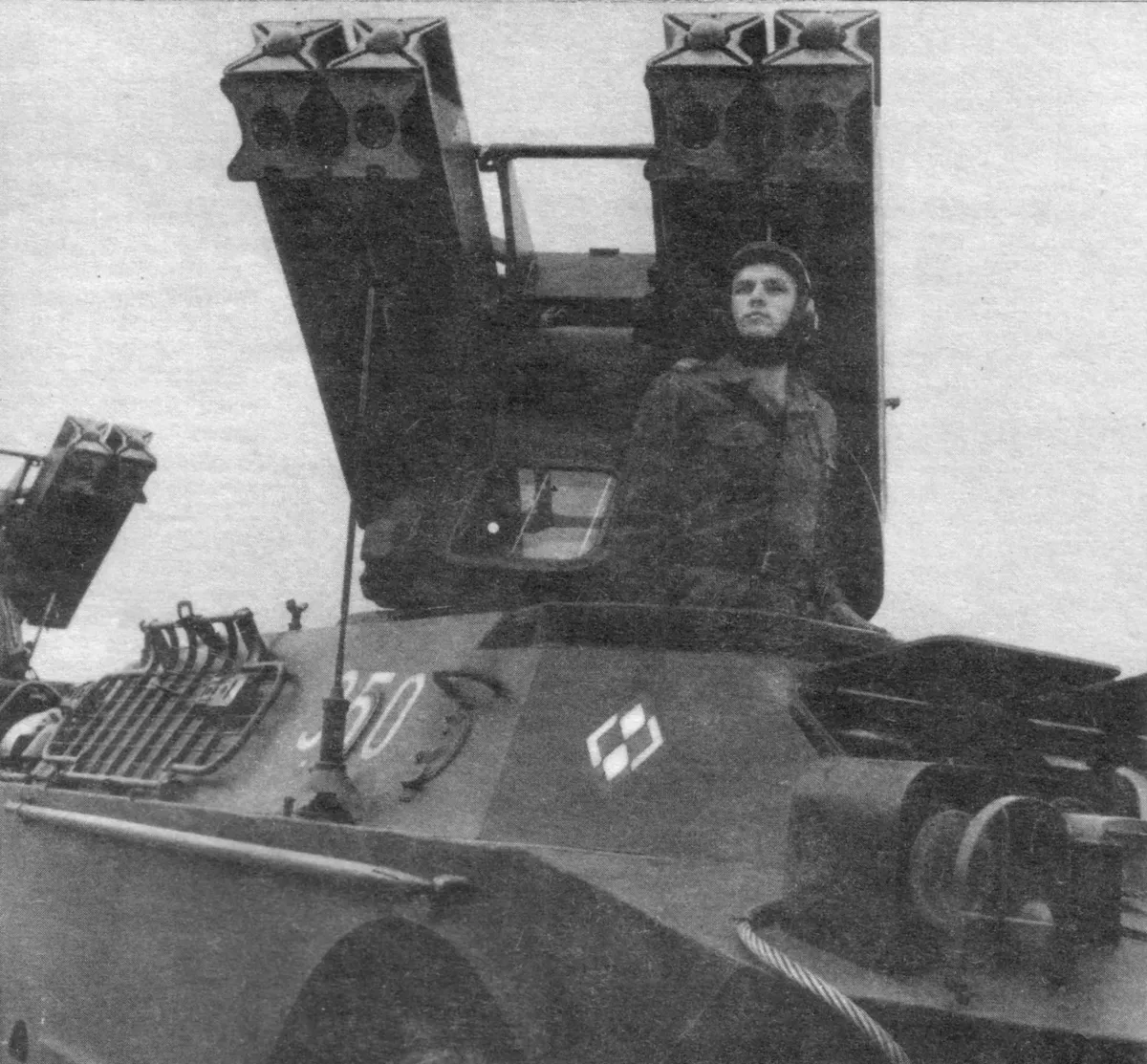
Four 9M31 or 9M31M missiles carried in launch containers on the turret.
Sources: Missilery.info Arrow-1; ODIN 9K31 Strela-1; National Defence University of Ukraine Strela-1.
Variants
The launcher family is normally discussed as the baseline 9K31 Strela-1 / 9P31 vehicle and the improved Strela-1M standard, with Romanian TABC-79/CA-95 vehicles using the Strela-1 missile family on a local chassis.
| Variant | Configuration | Designation notes |
|---|---|---|
| 9K31M Strela-1M | Improved launcher and missile family standard | The improved Strela-1M/9M31M family followed the baseline 9K31 after trials recommendations, with references distinguishing it as the improved SA-9B/Gaskin-Mod1 missile standard. Sources: Missilery.info Arrow-1, Strela-1M |
| TABC-79 / CA-95 | Romanian local-chassis variant | Army Recognition identifies TABC-79 as the Romanian version, while operator references commonly describe the Romanian CA-95 as a locally produced Strela-1-family vehicle. Sources: SA-9 Gaskin 9K31 Strela-1, Weaponsystems.net 9K31 Strela-1 |
Carried Munitions
The Strela-1 launcher family carried both the original 9M31 and the improved 9M31M missile.
| Carried item | Item type | Carriage evidence |
|---|---|---|
 | Infrared-guided surface-to-air missile | The turret is documented with four ready-to-fire 9M31 missiles. Sources: Weaponsystems.net 9K31 Strela-1 |
| Infrared-guided surface-to-air missile | Reference sources identify the 9M31M as the improved Strela-1M missile variant associated with the launcher family. Sources: Strela-1M |
Timeline
9K31 Strela-1 Key Events
Strela-1 development authorized
Soviet development began under an August 1960 decree that initially sought a lightweight portable air-defense complex before the requirement shifted toward a self-propelled regimental system.
Sources: Missilery.info Arrow-1
9K31 accepted into service
Reference and museum sources identify 1968 as the service-adoption year for the Strela-1 / 9P31 vehicle-mounted air-defense system.
Sources: Missilery.info Arrow-1, National Defence University of Ukraine Strela-1, SA-9 Gaskin 9K31 Strela-1
Improved Strela-1M family follows
The Strela-1M improvement package followed the original system after trials recommendations, with open references distinguishing the improved 9M31M missile from the baseline 9M31 round.
Sources: Missilery.info Arrow-1, Strela-1M
Yemeni inherited-stock context
Open-source Houthi missile and air-defense inventories list Strela-1 systems among weapons inherited from pre-war Yemeni Army stocks during the conflict that began in 2014.
Sources: Houthi Drone And Missile Handbook, Handbook Of Pre-War Yemeni Fighting Vehicles
Media
9K31 Strela-1 Videos
Related Weapon Systems


Sources
ODIN 9K31 Strela-1Publisher: U.S. Army ODIN Worldwide Equipment Guide | Note: Supports general background, BRDM-2 launcher configuration, four ready-to-fire 9M31 missiles, effective range/altitude, and grouped employment context. | Accessed: 2026-07-04Weaponsystems.net 9K31 Strela-1Publisher: WeaponSystems.net | Note: Supports technical specifications, Soviet origin, Nudelman OKB-16 development background, service entry, chassis, range, altitude, crew, mobility data, the turret's four 9M31 missiles, and Romanian CA-95/TABC-79 context. | Accessed: 2026-07-04Houthi Drone And Missile HandbookPublisher: Oryx | Note: Supports 2014 Yemen Civil War conflict use: Strela-1 systems were fielded by Houthi-aligned forces as inherited pre-war Yemeni Army stocks in the Houthi SAM inventory. | Accessed: 2026-07-04Handbook Of Pre-War Yemeni Fighting VehiclesPublisher: Oryx | Note: Supports 2014 Yemen Civil War context for pre-war Yemeni Army equipment available to Yemeni battlefield parties after the 2014-2015 Houthi takeover. | Accessed: 2026-07-04Polisario AFV InventoryPublisher: Oryx | Note: Supports 1975 Western Sahara War conflict use: Polisario/SPLA forces received about three 9K31 Strela-1 / SA-9 systems from Libya in the early 1980s during the Western Sahara conflict. | Accessed: 2026-07-04Iraqi Armed Forces On The Edge Of WarPublisher: Center for Strategic and International Studies | Note: Supports 1990 Gulf War conflict use: Iraqi air-defense order-of-battle reporting credits Iraq with SA-9 Gaskin vehicle-mounted infrared SAM systems during the Gulf War air-defense context. | Accessed: 2026-07-04Equipment Losses During The First Chechen WarPublisher: Oryx | Note: Supports 1994 First Chechen War conflict use: Chechen separatist forces initially fielded conventional forces equipped with 9K31 Strela-1 systems inherited from Soviet troops stationed in Chechnya. | Accessed: 2026-07-04SA-9 Gaskin 9K31 Strela-1Publisher: Army Recognition | Note: Supports background and specifications for the SA-9 Gaskin / 9K31 Strela-1, including BRDM-2 mounting, production/service timing, TABC-79 variant context, and short-range low-altitude air-defense role. | Accessed: 2026-07-04Missilery.info Arrow-1Publisher: Missilery.info | Note: Supports Strela-1 development under the August 1960 decree, the shift from a lightweight man-portable concept to a self-propelled regimental air-defense system, 1968 adoption, Strela-1M improvement context, and engagement-zone data. | Accessed: 2026-07-04National Defence University of Ukraine Strela-1Publisher: National Defence University of Ukraine | Note: Supports official museum/exhibit background for the 9P31 Strela-1, 1968 adoption, O. Nudelman chief-designer attribution, Saratov Aggregate Plant production attribution, crew, ammunition load, engagement range, and reaction time. | Accessed: 2026-07-04SA-9 Gaskin TEL Hatzerim ImagePublisher: Wikimedia Commons | Note: Supports primary image provenance for a 9K31 Strela-1 / SA-9 Gaskin vehicle at the Israeli Air Force Museum with reusable Commons licensing. | Accessed: 2026-07-04Polish BRDM-2 With AA Missiles ImagePublisher: Wikimedia Commons | Note: Supports gallery image provenance for a Polish 9K31 Strela-1 view published from a 1975 reference scan and marked public domain on Commons. | Accessed: 2026-07-049M31 Strela-1 Missile ImagePublisher: Wikimedia Commons | Note: Supports gallery image provenance for a 9M31 missile associated with the Strela-1 system under CC BY-SA 4.0 licensing. | Accessed: 2026-07-04SA-9 Gaskin Recognition PlatePublisher: Wikimedia Commons | Note: Supports gallery image provenance for a U.S. Army public-domain SA-9 Gaskin recognition plate. | Accessed: 2026-07-04Strela-1MPublisher: Encyclopedia Astronautica | Note: Supports background for the improved 9M31M Strela-1M missile variant carried by the 9K31 Strela-1 family. | Accessed: 2026-07-04