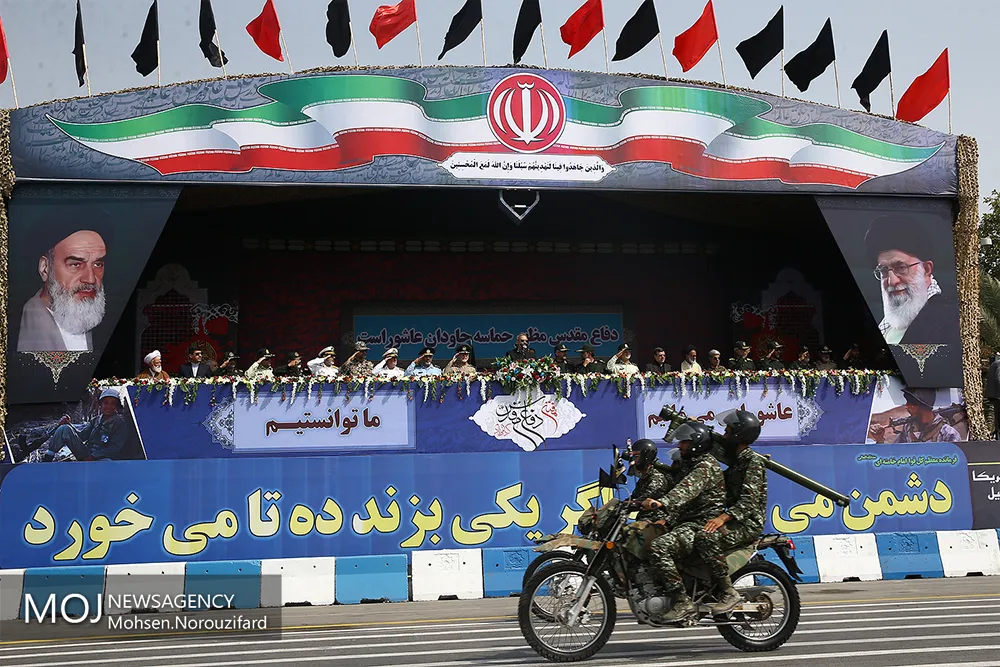


During the 2003 Iraq War, U.S. officials alleged that Iranian-supplied Misagh-1 missiles were being found for use against U.S. aircraft; Small Arms Survey later described the public evidence as limited, while noting a claimed Kata'ib Hezbollah Misagh-1 attack video as the strongest open-source indication.
Role detailsAir Defense
Misagh-1 MANPADS
Also known as
- Misagh 1
- Misaq 1
- Mithaq-1
- Mithaq 1
The Misagh-1 is an Iranian shoulder-fired, infrared-guided surface-to-air missile in the Chinese QW-1 design line. Open-source evidence outside Iran is strongest for reported 2003 Iraq War insurgent possession and Houthi QW-1-pattern display evidence in Yemen, but both lanes require care because Misagh-1, QW-1, and closely related patterns can be difficult to distinguish from imagery alone.
Role in Conflicts

Small Arms Survey identified a QW-1-pattern MANPADS displayed by Houthi soldiers in Amran, Yemen, in August 2022, and links Iran's domestic QW-1 assembly to the Misagh-1 designation; the identification is best treated as QW-1/Misagh-lineage evidence rather than a serial-confirmed missile.
Role detailsConflict Evidence Limits
Model-level MANPADS evidence is uneven in several conflicts. The Somalia lane is not listed here because open sources document shoulder-fired missiles in the post-2006 conflict but do not provide direct, model-specific support for Misagh-1 use. The Iraq and Yemen rows are retained with explicit attribution because the sources directly connect Misagh-1 or QW-1/Misagh-lineage systems to those theaters while also warning that the available evidence has limits.
Profile / Specs
Profile
- Origin
- Iran
- Built by
- Shahid Kazemi Industrial Complex
- Type
- Man-portable infrared-guided surface-to-air missile
- Service note
- 1990s-present
- Designer
- Iranian defense industry
- Designed
- Early 1990s
- Produced
- Production reported from the 1990s; SIPRI-cited estimate of about 1,100 Misagh-1 MANPADS produced from 1996 to 2006
- Number built
- Estimated 1,100 produced from 1996 to 2006, according to a SIPRI estimate cited by Small Arms Survey
- Developed from
- Chinese QW-1 Vanguard MANPADS
- Developed into
- Misagh-2 MANPADS
Specifications
- Guidance
- Passive infrared homing, fire-and-forget
- Launch platform
- Shoulder-fired MANPADS with disposable launch tube, grip-stock firing unit, and replaceable battery/coolant unit
- Crew
- One soldier; normally operated with an assistant in a two-person team
- Ready-to-fire weight
- 16.9 kg
- Missile weight
- 10.86 kg
- Missile length
- 1.477 m
- Engagement range
- 500 to 5,000 m
- Engagement altitude
- 30 to 4,000 m
- Warhead
- 1.17 kg high-explosive fragmentation
- Flight speed
- About 570 m/s
- Reaction time
- 5 to 10 seconds
- Engaged targets
- Tactical aircraft, helicopters, UAVs, and cruise missiles
QW-1 Lineage And Identification
The Misagh-1 sits in a family where factory designation, export designation, and visual identification overlap. Army Recognition describes it as an Iranian all-aspect passive-infrared MANPADS derived from the Chinese QW-1 Vanguard, while Small Arms Survey reports that Iran imported QW-1 systems before assembling them domestically as Misagh-1.
| Evidence thread | Catalog significance |
|---|---|
| Iranian service and specifications | Supports the Misagh-1 name, Shahid Kazemi manufacturer context, QW-1 lineage, and core missile data. |
| 2003 Iraq War reporting | Supports a conflict-use row with attribution caveats because public evidence includes U.S. allegations and limited open-source imagery. |
| Yemen imagery analysis | Supports QW-1/Misagh-lineage Houthi possession, but not a serial-number-level identification of a specific Iranian production lot. |
Variants
The Misagh line is usually described as Iran's domestic branch of Chinese QW-pattern MANPADS, with Misagh-1 tied to the QW-1 pattern and Misagh-2 tied to later QW-18 or QW-1M-pattern reporting.
| Variant | Configuration | Designation notes |
|---|---|---|
 | Later Iranian QW-pattern MANPADS | Army Recognition describes Misagh-2 as an advanced version of Misagh-1, while Small Arms Survey places Misagh-1 and Misagh-2 in Iran's domestic assembly of QW-1 and QW-18-pattern systems. Sources: Misagh-1, Persistent Perils: Illicit MANPADS in the MENA Region |
Timeline
Misagh-1 MANPADS Key Events
Iranian service period begins
Open reference reporting places the Misagh-1 in Iranian service and production from the early 1990s.
Sources: Misagh-1
SIPRI production estimate starts
Small Arms Survey cites a SIPRI estimate that Iran produced about 1,100 Misagh-1 MANPADS between 1996 and 2006.
Sources: Illicit Arms in Afghanistan, Iraq, and Somalia
2003 Iraq War supply allegation
U.S. military officials publicly alleged that Misagh-1 missiles were among Iranian-supplied weapons found in Iraq.
Sources: Iran Smuggling SAMs to Iraq?
QW-1-pattern display in Iraq
Small Arms Survey recorded QW-1-pattern MANPADS in Kata'ib Hezbollah imagery from Iraq, part of a wider MENA record of advanced MANPADS held by armed groups.
Sources: Persistent Perils: Illicit MANPADS in the MENA Region
Houthi QW-1-pattern display
Small Arms Survey identified a QW-1-pattern MANPADS displayed by Houthi soldiers during an August 2022 ceremony in Amran, Yemen.
Sources: Persistent Perils: Illicit MANPADS in the MENA Region
Related Weapon Systems


Sources
Misagh-1Publisher: Army Recognition | Note: Supports Misagh-1 background, manufacturer context, QW-1-derived lineage, component layout, service context, and core specifications. | Accessed: 2026-06-29Persistent Perils: Illicit MANPADS in the MENA RegionPublisher: Small Arms Survey | Note: Supports background on Iran's QW-1 imports and domestic Misagh-1 assembly, plus 2014 Yemen Civil War direct-use context for QW-1-pattern MANPADS displayed by Houthi soldiers in Amran, Yemen, in August 2022. | Accessed: 2026-06-29Illicit Arms in Afghanistan, Iraq, and SomaliaPublisher: Small Arms Survey | Note: Supports 2003 Iraq War direct conflict-use context and evidence limits for Misagh-1 or QW-1-pattern MANPADS linked to armed groups in Iraq, plus production-estimate and Somalia model-identification caveats. | Accessed: 2026-06-29Iran Smuggling SAMs to Iraq?Publisher: Wired | Note: Supports 2003 Iraq War direct conflict-use context: U.S. military allegations that Misagh-1 portable infrared surface-to-air missiles were among Iranian-supplied weapons found in Iraq for use against U.S. forces. | Accessed: 2026-06-29Mad Max MANPADS in YemenPublisher: Arms Control Wonk | Note: Supports background on Houthi MANPADS inventory, Misagh/QW-pattern sustainment limits, and Yemen air-defense context. | Accessed: 2026-06-29Shahid Ahmad Kazemi Industrial GroupPublisher: Iran Watch | Note: Supports manufacturer background for Shahid Ahmad Kazemi Industrial Group as an Iranian entity associated with surface-to-air missile systems. | Accessed: 2026-06-29The Arab-U.S. Strategic Partnership and the Changing Security Balance in the GulfPublisher: Center for Strategic and International Studies | Note: Supports Misaq spelling and Iranian light-SAM inventory context for QW-1/Misaq 1 and related designations. | Accessed: 2026-06-29Update: Shoulder-fired Missile ProliferationPublisher: Federation of American Scientists | Note: Supports background on Somali MANPADS proliferation and the limits of model-specific public identification in Somalia. | Accessed: 2026-06-292018 Sacred Defence Week parade (894).jpgPublisher: Wikimedia Commons | Note: Supports primary image provenance and licensing for a Misagh-1 photograph shown in Iranian parade imagery. | Accessed: 2026-06-29Ali Shamkhani inspecting military equipment (06).jpgPublisher: Wikimedia Commons | Note: Supports gallery image provenance and licensing for a Misagh-1 display photograph. | Accessed: 2026-06-29Iran Ministry of Defense Achievements Exhibition 2022 (05).jpgPublisher: Wikimedia Commons | Note: Supports gallery image provenance and licensing for a Misagh-1 exhibition photograph. | Accessed: 2026-06-29