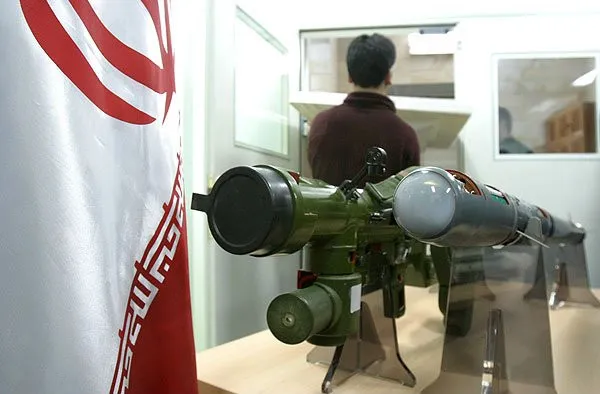

Open-source reporting identifies Misagh-2 or QW-18-pattern MANPADS in Houthi-aligned possession during the Yemen war, including a 2022 display; the reviewed sources support possession and fielding context rather than a specific documented Misagh-2 firing.
Role detailsAir Defense
Misagh-2 MANPADS
Also known as
- Misagh 2
The Misagh-2 is an Iranian shoulder-fired, infrared-guided MANPADS linked by open sources to the Chinese QW-series design line and Iran's domestic QW-18-pattern assembly. Specialist reporting and arms-proliferation research identify Misagh-2 or QW-18-pattern systems in Houthi-aligned possession during the 2014 Yemen Civil War, giving small units a portable short-range threat to helicopters, UAVs, cruise missiles, and other low-flying aircraft.
Role in Conflicts
Profile / Specs
Profile
- Origin
- Iran
- Built by
- Shahid Kazemi Industrial Complex
- Type
- Man-portable infrared-guided surface-to-air missile
- Service note
- Mid-2000s to present
- Designer
- Iranian defense industry
- Designed
- Early 2000s
- Produced
- Mass production announced in February 2006
- Developed from
- Chinese QW-series MANPADS
Specifications
- Guidance
- Passive infrared homing, fire-and-forget
- Seeker
- Dual-band passive infrared seeker with reported resistance to flares and solar or ground heat
- Engagement range
- Up to 6 km against approaching targets; about 5.2 km against receding targets
- Effective altitude
- About 2.5 km against jet fighters and 3.5 km against helicopters or subsonic aircraft
- Engaged targets
- Tactical aircraft, helicopters, UAVs, and cruise missiles
- Missile weight
- About 11.32 kg at launch
- System weight
- About 18 kg in firing position
- Warhead
- About 1.42 kg high-explosive fragmentation warhead
- Flight speed
- About 600 m/s
- Reaction time
- Less than 5 seconds for weapon reaction; 5 to 10 seconds listed as overall reaction time
- Crew
- One soldier
Variants
Open sources place Misagh-2 in the Chinese QW-pattern MANPADS family, but they do not describe the exact branch uniformly. Army Recognition describes it as a QW-2 Vanguard variant and advanced Misagh-1, while Small Arms Survey reports that Iran imported QW-18 systems before assembling them domestically as Misagh-2.
| Variant | Configuration | Designation notes |
|---|---|---|
 | Earlier Iranian QW-pattern MANPADS | Army Recognition describes Misagh-2 as an advanced version of Misagh-1; Small Arms Survey places Misagh-1 and Misagh-2 in Iran's domestic assembly of QW-1 and QW-18-pattern systems. Sources: Misagh-2, Persistent Perils: Illicit MANPADS in the MENA Region |
| QW-2 Vanguard | Chinese QW-series lineage claim | Army Recognition describes Misagh-2 as a variant of the Chinese QW-2 Vanguard missile system. Sources: Misagh-2 |
| QW-18 MANPADS | Chinese QW-pattern source design | Small Arms Survey reports that Iran imported QW-18 MANPADS in the early 2000s before assembling the system domestically as Misagh-2. Sources: Persistent Perils: Illicit MANPADS in the MENA Region |
Timeline
Misagh-2 MANPADS Key Events
QW-18 imports precede domestic assembly
Small Arms Survey reports that Iran imported QW-18 MANPADS in the early 2000s before assembling the system domestically as the Misagh-2.
Sources: Persistent Perils: Illicit MANPADS in the MENA Region
Mass production announced
Iranian state reporting through AFP said the defense minister launched domestic mass production of the Misagh-2 shoulder-fired air-defense missile in February 2006.
Sources: Iran boosts air defenses with locally made missile, Misagh-2
Jihan interdiction links components to Yemen
The Yemen-bound Jihan shipment contained QW-18-pattern or Misagh-2-related MANPADS components, including missiles or rounds and battery units, in reporting by Small Arms Survey and CTC West Point.
Sources: Persistent Perils: Illicit MANPADS in the MENA Region, The Houthi War Machine: From Guerrilla War to State Capture
Houthi display documented
Small Arms Survey identified at least one QW-18-pattern MANPADS displayed by Houthi soldiers during an August 2022 military ceremony in Yemen.
Sources: Persistent Perils: Illicit MANPADS in the MENA Region
QW-Series Lineage
Open sources agree that Misagh-2 belongs to the Chinese QW-pattern MANPADS lineage, but they describe the exact branch differently. Army Recognition ties the system to Shahid Kazemi Industrial Complex, calls it a QW-2 Vanguard variant, and presents it as an advanced version of Misagh-1. Small Arms Survey instead reports that Iran imported QW-18 systems in the early 2000s before assembling them domestically as Misagh-2.
Army Recognition thread
QW-2/Misagh-1 lineage, Shahid Kazemi Industrial Complex development, and technical data.
Small Arms Survey thread
QW-1 and QW-18 imports into Iran, domestic Misagh-1 and Misagh-2 assembly, and later QW-pattern proliferation in the MENA region.
Missile and Power Components
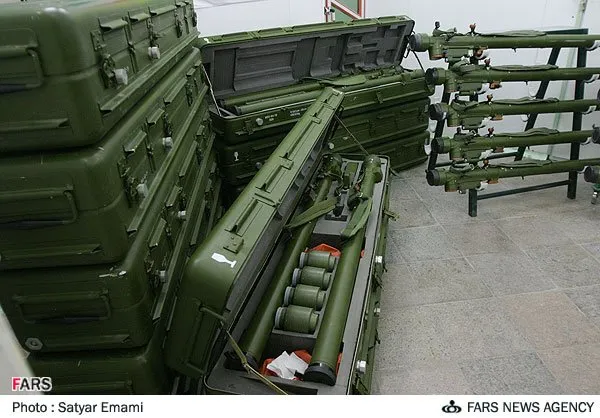
Small Arms Survey describes MANPADS as a missile, launch tube, reusable gripstock, and disposable battery or battery-coolant unit. That component view matters for Yemen: the Jihan seizure included QW-18-pattern missiles in launch tubes, battery units, and a gripstock, while CTC West Point separately describes Iranian-made Misagh-2 rounds and battery units aboard the Jihan-1.
Related Weapon Systems


Sources
Misagh-2Publisher: Army Recognition | Note: Supports Misagh-2 manufacturer background, design lineage, guidance, weights, range, altitude, and general air-defense role. | Accessed: 2026-07-04Iran boosts air defenses with locally made missilePublisher: Tehran Times | Note: Supports background on Iran's February 2006 announcement of domestic mass production for the shoulder-fired Misagh-2 missile. | Accessed: 2026-07-04Mad Max MANPADS in YemenPublisher: Arms Control Wonk | Note: Supports 2014 Yemen Civil War direct-use context: Misagh-2 MANPADS possessed and fielded by Houthi-aligned forces, including a 2022 parade/display and reported smuggling into Yemen. | Accessed: 2026-07-04Houthi Drone And Missile HandbookPublisher: Oryx | Note: Supports 2014 Yemen Civil War direct-use context: Misagh-2 MANPADS listed in Houthi-aligned forces' MANPADS inventory from 2022. | Accessed: 2026-07-04The Houthi War Machine: From Guerrilla War to State CapturePublisher: Combating Terrorism Center at West Point | Note: Supports background on Iranian-made Misagh-2 MANPADS rounds and battery units documented in arms-transfer context connected to Houthi forces. | Accessed: 2026-07-04Persistent Perils: Illicit MANPADS in the MENA RegionPublisher: Small Arms Survey | Note: Supports 2014 Yemen Civil War direct-use context: QW-18-pattern MANPADS displayed or possessed by Houthi soldiers in an August 2022 ceremony in Yemen, plus background on Iran's domestic Misagh-1 and Misagh-2 assembly and the January 2013 Jihan QW-18-pattern component seizure. | Accessed: 2026-07-04Shahid Ahmad Kazemi Industrial GroupPublisher: Iran Watch | Note: Supports manufacturer background for Shahid Ahmad Kazemi Industrial Group as an Iranian entity that develops and manufactures surface-to-air missile systems. | Accessed: 2026-07-04Misagh-2 MANPADS imagePublisher: Wikimedia Commons | Note: Supports primary image provenance and CC BY 4.0 licensing for a Misagh-2 launcher and missile display. | Accessed: 2026-07-04Misagh-2 MANPADS production line imagePublisher: Wikimedia Commons | Note: Supports gallery image provenance and CC BY 4.0 licensing for a Misagh-2 production-line photograph. | Accessed: 2026-07-04Iran Ministry of Defense Achievements Exhibition 2022 imagePublisher: Wikimedia Commons | Note: Supports gallery image provenance and licensing for a Misagh-2 exhibition photograph. | Accessed: 2026-07-04