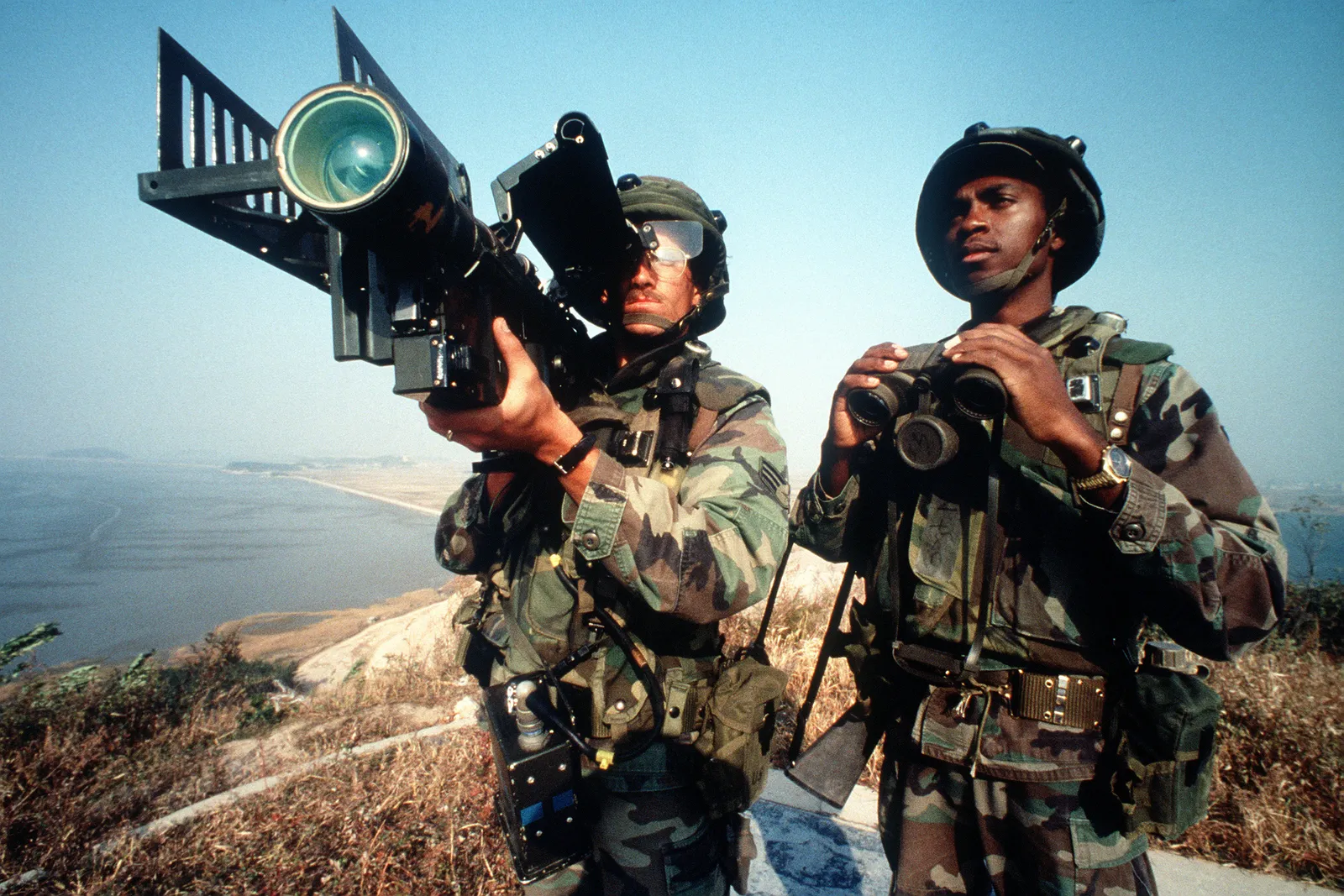

FAA flight-risk reporting says ISIS-Sinai used MANPADS to shoot down an Egyptian military helicopter flying at low altitude in January 2014; FDD's Long War Journal described Ansar Jerusalem video of a shoulder-fired SAM striking the helicopter, but the publicly cited sources do not identify the exact missile model.
Air Defense
MANPADS
Also known as
- MPADS
- Shoulder-fired SAM
- Shoulder-fired surface-to-air missile
- Portable air-defense missile
MANPADS are shoulder-fired or small-team portable surface-to-air missile systems used for very-short-range defense against low-flying aircraft and helicopters. This generic entry is reserved for directly sourced MANPADS, shoulder-fired SAM, or pattern-level conflict use where the public evidence does not identify a specific Strela, Igla, Stinger, or other missile model with enough confidence.
Role in Conflicts
Small Arms Survey assessed that Syrian armed groups acquired and used MANPADS during the civil war, including recent-generation systems documented through video, photographs, media reporting, and official statements; the report also warns that some claimed designations were uncertain or unsupported.
Role details
The Washington Institute reported that GNA-aligned forces relied on MANPADS and small artillery to contest LNA air superiority when the Tripoli campaign began in April 2019; the source does not identify the exact missile model.
Jamestown reported Russian army aviation testimony that Chechen rebels shot down a Russian Mi-26 at Khankala in August 2002 with a hand-held Strela-or-Igla-type missile, leaving the exact MANPADS model unresolved.

FAA flight-risk rulemaking says military aircraft in Afghanistan had been infrequently targeted with MANPADS since coalition operations began in 2001, while civil-aircraft targeting by MANPADS had not been seen in the recent past.
Role details
Africa Defense Forum reported that Rapid Support Forces fighters used portable surface-to-air missiles, identified as MANPADS, to shoot down a Sudanese Armed Forces MiG-29 in May 2023; the exact missile model is not named.
Profile / Specs
Profile
- Origin
- Multiple countries
- Built by
- Various manufacturers
- Type
- Man-portable air-defense system
- Service note
- First fielded in the 1960s; still present in state inventories and illicit non-state arsenals
- Designer
- Multiple design bureaus and defense manufacturers
- Designed
- 1950s-1960s development era for early systems
- Unit cost
- Varies widely by model, age, launcher package, and illicit or state-market context
- Produced
- 1960s-present across multiple MANPADS families
- Number built
- Arms Control Association cites an estimated one million MANPADS manufactured for national stockpiles or export.
Specifications
- Crew
- One soldier or a small team, depending on model and launch configuration
- Armament
- Single short-range surface-to-air missile in a portable launch tube or launcher assembly
- Guidance types
- Infrared homing, command line-of-sight, or laser beam-riding guidance
- Typical engagement range
- Average systems can reach targets at about 3.2 miles; exact range varies by model
- Altitude threat
- FAA notes some MANPADS present a risk up to 25,000 ft above ground level
- Targets
- Low-flying aircraft, helicopters, UAVs, and other low-altitude air targets
Variants
MANPADS are a portable air-defense class rather than one manufacturer's family; guidance method and national design lineage are usually more useful distinctions than a single model sequence.
| Variant | Configuration | Designation notes |
|---|---|---|
| Infrared seeker MANPADS | Fire-and-forget heat-seeking systems | Arms Control Association, SIPRI, and Small Arms Survey describe infrared homing as the dominant MANPADS guidance approach, covering families such as Stinger, Strela, Igla, Mistral, and FN-6. Sources: MANPADS at a Glance, SIPRI Global Efforts to Control MANPADS, Fire and Forget MANPADS in Syria |
| Command line-of-sight MANPADS | Operator-guided systems | Arms Control Association and SIPRI identify command line-of-sight systems as one of the main MANPADS guidance categories, with the operator keeping the target aligned during flight. Sources: MANPADS at a Glance, SIPRI Global Efforts to Control MANPADS |
| Laser beam-riding MANPADS | Laser-guided very-short-range air defense | Arms Control Association and SIPRI list laser beam-riding systems as a separate MANPADS guidance category, distinct from passive infrared seekers. Sources: MANPADS at a Glance, SIPRI Global Efforts to Control MANPADS |
| Pattern and foreign-variant identifications | Source-limited designation grouping | Small Arms Survey uses terms such as Strela-2-pattern or Igla-1-pattern when images or reports show a sub-category but do not identify a precise missile model or national variant. Sources: Fire and Forget MANPADS in Syria |
Representative MANPADS Families
Use this generic entry when sources document MANPADS, shoulder-fired SAMs, or a pattern-level identification without enough detail for a specific missile record. When the model is identified, the catalog should prefer the specific family page.
| Catalog record | Guidance family | Why it is separate |
|---|---|---|
 | Infrared / UV seeker | U.S. Stinger-series records can carry model-specific conflict rows, variants, and images when sources identify the missile rather than only generic MANPADS use. |
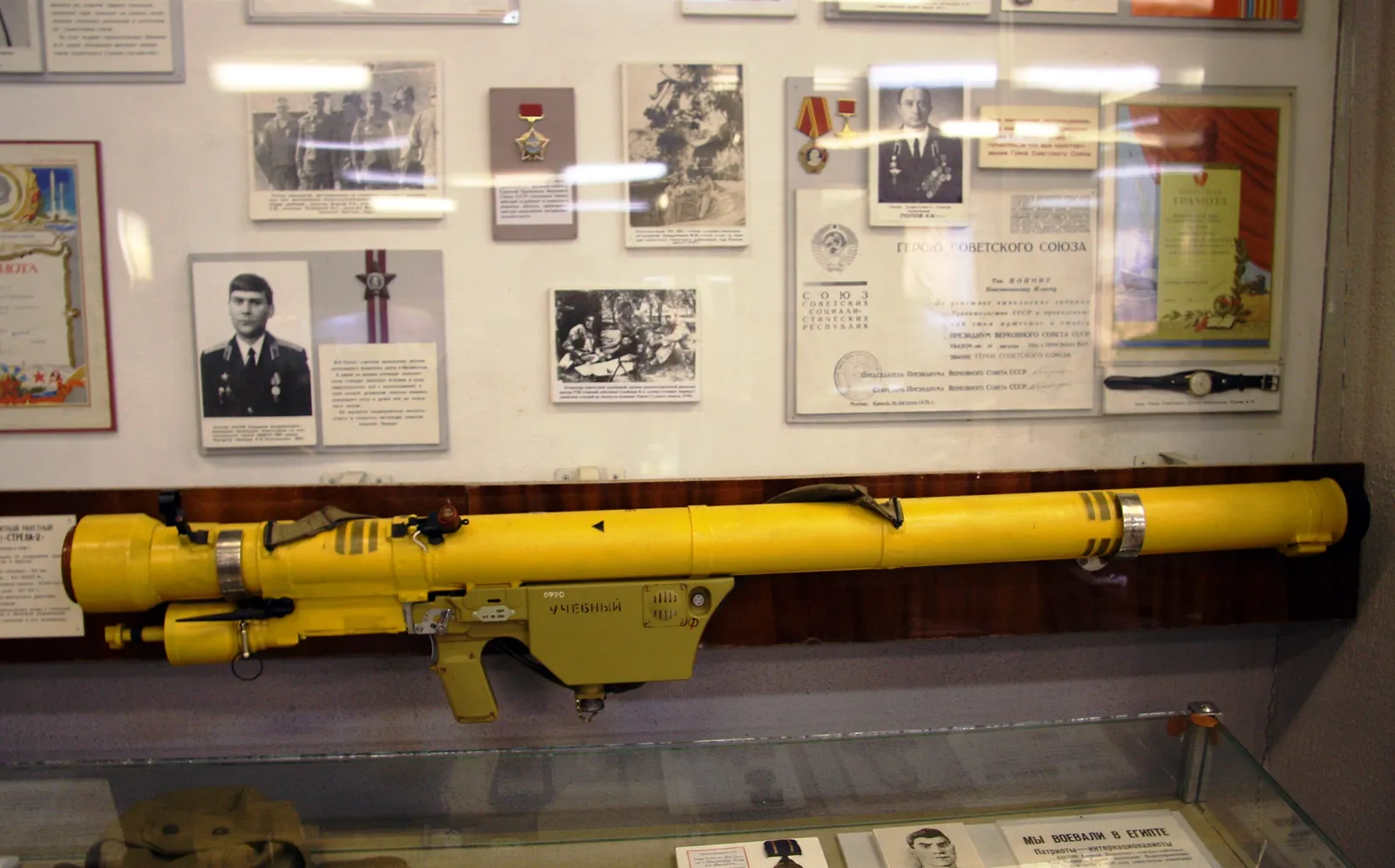
 | Infrared seeker | Strela-2 and Strela-2M pattern claims are common in proliferation reporting, but a specific Strela record is clearer when the source identifies that family. |
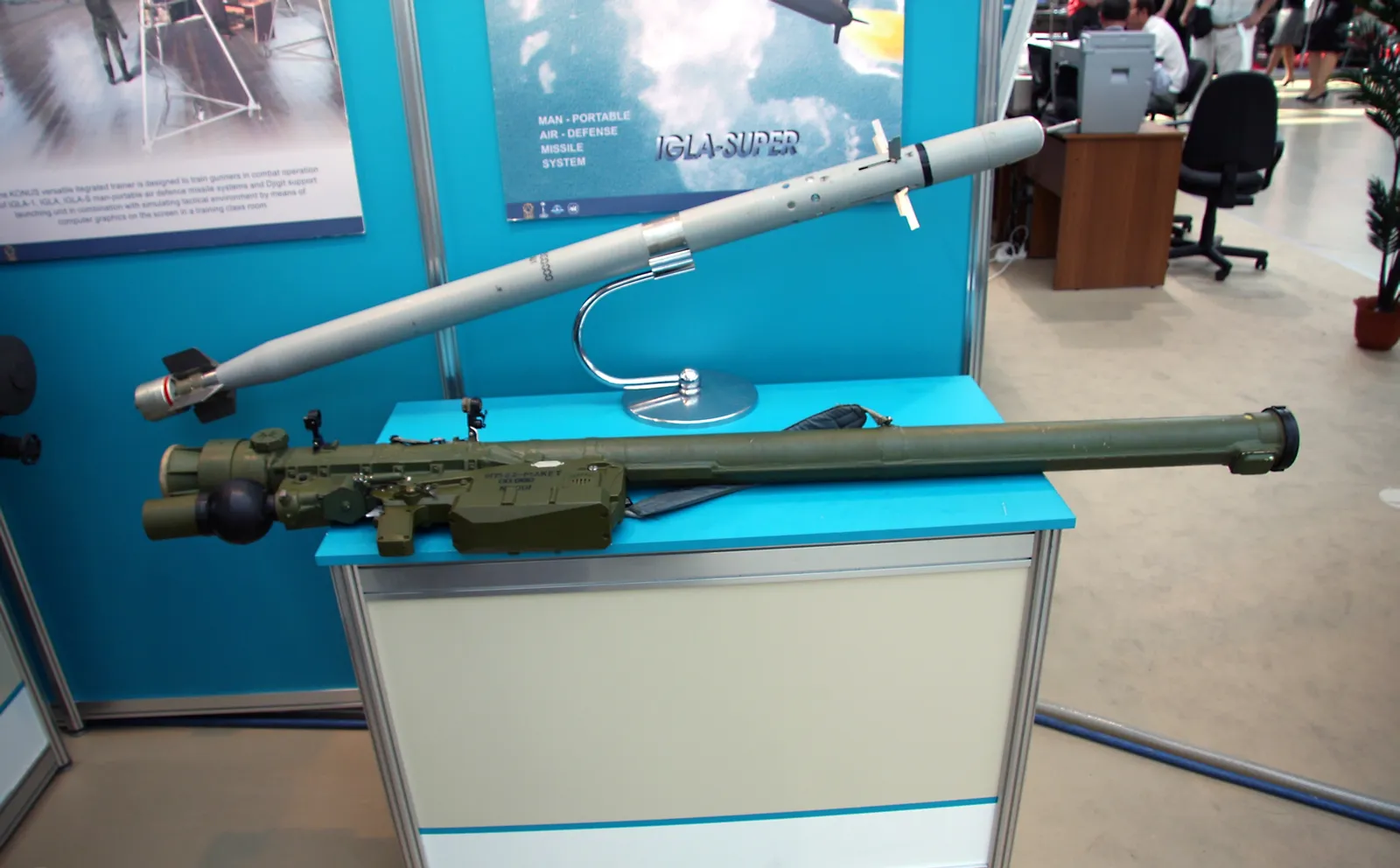
 | Infrared seeker | Igla, Igla-1, and Igla-S evidence often requires careful image or source distinction because reports may describe only a pattern or a trainer tube. |
 | Infrared seeker | Older Soviet-family systems can appear in legacy inventories and seizure reporting, so exact model support matters before assigning a conflict row. |
 | Infrared seeker | SIPRI lists Mistral among infrared-homing MANPADS, while the existing catalog record covers the broader Mistral missile family and helicopter fit. |
Timeline
MANPADS Key Events
First U.S. and Soviet infantry MANPADS fielded
Arms Control Association describes U.S. Redeye and Soviet Strela systems as the first MANPADS deployed by the two superpowers for portable infantry air defense.
Sources: MANPADS at a Glance
Libyan stockpile looting raises regional proliferation concern
Small Arms Survey traced hundreds or thousands of MANPADS missiles and components looted from Libyan depots in 2011, mostly first-generation Strela-2-pattern systems.
Sources: Missing Missiles MANPADS in North Africa
Syrian armed-group MANPADS inventory documented
Small Arms Survey assessed that armed groups in Syria had acquired at least eight MANPADS models, including newer systems rarely seen outside government control.
Sources: Fire and Forget MANPADS in Syria
Related Weapon Systems


Sources
MANPADS at a GlancePublisher: Arms Control Association | Note: Supports general MANPADS background, common guidance categories, early U.S. and Soviet deployment history, estimated production scale, average range, and proliferation context. | Accessed: 2026-07-02Fire and Forget MANPADS in SyriaPublisher: Small Arms Survey | Note: Supports MANPADS definition, source-limited pattern terminology, Syrian armed-group acquisition and use, the absence of public evidence for Syrian Stinger claims, and the 2011 Syrian Civil War conflict-use row. | Accessed: 2026-07-02SIPRI Global Efforts to Control MANPADSPublisher: SIPRI | Note: Supports MANPADS definition, three major guidance categories, and representative infrared, laser beam-riding, and command line-of-sight examples. | Accessed: 2026-07-02Missing Missiles MANPADS in North AfricaPublisher: Small Arms Survey | Note: 2011 Sinai Insurgency: analyzes the Ansar Bayt al-Maqdis MANPADS attack that struck an Egyptian military helicopter and supports model-identification cautions; also supports North Africa proliferation background. | Accessed: 2026-07-02What Turned the Battle for Tripoli?Publisher: The Washington Institute for Near East Policy | Note: 2014 Second Libyan Civil War: directly supports GNA-aligned use of MANPADS to contest control of the sky during the 2019 Tripoli campaign. | Accessed: 2026-07-02Heads Roll for Mi-26 CrashPublisher: The Jamestown Foundation | Note: 1999 Second Chechen War: directly supports Chechen rebel use of a hand-held Strela-or-Igla-type missile against a Russian Mi-26 at Khankala. | Accessed: 2026-07-02Federal Register Kabul FIR Flight Prohibition 2023Publisher: Federal Aviation Administration / Federal Register | Note: 2001 War in Afghanistan: directly supports MANPADS targeting of military aircraft since coalition operations began in Afghanistan in 2001 and related civil-aviation risk context. | Accessed: 2026-07-02Drones, Wagner Missiles Help RSF Match Sudanese Army's MightPublisher: Africa Defense Forum | Note: 2023 Sudan War: directly supports RSF use of portable surface-to-air missiles identified as MANPADS to shoot down a Sudanese Armed Forces MiG-29. | Accessed: 2026-07-02FAA Egypt Sinai Background Notice 2021Publisher: Federal Aviation Administration | Note: 2011 Sinai Insurgency: MANPADS were used by ISIS-Sinai to shoot down an Egyptian military helicopter flying at low altitude, and the notice identifies MANPADS as an ongoing anti-aircraft threat in the Sinai. | Accessed: 2026-07-02Ansar Jerusalem claims SAM attack as 3 soldiers killed in Sinai bus ambushPublisher: FDD's Long War Journal | Note: 2011 Sinai Insurgency: a shoulder-fired SAM was fired by Ansar Jerusalem / Ansar Bayt al-Maqdis in North Sinai and shown striking an Egyptian military helicopter. | Accessed: 2026-07-02Islamic State Sinai Province (IS-Sinai)Publisher: Australian National Security | Note: Supports background on Islamic State Sinai Province aliases, including Ansar Bayt al-Maqdis and Ansar Jerusalem, used to connect older Sinai reporting to the conflict side label. | Accessed: 2026-07-02Stinger Missile Team.JPEGPublisher: Wikimedia Commons | Note: Supports image provenance for the public-domain representative MANPADS team image used as the primary image. | Accessed: 2026-07-02Strela-2 MANPADS -01.jpgPublisher: Wikimedia Commons | Note: Supports image provenance for the CC BY-SA 4.0 Strela-2 MANPADS museum photograph used in the gallery. | Accessed: 2026-07-02IGLA-S MANPADS at IDELF-2008.jpgPublisher: Wikimedia Commons | Note: Supports image provenance for the CC BY-SA 4.0 Igla-S MANPADS photograph used in the gallery. | Accessed: 2026-07-02