- Side
- United Kingdom
- Role in conflict
- Portable air defense

British forces employed Stinger missiles as a portable air-defense weapon during the Falklands campaign.
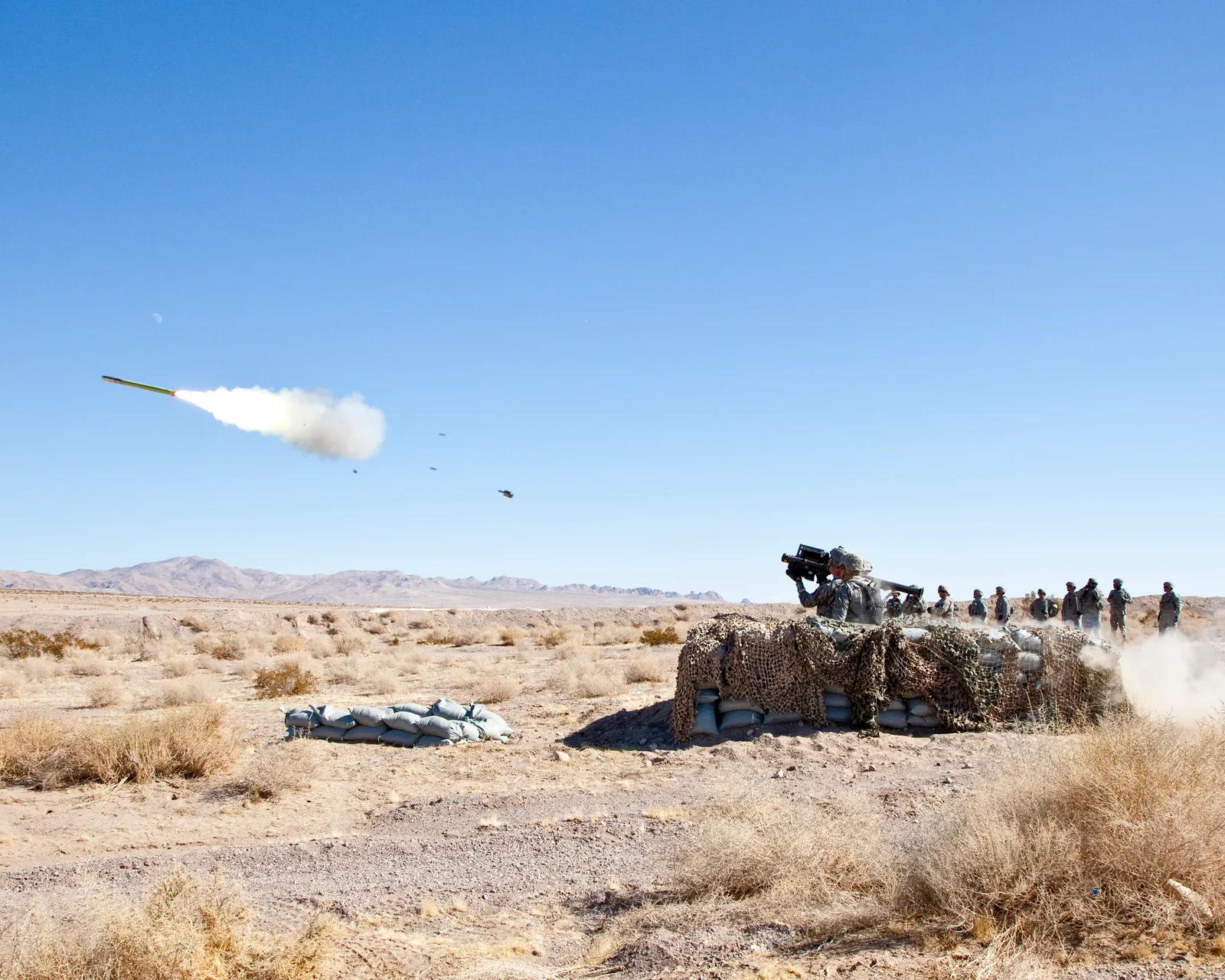
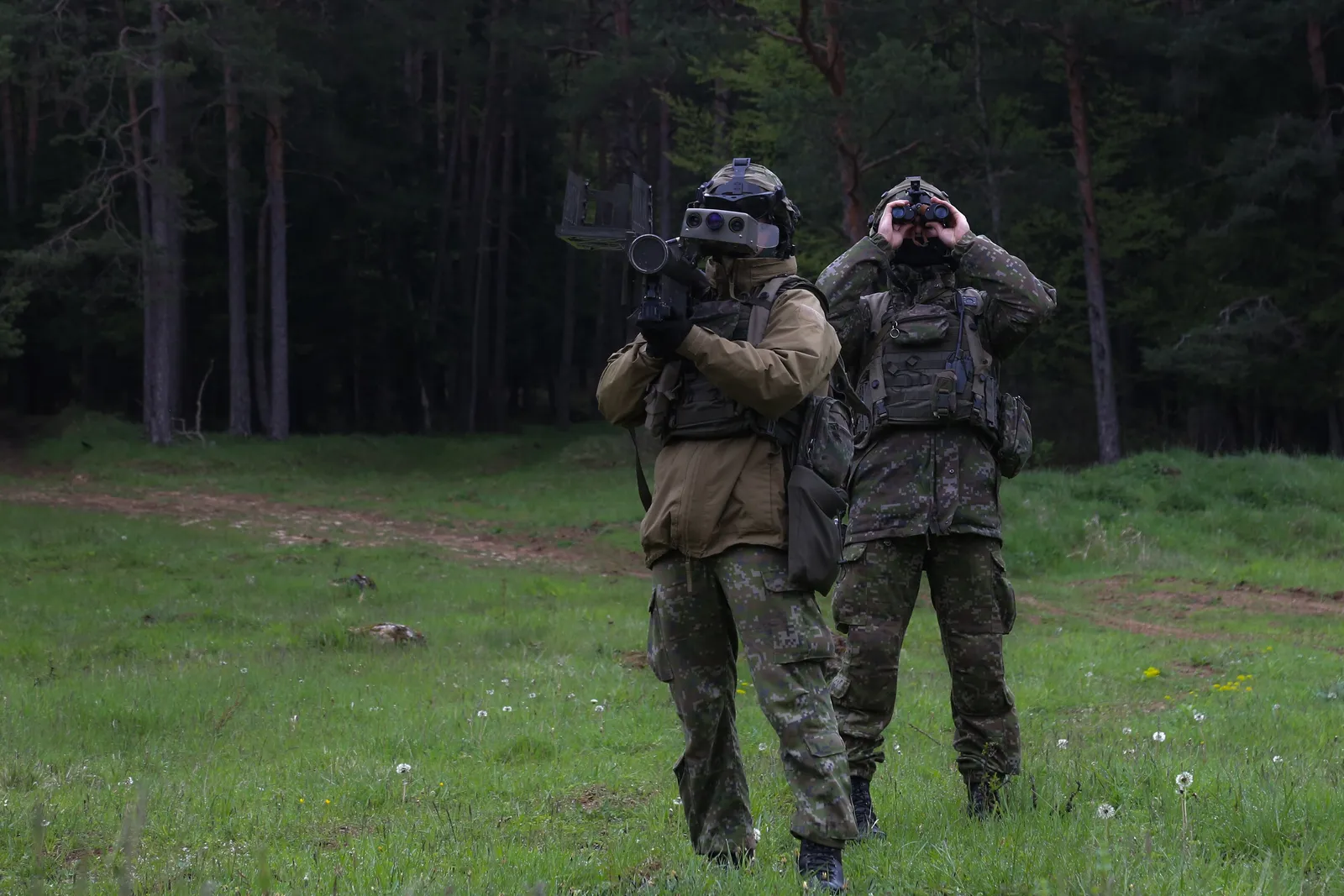
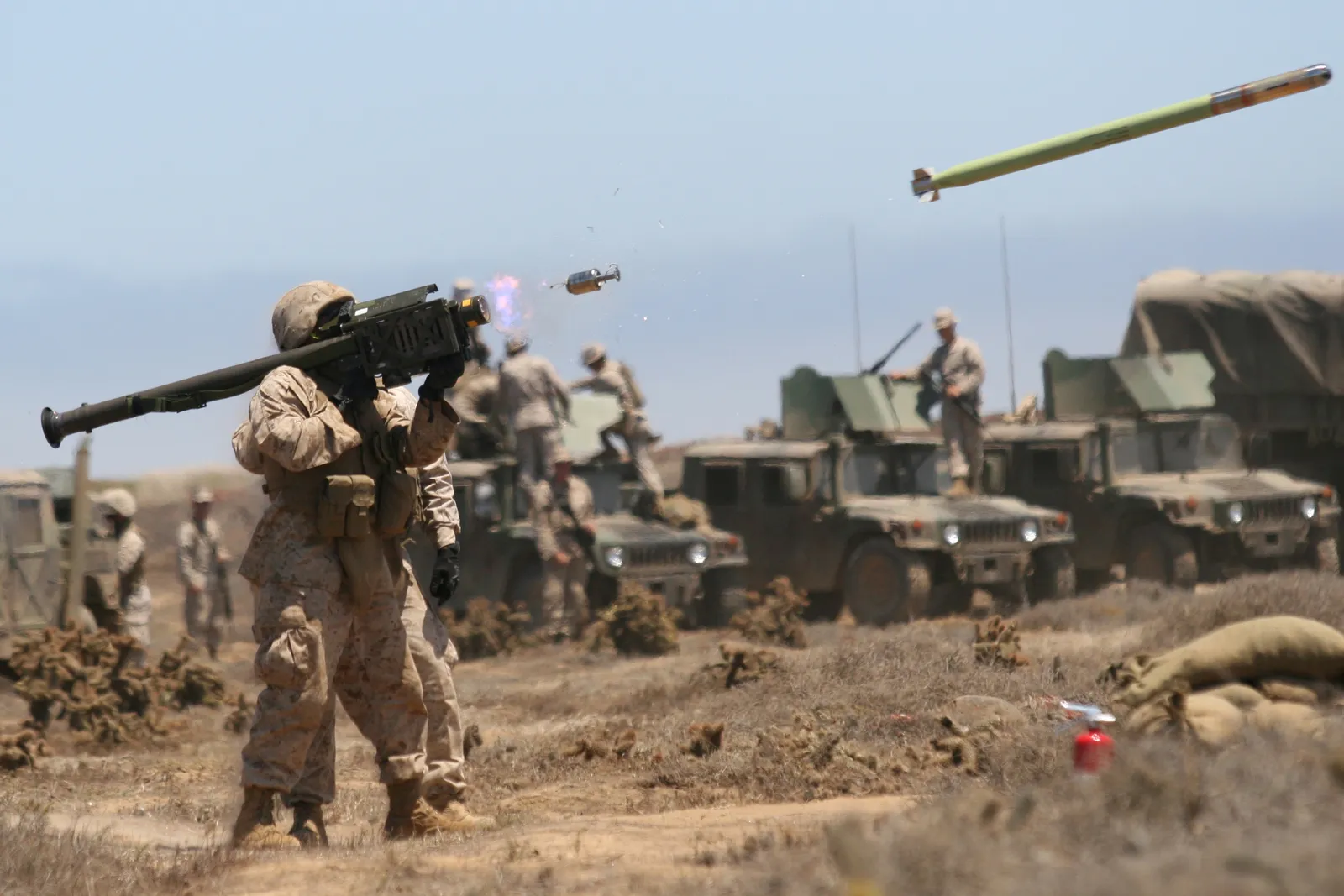
The FIM-92 Stinger is a U.S.-made infrared-guided surface-to-air missile family fielded as a shoulder-fired MANPADS, a vehicle-mounted SHORAD effector, and an air-to-air helicopter weapon. Its combat record runs from British use in the Falklands and Afghan resistance use against Soviet aircraft to U.S.-supplied Ukrainian air defense.
British forces employed Stinger missiles as a portable air-defense weapon during the Falklands campaign.
U.S.-supplied Stinger missiles gave Afghan resistance forces a shoulder-fired means to attack Soviet helicopters and contest low-altitude air operations.
Stinger-RMP and related Stinger configurations deployed with coalition forces for short-range air defense and force protection; official Gulf War history notes no Stinger-RMP combat firings during Desert Storm.
Role detailsSupplied to Ukrainian forces as a portable air-defense layer against low-flying aircraft, helicopters, and other short-range aerial threats.
Role detailsDeployed by Turkey and local partners in Idlib as shoulder-fired MANPADS against Syrian government and allied air operations; reporting also described vehicle-mounted systems using the same missile.
Role detailsStinger designations separate the original FIM-92A missile from POST, RMP, Block I, and helicopter-launched ATAS configurations.
| Variant | Configuration | Designation notes |
|---|---|---|
| FIM-92A Basic Stinger | Original production missile | Designation Systems identifies FIM-92A as the first production Stinger missile after the Redeye II program was renamed. Sources: Designation Systems FIM-92 Stinger |
| FIM-92B Stinger-POST | Passive Optical Seeker Technique variant | FAS and Designation Systems describe Stinger-POST as a two-band IR/UV seeker variant intended to improve target discrimination against clutter and countermeasures. Sources: FAS FIM-92A Stinger Weapons System, Designation Systems FIM-92 Stinger |
| FIM-92C Stinger-RMP | Reprogrammable Microprocessor variant | The RMP variant added reprogrammable onboard software so the missile could be updated against changing aircraft and countermeasure threats. Sources: FAS FIM-92A Stinger Weapons System, Designation Systems FIM-92 Stinger |
| FIM-92E Stinger-RMP Block I | Block I upgrade | FAS describes Block I as a hardware and software upgrade with changes such as a roll-frequency sensor/seeker, smaller battery, and improved processor and memory. Sources: FAS FIM-92A Stinger Weapons System |
| Air-to-Air Stinger | Helicopter-launched configuration | FAS and Army history describe ATAS as a Stinger adaptation for helicopter self-defense and air-to-air use. Sources: FAS FIM-92A Stinger Weapons System, 1981 - Redstone Arsenal Historical Information |
Stinger also appears in mounted short-range air-defense roles, not only as a shoulder-fired missile.
| Firing weapon | Weapon type | Firing evidence |
|---|---|---|
 | Vehicle-mounted SHORAD | Redstone history describes Avenger as a HMMWV-mounted system with Stinger missiles in two pods, extending Stinger from MANPADS use into a mobile point-defense vehicle. Sources: stinger / avenger - Redstone Arsenal Historical Information |
Cataloged helicopter and vessel records show Stinger adapted beyond a shoulder-fired launch tube.
| Carrier | Carrier type | Carriage evidence |
|---|---|---|
 | Armed helicopter | GlobalSecurity lists Stinger among the A109's air-to-air missile options. Sources: GlobalSecurity A109 specifications |
 | Armed utility helicopter | Sikorsky Archives says MH-60L DAP Black Hawks carried Stinger missiles on external wings, and a Black Hawk demonstrator was shown with Hellfire and Stinger missiles. |
 | Minehunter class | Bundeswehr lists FIM-92 Stinger among the Frankenthal class armament fit, showing the missile as carried by the class. Sources: Die Minenjagdboote der Frankenthal-Klasse - Bundeswehr |
Army history shows Stinger used in more than one mount or operating mode. The missile appears as a shoulder-fired MANPADS, as a vehicle-mounted SHORAD effector, and in helicopter self-protection roles.
| Context | Documented fit | Why it matters |
|---|---|---|
| HMMWV-mounted system with Stinger missiles in two pods | Shows Stinger as the primary missile in a mobile short-range air-defense vehicle. |
| Helicopter self-protection | Army tests showed Stinger suitable as an air-to-air self-protection system for helicopters | Documents the air-to-air mission that sits alongside the missile's ground-launched MANPADS use. |
| Bradley Fighting Vehicle | Army history says Stinger was used on the BFV for low-altitude air defense | Shows how the missile was adapted into another tracked vehicle air-defense fit. |
Redstone history says the REDEYE II was redesignated STINGER as the Army moved toward a one-for-one replacement for the basic REDEYE.
Sources: redeye - Redstone Arsenal Historical Information
The Army awarded General Dynamics the engineering-development contract for the Stinger system.
Sources: redeye - Redstone Arsenal Historical Information
The Army approved the Stingthrift program to reduce the missile's unit cost during production.
Sources: 1974 - Redstone Arsenal Historical Information
Redstone's 1981 history notes the Stinger reached initial operational capability in February 1981.
Sources: 1981 - Redstone Arsenal Historical Information
British forces employed Stinger missiles during the Falklands War, giving the missile an early combat appearance outside U.S. service.
Sources: Forces News Falklands weapons: Stinger
Redstone history records Stinger deployment under combat conditions during the U.S. airborne assault on Grenada.
Sources: 1983 - Redstone Arsenal Historical Information
FY 1985 production crossed the 10,000th Stinger missile mark.
Sources: 1985 - Redstone Arsenal Historical Information
The Army ordered a HMMWV-mounted Stinger version to replace the MANPADS configuration.
Sources: 1986 - Redstone Arsenal Historical Information
CIA museum material describes U.S.-supplied Stinger missiles giving Afghan guerrillas a more effective means to attack Soviet helicopter gunships.
Sources: CIA Museum Stinger Missile Launcher
Designation Systems reports first production Stinger-RMP missiles delivered to operational U.S. Army units in July 1989.
Sources: Designation Systems FIM-92 Stinger
FAS says Stinger-RMP testing was suspended during Operation Desert Storm and the missile was rushed into the field for war preparations.
Sources: FAS FIM-92A Stinger Weapons System
Raytheon says the Army began retrofitting Stinger missiles with proximity fuzes in 2019 to improve performance against unmanned airborne systems.
Sources: Stinger Missile
The U.S. Defense Department listed Stinger anti-aircraft missiles among security-assistance equipment supplied to Ukraine.
Sources: Fact Sheet on U.S. Security Assistance to Ukraine