Air Defense

MIM-104 Patriot

Also known as
  • MIM-104
  • PATRIOT
  • Patriot air defense system
  • Patriot missile defense system
  • SAM-D

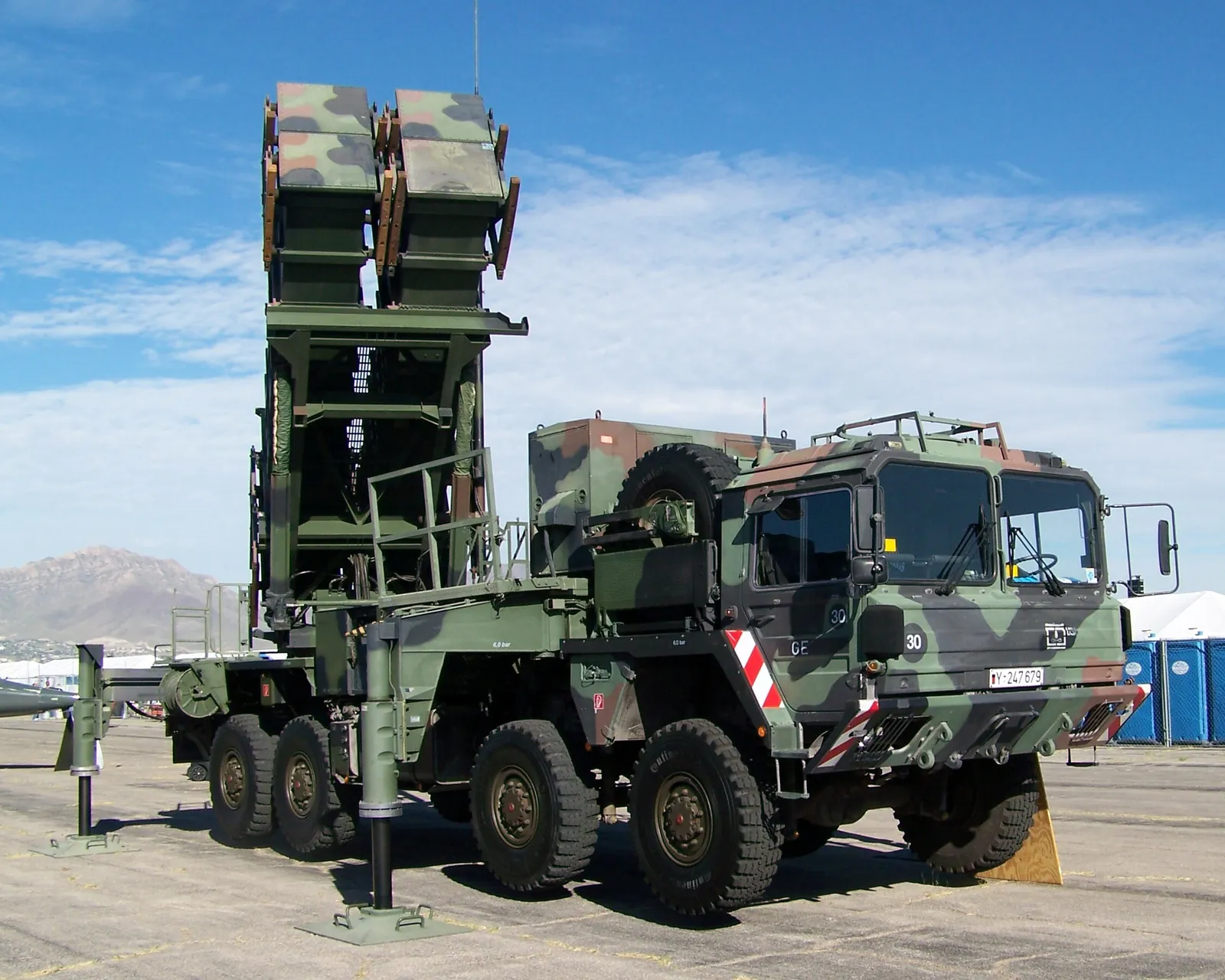
The MIM-104 Patriot is a U.S.-origin, truck-mobile air and missile defense system built around phased-array radar, command-and-control vehicles, launchers, power generation, antenna masts, support vehicles, and PAC-2 or PAC-3 interceptor families. Developed from the 1960s SAM-D program, it evolved from aircraft defense into a high-value air and missile defense layer used in Desert Storm, Operation Iraqi Freedom, Yemen, Ukraine, Gulf base defense, and reported 2026 Iran-war drone defense over Bahrain.

Role in Conflicts

Bahrain's government spokesperson said a Patriot system intercepted an Iranian drone over Manama on March 9, 2026, during the 2026 Iran War. The record is caveated because Al Jazeera reported the Bahraini account differed from CENTCOM's initial description, while Reuters Connect described the Patriot missile involved as likely U.S.-operated.

Side
IsraelTurkey

Israeli Patriot engagements around the Syria and Golan front from 2014 to 2018 documented use against Syrian drones and combat aircraft, while NATO allies fielded Patriot batteries in Turkey to protect Turkish airspace from Syrian-war spillover missile threats.

Role details
Profile / Specs

Profile

Origin
United States
Type
Long-range surface-to-air and ballistic missile defense system
Service note
Cold War design with modern PAC-2 GEM-T and PAC-3 upgrades
Designer
Raytheon-led SAM-D/PATRIOT development team
Designed
Development began as SAM-D in the 1960s; renamed PATRIOT in 1976
Produced
1980-present, with continuing modernization and interceptor production

Specifications

System role
Truck-mobile integrated air and missile defense system for aircraft, cruise missiles, drones, and tactical ballistic missiles
Battery components
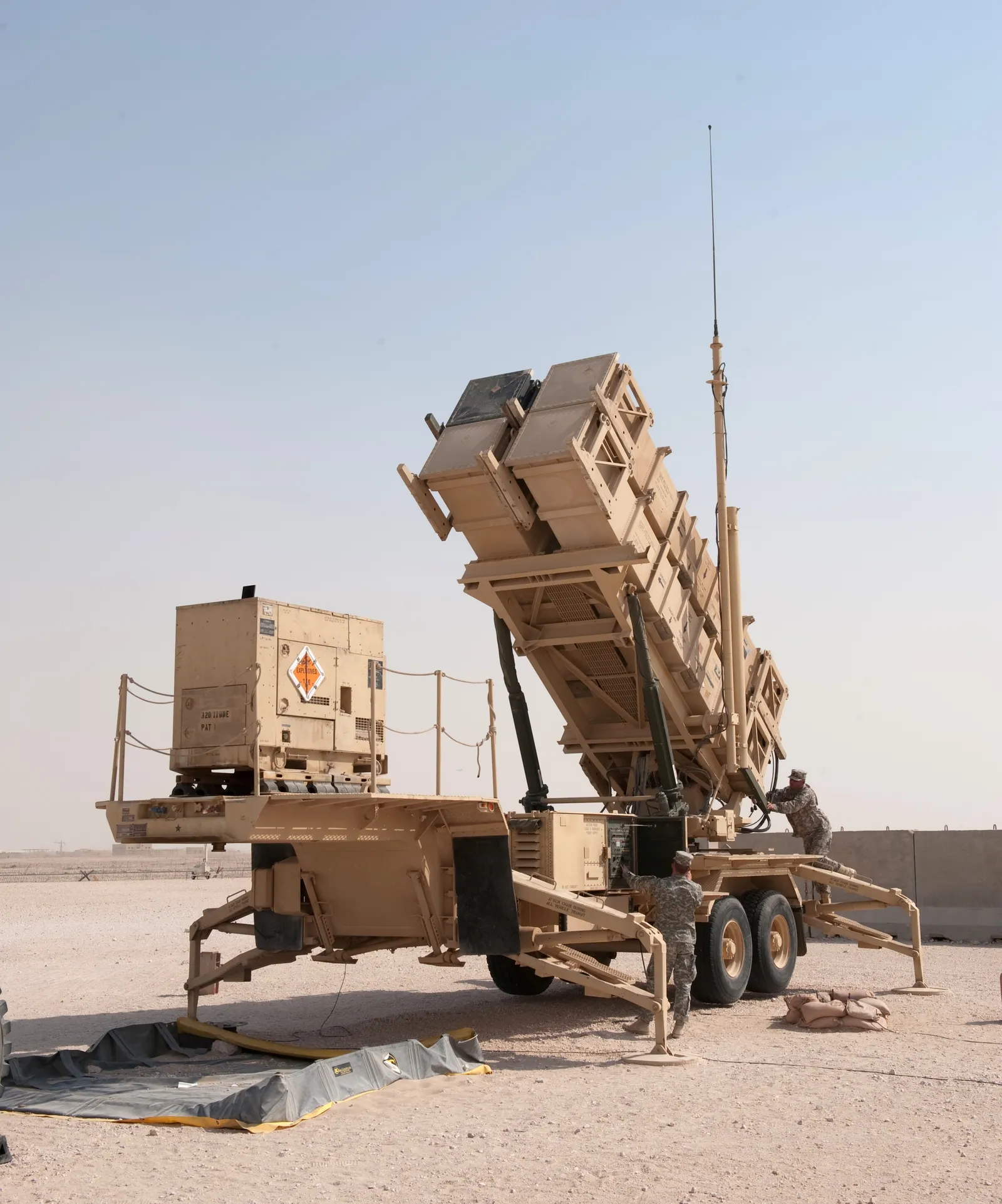
Radar set, engagement control station, power generation, antenna mast, support vehicles, and several launcher stations
Crew
About 90 soldiers assigned to a battery; three soldiers can operate the engagement control station in combat
Missiles
PAC-2/GEM family and PAC-3 / PAC-3 MSE interceptors
Launcher loadout
M903 launcher can carry up to 4 PAC-2 GEM, 16 PAC-3 CRI, or 12 PAC-3 MSE interceptors
Radar
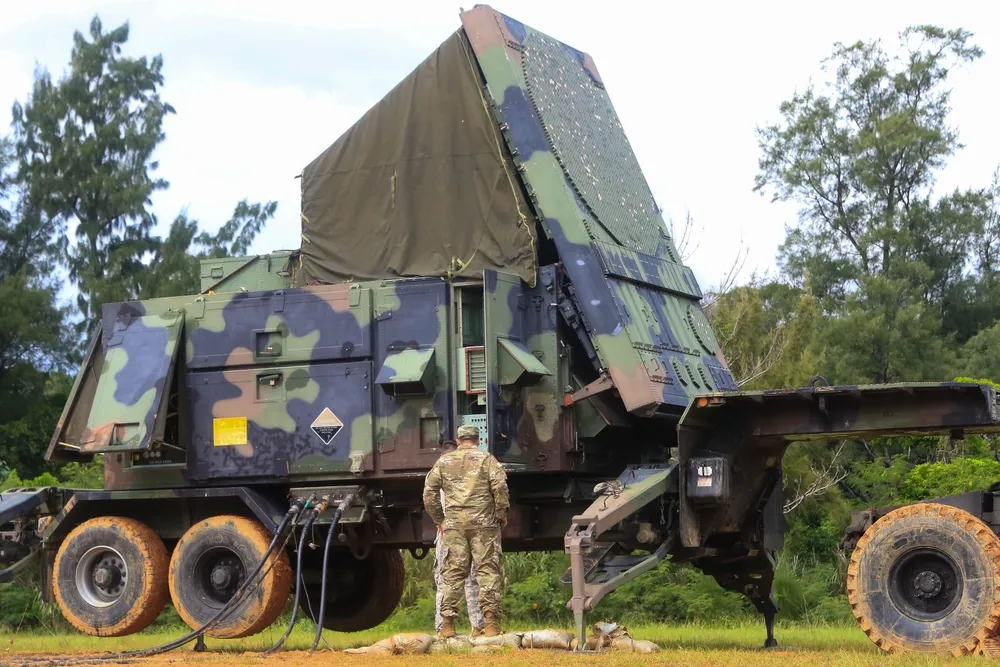
AN/MPQ-53, AN/MPQ-65, or AN/MPQ-65A phased-array radar depending on configuration
Mobility
Truck- and trailer-mounted system elements that can be emplaced as a battery
Guidance evolution
Track-via-missile Patriot architecture with later PAC-3 active Ka-band terminal seeker and hit-to-kill interceptors
Modern radar path
LTAMDS is the U.S. Army replacement path, adding 360-degree coverage with three antenna arrays while preserving Patriot-system investment
Variants

Patriot version names track both system-level capability upgrades and interceptor families. PAC-1 and PAC-2 describe early anti-tactical-ballistic-missile capability steps, while GEM-T and PAC-3 rows identify missile families that can be loaded by modern Patriot launchers.

VariantConfigurationDesignation notes
PAC-1Software-based tactical ballistic missile capability

PAC-1 added Patriot's first fielded tactical ballistic missile capability through software changes in the late 1980s.

Sources: Patriot, Patriot Air Defense Systems

PAC-2Blast-fragmentation missile upgrade

PAC-2 introduced missile changes for more demanding ballistic targets and became the key 1990 Gulf War Patriot interceptor baseline.

Sources: Patriot, Patriot Air Defense Systems

PAC-2 GEMGuidance Enhanced Missile family

PAC-2 GEM/GEM-T improved the larger Patriot interceptor line for aircraft, cruise missile, and tactical ballistic missile threats.

Sources: Patriot Guidance Enhanced Missile

MIM-104E Patriot PAC-2 GEM/T, Patriot PAC-2 guidance-enhanced interceptor missile, Air DefensePAC-2 GEM-TLinked GEM-T interceptor record

The linked GEM-T page covers the Guidance Enhanced Missile-Tactical round as a distinct Patriot interceptor used with Patriot launchers.

Sources: Patriot Guidance Enhanced Missile

PAC-3, Hit-to-kill Patriot interceptor missile, Air DefensePAC-3 CRIHit-to-kill interceptor family

PAC-3 CRI is part of the smaller hit-to-kill Patriot interceptor line; M903 launchers can carry a denser PAC-3 CRI load than PAC-2-family rounds.

Sources: Patriot

PAC-3, Hit-to-kill Patriot interceptor missile, Air DefensePAC-3 MSEMissile Segment Enhancement interceptor

PAC-3 MSE expands the defended battlespace with a larger dual-pulse booster and related guidance, structure, and software changes.

Sources: Patriot

Patriot Interceptors

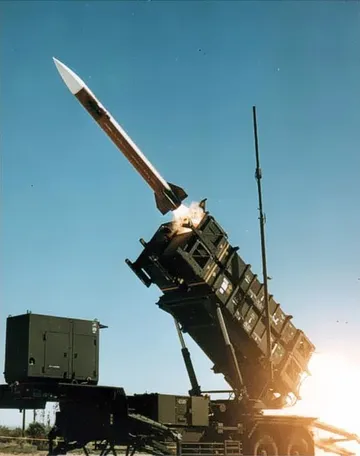
Patriot launchers can be loaded with larger PAC-2-family blast-fragmentation missiles or denser PAC-3-family hit-to-kill interceptors, letting batteries tailor the round mix to aircraft, cruise missile, and ballistic missile threats.

Launched itemItem typeLaunch evidence
MIM-104E Patriot PAC-2 GEM/T, Patriot PAC-2 guidance-enhanced interceptor missile, Air DefenseMIM-104E Patriot PAC-2 GEM/TBlast-fragmentation interceptor missile

PAC-2, PAC-2 GEM, and GEM-T rounds are the larger Patriot interceptor line; Raytheon describes GEM-T as a Guidance Enhanced Missile for aircraft, cruise missile, and tactical ballistic missile threats, while CSIS notes M903 launchers can carry four PAC-2 GEM canisters.

Sources: Patriot, Patriot Guidance Enhanced Missile

PAC-3, Hit-to-kill Patriot interceptor missile, Air DefensePAC-3Hit-to-kill interceptor missile

PAC-3 CRI and PAC-3 MSE are the smaller hit-to-kill Patriot interceptors optimized for ballistic missiles and other high-value air and missile threats; CSIS notes the M903 launcher can carry up to 16 PAC-3 CRI or 12 PAC-3 MSE interceptors.

Sources: Patriot

Missile-Defense Network Links

Patriot can operate inside wider missile-defense architectures where external sensors and command networks provide track or cueing data.

Compatible itemItem typeCompatibility evidence
C2BMC, Ballistic missile defense command-and-control system, Support EquipmentC2BMCBattle-management and communications system

DOT&E reported that C2BMC forwards AN/TPY-2 forward-based-mode tracks for Patriot cueing through Link 16, making it a documented missile-defense command-and-control link rather than a standalone Patriot component.

Sources: FY2014 DOT&E C2BMC report

AN/TPY-2 radar, Ballistic-missile defense radar, Air DefenseAN/TPY-2 radarBallistic-missile defense radar

A U.S. Strategic Command report on FTP-27 said AN/TPY-2 data supported a Patriot launch solution and a PAC-3 MSE intercept during THAAD-Patriot interoperability testing.

Sources: USSTRATCOM THAAD-Patriot Interoperability Test

Calculator

Launcher Loadout

Launchers6
Ready interceptors64
Average per launcher10.7
Loadout value$224,000,000
PAC-2 GEM/T2 launchers33%33%
PAC-3 CRI2 launchers33%33%
PAC-3 MSE2 launchers33%33%

Cost inputs are editable estimates. Defaults use CSIS reporting that PAC-3 MSE costs about $4.1 million and PAC-2 rounds cost about half as much, plus public reporting that places PAC-3 CRI near $3.4 million. Export packages, canisters, spares, sustainment, and contract scope can move real prices.

Timeline

MIM-104 Patriot Key Events

  1. AADS-70 concept begins

    The U.S. Army Missile Command began the AADS-70 concept that became Patriot's mobile air-defense lineage.

    Sources: Patriot

  2. Program renamed SAM-D

    The Army renamed the effort Surface-to-Air Missile Development, marking the transition from broad concept work toward the SAM-D program.

    Sources: Patriot

  3. First SAM-D flight test

    The pre-Patriot SAM-D program reached its first major flight-test milestone.

    Sources: Patriot

  4. Track-via-missile concept adopted

    SAM-D was reoriented around track-via-missile guidance and a simplified concept of operations, defining one of Patriot's signature technical features.

    Sources: Patriot

  5. SAM-D renamed PATRIOT

    The missile-defense program received the PATRIOT name after its SAM-D development phase.

    Sources: Patriot, Patriot Air Defense Systems

  6. Production decision

    Patriot moved from development to production with the 1980 production decision and limited production contract period.

    Sources: Patriot, Patriot Air Defense Systems

  7. First U.S. Army Patriot battalion activated

    The first U.S. Army Patriot missile battalion was activated, beginning operational Army service.

    Sources: Patriot, Patriot Air Defense Systems

  8. Anti-tactical-missile capability demonstrated

    Patriot demonstrated ballistic-missile-defense potential by intercepting a Lance missile before the 1990 Gulf War.

    Sources: Patriot, Patriot Air Defense Systems

  9. PAC-1 fielded

    PAC-1 added the first deployed Patriot tactical ballistic missile capability through software changes.

    Sources: Patriot, Patriot Air Defense Systems

  10. PAC-2 production authorized

    PAC-2 production was authorized, setting up the key ballistic missile upgrade used during Desert Storm.

    Sources: Patriot Air Defense Systems

  11. First combat use in Desert Storm

    U.S. Army history identifies Patriot's January 18, 1991 Scud intercept over Saudi Arabia as its first combat use and the first hostile tactical ballistic missile destroyed by an air-defense system.

    Sources: Patriot Air Defense Systems

  12. Dhahran software failure

    GAO later attributed the Dhahran Patriot failure during Desert Storm to a software problem in the weapon control computer.

    Sources: Patriot Missile Defense: Software Problem Led to System Failure at Dhahran

  13. ERINT selected for PAC-3

    ERINT was selected for PAC-3 development, creating the path to Patriot's hit-to-kill interceptor family.

    Sources: Patriot

  14. PAC-2 and PAC-3 used in Iraq

    Both PAC-2 and PAC-3 systems were used during Operation Iraqi Freedom, demonstrating improved missile-defense performance while friendly-fire incidents exposed identification and command-and-control risks.

    Sources: Patriot, Patriot Guidance Enhanced Missile

  15. PAC-3 MSE reaches initial operational capability

    PAC-3 MSE added an enlarged dual-pulse booster and other changes to expand the defended battlespace.

    Sources: Patriot

  16. PAC-3 MSE full-rate production approved

    Full-rate production approval established PAC-3 MSE as the modern high-end Patriot interceptor path.

    Sources: Patriot

  17. Ukraine confirms Patriot combat use

    The Pentagon confirmed that Ukraine had used Patriot to down a Russian missile; CSIS notes early reported Kinzhal engagements around Kyiv in May 2023.

    Sources: Patriot, Pentagon Press Secretary Air Force Brig. Gen. Pat Ryder Holds a Press Briefing

  18. Ukraine support scale described

    U.S. officials said the United States had provided two Patriot batteries and hundreds of interceptors to Ukraine, while allies supplied additional Patriot systems or components.

    Sources: Two Senior Defense Officials Hold a DOD Background Briefing on Ukraine

  19. Al Udeid missile attack defeated

    CENTCOM reported that U.S. and Qatari Patriot batteries defeated an Iranian ballistic missile attack on Al Udeid Air Base with no U.S. or Qatari casualties.

    Sources: U.S. and Qatari Forces Successfully Defend Against Iranian Ballistic Missile Attack

  20. Bahrain drone interception reported

    Bahrain later said a Patriot air-defense system intercepted an Iranian drone over Manama during the 2026 Iran War; Reuters Connect separately described analysis that the Patriot missile involved was likely U.S.-operated.

    Sources: Bahrain Says Patriot System Intercepted Drone Over Homes, Reuters Patriot Missile Involved in Bahrain Blast

  21. Ukraine GEM-T contract announced

    RTX's Raytheon announced a $3.7 billion contract to supply Patriot GEM-T interceptors for Ukraine, reflecting replenishment pressure from the air-defense war.

    Sources: RTX's Raytheon to Deliver Patriot Interceptors to Ukraine

Technical Evolution

Patriot began primarily as an anti-aircraft system and was adapted for tactical ballistic missile defense through PAC-1 and PAC-2. PAC-1 added software changes for tactical ballistic missile engagements, while PAC-2 changed the missile fuze, warhead, and guidance for more demanding ballistic targets.

PAC-2 GEM and GEM-T improved sensitivity, fuzing, and performance against tactical ballistic missiles, cruise missiles, and aircraft. PAC-3 marked a larger shift: it is smaller, more agile, uses an active Ka-band radar seeker for terminal guidance, and defeats targets by hit-to-kill impact rather than relying only on blast-fragmentation effects.

PAC-3 MSE expands the defended battlespace with an enlarged dual-pulse booster and other guidance, structure, and software improvements. Modern Patriot batteries can mix or tailor PAC-2/GEM-T and PAC-3/PAC-3 MSE loadouts for the defended target and threat set.
Operational Patterns
  • Aircraft defense to missile defense: Patriot's central story is adaptation from anti-aircraft defense into integrated air and missile defense against aircraft, cruise missiles, ballistic missiles, drones, and loitering munitions.
  • PAC-2 and PAC-3 are complementary: PAC-2/GEM-T remains useful against aircraft, cruise missiles, and some ballistic threats, while PAC-3/PAC-3 MSE is aligned with high-speed ballistic missile defeat through hit-to-kill interception.
  • Effectiveness is conditional: Later combat use suggests a more mature system than the 1991 Gulf War baseline, but saturation attacks, mixed drone-and-missile raids, maneuvering missiles, and command-and-control errors remain important constraints.
  • Strategic value comes from what it protects: Patriot is usually reserved for capitals, major air bases, energy infrastructure, coalition forces, and other critical nodes where interception can preserve strategic options.
  • Inventory and cost shape employment: Reported GEM-T and PAC-3 MSE production expansion reflects continuing demand, but limited interceptor stocks make Patriot best suited for high-value threats and sites.
Media
Related Weapon Systems
MIM-104C Patriot PAC-2, Patriot PAC-2 surface-to-air and tactical ballistic-missile interceptor, Air DefenseAir DefenseMIM-104C Patriot PAC-2Patriot PAC-2 surface-to-air and tactical ballistic-missile interceptorThe MIM-104C Patriot PAC-2 is the baseline Patriot Advanced Capability-2 interceptor, a U.S. Raytheon-built upgrade that adapted the original Patriot missile for more demanding tactical ballistic-missile engagements. PAC-2 changed the missile package before Desert Storm, became the visible Patriot missile-defense baseline of the 1990 Gulf War, and remained part of coalition Patriot combat use in the 2003 Iraq War before later PAC-2 GEM/GEM-T and PAC-3 interceptors took over the modernized Patriot mix.
PAC-3, Hit-to-kill Patriot interceptor missile, Air DefenseAir DefensePAC-3Hit-to-kill Patriot interceptor missilePAC-3 is the hit-to-kill interceptor family for Patriot air-defense batteries, using active radar homing and direct-impact defeat against tactical ballistic missiles, cruise missiles, aircraft, and other high-value air threats. PAC-3 CRI gives Patriot launchers a dense 16-round loadout, while PAC-3 MSE uses a larger dual-pulse motor and control changes for greater defended battlespace; documented combat and transfer contexts include Iraq in 2003, Yemen, Ukraine, and U.S.-Qatari Patriot defense during the June 2025 Iran missile attack on Al Udeid.
SAMP/T, Mobile long-range surface-to-air missile system, Air DefenseAir DefenseSAMP/TMobile long-range surface-to-air missile systemSAMP/T, known as MAMBA in French service, is a Franco-Italian truck-mounted air and missile defense system built around Aster interceptors, multifunction radar, engagement command modules, and road-mobile vertical launchers. Ukraine uses SAMP/T batteries for scarce long-range air defense against Russian aircraft, missiles, and drones, while the SAMP/T NG path adds newer radar, Aster 30 Block 1NT, and a multi-layer configuration integrating VL MICA.
ALQ-99 Tactical Jamming System, Tactical jamming pod system, Electronic WarfareElectronic WarfareALQ-99 Tactical Jamming SystemTactical jamming pod systemThe ALQ-99 Tactical Jamming System is a U.S. external-carriage airborne electronic attack pod family used to jam radar and communications targets for suppression of enemy air defenses. NAVAIR says it entered service in 1971, served on the EA-6B Prowler before transitioning to the EA-18G Growler in 2010, and remains in use alongside Next Generation Jammer pods, including documented VAQ-133 carriage during 2026 Iran War strike operations.

Related News

Sources