Air Defense

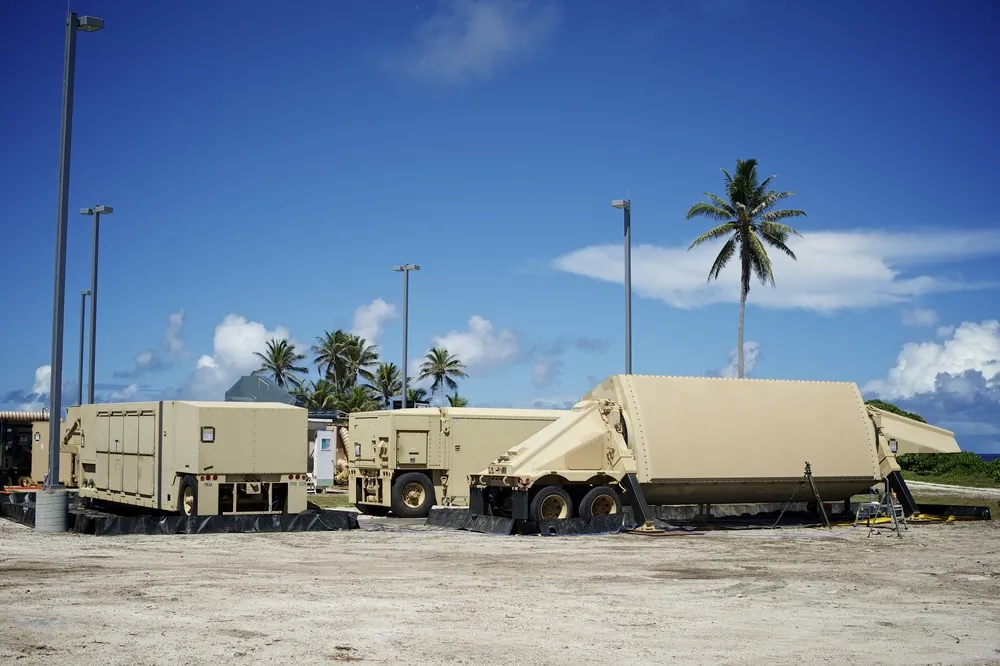
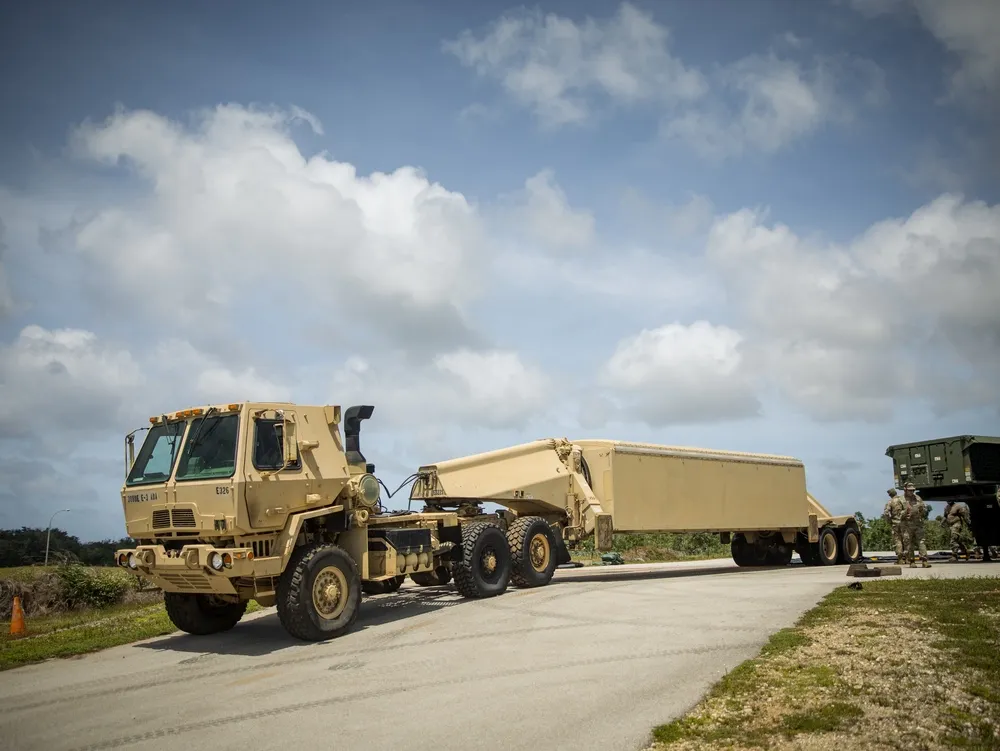
AN/TPY-2 radar

Also known as
  • AN/TPY-2
  • Army Navy/Transportable Radar Surveillance
  • Army Navy Transportable Radar Surveillance
  • TPY-2
  • THAAD radar

Raytheon's AN/TPY-2 is a transportable X-band active electronically scanned array radar for ballistic-missile defense. It can operate as a forward-based early-tracking sensor or in terminal mode with THAAD, feeding missile-defense networks with track and discrimination data; 2026 reporting also showed the radar's value as a high-priority target during regional missile exchanges.

Role in Conflicts

Role in conflict
Forward-deployed missile-defense sensor

During the 2026 Iran War, open-source reporting and satellite-imagery analysis identified AN/TPY-2 radars tied to U.S. THAAD deployments among the missile-defense sensors hit by Iranian strikes in Jordan and the Gulf region.

Profile / Specs

Profile

Origin
United States
Built by
Raytheon
Type
Ballistic-missile defense radar
Service note
2004-present
Unit cost
US$484.621 million (FY2025 procurement line, complete radar)

Specifications

Radar type
Transportable ballistic-missile defense radar
Antenna
X-band active electronically scanned array
Operating modes
Forward-based and terminal
Core functions
Detects, tracks, and discriminates ballistic missiles
Terminal role
Provides THAAD tracking and fire-control support in terminal mode
Network output
Can relay track data through C2BMC and other integrated missile-defense links
Transportability
Designed for movement by aircraft, ship, truck, or rail
Latest production feature
13th radar delivered to MDA used gallium nitride components
Procurement cost
US$484.621 million per radar in the FY2025 MDA procurement line
Operating Modes

AN/TPY-2 can be read as one radar with two different missile-defense jobs: a forward sensor for early track quality and a terminal sensor for a THAAD battery.

ModePrimary jobNetwork role
Forward-basedDetects, tracks, and discriminates ballistic missiles at long range.Feeds early track data into missile-defense command networks before terminal systems engage.
TerminalWorks with THAAD to track targets during the endgame.Provides the fire-control-quality sensor input used to support THAAD intercepts.
Test and integration useProvides live radar data during integrated missile-defense demonstrations.Has supported C2BMC cueing and Patriot launch-solution demonstrations.
Variants

AN/TPY-2 is organized less by separate public model numbers than by operating mode and production configuration.

VariantConfigurationDesignation notes
Forward-based modeEarly track and discrimination configuration

Raytheon describes forward-based AN/TPY-2 operation as a long-range sensor role that detects, tracks, and discriminates ballistic missiles before handing data to the wider missile-defense network.

Sources: AN/TPY-2 | Raytheon

Terminal modeTHAAD battery radar configuration

Raytheon describes terminal-mode AN/TPY-2 operation as the configuration that works with THAAD to identify and track targets and guide interceptors.

Sources: AN/TPY-2 | Raytheon

GaN-populated production radarUpdated production configuration

RTX said the 13th AN/TPY-2 radar delivered to MDA was the first U.S. missile-defense radar populated with gallium nitride components.

Sources: RTX 13th AN/TPY-2 delivery

Integrated Missile Defense

AN/TPY-2 is a sensor node inside layered missile-defense architectures rather than a standalone interceptor system.

Compatible itemItem typeCompatibility evidence
THAAD, Transportable terminal ballistic missile defense system, Air DefenseTHAADTerminal ballistic missile defense system

Raytheon describes AN/TPY-2 terminal-mode operation as the radar configuration that works with THAAD to identify, track, and support interceptor engagements.

Sources: AN/TPY-2 | Raytheon

C2BMC, Ballistic missile defense command-and-control system, Support EquipmentC2BMCBattle-management system

Lockheed Martin's FTO-02 E2 test report says AN/TPY-2 detected the target and relayed track information to C2BMC to cue defending BMDS assets.

Sources: Lockheed Martin FTO-02 E2 test report

MIM-104 Patriot, Long-range surface-to-air and ballistic missile defense system, Air DefenseMIM-104 PatriotAir and missile defense system

USSTRATCOM's joint integrated air-and-missile-defense demonstration described AN/TPY-2 data supporting a Patriot weapon-system launch solution and PAC-3 MSE intercept.

Sources: USSTRATCOM Joint IAMD demonstration

Timeline

AN/TPY-2 radar Key Events

  1. AN/TPY-2 enters missile-defense fielding

    MDAA places AN/TPY-2 fielding in 2004 as a transportable X-band sensor for U.S. ballistic-missile defense.

    Sources: MDAA AN/TPY-2 system profile

  2. Patriot integration demonstration

    A U.S. joint integrated air-and-missile-defense demonstration used AN/TPY-2 data to support a Patriot launch solution and PAC-3 MSE intercept.

    Sources: USSTRATCOM Joint IAMD demonstration

  3. 13th radar delivered to MDA

    RTX reported delivery of the 13th AN/TPY-2 radar to the Missile Defense Agency and identified it as the first U.S. missile-defense radar populated with GaN components.

    Sources: RTX 13th AN/TPY-2 delivery

  4. Radar-strike reporting highlights vulnerability

    Breaking Defense reported that Iranian targeting of THAAD-linked TPY-2 radars during the 2026 Iran War underscored the operational importance and exposure of forward missile-defense sensors.

    Sources: Breaking Defense THAAD TPY-2 radar strike analysis

Media
Related Weapon Systems
AN/TPQ-53 multimission radar, Mobile multimission counterfire and air-surveillance radar, Electronic WarfareElectronic WarfareAN/TPQ-53 multimission radarMobile multimission counterfire and air-surveillance radarThe AN/TPQ-53, commonly called Q-53, is a Lockheed Martin mobile active electronically scanned array radar that began as the Army's counterfire replacement for AN/TPQ-36 and AN/TPQ-37 Firefinder radars. Its baseline mission is to detect, classify, track, and locate mortar, artillery, and rocket launches in 90-degree or 360-degree modes, while software and open-architecture upgrades have extended the same family into counter-UAS, air-surveillance, and wider multimission radar roles.
AN/ALQ-249(V)1 Next Generation Jammer Mid-Band, Carrier-based airborne electronic attack jamming pod system, Electronic WarfareElectronic WarfareAN/ALQ-249(V)1 Next Generation Jammer Mid-BandCarrier-based airborne electronic attack jamming pod systemThe AN/ALQ-249(V)1 Next Generation Jammer Mid-Band is Raytheon's airborne electronic attack pod for U.S. Navy and Royal Australian Air Force EA-18G Growlers, replacing part of the ALQ-99 mission set with two-pod ship sets built around active electronically scanned arrays and a digital back end. It reached initial operational capability in December 2024 and has documented combat-linked use from VAQ-133 deployments in the 2023 Red Sea Crisis and 2026 Iran War.

Sources