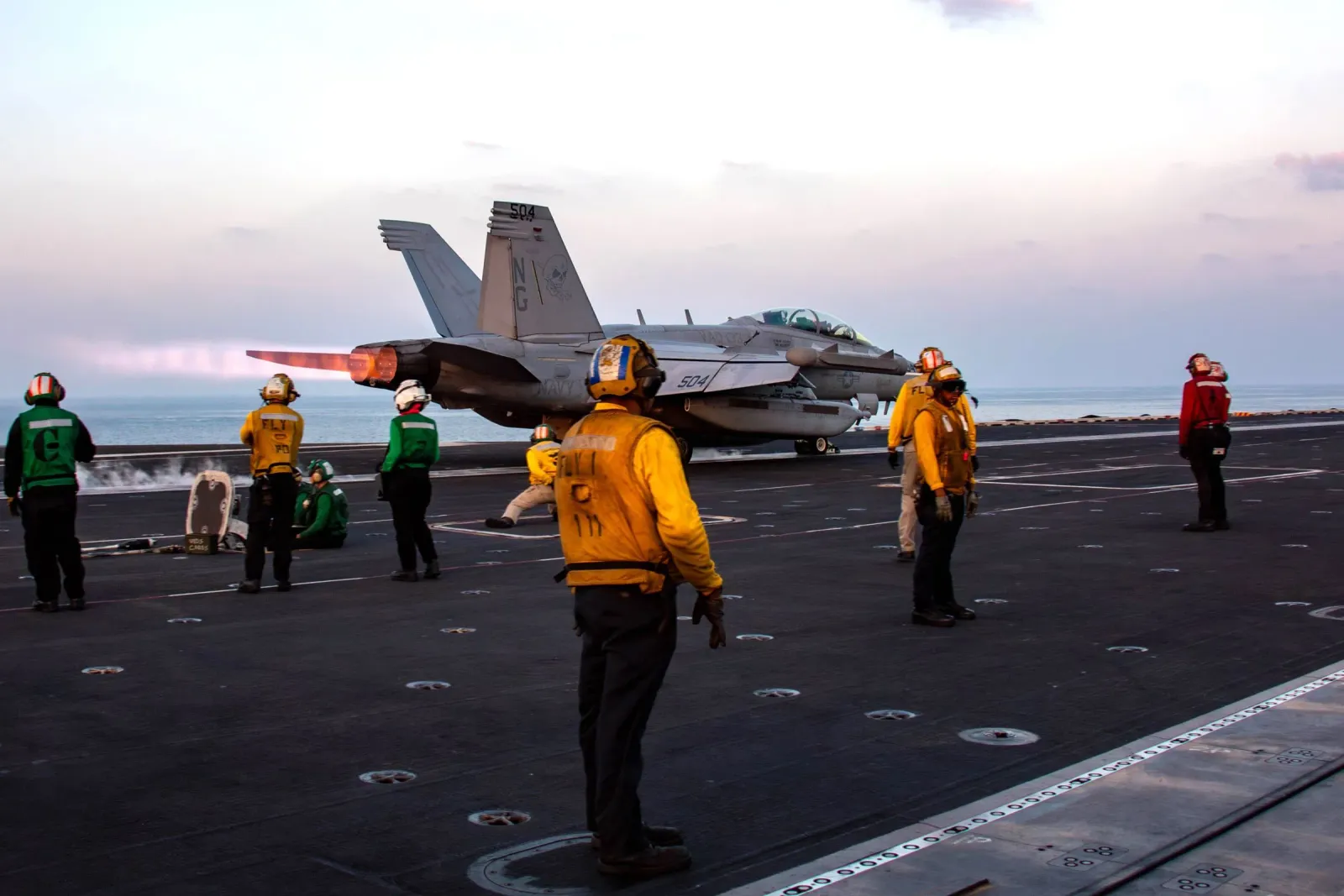

VAQ-133 deployed NGJ-MB pods aboard USS Abraham Lincoln during the carrier strike group's Middle East cruise, with specialist reporting identifying the pods as used during the Red Sea and Gulf of Aden campaign against Houthi forces.
Role detailsElectronic Warfare
AN/ALQ-249(V)1 Next Generation Jammer Mid-Band
Also known as
- AN/ALQ-249
- AN/ALQ-249(V)1
- NGJ-MB
- NGJ Mid-Band
- Next Generation Jammer Mid-Band
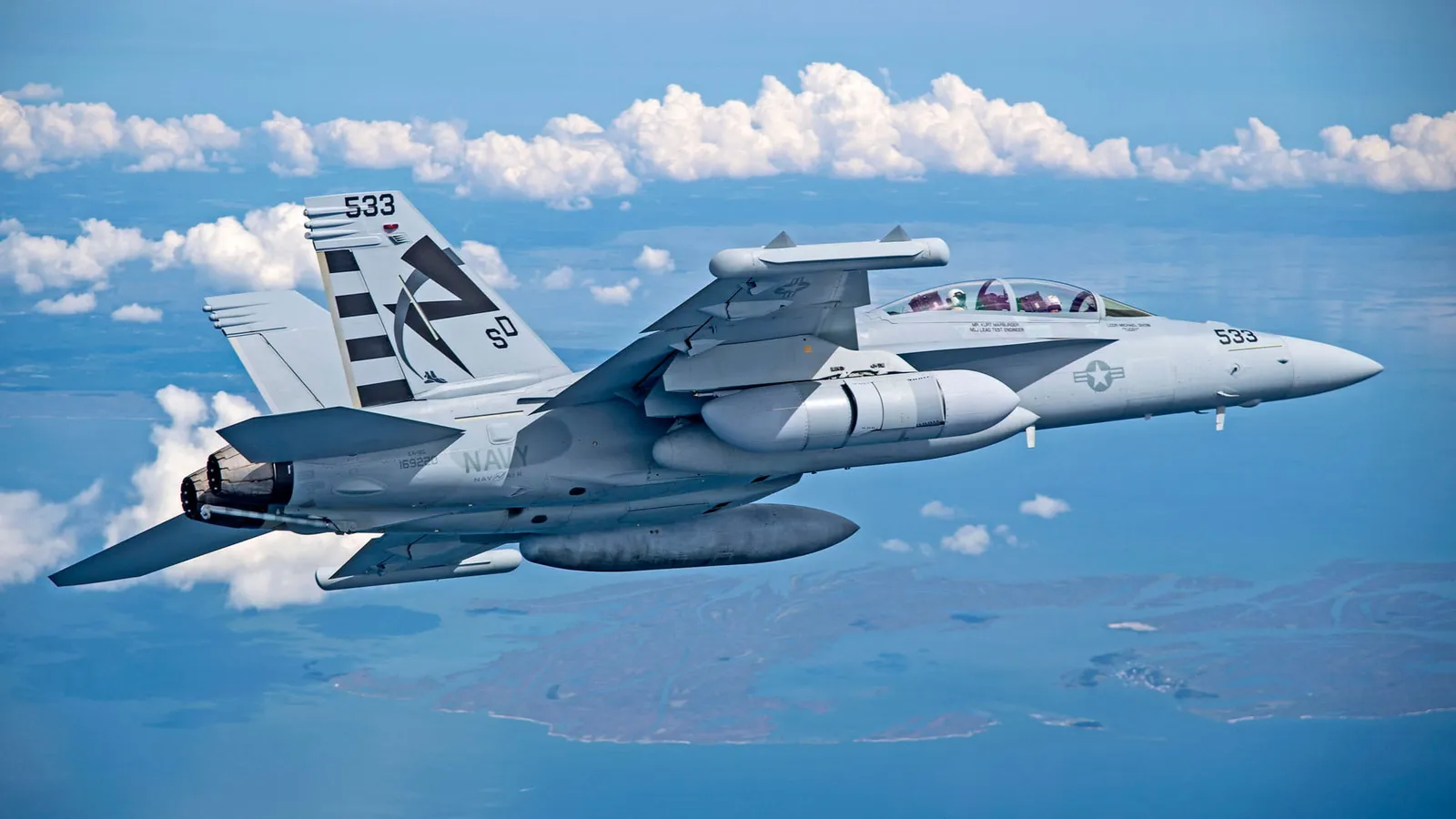
The AN/ALQ-249(V)1 Next Generation Jammer Mid-Band is Raytheon's airborne electronic attack pod for U.S. Navy and Royal Australian Air Force EA-18G Growlers, replacing part of the ALQ-99 mission set with two-pod ship sets built around active electronically scanned arrays and a digital back end. It reached initial operational capability in December 2024 and has documented combat-linked use from VAQ-133 deployments in the 2023 Red Sea Crisis and 2026 Iran War.
Role in Conflicts
- Role in conflict
- Electronic attack support for carrier air operations
Specialist reporting identified ALQ-249 pods on a VAQ-133 EA-18G Growler photographed during Operation Epic Fury missions over Iran, directly linking the NGJ-MB pod set to U.S. electronic-attack operations in the 2026 Iran War.
Profile / Specs
Profile
- Origin
- United States
- Built by
- Raytheon
- Type
- Carrier-based airborne electronic attack jamming pod system
- Service note
- Entered U.S. Navy fleet fielding in the 2020s as the mid-band increment of the Next Generation Jammer family
- Unit cost
- about $45.4 million per ship set (13 ship sets for $590,801,245 in the Nov. 26, 2024 LRIP award)
- Produced
- Low-rate initial production from 2021; first U.S. Navy fleet pods delivered in July 2023; first RAAF ship sets delivered in September 2025
Specifications
- Configuration
- Two pods per ship set
- Carrier aircraft
- EA-18G Growler
- Frequency band
- Mid-band
- Antenna technology
- Active electronically scanned array
- Back end
- All-digital electronic attack architecture
- Operators
- United States Navy and Royal Australian Air Force
- Role
- Airborne electronic attack and radar/communications jamming
- Production status
- Low-rate initial production with follow-on ship-set awards
Variants
Next Generation Jammer is an incremented pod family for EA-18G airborne electronic attack, with this record covering the mid-band AN/ALQ-249(V)1 ship set.
| Variant | Configuration | Designation notes |
|---|---|---|
| Next Generation Jammer Low-Band | Low-band increment | NAVAIR describes NGJ as a family of increments covering different frequency bands; the low-band increment is a separate family member rather than the AN/ALQ-249(V)1 mid-band pod. Sources: Next Generation Jammer |
| Next Generation Jammer Mid-Band Expansion | Mid-band upgrade | Raytheon's 2024 NGJ-MBX award covers an expansion of the current mid-band system to extend its frequency range against additional threats. Sources: RTX's Raytheon awarded U.S. Navy contract for Next Generation Jammer Mid-Band Expansion |
Carrier Aircraft
The NGJ-MB ship set is fitted to the EA-18G Growler for carrier-based airborne electronic attack.
| Carrier | Carrier type | Carriage evidence |
|---|---|---|
 | Electronic attack aircraft | The Navy fact file and Raytheon product material identify the EA-18G Growler as the aircraft that carries the two-pod NGJ-MB ship set. Sources: Next Generation Jammer Mid-Band, Raytheon NGJ-MB Product Page |
Program Context
NGJ-MB is the mid-band increment of the Navy's Next Generation Jammer program. The sourced record distinguishes three reader-facing layers: the fitted ship set, the carrier aircraft, and later expansion work that extends the mid-band system.
| Layer | Catalog meaning | Source-backed context |
|---|---|---|
| Ship set | Two AN/ALQ-249(V)1 pods | The Navy describes NGJ-MB as a two-pod airborne electronic attack system for the EA-18G Growler. |
| Carrier aircraft | | The Growler carries the pod set and provides the crewed carrier-based electronic attack platform. |
| Expansion path | NGJ-MBX | Raytheon's 2024 Mid-Band Expansion award is an upgrade path for extending the frequency range of the current mid-band system. |
Timeline
AN/ALQ-249(V)1 Next Generation Jammer Mid-Band Key Events
Production phase begins
Raytheon announced that the NGJ-MB program was moving into production and deployment after the Milestone C decision.
Sources: Raytheon NGJ-MB Production Start
Follow-on LRIP ship sets ordered
The Defense Department announced a $590.8 million Raytheon award covering 13 NGJ-MB low-rate initial production ship sets.
Sources: Contracts For Nov. 26, 2024
IOC decision publicly reported
DSIAC mirrored NAVAIR reporting that the U.S. Navy declared NGJ-MB initial operational capability in December 2024 after fleet fielding, testing, and production milestones.
Sources: DSIAC NGJ-MB IOC
VAQ-133 completes first NGJ-MB deployment
Naval Aviation News reported that VAQ-133 completed the first deployment of the NGJ-MB system with the USS Abraham Lincoln Carrier Strike Group.
Sources: VAQ-133 First NGJ-MB Deployment
RAAF ship-set delivery announced
RTX announced that Raytheon had delivered the first NGJ ship sets to the Royal Australian Air Force, with the first delivery occurring in September 2025 and additional deliveries continuing through 2026.
Sources: RTX RAAF NGJ Shipsets
Media
AN/ALQ-249(V)1 Next Generation Jammer Mid-Band Images
Related Weapon Systems


Sources
Next Generation Jammer Mid-BandPublisher: U.S. Navy | Note: Supports the AN/ALQ-249(V)1 system's mid-band role, two-pod airborne electronic attack configuration, EA-18G Growler carrier aircraft, and Raytheon contractor context. | Accessed: 2026-06-29Next Generation JammerPublisher: Naval Air Systems Command | Note: Supports NGJ family context, production pod delivery to the fleet, and the distinction between mid-band and low-band increments. | Accessed: 2026-06-29Raytheon NGJ-MB Product PagePublisher: RTX | Note: Supports manufacturer product context for the NGJ-MB pod, including the AESA/digital-back-end description, EA-18G employment, and gallery image provenance. | Accessed: 2026-06-29Raytheon NGJ-MB Production StartPublisher: Raytheon | Note: Supports the July 2021 transition into NGJ-MB production and deployment following the Milestone C decision. | Accessed: 2026-06-29RTX RAAF NGJ ShipsetsPublisher: RTX | Note: Supports Royal Australian Air Force operator context, first ship-set delivery timing, continued 2026 deliveries, and cooperative U.S. Navy/RAAF program context. | Accessed: 2026-06-29RTX's Raytheon awarded U.S. Navy contract for Next Generation Jammer Mid-Band ExpansionPublisher: RTX | Note: Supports the NGJ-MBX upgrade description, frequency-range extension, EA-18G Growler employment, and expansion-contract context. | Accessed: 2026-06-29Contracts For Nov. 26, 2024Publisher: U.S. Department of Defense | Note: Supports the low-rate initial production award value for 13 NGJ-MB ship sets and the Raytheon contract award context used for the unit-cost estimate. | Accessed: 2026-06-29DSIAC NGJ-MB IOCPublisher: Defense Systems Information Analysis Center | Note: Mirrors NAVAIR reporting on the December 2024 NGJ-MB initial operational capability decision and provides official U.S. Navy image provenance for the lead image. | Accessed: 2026-06-29VAQ-133 First NGJ-MB DeploymentPublisher: Naval Aviation News | Note: Supports VAQ-133 completion of the first NGJ-MB deployment with USS Abraham Lincoln Carrier Strike Group. | Accessed: 2026-06-29Navy Growlers ALQ-249 Went To WarPublisher: The War Zone | Note: Supports 2023 Red Sea Crisis direct conflict-use by identifying NGJ-MB combat use during VAQ-133's first cruise against Houthi forces; also supports 2026 Iran War direct conflict-use by identifying ALQ-249 pods on a VAQ-133 Growler photographed during Operation Epic Fury missions over Iran. | Accessed: 2026-06-29